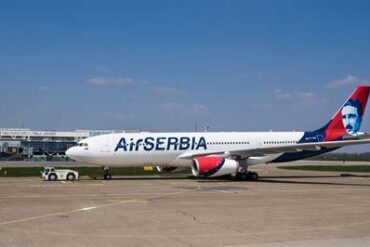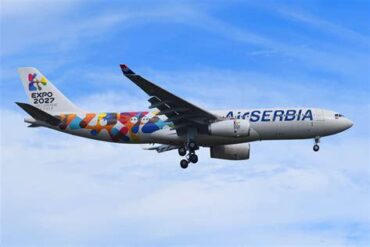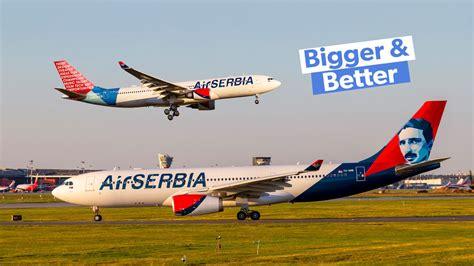
Air Serbia has achieved a historic milestone, crossing the two-million-passenger threshold by the end of June 2025 — a record-breaking feat that redefines the regional air travel landscape across the Balkans. This surge represents more than just numerical growth; it marks a turning point in how the airline is perceived, operated, and integrated into the broader European aviation ecosystem.
Record-Breaking Mid-Year Growth Defines a New Era
Crossing the two-million mark within just six months of 2025 underlines Air Serbia’s strategic agility and operational excellence. In an industry fraught with volatility and market unpredictability, this kind of consistent and rapid growth is rare. Compared to previous years, the pace at which the airline has accelerated its passenger capacity, route network, and service quality speaks volumes about its long-term vision and executional precision.
Behind this remarkable growth lies a potent mix of factors — from increased flight frequencies to sharply tuned marketing strategies — all designed to capitalize on surging travel demand. With travel bouncing back strongly post-pandemic, Air Serbia managed to not just recover but leap ahead of its regional competitors.
Strategic Route Expansion Driving Connectivity
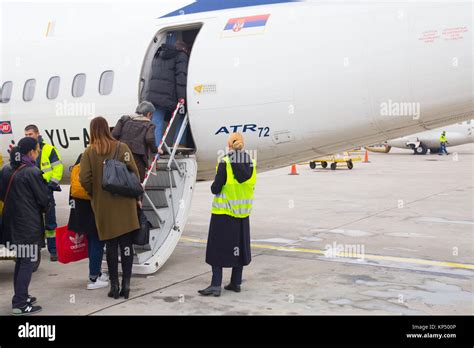
Air Serbia’s route development strategy is at the core of this success story. The airline has rapidly grown its Belgrade hub into a nexus of connectivity, serving not only the Balkans but also acting as a pivotal bridge between Western Europe, the Middle East, and beyond. In the first half of 2025, the airline introduced new destinations and increased the frequency of existing high-demand routes, directly contributing to greater passenger volume.
This network optimization has allowed Air Serbia to tap into multiple market segments:
- Leisure travelers heading to Adriatic coastlines or European capitals
- Business passengers flying to financial centers
- Transit passengers using Belgrade as a low-hassle connecting hub
The expansion is not random but part of a broader connectivity vision, designed to offer seamless access across the region while strategically positioning Serbia as an aviation crossroads.
Economic Engine for Serbia and the Balkans
Beyond the numbers, Air Serbia’s growth has triggered a positive ripple effect across various sectors of the Serbian and regional economy. The rise in passenger volume boosts demand in hospitality, transportation, tourism, retail, and service industries, providing economic opportunities not only in Belgrade but in satellite cities and towns now increasingly connected via air.
This aviation boom supports Serbia’s broader macroeconomic objectives — attracting foreign investment, stimulating exports through cargo logistics, and building a modern national brand rooted in accessibility and quality.
A Passenger-First Philosophy Elevating the Experience
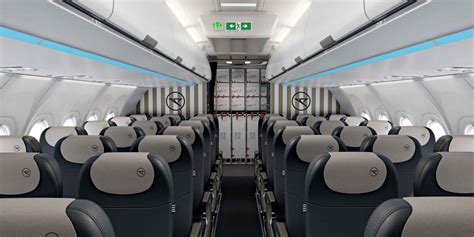
Air Serbia’s passenger growth isn’t merely a result of increased connectivity — it reflects an intentional, passenger-first philosophy. Major investments have been made in fleet modernization, adding more fuel-efficient and passenger-friendly aircraft that cater to diverse customer expectations.
Improvements in cabin comfort, digital booking tools, and customer service training have significantly enhanced the travel experience. Passengers now benefit from:
- Streamlined booking and check-in via mobile platforms
- Faster baggage handling and shorter wait times
- In-flight service upgrades including Wi-Fi and new catering options
These enhancements have had a tangible effect on brand loyalty, with repeat customers and positive reviews surging in tandem with passenger numbers. The attention to detail in customer service reaffirms the airline’s reputation as a quality regional carrier.
Commitment to Sustainability and Environmental Goals
With rising global scrutiny on aviation emissions, Air Serbia has not turned a blind eye to its environmental obligations. In fact, its sustainability roadmap is central to its growth model. This includes:
- Fleet upgrades to more fuel-efficient models
- Route optimization to minimize unnecessary emissions
- Ground operation improvements aimed at reducing energy use
These efforts, while aligned with ICAO and EU environmental standards, also serve a brand positioning function — showcasing Air Serbia as a modern, forward-looking airline that respects environmental imperatives.
Strategic Partnerships Reinforcing Long-Term Ambitions
Air Serbia’s recent progress is not a solo achievement; it is closely tied to strategic alliances with international carriers. These partnerships extend Air Serbia’s reach far beyond its own network, allowing passengers access to hundreds of destinations via codeshare and interline agreements.
Working with European legacy carriers, Middle Eastern giants, and emerging market players, Air Serbia is shaping itself into a nodal point of East-West travel. This cooperation adds resilience and agility, ensuring the airline can maintain competitive pricing while offering unmatched reach for a mid-sized European carrier.
Looking Ahead: Growth With Precision and Purpose
With six more months remaining in 2025, Air Serbia is on course to surpass all historical passenger records. But it’s not just about volume — the qualitative dimension of growth is equally prioritized. The airline’s strategic roadmap includes:
- New route launches to underserved secondary cities in Europe and the Middle East
- Upgraded digital infrastructure to improve customer interactions
- Data-driven marketing and AI-enhanced pricing models to boost revenue per seat
Air Serbia’s senior leadership is fully aware that post-pandemic aviation demands both adaptability and bold vision. The upcoming initiatives aim to further entrench the airline’s leadership in the Western Balkans while exploring new long-haul opportunities as conditions allow.
Regional Dominance and International Ascent
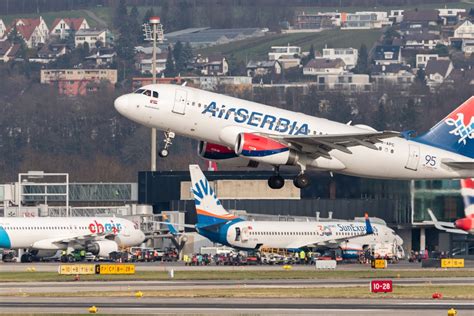
No longer just a national flag carrier, Air Serbia has emerged as a benchmark for regional aviation excellence. Its ability to achieve such exponential growth while maintaining operational discipline, customer satisfaction, and financial prudence sets it apart in a competitive industry.
This evolution is also symbolic: Serbia’s historical position at the crossroads of Europe is now being mirrored in its aviation strategy. By building a hub in Belgrade that connects east to west and north to south, Air Serbia is turning geography into a strategic advantage.
The airline’s influence now extends beyond its own borders — it plays a key role in regional integration, tourism diplomacy, and cross-border commerce.
Conclusion: Two Million Passengers as a Symbol of Reinvention
Crossing the two-million mark by mid-2025 is more than a headline — it’s a statement. It’s proof that Air Serbia’s transformation from a modest regional carrier into a dynamic, future-oriented airline is well underway.
This success rests on a foundation of smart investments, operational excellence, and relentless customer focus. At the same time, it signals a shift in regional aviation dynamics, with Serbia now firmly positioned as a vital air travel hub in Southeastern Europe.
As the airline eyes new horizons, what remains clear is this: Air Serbia is no longer just flying passengers — it is flying high on the wings of strategic reinvention and sustainable ambition.