The Airline Transport Pilot (ATP) certificate represents the pinnacle of aviation achievement in the United States. This certification is essential for pilots aspiring to serve as captains or first officers in airline operations under Part 121 of the Federal Aviation Regulations (FAR). It grants pilots the authority to operate large, multi-engine aircraft and is accompanied by a host of responsibilities and requirements. Understanding the privileges and the comprehensive requirements for obtaining the ATP certificate is crucial for any aviation professional seeking to advance their career.
What is an Airline Transport Pilot (ATP) Certificate?
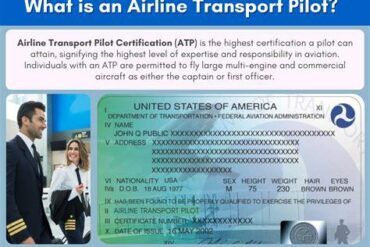
An ATP certificate is the highest level of pilot certification in the United States. It is mandatory for individuals who wish to serve as captains or first officers in commercial airline operations under Part 121 of the FAR. This certification enables pilots to operate large aircraft and take command of complex, multi-engine planes. The ATP certificate is required to work with major airlines or any air carrier operating under Part 121 rules.
To qualify for the ATP certificate, aspiring pilots must meet a series of rigorous training, flight experience, and knowledge requirements. A key aspect of this certification is that it acknowledges a pilot’s ability to perform as a pilot-in-command (PIC) for large, multi-engine aircraft. This certification not only validates a pilot’s experience but also their ability to safely navigate and manage flights in a professional commercial setting.

ATP Certificate Privileges
The Airline Transport Pilot certificate bestows a set of privileges and responsibilities on the pilot who holds it. These privileges include:
- Pilot in Command: ATP certificate holders are authorized to act as PIC of aircraft, which allows them to operate in commercial aviation settings such as airline flights and charter services.
- Flight as Captain or First Officer: ATP certificate holders can serve as captains or first officers in airline operations under FAR Part 121, ensuring safe transport of passengers and cargo.
- Multi-Engine Aircraft Operation: The certificate is primarily designed for pilots who wish to operate large, multi-engine aircraft. The complexity of these aircraft requires extensive training and experience.
- Command of Complex Aircraft: ATP pilots are authorized to command complex aircraft systems and equipment, including advanced navigation, autopilot systems, and weather radar.
These privileges underscore the level of competence and expertise that ATP pilots are expected to demonstrate in their roles within commercial aviation.
ATP Certificate Requirements
To qualify for an Airline Transport Pilot certificate, applicants must meet a series of strict requirements as outlined by the Federal Aviation Administration (FAA). These include:
- Age Requirement: The applicant must be at least 21 years old. However, applicants who possess a Restricted Airline Transport Pilot certificate (R-ATP) may be eligible to obtain an ATP certificate at the age of 23, contingent on meeting specific flight experience requirements.
- English Proficiency: The FAA mandates that applicants must be able to read, speak, write, and understand the English language to ensure communication during flight operations.
- Good Moral Character: The applicant must demonstrate a record of good moral standing and adhere to professional and ethical aviation practices.
- Commercial Pilot Certificate: An ATP applicant must hold a commercial pilot certificate with an instrument rating, or an equivalent certification from a foreign country.
- Completion of ATP Certification Training Program: Aspiring ATP pilots must complete an FAA-approved ATP Certification Training Program (CTP), which is mandatory for those seeking the multi-engine rating.
- Written Knowledge Test: The applicant must pass the FAA’s written knowledge test, which assesses understanding of advanced aviation subjects including aerodynamics, weather patterns, navigation, and air traffic control procedures. The test is divided into two categories, one for multi-engine aircraft (ATP multi-engine airplane test, ATM) and one for single-engine aircraft (ATP single-engine airplane test, ATS).
ATP Aeronautical Experience Requirements
In addition to meeting the educational and knowledge requirements, applicants must fulfill specific flight experience requirements before being eligible to take the practical test for the ATP certificate. These requirements are designed to ensure that the pilot has the requisite hands-on flying experience to safely operate complex aircraft under a variety of conditions. The minimum flight hours for ATP certification include:
- 1,500 Hours of Total Flight Time: This is the fundamental experience requirement for ATP certification, encompassing all types of flight operations, including solo, cross-country, and night flights.
- 500 Hours of Cross-Country Flight: Pilots must have significant experience flying long distances, navigating different airspaces, and dealing with a variety of weather conditions during cross-country flights.
- 100 Hours of Night Flight: Night flying experience is essential to ensure that pilots can safely operate in reduced visibility conditions.
- 50 Hours in the Aircraft Class: To qualify for a specific aircraft class rating, the applicant must log 50 hours of flight time in the type of airplane for which they are seeking certification.
- 75 Hours of Instrument Flight Time: Pilots must have 75 hours of flight time operating under instrument flight rules (IFR), which is essential for flying in adverse weather conditions when visual references are not available.
These requirements ensure that the pilot has the skills and judgment needed to operate in commercial aviation environments, particularly in high-stakes, high-pressure situations.
What is a Restricted Airline Transport Pilot Certificate (R-ATP)?
The Restricted Airline Transport Pilot Certificate (R-ATP) is a variation of the standard ATP certificate that allows certain pilots to qualify with fewer flight hours. The R-ATP was introduced to encourage the development of pilots with higher levels of education and training, providing a pathway for them to begin their careers with reduced experience requirements.
The primary advantage of the R-ATP is that it lowers the flight hour requirement needed to qualify for the ATP certificate. There are two main categories for R-ATP applicants based on educational background:
- 1,000 Hours: Pilots who have completed an FAA-approved bachelor’s degree program in aviation are eligible for the R-ATP with only 1,000 hours of flight time.
- 1,250 Hours: Pilots who have graduated from an FAA-approved associate degree program in aviation are eligible for the R-ATP with 1,250 hours of flight time.
The R-ATP allows these pilots to serve as first officers in airline operations, but it comes with restrictions, including the requirement to complete additional flight experience before qualifying to serve as captains.
Practical Test and Certification Process
Once all the prerequisites are met, the final step to obtaining the ATP certificate involves passing a practical test, which is administered by an FAA examiner. This test evaluates the pilot’s ability to perform various maneuvers and handle in-flight scenarios that require advanced knowledge and judgment. The test covers a wide range of skills, from emergency procedures to navigation and aircraft handling.
In addition to the practical flight test, the applicant must demonstrate competence in a simulator environment. These simulations help ensure that pilots are capable of managing complex systems and responding to in-flight challenges that may not be easily replicated during an actual flight.
Conclusion
Becoming an Airline Transport Pilot is the ultimate achievement for any aviator, offering extensive privileges and opportunities within the world of commercial aviation. The process requires a substantial investment in training, flight hours, and education. However, for those who are committed to reaching the pinnacle of their aviation careers, the rewards of an ATP certificate are significant. The path to certification may be demanding, but it ensures that only the most qualified pilots are entrusted with the responsibility of operating large, multi-engine aircraft in commercial operations. Whether you are starting your journey or preparing for the final steps, the pursuit of an ATP certificate is a testament to your skill, knowledge, and dedication to aviation.