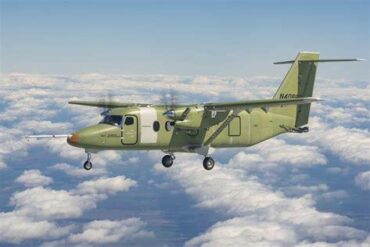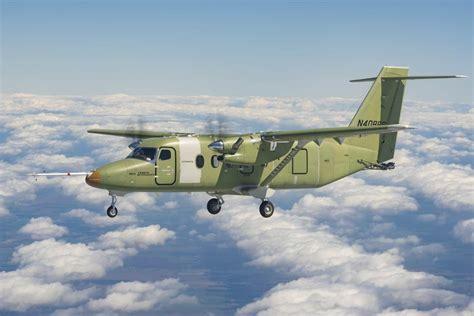
Belgium has approved the acquisition of five Cessna 408 SkyCourier light utility aircraft from the United States, marking a strategic shift in how the country plans to support special operations, crisis response, and austere air mobility missions. The decision, approved under the STAR program, reflects a growing recognition that modern military forces require not just heavy-lift strategic aircraft but also agile, rugged platforms capable of operating where infrastructure is limited or non-existent.
The SkyCourier fleet will be procured as commercial aircraft built in the United States and subsequently converted in Belgium into specialized military-configured platforms. This approach allows Belgium to tailor the aircraft to national requirements while simultaneously strengthening its domestic aerospace industry. The procurement expands the originally planned fleet from four to five aircraft, highlighting the importance Belgian defense planners place on restoring a light fixed-wing capability after the retirement of the C-130 Hercules fleet.
The strategic logic is clear: the Airbus A400M Atlas, which replaced the C-130, excels in heavy transport missions but requires longer, better-prepared runways. Special operations, humanitarian evacuations, and covert insertions often demand aircraft that can land on short, rough, or improvised strips. The SkyCourier is designed to fill this operational gap, complementing helicopters and larger transports with a versatile fixed-wing platform optimized for speed, range, and flexibility.
Strategic Drivers Behind Belgium’s SkyCourier Acquisition
Belgium’s acquisition reflects a broader shift in NATO and European defense planning, where flexibility and rapid deployment are becoming as critical as raw payload capacity. The retirement of the C-130 fleet left a capability gap in Belgium’s air mobility portfolio. While the A400M offers superior payload and range, it cannot routinely operate from grass fields or short, austere runways.
Special operations missions often unfold in environments where airfields are minimal, damaged, or politically sensitive. In such scenarios, an aircraft that can land discreetly on short strips, deliver personnel or equipment, and depart quickly becomes a strategic asset. The SkyCourier’s ability to operate from minimally prepared runways makes it ideal for insertion and extraction of special forces, medical evacuation, and diplomatic or civilian evacuation during crises.
Belgian planners also envision the SkyCourier as a bridge between helicopters and large transport aircraft. Helicopters offer vertical lift and extreme flexibility but are slower and have limited range and payload. Large transports provide massive capacity but require infrastructure. The SkyCourier occupies a middle ground, delivering speed and efficiency while maintaining the ruggedness required for expeditionary operations.
Domestic Conversion and Industrial Benefits for Belgium
A key feature of the Belgian procurement strategy is the decision to acquire the aircraft in commercial configuration and convert them domestically. Belgian aerospace companies Sonaca and Sabena Technics will carry out the conversion work, integrating mission-specific systems and military-grade equipment.
This approach allows Belgium to customize the aircraft for special operations, intelligence support, and medical missions. Planned modifications include advanced sensor suites, camera systems, and mission equipment tailored for observation and signals intelligence. Medical evacuation configurations will enable rapid reconfiguration of the cabin for casualty transport, while modular interiors will support troop insertion and logistics roles.
From an industrial perspective, this strategy anchors significant value within Belgium’s aerospace sector. Rather than purchasing fully militarized aircraft abroad, Belgium ensures that engineering, integration, and sustainment expertise remain within its national industry. This strengthens domestic technical capabilities and provides long-term economic and technological benefits.
The financial structure of the program underscores its scale. The base unit cost of the Cessna 408 SkyCourier is estimated at approximately €6.5 million before conversion and mission equipment. Belgian authorities have allocated a broader funding envelope of €322.3 million for 2026 to cover acquisition, conversion, training, and integration. This substantial investment reflects the complexity of transforming a commercial platform into a specialized military asset.
Dedicated Special Operations Squadron and Timeline
Belgium plans to establish a dedicated Special Operations Squadron at Beauvechain Air Base to operate the SkyCourier fleet. Operational planning aims to maintain at least two aircraft available at any given time, supported by trained crews and maintenance teams. This operational readiness target ensures that the fleet can respond rapidly to emerging crises or special operations requirements.
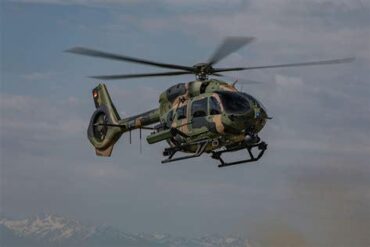
Initial operational capability is targeted for the 2028–2029 timeframe. This timeline accounts for aircraft delivery, domestic conversion, crew training, and integration into Belgium’s broader air mobility doctrine. The SkyCourier program also aligns with Belgium’s broader modernization of special operations aviation, including the introduction of Airbus H145M helicopters and longer-term plans for medium and heavy transport helicopters following the retirement of the NH90-TTH fleet.
This layered approach to aviation capabilities reflects a modern military doctrine that emphasizes modular, scalable air mobility assets. Rather than relying on a single aircraft type for all missions, Belgium is building a diversified fleet optimized for different operational environments.
Origins and Development of the Cessna 408 SkyCourier
The Cessna 408 SkyCourier was launched in November 2017 by Textron Aviation in response to a specific requirement from FedEx Express. FedEx sought a new-generation utility aircraft capable of carrying standard LD3 cargo containers while remaining within the regulatory limits of the 19-seat category. This niche requirement drove the aircraft’s design philosophy, emphasizing payload efficiency, operational simplicity, and cost-effective performance.
The first flight took place on May 17, 2020, following several years of design and ground testing. Type certification was achieved in March 2022, enabling deliveries to begin shortly thereafter. FedEx became the launch customer, placing an initial firm order for 50 aircraft with options for additional units. Commercial service began in 2022, primarily focused on cargo operations within FedEx’s feeder network.
Government and military interest emerged later, with Jamaica and Belgium placing the first military orders in January 2026. The aircraft’s commercial origins do not diminish its military utility; rather, they underscore a growing trend of militaries adopting commercial platforms and modifying them for specialized roles. This approach reduces acquisition costs while leveraging proven commercial reliability and production lines.
Design Philosophy and Structural Characteristics
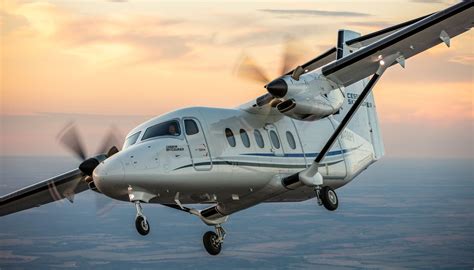
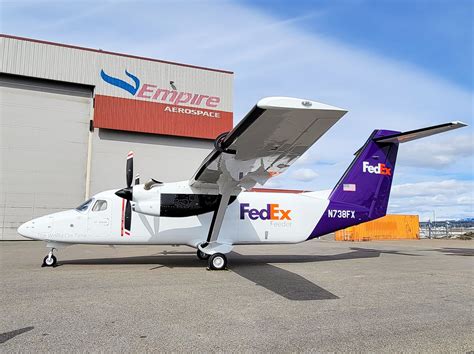
The SkyCourier is a high-wing, twin-turboprop aircraft optimized for utility, cargo, and regional transport missions. The high-wing configuration provides several advantages for military and austere operations. It offers increased ground clearance for the propellers, reducing the risk of debris ingestion on unpaved runways, and facilitates loading and unloading operations.
The fixed landing gear is another deliberate design choice, reducing mechanical complexity and maintenance requirements. While retractable landing gear improves aerodynamic efficiency, fixed gear enhances robustness and reliability—critical attributes for aircraft operating in harsh environments with limited maintenance infrastructure.
The aircraft’s cabin is designed for flexibility, with a flat floor and large rear cargo door that facilitate the loading of bulky cargo and standardized containers. The modular interior allows rapid reconfiguration between passenger, cargo, and mixed-use layouts. This adaptability is particularly valuable for military operators, who may need to switch between troop transport, logistics, and medical roles on short notice.
Payload, Cabin, and Operational Flexibility
One of the SkyCourier’s defining features is its balance between payload, volume, and operating economics within the 19-seat regulatory category. In its freighter configuration, the aircraft can carry up to three LD3 containers or approximately 6,000 pounds (around 2,700 kilograms) of cargo. This payload capacity surpasses many aircraft in the same class, making it attractive for logistics and military resupply missions.
In passenger configuration, the cabin can accommodate up to 19 occupants, keeping it below regulatory thresholds that would require additional cabin crew. This regulatory advantage reduces operating costs and simplifies crew requirements. The non-pressurized cabin limits cruise altitude but significantly reduces structural complexity, acquisition costs, and maintenance demands compared to pressurized regional aircraft.
Seats and interior fittings can be removed or reinstalled, allowing operators to transition between passenger and cargo roles quickly. For military users, this modularity enables rapid mission reconfiguration, supporting everything from troop insertion to humanitarian relief operations.
Performance Specifications and Technical Capabilities
The Cessna 408 SkyCourier is powered by two Pratt & Whitney Canada PT6A-65SC turboprop engines, each rated at 1,100 shaft horsepower. These engines are widely regarded for their reliability, efficiency, and global support network, making them a preferred choice for utility and regional aircraft worldwide.
The aircraft has a maximum takeoff weight of approximately 8,600 kilograms and a maximum cruise speed of around 210 knots (approximately 390 kilometers per hour). Its maximum ferry range reaches roughly 1,700 kilometers, depending on configuration and payload. The SkyCourier can operate at altitudes up to 25,000 feet and requires a takeoff distance of about 1,100 meters, enabling operations from relatively short runways.
Avionics are centered on the Garmin G1000 NXi suite, providing modern navigation, flight management, and situational awareness capabilities. This digital cockpit enhances safety and reduces pilot workload, particularly during complex operations in challenging environments.
In terms of dimensions, the aircraft measures approximately 16.8 meters in length, with a wingspan of 22.0 meters and a height of around 6.3 meters. The cabin measures roughly 7.1 meters in length, 1.9 meters in width, and about 1.8 meters in height, allowing stand-up access and efficient cargo handling.
Operational Role in Belgium’s Defense Architecture
The SkyCourier is positioned as a light fixed-wing asset that complements Belgium’s existing air mobility capabilities rather than replacing them. It fills the gap between helicopters and larger transport aircraft, offering a unique combination of speed, range, and short-field performance.
Planned mission profiles include:
- Insertion and extraction of special operations forces in austere environments
- Medical evacuation of wounded personnel from forward areas
- Evacuation of civilians or diplomatic staff during crises
- Intelligence, surveillance, and reconnaissance support through integrated sensors
- Rapid logistics and resupply missions in constrained theaters
These missions require aircraft that can operate with minimal infrastructure, respond quickly, and adapt to evolving operational requirements. The SkyCourier’s design and performance characteristics align closely with these demands.
Strategic Implications for NATO and European Defense
Belgium’s decision to acquire the SkyCourier reflects a broader trend among NATO and European militaries toward diversified and flexible air mobility fleets. Large strategic transports like the A400M and C-17 remain essential for heavy lift, but modern conflicts and crises increasingly demand smaller, agile platforms that can operate close to the tactical edge.
The adoption of a commercial-derived platform also highlights a shift toward cost-effective procurement strategies. By leveraging commercial aircraft designs and converting them for military use, governments can reduce development costs, shorten acquisition timelines, and benefit from established supply chains and maintenance ecosystems.
Belgium’s approach also underscores the importance of domestic industrial participation in defense programs. By conducting conversions and integration work locally, Belgium strengthens its aerospace sector and ensures sovereign control over critical technologies and sustainment capabilities.
Long-Term Outlook and Operational Evolution
As the SkyCourier enters Belgian service toward the end of the decade, its role is likely to evolve alongside emerging operational concepts. Special operations forces increasingly rely on rapid, discreet mobility, and light fixed-wing aircraft provide a valuable complement to rotary-wing assets. The integration of advanced sensors, communications, and mission systems will further enhance the aircraft’s utility in intelligence-driven operations.
The SkyCourier’s modular design also allows for future upgrades and mission expansion. Potential enhancements could include improved sensor suites, data links for networked operations, and specialized kits for humanitarian or disaster response missions. As Belgium continues to modernize its defense forces, the SkyCourier fleet will serve as a flexible platform adaptable to a wide range of scenarios.
Conclusion: A Pragmatic Investment in Agile Air Mobility
Belgium’s acquisition of five Cessna 408 SkyCourier aircraft represents a pragmatic and strategically coherent investment in agile air mobility. By addressing the capability gap left by the retirement of the C-130 fleet and complementing the A400M, Belgium is building a balanced and resilient air transport portfolio.
The SkyCourier’s combination of short-field performance, payload capacity, modular design, and cost-effective operation makes it well-suited for special operations, crisis response, and austere logistics missions. Domestic conversion and integration ensure that Belgium retains control over customization and sustainment while strengthening its aerospace industry.
In an era where military effectiveness increasingly depends on flexibility, speed, and adaptability, the SkyCourier provides Belgium with a versatile tool to project power, support allies, and respond to crises wherever runways are short and stakes are high.