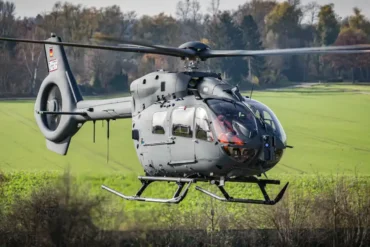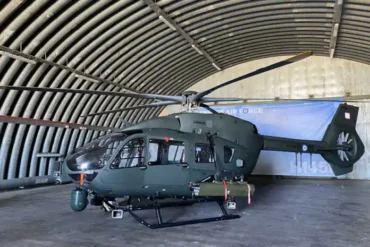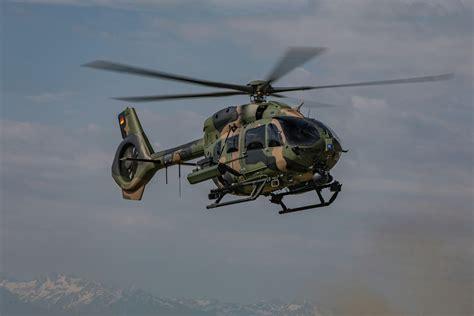
Germany has made a strategic leap forward in military aviation by expanding its fleet of Airbus H145M helicopters to a total of 82 aircraft, solidifying its commitment to a rapid-response, multi-role aerial force. This decision marks a pivotal moment in Berlin’s evolving defence posture, with emphasis on mobility, modularity, and mission-ready deployment across the European theatre.
Strategic Procurement for Operational Agility
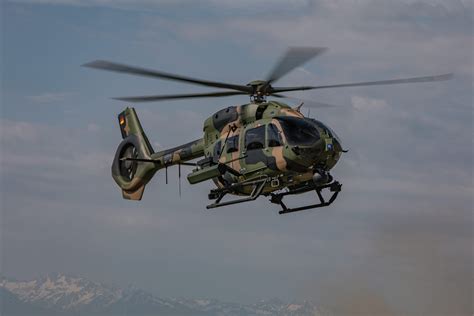
On December 15, 2025, the German Ministry of Defence confirmed the procurement of 20 additional Airbus H145M light combat helicopters, exercising a pre-agreed contract option from December 2023. The expansion is more than an inventory upgrade—it reflects a paradigm shift toward scalable, agile capabilities tailored for modern threats and joint operational scenarios.
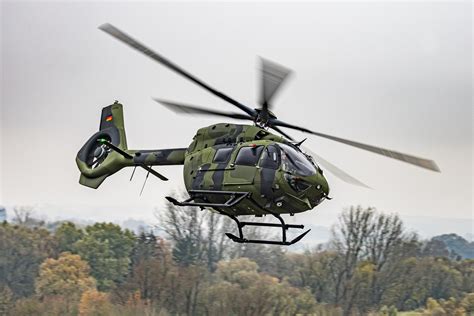
Airbus Helicopters, which delivered the first H145M LKH in November 2024, has ensured a swift transition from contract signing to operational deployment. With a combined allocation of 72 helicopters to the German Army and 10 to the Luftwaffe’s special operations, the new fleet balance emphasizes both broad-based tactical lift and elite mission specialization. This dual-use framework underlines Berlin’s strategy: saturate the light rotary-wing segment with a highly reconfigurable platform that supports everything from covert insertions to light-attack roles.
Modular Multi-Role Design: The H145M Advantage
At the core of Germany’s helicopter modernization plan is the H145M’s modular adaptability. Designed as a mission-flexible aircraft, the platform allows rapid conversion between light-attack configurations and special operations setups in mere minutes. Airbus highlights a configuration range that includes:
- Axial ballistic and guided weapon systems
- Self-protection and electronic warfare suites
- Fast roping and rappelling gear
- Hoisting mechanisms for rescue and recovery
- External cargo carrying capacity
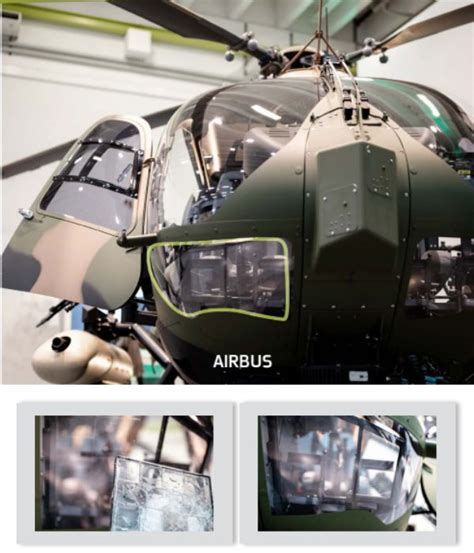
Powered by twin Safran Arriel 2E engines and equipped with the Helionix avionics suite, the helicopter boasts a 4-axis autopilot system that reduces pilot workload, crucial for low-altitude and urban missions. Notably, its low acoustic footprint enhances its ability to conduct discreet reconnaissance and special forces insertion operations—key requirements in today’s asymmetric combat zones.
Light Combat Helicopters in a Tiered Force Structure
Germany’s expanded H145M fleet serves as the light combat and tactical mobility tier within a larger rotary-wing force structure. The heavier NH90s handle medium-lift transport, while the CH-47F Block II Chinooks—destined to replace the aging CH-53 fleet—are earmarked for heavy-lift tasks. This three-tiered framework ensures:
- Fast deployment of small, specialized teams via H145Ms
- Robust medium transport of troops and equipment with NH90s
- Strategic logistics and heavy mobility through CH-47Fs
The H145M fills a unique niche—not designed to replace dedicated attack helicopters like the Tiger, but to offer daily-operable, flexible combat support. Through mission kits, it provides “light combat” capabilities without sacrificing versatility or logistical efficiency.
Training Continuity and Force Generation Synergy
A standout feature of Germany’s procurement strategy is the seamless integration of training and frontline readiness. By using the same helicopter model for pilot training and combat operations, the Bundeswehr avoids lengthy type transitions, allowing pilots and crews to remain current on a single platform.
This unification offers key benefits:
- Faster crew qualification cycles
- Higher mission-readiness rates
- Lower training infrastructure costs
- Streamlined spare parts and maintenance chains
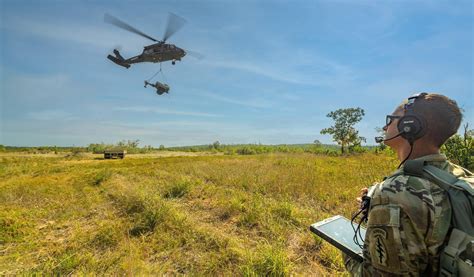
In high-tempo deployment environments, crew readiness can be as critical as the availability of airframes. Germany’s bet on the H145M as both a training and operational platform means fewer bottlenecks, a tighter feedback loop from the field, and the ability to scale missions based on immediate needs.
Combat Versatility in the European Security Landscape
With security dynamics in Europe shifting rapidly, Germany’s increased H145M fleet provides tactical agility and strategic scalability. The aircraft’s deployment model supports:
- Forward-basing and detachment for fast reaction
- Special forces integration for joint NATO operations
- Persistent ISR (intelligence, surveillance, reconnaissance) missions
- Light strike and deterrence in semi-permissive zones
While the H145M is not built for deep penetration in contested airspace, it thrives in permissive to semi-permissive environments, especially when paired with ISR support, electronic warfare layers, and integrated air defence coverage. These helicopters will be most effective when operating in conjunction with other NATO assets under a multi-domain operational umbrella.
Industrial Strength and International Interoperability
From an industrial perspective, the enlargement of Germany’s H145M programme reinforces the production pipeline around Airbus’ Donauwörth facility, supporting both local employment and defence sector stability. It also aligns Germany with a growing network of H145 users, which includes European and U.S. operators, facilitating joint training, logistics, and interoperability.
The platform’s wide adoption ensures:
- Shared upgrades and mission kits
- Cross-border operational compatibility
- Streamlined multinational exercises
This industrial and diplomatic dimension strengthens Germany’s position within NATO as a capability provider rather than merely a force contributor.
From Inventory to Immediate Readiness
Germany’s H145M expansion is not just about numbers—it’s about creating a ready, versatile and resilient helicopter force. The programme’s success hinges on more than procurement. It depends on the Bundeswehr’s ability to deliver integrated training pipelines, maintain supply chain fluidity, and field mission kits effectively.
If those systems hold, the H145M could evolve into more than a “light combat helicopter”—it could become the daily workhorse for special operations, reconnaissance, rapid response, and crisis surge missions. In an era when availability and readiness are paramount, Germany’s choice may well become a benchmark for how NATO allies structure their light aviation fleets.
Conclusion: A Force Multiplier in Motion
Germany’s expansion of the H145M helicopter fleet signals a decisive turn toward modular, high-readiness forces designed for the operational demands of today and tomorrow. With its combination of combat flexibility, stealthy ISR, training efficiency and multinational synergy, the H145M is fast becoming a backbone asset in Europe’s evolving military landscape.
As delivery and fielding continue apace, all eyes will be on how Germany transforms this procurement into a fully operational capability—not just expanding its arsenal, but truly reshaping its rotary-wing doctrine for 21st-century warfare.