Boeing’s decision to transfer Wisk Aero, Insitu, and SkyGrid to Archer Aviation represents far more than another corporate restructuring. It marks a significant change in how Boeing intends to participate in the future of autonomous aviation. Instead of owning and directly developing a portfolio of emerging autonomous-aircraft and airspace technologies, Boeing will retain a substantial financial interest in Archer while allowing the electric-aircraft company to control the businesses and technologies themselves.
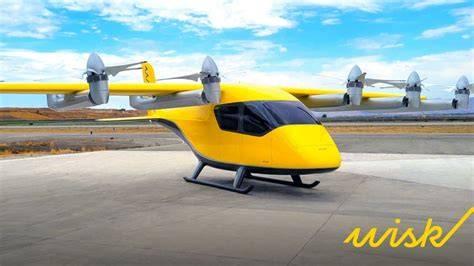
The transaction is particularly striking because the three subsidiaries represent very different pieces of the autonomous-flight puzzle. Wisk Aero has spent years developing autonomous electric vertical takeoff and landing aircraft. Insitu already operates a mature unmanned-aircraft business serving defense and surveillance customers around the world. SkyGrid, meanwhile, has focused on the digital infrastructure required to safely integrate highly automated aircraft into increasingly crowded airspace.
Together, those companies gave Boeing exposure to aircraft, autonomous systems, defense drones, and the software infrastructure needed to coordinate future air operations. Handing them to Archer therefore raises an obvious question: why would one of the world’s largest aerospace manufacturers surrender direct control over technologies that could define the next generation of aviation?
Boeing’s Autonomous Aviation Portfolio Has Changed Hands
The answer is unlikely to be explained by a single factor. Boeing has described the transaction as a strategic move designed to accelerate innovation, sharpen its focus on core businesses, strengthen its balance sheet, and give the transferred companies an environment in which they can move faster.
That argument has merit. Large aerospace companies are exceptionally good at developing complex aircraft, but their size can also make it difficult to move quickly in emerging markets. Autonomous air taxis, artificial intelligence, advanced air mobility, and drone operations require experimentation and rapid iteration. Archer Aviation is much smaller and has built its identity around precisely those technologies.
The deal gives Archer ownership of three businesses that complement its existing ambitions. More importantly, it potentially creates a broader technology platform rather than leaving Archer as simply another company developing an electric air taxi.
For Boeing, however, the transaction also represents a retreat from direct ownership. The manufacturer will receive a 19.75% stake in Archer Aviation, a board seat, and warrants that provide additional potential upside. Boeing will therefore remain financially connected to the technologies it is transferring, but its relationship with them is changing from owner and developer to strategic investor and partner.
That distinction matters. Boeing has not abandoned autonomous aviation completely. Instead, it has effectively chosen to place much of its autonomous aviation future inside Archer.
Why Wisk Aero Is Such an Important Transfer
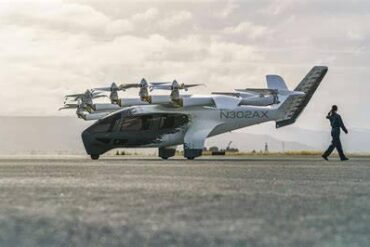
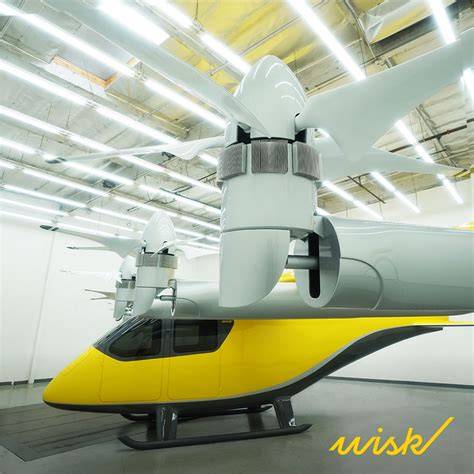
Wisk Aero is arguably the most visible part of the transaction because it represents Boeing’s long-running investment in autonomous passenger flight.
Wisk describes its aircraft as the world’s first four-passenger autonomous air taxi. Its development history stretches across six generations of eVTOL aircraft and more than 1,750 test flights. The company has therefore accumulated years of flight-test experience in an area where virtually every technical and regulatory question remains difficult.
The concept behind Wisk is fundamentally different from conventional aviation. Rather than relying on a pilot to operate the aircraft, the system is intended to enable autonomous passenger transportation. That requires far more than an electric propulsion system. Flight-control architecture, redundancy, perception, navigation, communications, airspace integration, emergency procedures, and certification all become critical.
For Archer, acquiring Wisk potentially provides access to years of engineering work that would otherwise take enormous amounts of time and money to reproduce.
It is also an unusually interesting corporate reunion. Archer and Wisk were once direct competitors, and their relationship became openly hostile. In 2021, Wisk sued Archer, alleging intellectual-property theft and claiming that Archer’s aircraft design incorporated protected elements from Wisk’s work. Archer subsequently countersued for $1 billion.
The dispute was eventually settled, and the settlement established an unusual foundation for the relationship that exists today. Wisk became Archer’s exclusive provider of autonomous technology while Wisk also received an option to acquire more than 13 million Archer shares at a nominal price.
That history makes the acquisition particularly remarkable. A former competitor has effectively become part of the company that once stood on the opposite side of an intellectual-property battle.
Insitu Gives Archer Something an eVTOL Company Cannot Easily Build
If Wisk represents the futuristic side of autonomous aviation, Insitu represents the proven commercial and defense side.
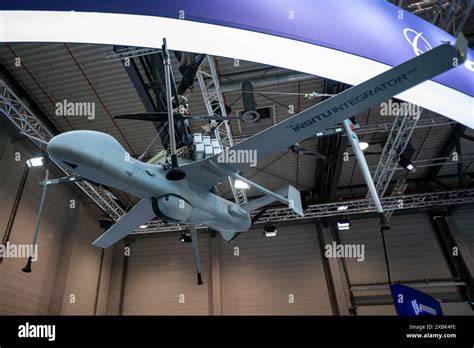
Insitu has manufactured thousands of unmanned aircraft and provides surveillance and reconnaissance systems to customers in numerous countries. Its products have been used by military organizations that require persistent intelligence, surveillance, and reconnaissance capabilities in environments where sending crewed aircraft may be inefficient or unnecessarily risky.
One of its notable systems is the RQ-21 Blackjack, also known as the Integrator. The small tactical unmanned air system has a maximum takeoff weight of 134 pounds, a wingspan of approximately 16 feet, and an 8-horsepower EFI piston engine. It can cruise at about 63 mph and has an endurance of up to 16 hours.
Those numbers reveal why Insitu is strategically valuable. This is not merely an experimental autonomous aircraft flying technology demonstrators. It is a mature unmanned-aircraft business with operational customers, established manufacturing capability, and real-world experience.
That experience could provide Archer with an immediate source of revenue and an established defense presence. The reference material indicates that Insitu generates roughly $200 million in annual revenue, a particularly important consideration for Archer given its reported $263.2 million second-quarter loss.
Archer has ambitious plans, but ambitious plans require capital. Acquiring a defense business with existing customers can provide a very different financial foundation from relying entirely on the eventual certification and commercialization of passenger eVTOL aircraft.
It also creates a natural bridge between civilian advanced air mobility and military autonomy. That bridge is becoming increasingly important as defense organizations explore autonomous aircraft, distributed systems, and hybrid vertical-takeoff platforms.
SkyGrid Could Be the Quietest but Most Important Asset
SkyGrid may attract less attention than Wisk or Insitu because it does not produce an aircraft that can be photographed on a runway. Yet its technology could become one of the most important parts of the transaction.
The future of autonomous aviation depends on more than capable aircraft. Thousands of automated aircraft cannot simply enter existing airspace and operate independently without sophisticated systems coordinating their movements.
SkyGrid focuses on this problem by developing technology intended to integrate advanced air mobility and highly automated aircraft operations into shared airspace.
That is an enormous challenge. Future airspace could contain conventional airliners, helicopters, military aircraft, drones, autonomous air taxis, cargo aircraft, emergency vehicles, and potentially thousands of other automated platforms. These aircraft will need to understand where they are allowed to fly, what other aircraft are doing, which routes are available, and how to respond when something unexpected happens.
Autonomy therefore has two dimensions. One is the aircraft itself. The other is the digital ecosystem surrounding the aircraft.
SkyGrid addresses the second problem. Bringing it together with Wisk’s autonomous-flight technology and Archer’s eVTOL development could give Archer a much broader position in the emerging autonomous aviation market.
Boeing Is Also Giving Up More Than Aircraft Technology
The transaction becomes even more significant when viewed alongside Boeing’s wider restructuring.
In November, Boeing completed a $10.55 billion sale of assets from its Digital Aviation Solutions business to Thoma Bravo. The transaction included Jeppesen, ForeFlight, AerData, and OzRunways.
These businesses cover areas including navigation data, electronic flight bags, flight planning, aircraft management, engine fleet planning, technical records, and operational software.
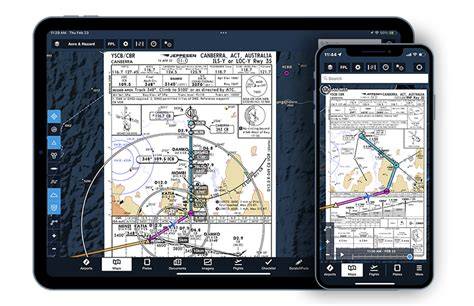
The pattern is difficult to ignore. Boeing is progressively reducing its ownership of businesses outside its most strategically important aircraft and defense operations.
Boeing CEO Kelly Ortberg described the digital-assets transaction as part of a strategy to focus on core businesses, supplement the balance sheet, and prioritize investment-grade credit ratings.
That financial context is crucial to understanding the Archer transaction.
Boeing has endured years of pressure surrounding its commercial-aircraft operations, with the 737 MAX and 777X programs demanding enormous engineering, manufacturing, certification, and financial resources. The company’s broader financial performance has also been under sustained pressure, with only one net profitable quarter since 2019 according to the reference material.
In that environment, management has to make choices about where billions of dollars of capital and thousands of engineering hours should go.
The answer appears increasingly clear: Boeing wants to concentrate resources on its core aircraft and defense businesses while maintaining exposure to promising technologies through partnerships and equity investments.
The 19.75% Archer Stake Changes the Meaning of the Deal
Calling the transaction a complete surrender would therefore be misleading.
Boeing is giving up direct ownership, but it is not walking away empty-handed. Its 19.75% stake in Archer Aviation gives Boeing a potentially valuable position if Archer succeeds.
The manufacturer will also receive a board seat, strengthening its influence over Archer’s strategic direction. Boeing has additional warrants that could allow it to purchase more Archer shares at predetermined prices, providing another potential financial benefit if Archer’s valuation increases substantially.
Perhaps even more important is the planned cooperation on artificial intelligence.
Boeing is expected to contribute data from more than two million flight hours toward an AI model that Archer will develop. That could become one of the most consequential aspects of the agreement because modern autonomous aviation depends heavily on data.
An autonomous aircraft must learn from enormous quantities of information about flight conditions, aircraft behavior, abnormal events, navigation, weather, airspace interactions, and operational procedures. Boeing’s historical flight data represents an asset that Archer could not easily recreate.
This means Boeing may have surrendered ownership of the autonomous-flight companies while retaining something potentially more valuable: a strategic connection to the data, AI development, and commercial upside generated by the new platform.
Archer’s Midnight and Halo Show Where the Company Is Going
The acquisition also arrives as Archer attempts to broaden its ambitions beyond a single passenger aircraft.
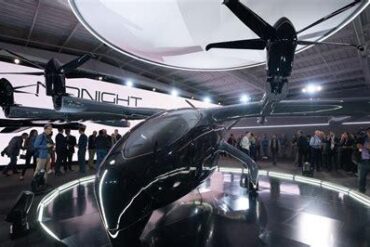
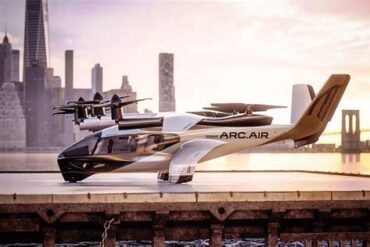
Its Midnight eVTOL is designed around relatively short passenger journeys, with a target range concept of approximately 62 miles or 100 kilometers. The aircraft is intended to make short-distance air transportation faster while using an all-electric propulsion system and a highly automated operational model.
Midnight remains central to Archer’s commercial strategy, but the company is also pursuing Halo, a platform designed around a wider range of civilian and defense applications.
Halo uses a hybrid powerplant rather than relying exclusively on battery-electric propulsion. That makes sense for missions requiring greater payloads, longer distances, or higher speeds. Its intended applications include logistics, freight, and emergency operations, as well as potential military missions.
This is where the Boeing acquisition becomes especially powerful strategically. Wisk brings autonomous passenger-aircraft development. Insitu brings proven unmanned defense aircraft. SkyGrid brings airspace-management technology. Archer brings eVTOL development and a growing ambition to build a diversified aerospace platform.
The combined business is therefore much broader than an electric air-taxi manufacturer.
Boeing’s Decision Could Be a Strategic Retreat or a Brilliant Shortcut
There are two ways to interpret Boeing’s decision.
The optimistic interpretation is that Boeing recognized an emerging technology sector that could develop faster under a more focused owner. Instead of spending enormous amounts of corporate resources managing autonomous aviation subsidiaries, Boeing can let Archer execute while retaining a large equity position.
Under that scenario, Boeing gets the best of both worlds. It reduces operational complexity while maintaining substantial upside if autonomous aviation becomes a major transportation and defense market.
The more skeptical interpretation is that Boeing simply cannot afford to pursue every future technology at the same time.
The company is confronting enormous demands across its commercial-aircraft programs, production systems, certification efforts, supply chain, defense operations, and balance sheet. Autonomous aviation is exciting, but it is also capital-intensive and uncertain. Certification timelines are difficult to predict, market demand remains unproven, and competing technologies could change the economics of the sector.
From this perspective, transferring Wisk, SkyGrid, and Insitu is less about Boeing voluntarily abandoning the future and more about choosing where it can realistically compete today.
Archer Has Won a Huge Opportunity — But It Has Also Inherited Huge Expectations
For Archer, the transaction could be transformative.
The company now has access to technology, intellectual property, engineering expertise, defense capabilities, software, data, and established businesses that dramatically expand its potential addressable market.
But the deal also raises expectations.
Archer’s reported $300,000 in revenue during 2025 demonstrates the enormous gap between the company’s ambitions and its current commercial scale. The addition of Insitu could materially change that picture, but integrating three very different businesses will not be easy.
Wisk, Insitu, and SkyGrid operate in different markets, with different customers, technologies, regulatory requirements, and corporate cultures. Combining them into a coherent “physical AI” aerospace platform will require more than simply changing ownership documents.
The acquisition gives Archer scale. It does not automatically give Archer execution.
What Boeing’s Autonomous Flight Future Now Looks Like
The most important consequence of the transaction is that Boeing’s autonomous aviation strategy will increasingly be indirect.
Instead of developing every technology internally, Boeing can provide capital, data, aerospace expertise, strategic guidance, and access to a massive installed knowledge base while Archer handles the operational integration of the acquired companies.
That is a major philosophical shift for an aerospace company that has historically built and controlled much of its technological ecosystem.
The future success of the strategy will depend on whether Archer can turn these assets into a functioning business rather than a collection of valuable subsidiaries. If it succeeds, Boeing’s decision could eventually look remarkably smart. Boeing would have reduced its financial burden while maintaining substantial exposure to a potentially enormous autonomous aviation market.
If Archer struggles, however, the transaction could instead be remembered as a sign that Boeing had to retreat from emerging technologies because its core business demanded too much attention.
For now, the clearest conclusion is that Boeing has not abandoned autonomous flight so much as outsourced its most ambitious autonomous-flight bets. Wisk, Insitu, and SkyGrid are now part of Archer’s much broader aerospace strategy, while Boeing retains equity, board representation, warrants, and access to the development of a new AI platform.
That makes this deal more complicated than a simple sale. Boeing is stepping away from the cockpit, but it has deliberately kept a seat in the cabin.
And if Archer can turn autonomous aircraft, defense drones, airspace software, and flight data into one scalable platform, Boeing may eventually discover that giving up direct control was precisely what allowed its autonomous aviation ambitions to move faster.