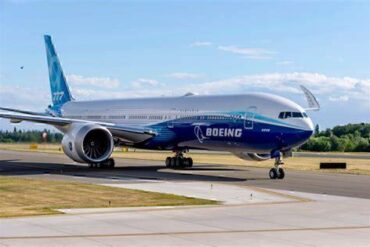
Boeing’s next-generation freighter, the 777-8F, is moving from long-anticipated concept to operational reality, with the manufacturer now targeting early 2029 for the aircraft’s first commercial service. The timeline reflects the hard-earned lessons of a post-crisis certification environment, where engineering maturity and regulatory confidence now dictate schedules more than marketing optimism. For cargo airlines planning fleet renewals across the late 2020s and 2030s, the 777-8F is not just another freighter option. It is a structural shift in how heavy, long-range air cargo will be moved in a world increasingly allergic to four engines, volatile fuel prices, and rising emissions standards.
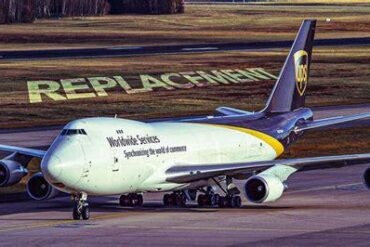
The 777-8F sits at the apex of Boeing’s freighter lineup, designed to inherit the role once dominated by the Boeing 747-400F while preserving the operational simplicity of twin-engine fleets. It builds on the proven economics of the current 777F, but stretches capability into payload classes that were previously the domain of much larger aircraft. This is not a symbolic upgrade. It is a redefinition of what a two-engine freighter can do on ultra-long-haul routes linking Asia, Europe, the Middle East, and North America, where dense cargo, high-value goods, and time-critical logistics demand both muscle and efficiency.
The revised service-entry target is inseparable from the broader 777X program. Boeing plans to introduce the passenger 777-9 first, with certification expected in 2027. Only after that milestone can the 777-8F follow, roughly two years later. This sequencing is not cosmetic. The freighter shares the same core airframe, composite wing, and systems architecture as the passenger variant. Regulatory approval of those foundations clears a wide path for the cargo version, even if the freighter avoids the complexities of cabin interiors and passenger safety certification. In practical terms, the 777-9’s approval becomes the keystone holding up the entire 777X arch.
The 777-8F as Boeing’s New Cargo Flagship
Boeing’s dominance of the dedicated freighter market has been built on a simple strategy: provide aircraft that scale logically from regional express workhorses to global heavy lifters. The 737-800BCF handles short-haul parcel flows. The 767-300F anchors medium-range networks. The current 777F covers long-haul trunk routes. The 777-8F goes one rung higher, offering near-747 payload capability with twin-engine economics that are simply more compatible with modern airline balance sheets.
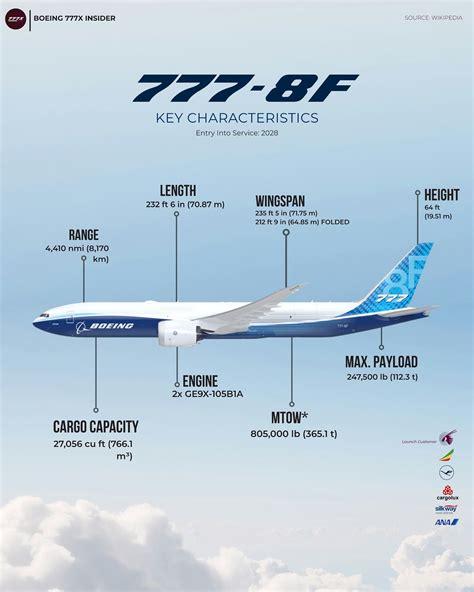
This aircraft is engineered to carry 31 main-deck pallets, preserving compatibility with existing 777 freighter logistics chains. That choice sounds mundane, but it matters. Cargo networks thrive on standardization. Ground equipment, loading procedures, warehouse layouts, and scheduling software are all tuned to pallet counts and door positions. By matching the 777F layout while expanding payload and range, Boeing allows airlines to scale up without reinventing their operational choreography.
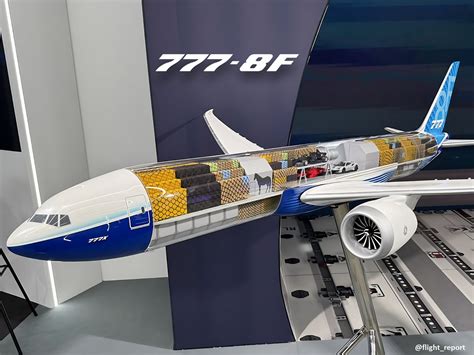
The 777-8F’s massive composite wing, the longest ever built for a commercial airliner, introduces another quiet revolution: folding wingtips. The aircraft’s wingspan in flight pushes aerodynamic efficiency to new levels, but on the ground, the tips fold upward so the jet can fit into the same airport gate categories as today’s 777s. This is not a novelty feature. It is infrastructure diplomacy. Airlines can deploy the aircraft across existing cargo hubs without waiting for airports to widen taxiways or rebuild stands, saving years of friction and billions in capital expenditure across the global network.
At the heart of the aircraft are General Electric GE9X engines, the most powerful and fuel-efficient turbofans ever certified for commercial service. The GE9X’s high bypass ratio and advanced materials translate into lower fuel burn per ton-mile and materially reduced noise footprints. For cargo airlines increasingly hemmed in by nighttime noise restrictions around major hubs, quieter departures are not public relations perks. They are operating rights.
Why Early 2029 Matters for Cargo Planning Cycles
Fleet planning in cargo aviation runs on long horizons. Freighters are expensive, capital-intensive assets that airlines expect to keep in service for decades. The early 2029 target for the 777-8F lands at a pivotal moment. By the late 2020s, large portions of the 747-400F fleet will be economically exhausted. Maintenance costs rise steeply with age, and four-engine fuel burn becomes harder to justify as sustainability regulations tighten. Airlines are not sentimental. They will retire iconic aircraft when the numbers turn red.
The gap between today’s 777F and the capabilities demanded by heavy-lift routes has been growing. The 777F is efficient and reliable, but it cannot fully replicate the payload-range envelope of the 747 on certain long sectors. The 777-8F is designed to close that gap without dragging four engines into the future. Early 2029 is soon enough to intercept the retirement wave, yet late enough that certification discipline can stabilize the program. It is an uncomfortable compromise for airlines hungry for capacity, but it is a safer one for fleets that cannot afford technical surprises.
This timing also intersects with global emissions policy. New environmental standards scheduled to take effect later in the decade will push airlines toward newer, cleaner aircraft. The 777-8F’s efficiency gains over older widebody freighters are not incremental. They are strategic. Lower emissions per ton-mile become a license to operate in regions where regulatory pressure is climbing. Cargo is not immune to climate politics. It is simply been slower to feel the squeeze.
Orders, Launch Customers, and Strategic Signal Value
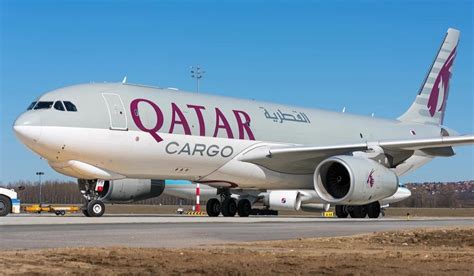
The 777-8F launched in 2022 with Qatar Airways Cargo as the anchor customer, an endorsement that carries weight in cargo circles. Qatar’s network is built around ultra-long-haul connectivity through Doha, precisely the kind of operation that benefits from high-payload, long-range freighters. Since launch, more than 60 firm orders have been placed by operators including Cargolux, Lufthansa Cargo, China Airlines, ANA Cargo, and Silk Way West Airlines. These are not speculative buyers. They are network carriers with dense intercontinental freight flows and a clear view of their replacement cycles.
The pattern behind these orders tells a story. European carriers are planning for the gradual retirement of 747s and older 777Fs. Asian operators are aligning with export-driven growth in electronics, pharmaceuticals, and high-value manufacturing. Middle Eastern cargo hubs are reinforcing their role as global transshipment points. The 777-8F becomes a strategic instrument in each case, not merely a piece of hardware.
The early start of wing component manufacturing in Everett marks the transition from promise to physical reality. Production milestones matter because they lock in supplier contracts, workforce commitments, and program momentum. The 777-8F’s dependency on the 777-9’s certification remains the biggest variable, but the industrial machine is now moving. Once factories spin up, inertia works in favor of delivery schedules rather than against them.
Converted 777-300ER Freighters and the Market’s Two-Lane Future
One of the most intriguing competitive pressures on the 777-8F does not come from Airbus, but from within Boeing’s own ecosystem. Converted 777-300ER freighters are entering service as passenger jets retire from long-haul fleets. These conversions offer impressive volumetric capacity, sometimes even exceeding the 777-8F in cubic terms due to the -300ER’s longer fuselage. On paper, that looks like a threat.
In practice, the market is bifurcating. Converted freighters excel at moving light, bulky cargo such as e-commerce parcels, apparel, and consumer goods. Their economics make sense when volume, not weight, is the limiting factor. The 777-8F, by contrast, is engineered for dense, heavy cargo. Its reinforced floors, higher maximum takeoff weight, and purpose-built cargo systems allow it to haul machinery, automotive components, and industrial equipment over intercontinental distances with payloads that conversions struggle to sustain efficiently.
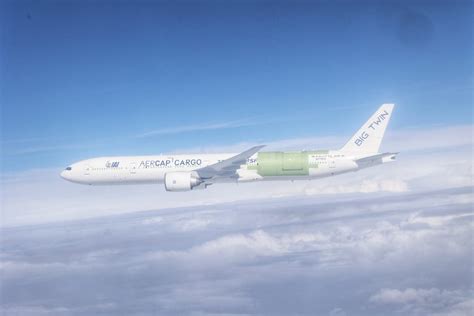
This is not a zero-sum contest. The retirement of hundreds of 747 freighters creates a capacity vacuum that no single aircraft type can fill alone. Converted 777-300ERs will absorb the volumetric side of that demand. The 777-8F will take on the structural payload missions where weight matters more than space. The market needs both, and airlines will likely operate mixed fleets that optimize for different cargo profiles across their networks.
The Quiet Retirement of the Four-Engine Era
The 747’s cultural gravity is immense. It defined heavy air cargo for decades, with nose-loading capability and payload classes that felt untouchable. Yet economics are ruthless. Four engines mean higher fuel burn, more maintenance events, and greater exposure to parts shortages as production lines close. As sustainability reporting tightens and fuel price volatility persists, the business case for keeping aging 747s airborne erodes further.
The 777-8F is not a romantic replacement. It cannot replicate nose-loading, and certain outsize cargo missions will still require specialized aircraft. What it offers is something more valuable in modern logistics: predictable economics. Airlines can schedule long-haul routes with confidence that fuel efficiency, maintenance cycles, and regulatory compliance will remain stable over decades. In a network world dominated by just-in-time supply chains and time-sensitive manufacturing, predictability beats nostalgia.
The gradual phase-out of the 747 also reshapes cargo hub infrastructure. Airports that once tailored operations to four-engine giants will adapt to fleets dominated by large twins. Noise footprints shrink. Fuel storage logistics change. Maintenance ecosystems pivot toward GE9X-powered aircraft. The 777-8F is not just a new airplane. It is a pivot point in how cargo aviation organizes itself physically and economically.
The 777X Program as the Structural Backbone
The 777-8F cannot escape the gravity of the broader 777X program. The composite wing and GE9X engines that underpin the freighter are shared with the passenger 777-9 and 777-8 variants. Certification of these core technologies sets the regulatory precedent for all derivatives. This interdependence is both a risk and a strength. Delays in the passenger program ripple into the freighter timeline, but once the foundation is certified, derivative approval becomes more predictable.
Passenger airlines have placed more than 500 orders for the 777X family, with Emirates alone accounting for a massive share. That scale matters for the freighter. A large installed base of engines, wings, and systems creates a global maintenance ecosystem that cargo operators can tap into. Parts availability improves. Training pipelines mature. Reliability data accumulates. The freighter benefits from a support network built on passenger volumes, a rare case where belly-cargo aviation indirectly subsidizes dedicated freighter reliability.
What Early 2029 Means for Global Trade Lanes
By the time the first 777-8F enters service, global trade patterns will be shaped by forces already in motion: e-commerce saturation, pharmaceutical cold-chain expansion, and the reconfiguration of manufacturing supply chains across Asia, Europe, and North America. Transpacific and transatlantic lanes will remain the backbone of high-value air freight, with Middle Eastern hubs acting as connective tissue between continents.
For US cargo hubs, the 777-8F’s arrival offers a new tool for long-haul reach without four-engine overhead. Routes linking Memphis, Louisville, Anchorage, Los Angeles, and Chicago to Asia and Europe gain flexibility. Dense cargo that once demanded 747 capacity can be handled with twin-engine efficiency. This changes how airlines design schedules, allowing more frequent services with slightly smaller aircraft that still meet payload needs, smoothing peaks in demand without resorting to chartering older, less efficient freighters.
The early 2029 entry target also aligns with fleet renewal cycles that many carriers set a decade in advance. Orders placed today are bets on the shape of trade tomorrow. The 777-8F represents a wager that heavy air cargo will remain essential to global commerce, even as maritime and rail compete aggressively on cost. Speed still matters when factories shut down without parts, when vaccines must cross oceans in hours, and when high-value electronics lose relevance by the week.
The 777-8F’s delayed but clearer timeline reflects a more sober aviation industry, one that has learned to value certification discipline over optimistic promises. When it finally enters service in early 2029, it will not merely join fleets. It will redraw the ceiling of what twin-engine freighters are expected to carry across the planet’s longest air routes.


![Big Drones & Heavy Lift Drones: A Comprehensive Guide for Drone Pilots [New for 2025]](https://boltflight.com/wp-content/uploads/2025/05/big-drones-heavy-lift-drones-comprehensive-guide-drone-pilots-new-2025-370x247.jpg "Big Drones & Heavy Lift Drones: A Comprehensive Guide for Drone Pilots [New for 2025]")