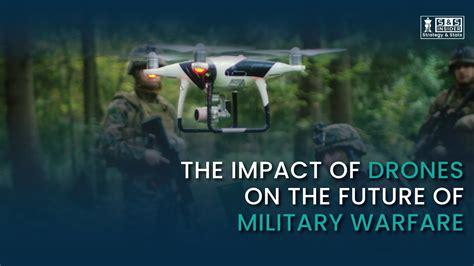
Modern warfare is undergoing a radical transformation, not through the replacement of soldiers and jets by drones and artificial intelligence, but through the strategic integration of old and new technologies. In recent years, the battlefields of Ukraine and the skies over Iran have provided vivid demonstrations of how military power is evolving—and what it means for global security. The question is no longer if AI and unmanned systems will reshape the future of combat, but how they can be embedded meaningfully into national defense strategies.
The notion of high-tech systems entirely supplanting traditional forces is seductive but ultimately misguided. The real evolution is subtler and more complex: it’s about combining legacy assets with digital innovation, manned operations with autonomy, and brute force with algorithmic precision.
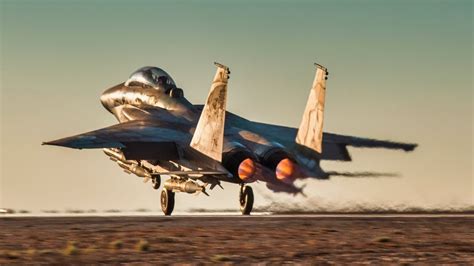
Ukraine and Israel: Real-World Case Studies in Modern Conflict
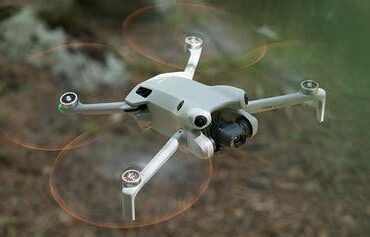
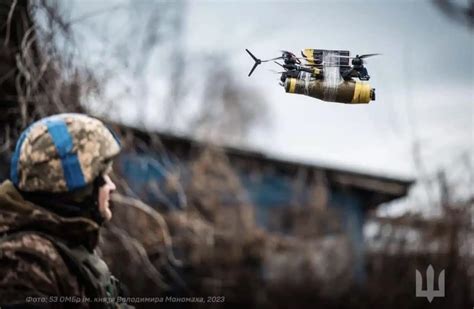
When Ukrainian drones penetrated deep into Russian territory and damaged strategic bombers in Operation Spider’s Web, it shocked defense analysts worldwide. These were commercially modified drones, some costing less than $1,000, which inflicted millions in damage. Ukraine’s approach highlighted the power of asymmetric warfare—where innovation, agility, and improvisation overcome numerical or technological disadvantages. With limited resources, Ukraine turned basic hardware into strategic assets, undermining the invincibility of one of the world’s largest militaries.
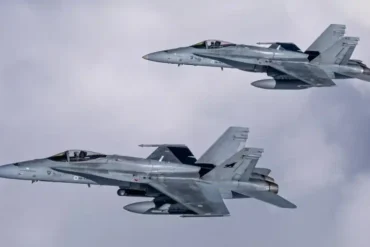
Meanwhile, Israel’s strike on Iranian nuclear facilities presented a different, yet equally illuminating, model of combat evolution. In one of the most sophisticated coordinated attacks in modern history, Israel deployed over 200 aircraft to launch more than 300 precision munitions on 100 high-value targets. But that wasn’t the only element. Israel simultaneously used quadcopters launched from inside Iranian territory, smuggled weapons systems, and advanced human intelligence to cripple anti-air defenses and assassinate nuclear officials. The operation blended cyber warfare, AI-driven analysis, covert special operations, and conventional air power into one seamless mission.
This wasn’t about drones replacing jets. It was about harmonizing every available tool to achieve total battlefield superiority.
Why Integration Is the Real Revolution
The lesson from these two conflicts is clear: superiority in modern warfare depends on synthesis, not substitution. Gone are the days when dominance was defined by sheer numbers of tanks, jets, or missiles. Today, speed, coordination, and adaptability dictate outcomes. The future doesn’t belong to the side with more hardware, but to the one with better software—mental, digital, and organizational.
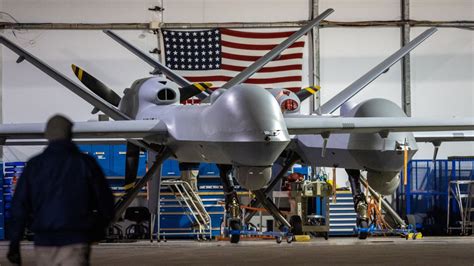
This is where the United States military faces a significant challenge. America’s defense spending dwarfs all other nations, but its systems often operate in silos. Legacy platforms—stealth fighters, heavy tanks, nuclear submarines—are powerful but often lack integration with AI-enabled systems or unmanned technologies. These platforms are enhanced by upgrades, but not redefined by them.
For example, AI is increasingly used to assist in targeting and surveillance, but rarely in operational decision-making or command chains. Cyber capabilities exist but are often deployed separately from kinetic operations. Most troubling, U.S. procurement processes remain rigid, bureaucratic, and deeply resistant to the kind of fast-cycle adaptation that defines success in contemporary conflicts.
China’s Model: Full-Spectrum Military Integration
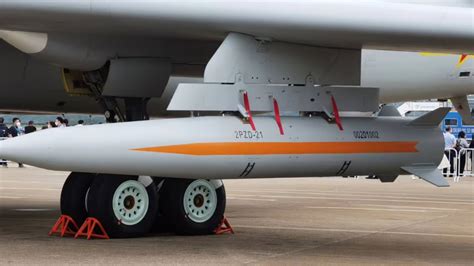
In contrast, China’s military modernization is unfolding at an astonishing pace. In 2021, China tested a hypersonic missile that circumnavigated the globe before striking its target. While the missile itself was a technological feat, the true significance lay in the systemic integration it demonstrated: space-based sensors, hypersonic propulsion, and precision strike systems all functioning in concert. It was, in the words of then Joint Chiefs Chairman Gen. Mark Milley, “very close” to a Sputnik moment.
Chinese military doctrine is clearly focused not on gadgets, but on capabilities as systems. This involves networked coordination between satellites, drones, ground assets, AI processors, and human decision-makers. Rather than treating new technology as a bolt-on accessory, China is rebuilding its military architecture from the ground up to fit the 21st century battlespace.
The U.S. Response: Innovation Without Integration
The U.S., by contrast, often pursues technological innovation without fully embedding it into strategic doctrine. This disjointed approach leaves the military with cutting-edge tech that is underutilized or misaligned with real-time operational needs. Moreover, a risk-averse culture, legacy procurement models, and compartmentalized command structures delay adaptation. By the time a promising drone platform or AI application is approved and deployed, the battlefield may have already changed.
This is especially problematic when confronting non-traditional adversaries. In Iraq and Afghanistan, insurgent groups exploited commercial tech—cell phones, GPS, off-the-shelf drones—to challenge a far more sophisticated U.S. force. These groups adapted faster, operated leaner, and often outmaneuvered slow, hierarchical U.S. structures.
Private Sector as a Battlefield Catalyst
To accelerate integration, democratic nations must turn to their entrepreneurial ecosystems. In Silicon Valley and Tel Aviv, startups are already pushing the boundaries of military technology—from autonomous swarms to next-gen cybersecurity, quantum encryption to battlefield robotics. Venture capital firms, like 1948 Ventures, are funding dual-use technologies capable of disrupting entire domains of warfare.
But these innovations will only matter if they’re plugged into real-world military use cases. That requires rethinking procurement pipelines, flattening command structures, and giving young officers access to experimental tools. It also means viewing failure as part of innovation—something the traditional defense establishment often avoids.
Startups thrive on iteration, speed, and risk-taking—precisely what today’s military threats demand. The military of the future must behave more like a startup: agile, collaborative, and unafraid to pivot.
Training and Culture Must Catch Up
Technology alone won’t save any military force. Without organizational change, even the best tools falter. The U.S. military must rewrite its training programs, rules of engagement, and operational doctrines to reflect a world where AI is a co-pilot, drones are frontline scouts, and data is as valuable as firepower.
Every commander should be fluent in drone tactics. Every planning exercise should include cyber and information warfare components. Decision-making must become decentralized, faster, and responsive to machine-generated insights.
Democracies Must Evolve or Be Outpaced
In an era of tightening defense budgets and growing global instability, doing more with less is not a preference—it’s a necessity. Democracies are uniquely constrained by public accountability, legal oversight, and deliberative decision-making. These are strengths, but they must be reconciled with the demands of a battlefield that rewards immediacy and adaptability.
This means making integration not a goal but a default state. AI should be embedded in planning systems. Drones should be integrated into every unit’s operational design. Cyber teams should train alongside infantry. Most importantly, military leaders must be empowered to experiment, learn, and fail forward.
Conclusion: The Future Belongs to the Integrators
The wars of tomorrow will not be won by those who simply accumulate the most drones or develop the smartest algorithms. They will be won by those who seamlessly orchestrate a symphony of old and new, man and machine, strategy and spontaneity.
Ukraine’s improvisation proved that even basic tech, wielded creatively, can yield asymmetric advantage. Israel’s orchestration showed that deep integration creates unstoppable momentum. The United States and its allies must embrace both lessons.
This isn’t a choice between soldiers and software, pilots and processors. It’s about mastering both—and ensuring they function together, at speed, and with clarity of purpose. That is the true revolution in military affairs.