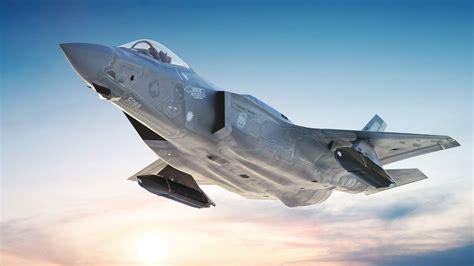
The F-35 Lightning II has become synonymous with air superiority in the 21st century. Developed by Lockheed Martin under the Joint Strike Fighter program, this fifth-generation combat aircraft has changed the dynamics of aerial warfare through a fusion of stealth, advanced avionics, supersonic speed, and multirole versatility. Yet, despite these unmatched capabilities, a question remains: can the F-35 fly without a pilot?
The Human Element: Why the F-35 Still Needs a Pilot
As of mid-2025, the F-35 remains a manned aircraft. While its software suite, including the Autonomic Logistics Information System (ALIS) and the advanced mission systems, push the boundaries of automation, the aircraft still requires a human pilot inside the cockpit to operate. This is largely due to its foundational design: the F-35 was conceived from the beginning as a piloted platform, meant to provide high levels of situational awareness, decision-making capabilities, and responsiveness in combat scenarios.
The closest the F-35 has come to “flying itself” occurred in 2023, when an F-35B kept flying for 11 minutes after its pilot ejected. The aircraft continued on its programmed heading under the guidance of its automatic flight control system before crashing approximately 70 miles away. While notable, this incident did not demonstrate autonomy, but rather a rigid adherence to pre-set instructions — not a capacity for independent operation.
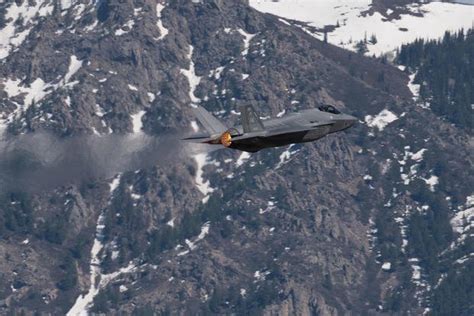
This distinction is critical. The F-35 can stabilize itself mid-flight, make minor corrections, and adapt to flight envelope parameters, but it cannot make mission-critical decisions, conduct tactical maneuvers, or adapt to dynamic threats without direct human input.
Remote Operations and the Drone Question
The United States Air Force has become increasingly proficient in the use of uncrewed aerial vehicles (UAVs), employing them for reconnaissance, strike missions, and ISR (Intelligence, Surveillance, Reconnaissance) duties across the globe. The success of drones like the MQ-9 Reaper and the classified RQ-180 have led to calls for making frontline combat aircraft optionally crewed.
However, converting a platform like the F-35 to fly autonomously or via remote control presents serious technical and strategic challenges. Unlike drones, which are built from the ground up to be remotely piloted or autonomous, the F-35 is built around the human-machine interface. Systems like Distributed Aperture System (DAS) and the Electro-Optical Targeting System (EOTS) are designed to enhance pilot cognition, not replace it. Redesigning these systems for full autonomy would require significant reengineering.
NGAD and the Rise of Autonomous Air Combat
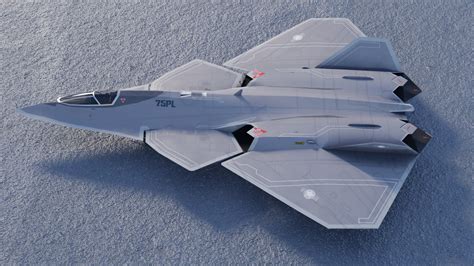
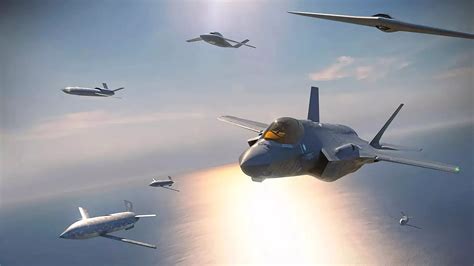
The most credible path to an autonomous or semi-autonomous F-35 lies in the Next Generation Air Dominance (NGAD) program. This initiative seeks to replace current fighters with a family of systems, including crewed sixth-generation aircraft and fleets of Collaborative Combat Aircraft (CCAs) — highly advanced UAVs that can support or operate independently of human-piloted aircraft.
Within this vision, the F-35 could potentially take on a drone mothership role or fly alongside autonomous wingmen. Integration into such a network would necessitate secure data links, AI decision-making modules, and robust cybersecurity protocols. Lockheed Martin has indicated that many of these technologies are being tested in parallel with NGAD development and could be “ported” to the F-35 platform within a relatively short time frame.
Lockheed Martin’s Vision: Making Pilots Optional
In May 2025, Lockheed Martin CEO Jim Taiclet revealed at Bernstein’s Strategic Decisions Conference that the company could feasibly make the F-35 pilot-optional within two to three years. According to Taiclet, “We could make the F-35 pilot optional over a relatively modest time frame based on a lot of the development we’ve done.” He specifically referenced technological advances made under the NGAD and CCA umbrella.
This ambitious timeline suggests that within 2027-2028, the U.S. military may field a variant of the F-35 capable of flying autonomously or under remote supervision, depending on mission requirements. This would require significant software upgrades, modular hardware changes, and a new doctrine of operation — but it is technically within reach.
Implications of an Autonomous F-35 Variant
The ability to fly the F-35 without a human onboard would dramatically enhance its combat survivability, maneuverability, and mission endurance. Without the physiological limitations of a pilot — particularly the G-force constraints — the aircraft could execute tighter turns, more aggressive dogfighting tactics, and riskier maneuvers in contested environments.
Furthermore, removing pilots would open the door for deploying F-35s on missions deemed too dangerous for human survival, such as high-threat anti-access/area denial (A2/AD) zones, or penetrating heavily defended airspace during the opening stages of a conflict.
Another key advantage is the ability to conduct long-duration surveillance or strike missions, where pilot fatigue is currently a limiting factor. Ground-based crews could rotate during the mission or operate in shifts, keeping the aircraft active far beyond the duration possible with a single onboard pilot.
Challenges in Making the F-35 Autonomous
Despite the promise, transitioning the F-35 to a fully autonomous or remote-capable aircraft isn’t without technical, operational, and ethical hurdles:
- Sensor Fusion: The aircraft’s ability to process and present data from multiple sources is tuned for human interpretation. Adapting it for AI decision-making will require redesigning cognitive layers of its software.
- Redundancy and Failover Systems: An autonomous aircraft must be fail-safe under a wide range of failure scenarios — from GPS denial to cyberattacks.
- Rules of Engagement (ROE): Current military doctrine relies heavily on human judgment in lethal scenarios. Autonomy would require revisiting legal and ethical frameworks.
- Cost and Resource Allocation: Integrating such systems would require billions in funding and coordination across military branches.
International Interest and Allied Integration
Given that the F-35 program involves more than a dozen allied nations, the question of autonomy doesn’t only impact the U.S. Air Force. Countries like the UK, Australia, Italy, and Japan, all of whom operate or plan to operate F-35 fleets, would need to align on security standards, control protocols, and ethical boundaries around autonomous warfare.
Some of these countries are already investing in drone swarming and manned-unmanned teaming (MUM-T) technologies. The United Kingdom’s Loyal Wingman program, for example, seeks to field semi-autonomous UAVs that can fly in concert with F-35s, absorbing risk and expanding mission capabilities.
What the Future Holds
As air combat evolves into a more networked and digital battlespace, the F-35 is poised to remain relevant by adapting to these new paradigms. The concept of an optionally piloted F-35 fits into this trajectory. Not only would such aircraft be more lethal and survivable, but they would also amplify the effects of AI-driven warfare by acting as force multipliers.
While the aircraft today requires a human at the stick, the groundwork is being laid for a future where the pilot may sit in a bunker halfway across the globe — or perhaps not be human at all. And in that future, the F-35 might not just be the most advanced fighter jet in the world, but also the most intelligent.
Conclusion: A Jet on the Brink of Autonomy
The question of whether an F-35 can fly without a pilot is not a matter of current capability, but of imminent possibility. Technologically, we are just a few short steps away. Strategically, the benefits are compelling. Logistically and ethically, however, the challenge is monumental.
But make no mistake: within a few years, we may witness the rise of a pilot-optional F-35, redefining air power, deterrence, and the very nature of aerial combat. Whether piloted by humans or algorithms, the future of the F-35 is about to get a whole lot smarter.