The global balance of naval power is entering a new and consequential phase as China accelerates the expansion and modernization of its submarine fleet. According to assessments from the U.S. Office of Naval Intelligence, the People’s Liberation Army Navy (PLAN) could operate around 70 submarines by 2027, with the fleet potentially growing to approximately 80 boats by 2035. This steady increase reflects a deliberate strategy to strengthen China’s undersea warfare capabilities while projecting greater military influence across the Indo-Pacific maritime theater.
For decades, submarine forces have served as the quiet backbone of naval deterrence and sea control. They operate unseen beneath the surface, capable of launching long-range missiles, intercepting naval task forces, and conducting strategic surveillance missions. China’s expanding undersea fleet signals a major shift in regional naval dynamics and represents one of the most important military developments shaping the future of maritime competition with the United States Navy.
As China modernizes its submarine arsenal with nuclear-powered attack submarines, guided-missile submarines, and ballistic missile submarines, the country is gradually transforming its naval doctrine. Instead of focusing solely on coastal defense, Beijing is building a force capable of sustained operations far beyond its immediate waters, extending Chinese naval reach into the Western Pacific, the Indian Ocean, and potentially even the Arctic and Atlantic in future decades.
China’s Growing Undersea Fleet and Strategic Ambitions
Recent intelligence estimates suggest that China’s submarine inventory could reach approximately 70 vessels by 2027, driven by the addition of several new nuclear-powered submarines and the gradual retirement of older Soviet-designed or early-generation Chinese boats. This projected expansion includes six nuclear-powered guided-missile submarines, three smaller-class nuclear attack submarines, and two ballistic missile submarines, significantly strengthening China’s undersea strike capabilities.
By 2035, the number of Chinese submarines may approach 80 vessels, marking one of the largest submarine fleets in the world. Roughly half of these submarines are expected to be nuclear-powered, a transformation that dramatically increases their operational endurance and geographic reach. Unlike conventional diesel-electric submarines that must periodically surface to recharge batteries, nuclear submarines can remain submerged for months, enabling long-duration patrols far from Chinese waters.
The strategic implications are substantial. A larger nuclear-powered fleet allows China to maintain persistent patrols in critical maritime zones, including the South China Sea, the Philippine Sea, and strategic shipping routes connecting East Asia to the Middle East and Europe.
The “Near Seas Defense, Far Seas Protection” Naval Strategy
China’s submarine expansion is closely tied to a broader maritime doctrine known as “Near Seas Defense, Far Seas Protection.” This strategy combines traditional coastal defense with the capability to operate far beyond China’s immediate maritime boundaries.
Under this framework, submarines perform a range of crucial roles, including:
- Strategic nuclear deterrence patrols
- Sea-lane interdiction and blockade operations
- Intelligence collection and surveillance
- Precision strikes against naval fleets and land targets
Submarines provide a stealthy platform capable of operating inside contested environments where surface ships and aircraft may face higher risks. When combined with satellite surveillance, naval aviation, and surface combatants, China’s submarine force becomes a powerful instrument for controlling key maritime corridors.
The South China Sea and East China Sea remain particularly important operational areas. These regions serve as gateways to the wider Pacific Ocean, and maintaining submarine dominance in these waters is essential for protecting Chinese naval movements and ballistic missile patrol areas.
Modern Submarine Classes Powering China’s Naval Transformation
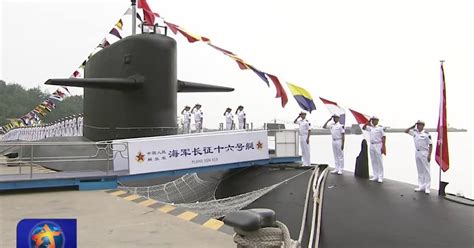
China’s submarine fleet consists of multiple classes of vessels, each designed for specific operational missions. The rapid development of new submarine technologies is transforming these platforms into highly capable systems equipped with advanced sonar arrays, cruise missile launchers, and improved acoustic stealth.
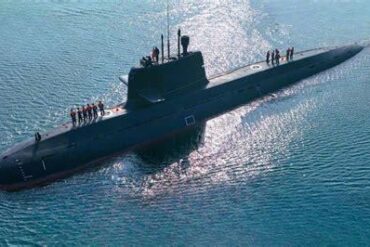
One of the core pillars of the fleet is the Type 093 Shang-class nuclear-powered attack submarine. These submarines serve as the PLAN’s primary undersea hunter-killers, designed to track and engage enemy submarines and surface ships. The newest Shang III variant incorporates significant upgrades, including ducted propulsors for quieter propulsion and improved acoustic dampening technologies.
These submarines also feature vertical launch systems capable of firing cruise missiles, allowing them to strike naval targets or land-based infrastructure from concealed underwater positions. Since 2022, at least six Shang III submarines have been launched, highlighting the pace of China’s submarine construction program.
Another key platform under development is the Type 095 nuclear-powered guided-missile submarine, which is designed to provide long-range precision strike capabilities. Equipped with advanced missile systems, the Type 095 will allow China to conduct covert attacks against both maritime targets and strategic land installations.
Ballistic Missile Submarines and Nuclear Deterrence
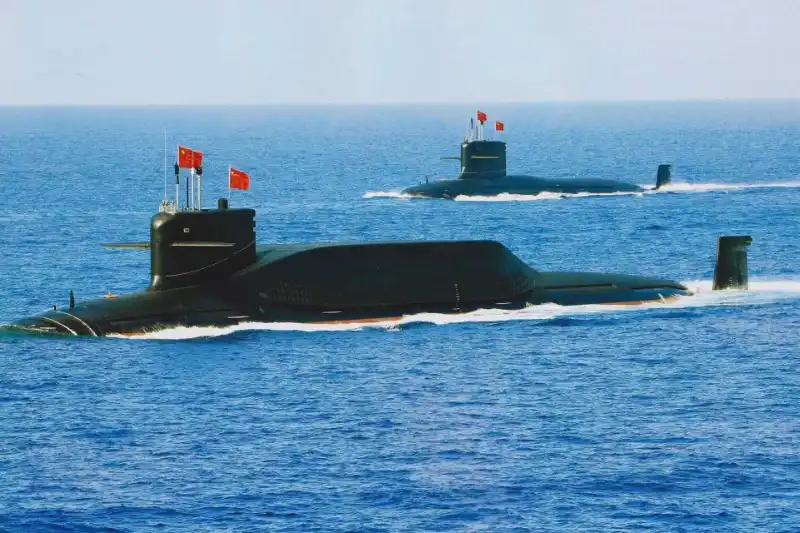
Among the most strategically significant components of China’s submarine fleet are its ballistic missile submarines (SSBNs), which form a crucial element of the country’s nuclear deterrent.
The current backbone of this capability is the Type 094 Jin-class submarine, which carries the JL-3 submarine-launched ballistic missile (SLBM). These missiles have the range to strike intercontinental targets, allowing China to maintain a credible second-strike capability even if its land-based nuclear forces were compromised.
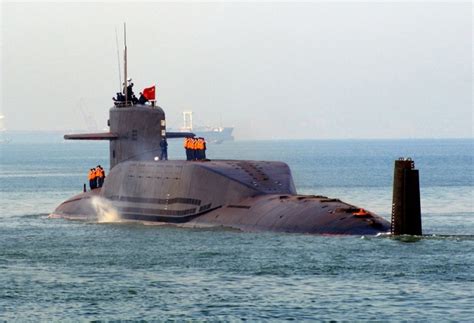
The Jin-class submarines often conduct patrols within protected maritime zones near the first island chain, sometimes referred to as “bastion areas.” These areas are defended by layers of naval forces, surveillance systems, and anti-submarine warfare assets designed to shield strategic submarines from enemy detection.
China is also working on the next-generation Type 096 ballistic missile submarine, expected to carry the JL-4 intercontinental submarine-launched ballistic missile. This new missile system could potentially strike targets across large portions of the continental United States while remaining within waters close to China’s coastline, significantly strengthening China’s strategic deterrence posture.
Diesel-Electric Submarines and Coastal Defense
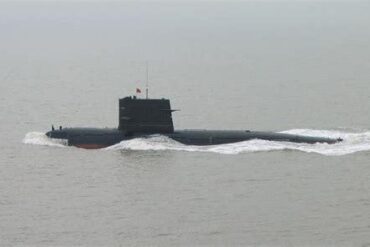
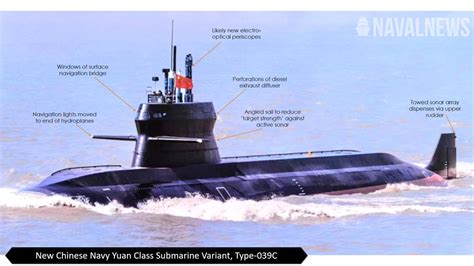
Despite the increasing importance of nuclear propulsion, diesel-electric submarines remain a vital component of China’s fleet. The PLAN currently operates more than 50 conventional submarines, many of which belong to the Type 039A/B Yuan-class.
These submarines are equipped with air-independent propulsion (AIP) systems, a technology that allows conventional submarines to remain submerged for extended periods without surfacing to recharge batteries. AIP dramatically improves stealth by reducing the need for snorkeling operations, which can expose submarines to radar and infrared detection.
The Yuan-class submarines are particularly effective in littoral environments, such as the shallow waters of the South China Sea, where maneuverability and acoustic concealment are critical. Their mission profile often includes defending coastal waters, monitoring shipping lanes, and supporting anti-access operations against foreign naval forces.
Shipyard Expansion and Industrial Capacity
Behind China’s growing submarine fleet lies a rapidly expanding shipbuilding infrastructure. The country operates three major submarine construction shipyards, where extensive investments have increased production capacity and modernized fabrication facilities.
These shipyards now feature larger construction halls, advanced assembly lines, and upgraded manufacturing equipment capable of producing larger pressure hull sections and modern reactor systems. The upgrades have effectively more than doubled China’s submarine production capacity.
Previously, nuclear submarine production in China averaged less than one boat per year. Recent improvements in shipyard throughput now allow multiple submarines to be constructed simultaneously, accelerating fleet expansion.
The ability to build both nuclear-powered submarines and advanced diesel-electric vessels ensures that China can maintain a steady pipeline of new submarines while gradually replacing older platforms.
Unmanned Underwater Vehicles and Undersea Surveillance
China’s undersea strategy extends far beyond traditional submarines. The country is investing heavily in unmanned underwater vehicles (UUVs) and advanced seabed sensor networks, creating a layered system of underwater surveillance and reconnaissance.
One example is the HSU001 autonomous underwater vehicle, which conducts intelligence, surveillance, and reconnaissance missions while collecting oceanographic data. These vehicles help scientists and naval planners understand water temperature, salinity, and ocean currents, factors that significantly influence sonar performance.
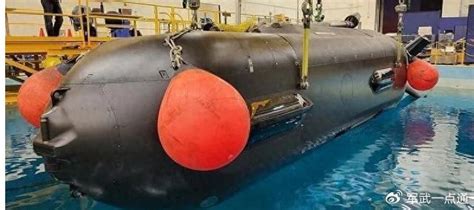
Other platforms such as the AJX002 underwater vehicle are designed for missions including mine deployment and potential torpedo delivery. More experimental concepts like the UUV300 feature modular payload bays capable of carrying sensors, mines, or even smaller autonomous vehicles.
Complementing these vehicles is the Blue Ocean Information Network, an ambitious seabed surveillance system integrating sonar arrays, underwater sensor nodes, satellite-linked buoys, and mobile autonomous vehicles. This network is designed to create a continuous detection architecture across strategic maritime areas.
By combining fixed seabed sensors with mobile underwater platforms, China can monitor key shipping lanes, track foreign submarines, and gather real-time oceanographic intelligence.
Expanding Undersea Operations Beyond the Western Pacific
As China’s submarine fleet grows, so too does the geographic scope of its potential operations. While current deployments focus largely on the Western Pacific and surrounding seas, future submarine patrols may extend into the Indian Ocean, Arctic approaches, and possibly even the Atlantic Ocean.
The expansion of nuclear-powered submarines plays a key role in this shift. Their long endurance and high sustained speed allow them to travel vast distances without surfacing, making them ideal for extended deployments far from Chinese bases.
Strategically, this means China could maintain a persistent underwater presence near major maritime chokepoints, including shipping routes critical to global trade. Such deployments would provide Beijing with increased leverage in times of geopolitical tension while complicating naval planning for potential adversaries.
The Emerging Undersea Competition with the United States
The rapid growth of China’s submarine fleet underscores the intensifying undersea competition between the United States and China. The U.S. Navy still maintains one of the world’s most capable submarine forces, centered around Virginia-class attack submarines and Ohio-class ballistic missile submarines.
However, China’s sustained investment in submarine construction, advanced sensors, and unmanned underwater technologies indicates a long-term effort to close the capability gap.
Undersea warfare has always been one of the most complex and technologically demanding domains of military operations. Sound travels through water in strange ways, bending through layers of temperature and salinity like light through glass. Submarines exploit these acoustic quirks to hide in the depths, while sonar operators hunt for faint mechanical signatures buried in the ocean’s background noise.
As both nations develop quieter submarines, smarter sensors, and autonomous underwater systems, the underwater domain is becoming a vast, invisible chessboard stretching across the world’s oceans.
By the 2030s and beyond, the expansion of China’s submarine fleet—combined with advanced surveillance networks and unmanned systems—will likely ensure that undersea warfare remains one of the most decisive arenas of strategic military competition in the 21st century.