The strategic balance underpinning global security is entering a period of profound transformation, as projections from the U.S. Intelligence Community indicate that missile threats capable of striking the United States will expand dramatically—from over 3,000 today to more than 16,000 by 2035. This projected fivefold increase is not merely a matter of quantity; it represents a systemic shift in how adversaries conceptualize deterrence, warfare, and technological dominance. At the center of this transformation lies China’s accelerating military buildup, which is redefining the scale, sophistication, and survivability of long-range strike capabilities.
The expansion of missile arsenals reflects a convergence of geopolitical ambition, technological innovation, and evolving military doctrine. Nations including China, Russia, North Korea, Iran, and Pakistan are simultaneously increasing both the volume and diversity of their missile forces. This includes intercontinental ballistic missiles (ICBMs), hypersonic glide vehicles (HGVs), and advanced cruise missiles, all designed to penetrate defenses, reduce reaction time, and impose unprecedented strain on U.S. homeland security systems.
China’s Strategic Missile Expansion Reshapes the Threat Landscape
China’s military modernization has emerged as the principal driver behind this projected surge. The deployment of advanced systems such as the DF-41 intercontinental ballistic missile and the DF-17 hypersonic glide vehicle signals a decisive shift toward high-end, precision-strike capabilities. These systems are engineered not only for range—extending up to 18,000 kilometers—but also for survivability and lethality.
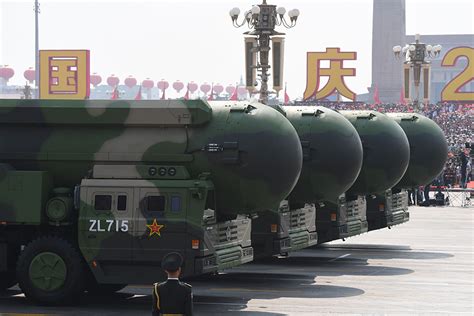
The DF-41, in particular, introduces multiple independently targetable reentry vehicles (MIRVs), enabling a single missile to carry multiple nuclear warheads aimed at separate targets. This dramatically increases the number of incoming threats that missile defense systems must track and intercept simultaneously. Meanwhile, China’s construction of vast missile silo fields—numbering in the hundreds—underscores a strategic commitment to expanding both launch capacity and redundancy.
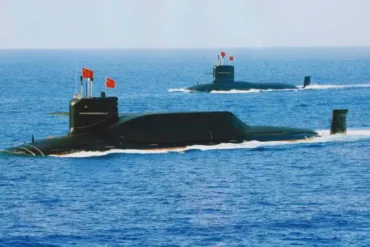
Equally significant is China’s integration of road-mobile systems such as the DF-31AG, which enhance survivability by enabling rapid relocation and concealment. Combined with submarine-based platforms and hardened infrastructure, these developments point to a layered, resilient missile force designed to endure and respond under contested conditions.
Russia’s Advanced Arsenal and Hypersonic Edge
While China is driving numerical expansion, Russia continues to maintain the world’s most diverse and technologically advanced missile arsenal. Systems such as the RS-28 Sarmat and the Avangard hypersonic glide vehicle exemplify Moscow’s focus on defeating missile defense through speed, maneuverability, and unpredictability.
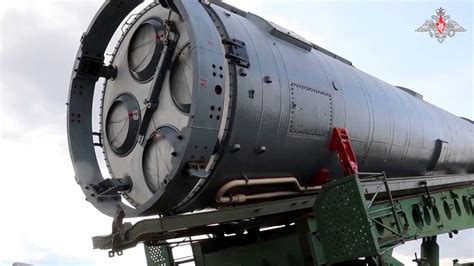
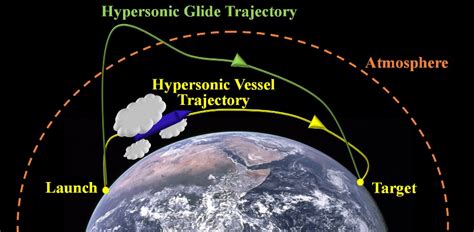
The Avangard, capable of traveling at speeds exceeding Mach 5, can maneuver unpredictably during its flight, rendering traditional interception methods significantly less effective. Similarly, the Kinzhal air-launched ballistic missile and Kalibr cruise missiles provide Russia with flexible, multi-domain strike options that can be deployed from air, land, and sea platforms.
This triad-based approach ensures that Russia retains a robust second-strike capability, reinforcing its nuclear deterrence posture while simultaneously complicating U.S. defense planning. The emphasis on hypersonic systems represents a broader trend in which speed and agility are prioritized over sheer payload.
Emerging Threats from North Korea, Iran, and Pakistan
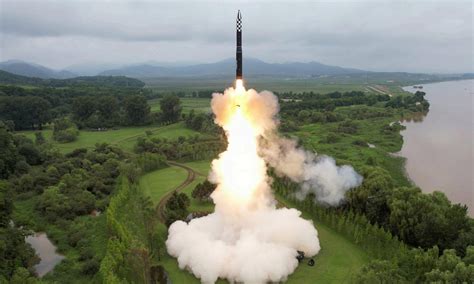
Beyond the major powers, regional actors are rapidly advancing their missile programs in ways that carry global implications. North Korea’s Hwasong-17 and Hwasong-18 ICBMs are explicitly designed to reach the continental United States, with the latter incorporating solid-fuel propulsion that significantly reduces launch preparation time.
Iran, meanwhile, continues to refine systems such as the Shahab-3 and Khorramshahr, while leveraging space-launch technologies like the Simorgh as potential stepping stones toward longer-range capabilities. Pakistan’s development of the Shaheen-III further underscores the growing reach of missile technologies across volatile regions.
These programs are not isolated; they reflect a broader pattern of proliferation in which missile technology is increasingly accessible, adaptable, and integrated into national defense strategies. The result is a global network of missile capabilities that extends far beyond traditional superpower competition.
The Rise of Saturation Warfare and Low-Cost Strike Systems
One of the most consequential shifts in modern missile warfare is the integration of low-cost, high-volume strike systems alongside advanced missiles. Adversaries are increasingly pairing high-end weapons with expendable platforms such as loitering munitions and one-way attack drones, creating a layered threat environment designed to overwhelm defenses.
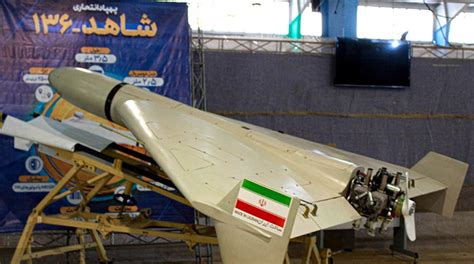
Iran’s deployment of the Shahed-136 drone has demonstrated the effectiveness of this approach, particularly when used in conjunction with ballistic and cruise missiles. Russia has adopted similar tactics in Ukraine, combining Kalibr missile strikes with drone swarms to saturate air defense networks.
China is developing comparable concepts within its anti-access/area denial (A2/AD) framework, integrating missiles, drones, and electronic warfare into cohesive operational strategies. This approach exploits a critical asymmetry: the cost of intercepting incoming threats often far exceeds the cost of launching them, creating economic and operational strain on defensive systems.
Technological Acceleration: AI, Space, and Hypersonics
The rapid evolution of missile capabilities is being driven by breakthroughs in enabling technologies. Advances in satellite navigation, artificial intelligence, and guidance systems are dramatically improving accuracy, with some systems achieving a circular error probable (CEP) of less than 100 meters. This level of precision transforms missiles from strategic deterrents into highly effective tactical weapons.
Artificial intelligence is increasingly being applied to optimize targeting, trajectory planning, and decision-making processes, reducing response times and enhancing operational efficiency. At the same time, the militarization of space is introducing new vulnerabilities. China and Russia are developing anti-satellite (ASAT) capabilities, including co-orbital systems that could disrupt early warning and communication networks.
Hypersonic weapons, capable of sustained flight at speeds exceeding Mach 5 while maneuvering mid-course, represent perhaps the most disruptive innovation. Their ability to evade detection and interception challenges the very foundations of existing missile defense architectures.
A Growing Nuclear Dimension and Strategic Instability
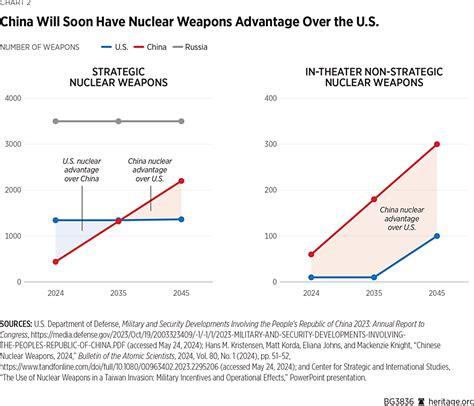
Missile proliferation is deeply intertwined with the modernization of nuclear arsenals. China’s nuclear warhead stockpile, currently estimated in the low 600s, is projected to exceed 1,000 by 2030, supported by MIRV-capable systems like the DF-41. Russia continues to field the largest inventory of nuclear warheads, while North Korea is actively expanding its fissile material production.
This expansion introduces new layers of strategic complexity. The combination of increased warhead counts, diversified delivery systems, and reduced warning times heightens the risk of miscalculation. Missile forces are no longer confined to deterrence; they are becoming integral to coercive diplomacy and conventional warfare, blurring the line between nuclear and non-nuclear conflict.
Implications for U.S. Homeland Defense and Deterrence
The projected increase to over 16,000 missile systems by 2035 presents a formidable challenge for U.S. defense planners. Existing missile defense architectures, designed to counter limited threats, must now adapt to a reality defined by scale, speed, and complexity. This will require substantial investments in sensor networks, interceptor inventories, and command-and-control systems.
Equally critical is the need to address the growing disparity between offensive and defensive costs. As adversaries leverage inexpensive systems to saturate defenses, the United States must explore innovative solutions that enhance efficiency without compromising effectiveness. This includes the integration of directed energy weapons, advanced tracking algorithms, and resilient space-based sensors.
The evolving threat environment also underscores the importance of intelligence. Monitoring missile deployments, technological advancements, and doctrinal shifts will be essential for maintaining strategic awareness and ensuring timely responses.
A Structural Shift in Global Security Dynamics
The anticipated fivefold increase in missile threats is not a temporary anomaly; it represents a structural transformation in the global security landscape. As nations continue to invest in long-range strike capabilities, the balance between offense and defense is being recalibrated in ways that favor complexity, speed, and volume.
This transformation carries profound implications for deterrence stability. The interplay between expanding offensive capabilities and evolving defensive measures will shape the trajectory of international security for decades to come. In this environment, the margin for error is narrowing, and the stakes are rising.
The world is entering an era where missile power is not just a measure of military strength, but a defining factor in geopolitical influence. The question is no longer whether missile threats will grow, but how nations will adapt to a future where precision, proliferation, and unpredictability redefine the rules of engagement.