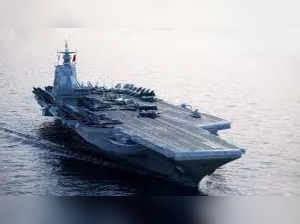
In a dramatic assertion of maritime power, China has advanced its naval capabilities, signaling a strategic pivot in the balance of military influence in the Pacific Ocean. For the first time, two of China’s aircraft carriers—the Liaoning and the Shandong—conducted simultaneous, coordinated exercises beyond the first island chain. This escalation places the Chinese People’s Liberation Army Navy (PLAN) in a more formidable position than ever before, directly challenging U.S. military supremacy in a region long dominated by American naval forces.
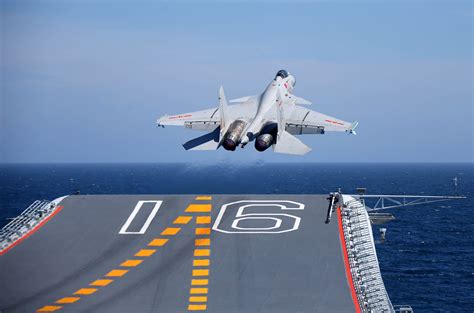
These exercises, executed from late May through June 2025, unfolded in waters near Japan and extended deep into the western Pacific. With up to ninety air operations per day, the drills included repeated takeoffs and landings of J-15 fighter jets, advanced helicopters, and support aircraft. Both carriers operated with full escort by PLAN warships, simulating battle group formations similar to those routinely conducted by the U.S. Navy’s Carrier Strike Groups (CSGs).
China’s Carrier Arsenal: From Experiment to Operational Force
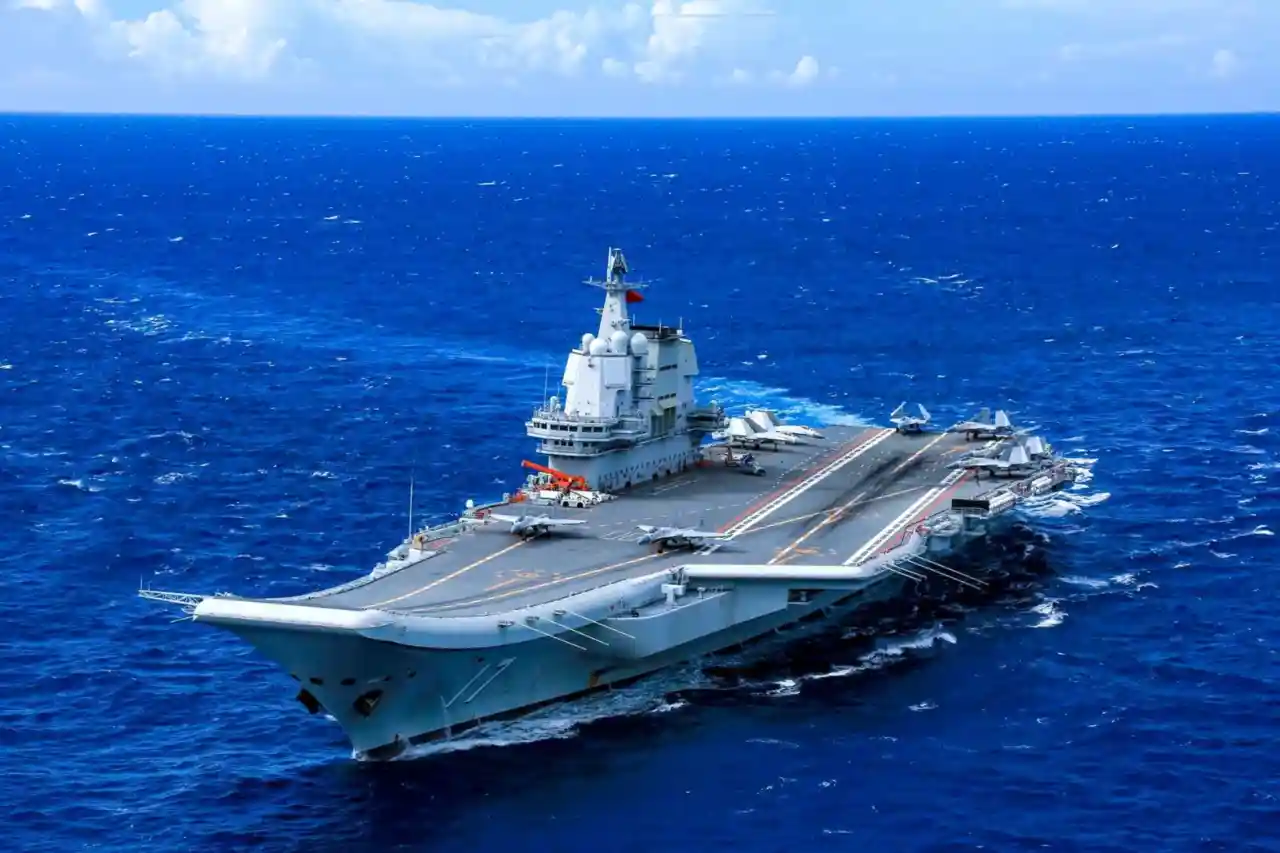
The Liaoning, originally a Soviet Kuznetsov-class vessel acquired from Ukraine in 1998, was refurbished and commissioned in 2012. It marked China’s first real step into blue-water naval aviation. The Shandong, China’s first domestically built aircraft carrier, was commissioned in 2019 and features improved hangar space, elevators, and operational efficiency. Both ships operate using STOBAR systems—Short Take-Off But Arrested Recovery—launching aircraft from a ski-jump ramp.
The Liaoning can field around 24 Shenyang J-15 multirole fighters, while the Shandong is capable of hosting up to 36 aircraft, expanding the tactical scope and sortie rate of Chinese carrier groups. These numbers, though still below the U.S. standard of 75–90 aircraft per Nimitz or Ford-class carrier, represent a sharp increase in Beijing’s capacity to project power.
Crossing the First Island Chain: Strategic Implications
Perhaps most significant is the geographical leap made by this dual-carrier operation. The “first island chain,” which stretches from the Japanese archipelago through Taiwan to the Philippines, has long been considered a strategic boundary for China. By operating beyond it—and nearing the “second island chain” that includes Guam, a key U.S. military base—China has signaled a new phase of maritime reach and assertiveness.
According to Christopher Sharman of the U.S. Naval War College, this move expands China’s strategic envelope and places more pressure on American forces stationed in the Indo-Pacific. It forces the U.S. to consider multi-vector threats in scenarios ranging from Taiwan conflict contingencies to broader Indo-Pacific maritime security.
Simulation of Conflict: Far-Sea Defense Becomes Real
Chinese state media reported that the carrier groups engaged in simulated confrontations, testing joint operations capabilities and coordination between air, sea, and subsurface elements. Xinhua News Agency emphasized the focus on “far-sea defense,” a euphemism for extended-range operations aimed at denying adversaries strategic access to key oceanic corridors.
Japan’s Ministry of Defense observed multiple instances of Chinese fighters flying within dangerous proximity to Japanese surveillance aircraft, underscoring the growing risks of accidental escalation. These tactics mirror those of the U.S. during the Cold War, where close surveillance and brinkmanship blurred the lines between peacetime presence and preparatory posture.
The Rise of the Fujian: China’s Technological Breakthrough
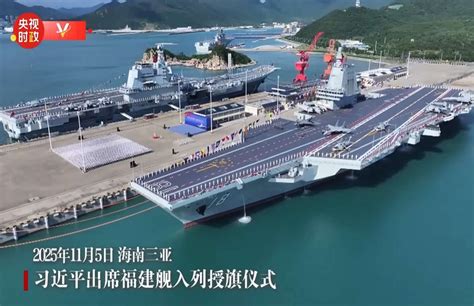
Although the Liaoning and Shandong have garnered attention, it is the upcoming Fujian-class carrier that represents China’s most ambitious leap forward. Launched in 2022 and currently undergoing sea trials, the Type 003 Fujian is equipped with an electromagnetic catapult system (EMALS), similar to that used on the U.S. Gerald R. Ford-class. This advanced launch mechanism enables the takeoff of heavier, more capable aircraft, including early warning planes and strike bombers.
The Fujian also boasts a flat-deck design without a ski-jump, indicating its ability to conduct more complex, higher-frequency flight operations. While still diesel-powered, its layout and systems reflect an approach closer to U.S. standards, signaling that China is narrowing the qualitative gap in naval aviation.
Six Carriers by 2040: Strategic Ambition Meets Industrial Muscle
Beijing plans to operate at least six aircraft carriers by 2040, including the likely introduction of a nuclear-powered supercarrier currently in early development. This ambition aligns with China’s long-term goals to protect its maritime trade routes, particularly the critical corridors stretching through the Indian Ocean and South China Sea.
According to Timothy Heath of the RAND Corporation, these ships are central to a grander strategy to extend Chinese influence across global waters, not just its regional periphery. However, Heath cautions that mere possession of carriers does not translate to supremacy. In any future confrontation, Chinese and American carriers alike would be vulnerable to advanced hypersonic missiles, torpedoes, and undersea drone swarms.
The Taiwan Strait Flashpoint: Carriers as Instruments of Coercion
Experts widely agree that in the event of a Taiwan crisis, Chinese aircraft carriers would play a coercive and surveillance-centric role. According to Narushige Michishita, a professor in Tokyo, carriers would be instrumental in imposing maritime blockades, controlling sea lanes, and deterring U.S. or Japanese intervention.
That said, China’s mainland air bases, with proximity to Taiwan, offer faster response times and broader missile coverage, making them the primary strike assets in such a scenario. Still, aircraft carriers offer something fixed land bases do not—mobility, flexibility, and a psychological edge in demonstrating global reach.
1996 Taiwan Strait Crisis: The Catalyst for Naval Revolution
China’s carrier development finds its roots in the 1996 Taiwan Strait crisis, when the United States deployed two carrier strike groups to signal resolve against Chinese missile aggression. That episode profoundly shaped the strategic thinking in Beijing. Shocked by its own powerlessness at sea, China’s leadership resolved never again to be outmatched on the open ocean.
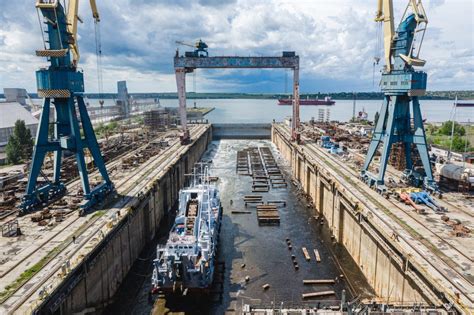
The Liaoning was purchased from Ukraine in 1998 as a semi-complete hull, officially for use as a floating casino. Instead, it became the PLAN’s first serious aviation platform. Since then, Beijing’s carrier program has grown with meticulous determination, focusing not just on hardware but on doctrine, training, and integrated operations.
Power Projection and Politics: Xi Jinping’s Maritime Doctrine
Beyond military strategy, aircraft carriers symbolize national prestige. For Xi Jinping, their expansion is part of a broader doctrine to establish China as a global maritime power. Carrier deployments are now not only exercises in warfighting, but tools of diplomacy, intimidation, and influence. They sail through contested zones, appear during summits, and project Chinese presence in Africa, the Middle East, and Latin America.
China’s investment in these floating airbases also aims to counterbalance the U.S.-led alliance network, including the Quad (U.S., Japan, India, Australia) and AUKUS (Australia, UK, U.S.), which Beijing views as containment efforts. The recent joint deployment of Liaoning and Shandong sends a calculated signal that the PLAN will not remain confined to the Yellow Sea or the Taiwan Strait.
Conclusion: Redefining the Pacific’s Balance of Power
The dual carrier exercise of 2025 marks a strategic inflection point. While the U.S. Navy remains dominant in terms of raw capability, logistics, and combat-tested doctrine, China’s rapid naval modernization has compressed timelines and narrowed gaps. The question is no longer whether China can operate aircraft carriers effectively—it can. The question now is how Washington and its allies will respond to a China that seeks not just parity, but primacy in the Indo-Pacific.
The next decade will determine whether this bold maritime vision becomes a pillar of Chinese global ascendancy—or collapses under the pressure of geopolitical, economic, and military pushback.