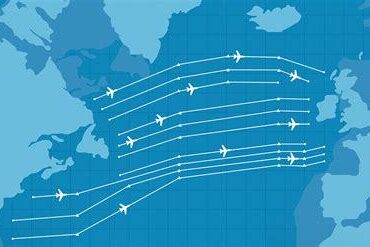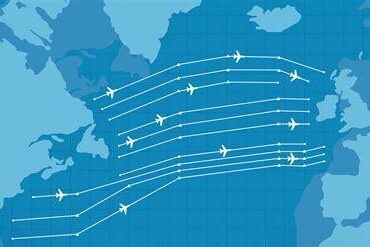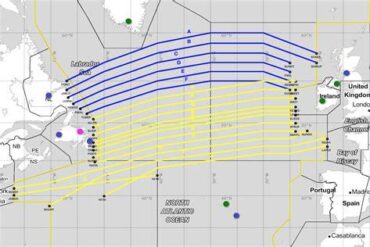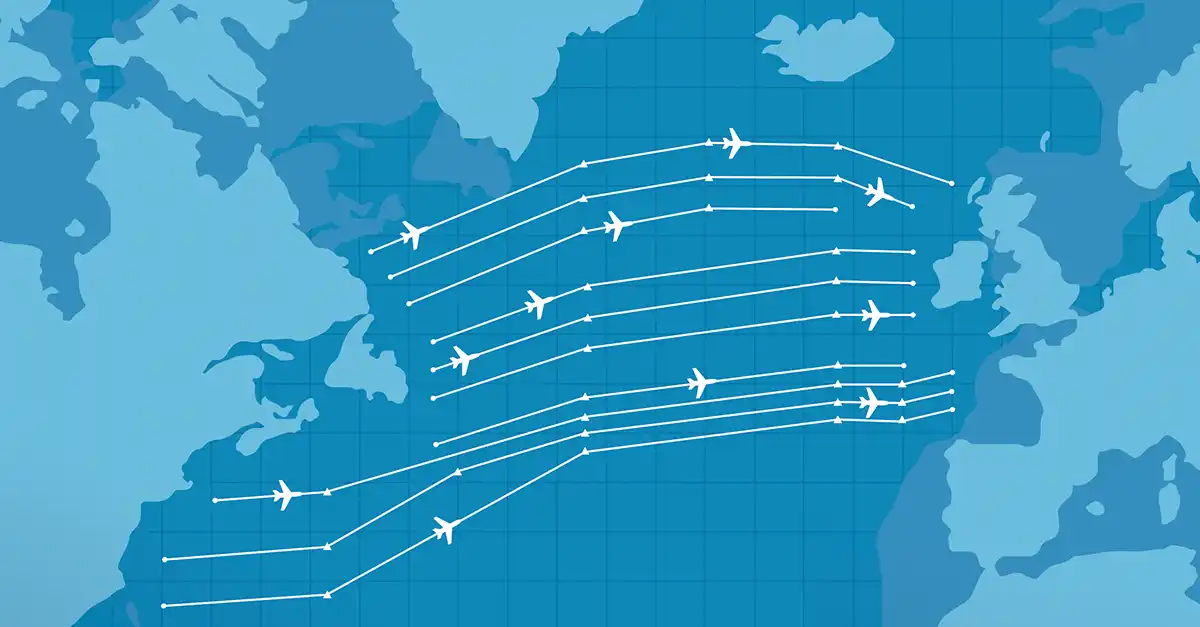
The North Atlantic (NAT) airspace is one of the most heavily used oceanic regions in the world, linking Europe and North America. With nearly half a million flights crossing it annually—and that number still rising—effective communication is vital. However, because direct voice contact and radar coverage are often limited across much of this region, aircraft rely on strict navigation standards and disciplined communication procedures to maintain safe separation. This article walks through the key communication systems, protocols, and expectations for pilots operating in the NAT.
Understanding Voice Communication Over the NAT
In much of the NAT airspace, Very High Frequency (VHF) communication is not reliable due to the curvature of the Earth. Since VHF signals travel in straight lines, they struggle to reach aircraft once they are beyond the line-of-sight of a ground station. To fill this gap, two main alternatives are used: High Frequency (HF) radio and satellite voice communication (SATVOICE).
HF signals are more versatile in oceanic regions. They can travel along the Earth’s surface as ground waves or bounce off the ionosphere as sky waves. This allows them to reach aircraft well beyond VHF’s limitations. SATVOICE, on the other hand, uses satellites to relay voice messages over vast distances. Both are essential in NAT operations.
Aircraft flying outside VHF coverage must carry at least two long-range communication systems. One of these must be HF, while the second may be either SATVOICE or a Controller-Pilot Data Link Communication (CPDLC) system—if coverage requirements are met. However, not all systems are suitable for every part of the NAT. For instance, Inmarsat-based services may not provide full coverage north of 80°N.
There are exceptions. If the HF system fails and the aircraft is returning for repairs, a waiver may be requested. This is only granted if the plane has two other working long-range systems and approval is obtained from the responsible Area Control Centre (ACC).
The Role of Aeronautical Radio Stations
Routine voice communications in the NAT region often occur through specialized aeronautical radio stations. These stations are staffed by trained radio operators—not air traffic controllers. Their role is to relay voice messages between aircraft and the appropriate oceanic ACC. This differs from CPDLC, where messages go directly between the controller and the flight crew.
Six radio stations cover the NAT: Bodø Radio in Norway, Gander Radio in Canada, Iceland Radio in Iceland, New York Radio in the USA, Santa Maria Radio in Portugal, and Shanwick Radio in Ireland. These facilities also manage General Purpose VHF (GP/VHF) outlets. Since operators typically monitor multiple frequencies at once, it’s helpful for pilots to state which frequency they’re using when initiating contact.
In Iceland and the surrounding region, Reykjavik Centre provides direct air traffic control services using VHF. The callsign “Reykjavik Control” is used when flight crews are talking directly to ATC. In contrast, “Iceland Radio” refers to the station where a radio operator is simply relaying messages.
SELCAL: Reducing the Need for Constant Listening
Aircraft operating in the NAT should continuously monitor their assigned frequency unless equipped with SELCAL, which stands for Selective Calling. This system alerts the crew with a chime when a ground station wants to establish contact, reducing the need for constant radio monitoring.
To use SELCAL properly, crews should:
- Include the SELCAL code in the flight plan. If the aircraft is changed before the flight, a new flight plan or a change message (CHG) must be filed with the updated SELCAL code.
- Perform a SELCAL check before entering oceanic airspace.
- Maintain SELCAL watch once the check is complete.
Even when using SATVOICE or CPDLC for routine messages, crews must ensure ATC can reach them in a timely manner through SELCAL or traditional frequency monitoring.
SELCAL codes are assigned based on the typical area of operation for the aircraft. If an operator plans to fly outside their usual area, they should request an appropriate code from the SELCAL Registrar to avoid duplicates.
Using SATVOICE in Oceanic Airspace
SATVOICE is part of the Aeronautical Mobile Satellite (Route) Service and acts as a backup to HF and CPDLC systems. Important contact numbers for SATVOICE, including those for radio stations and ACCs, are listed in the State AIPs (Aeronautical Information Publications).
Normally, crews should direct SATVOICE calls to a radio station rather than an ACC. The only exception is when the urgency of the message makes direct ACC contact necessary. It’s important to note that poor HF quality does not count as an emergency. Even when using SATVOICE, pilots must keep a SELCAL watch or listen to their assigned HF frequency.
Guidelines for SATVOICE are outlined in ICAO Doc 7030, which highlights that the system is supplementary and should not be used as a primary method of communication without the proper fallback procedures in place.
Data Link Communications: CPDLC and ADS-C
Many flights crossing the NAT are now equipped with data link communication tools, which help streamline operations and increase safety. These tools include CPDLC for text-based messages and Automatic Dependent Surveillance-Contract (ADS-C) for position reporting.
With CPDLC, air traffic controllers can communicate directly with flight crews even when they’re also on a voice frequency. This redundancy improves situational awareness. ADS-C, meanwhile, provides continuous position updates that help controllers ensure the aircraft stays on its planned route.
If there’s a failure or performance drop in the data link system, it will alert the crew. In such cases, the pilots should inform ATC as soon as possible so they can apply alternative separation procedures.
Importantly, crews using data link systems must still monitor their HF frequency or operate SELCAL. Logging on to the correct oceanic ACC is also crucial, even if ATS surveillance is active. With the introduction of Performance-Based Communication and Surveillance (PBCS) separation standards, maintaining an active data link connection is more important than ever. Without it, aircraft may not be eligible for the most efficient separation.
Common Use of 123.450 MHz and 121.5 MHz
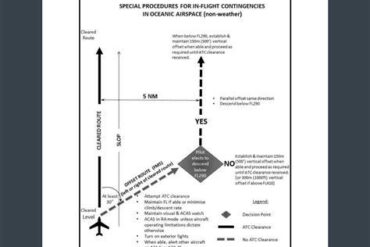
Two special frequencies are important in the NAT: 123.450 MHz and 121.5 MHz. The first is the inter-pilot frequency, used for operational discussions between aircraft that are out of VHF ground range. This is not a casual chat channel—it should only be used for important flight-related conversations. It can also be helpful for coordinating strategic lateral offsets (SLOP) or relaying position reports during a communication failure.
The second, 121.5 MHz, is the emergency frequency. All aircraft are expected to monitor it at all times. It allows aircraft to assist others experiencing emergencies or to establish initial contact if needed. However, since this channel may be used by aircraft in distress, it’s important to limit non-emergency communication on 121.5 MHz when possible.
To reduce the load on this frequency, flight crews should also monitor 123.450 MHz when practical.