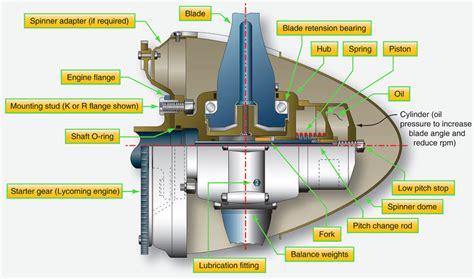
A constant speed propeller is designed to automatically adjust its blade pitch, helping it maintain a steady RPM regardless of engine torque, airspeed, or altitude. This adjustment is managed by a Constant Speed Unit, also known as a governor, which is an essential part of the propeller’s design.
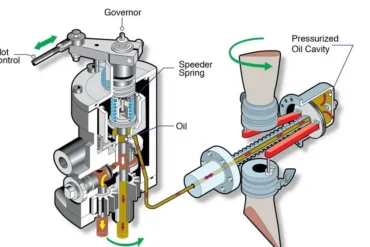
The Constant Speed Unit operates based on centrifugal force and includes a speeder spring along with fly weights. The speeder spring is set to balance the fly weights at a specific propeller RPM. In some cases, pilots can adjust this setting to choose different target RPMs. If the propeller exceeds the chosen RPM, the fly weights move outward. Conversely, if the propeller is under-speed, the fly weights swing inward. These movements alter the tension on the speeder spring.
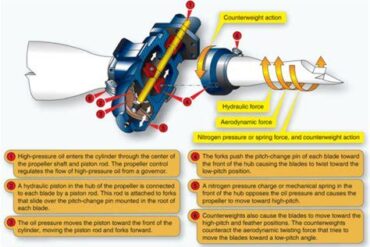
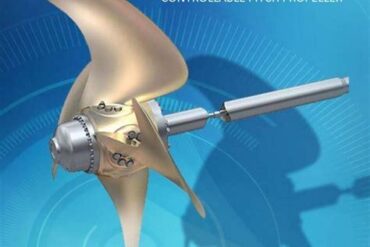
In older constant speed propellers, the fly weights would mechanically change the pitch of the propeller—raising it in response to an over-speed and lowering it during an under-speed. Newer models achieve pitch changes by directing pressurized oil through a pilot valve, which adjusts the blade angle to maintain the desired RPM. Some manufacturers even use electronic systems to replace the traditional speeder spring and flyweights.
The advantage of a constant speed propeller is significant. Most engines, particularly turboprop engines, generate peak power within a narrow speed range. A constant-speed system allows either the manufacturer or the pilot to select the appropriate propeller speed for the situation. This system automatically maintains that RPM, adapting to changes in aircraft altitude, airspeed, flight phase, and engine power. By doing so, it optimizes the operation of both the propeller and the engine for maximum efficiency.
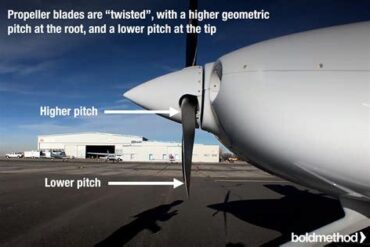
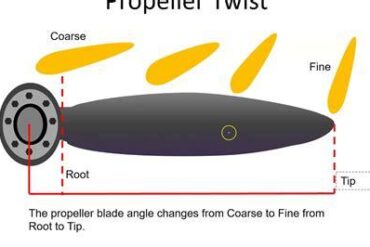
RPM control is achieved by adjusting the pitch of the propeller blades, which alters the angle of the blades relative to their rotation. When the blade angle decreases, less torque is needed to turn the propeller, which can lead to higher airspeed and engine RPM. In contrast, increasing the blade angle raises the torque requirement to keep the RPM constant. If the power doesn’t change, this will cause both the engine and propeller to slow down.
Ultimately, this relationship enables the propeller and engine to maintain their ideal RPM. When more fuel is added—by pushing the power lever forward—the engine’s power output increases, potentially raising the engine RPM. To keep the propeller RPM steady, the blade angle must increase to handle the extra torque produced by the engine. Conversely, when the power lever is reduced, less torque is available, which allows the propeller RPM to drop while keeping the engine RPM relatively constant.