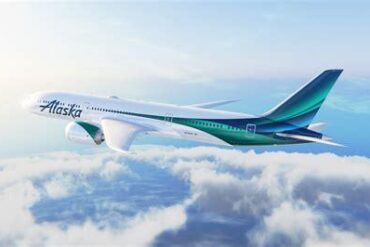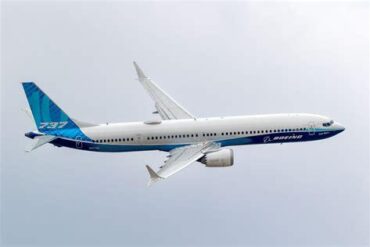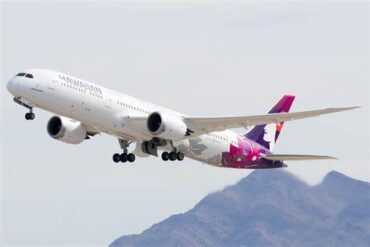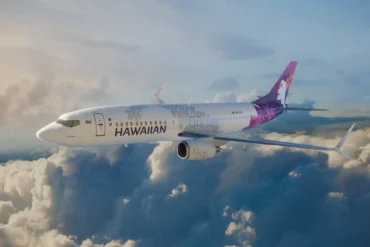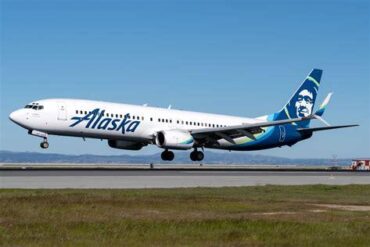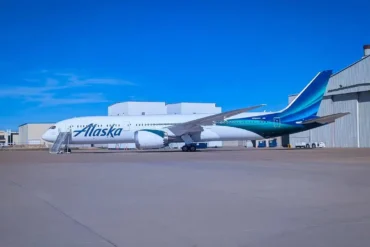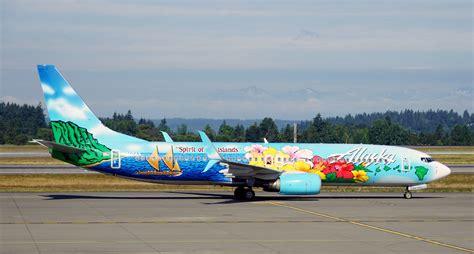
The recent merger of Alaska Airlines and Hawaiian Airlines has sparked strategic questions across the aviation sector, chief among them: Will Alaska Airlines repaint Boeing 737 MAX aircraft into Hawaiian Airlines’ livery to streamline operations and maintain brand identity? This pivotal consideration sits at the crossroads of fleet unification, brand integrity, operational efficiency, and long-term cost control.
The Challenge of Merging Two Distinct Identities
Alaska Airlines, a carrier long celebrated for its loyalty to Boeing and Pacific Northwest roots, has committed to maintaining Hawaiian Airlines as a separate brand. This rare approach introduces a unique branding dilemma: two names operating under one Air Operating Certificate (AOC), yet requiring visual consistency and operational synergy.
Hawaiian Airlines, with its strong identity across the Pacific, is known for its island-centric aesthetic, a brand cultivated over decades. Alaska must now consider whether repainting some Boeing 737 MAX aircraft in Hawaiian colors offers the most efficient method of sustaining this legacy, especially as it plans to phase out incompatible fleet types.
Alaska’s All-Boeing Strategy: A Deep-Rooted Identity
Alaska Airlines has maintained a near-religious adherence to a Boeing-exclusive narrowbody fleet since retiring its last McDonnell Douglas jets in 2008. This strategy, driven by cost efficiencies in maintenance, training, and logistics, has made its fleet one of the most streamlined among U.S. carriers. Even the 2018 acquisition of Virgin America, which brought in Airbus A320 family aircraft, was met with swift realignment; by 2023, the A321neos inherited were retired, replaced by the ever-growing fleet of Boeing 737 MAX aircraft.
Alaska’s philosophy is clear: operational simplicity and cost control. Maintaining multiple narrowbody types—especially for limited-use scenarios—disrupts this philosophy and drives up expenses. Thus, it’s no surprise that the small Hawaiian A321neo fleet, despite its efficiency and modernity, is being reevaluated.
What Happens to Hawaiian’s Airbus Fleet?
Hawaiian Airlines currently operates 18 Airbus A321neos, mainly on medium-haul routes from Hawaii to the U.S. mainland. These aircraft are praised for their fuel efficiency and extended range, thanks to auxiliary fuel tanks. However, as CFO Shane Tackett emphasized during the 2025 Goldman Sachs Industrials Conference, Alaska is unlikely to maintain such a small, standalone Airbus fleet unless they can double its size—an improbable scenario given market availability and leasing costs.
Tackett was blunt:
“The number of A321s we have is too few. And so you need double that number or 0…”
The current market complicates expansion. New A321neo deliveries are delayed for years, and used aircraft are rare and costly due to high demand. Coupled with zero engine commonality between the PW1100G on A321neos and CFM LEAP-1B on 737 MAXs, the economic rationale for continuing the A321neo line is weak.
A Pragmatic Solution: Hawaiian Colors, Boeing Metal
Alaska Airlines’ logical path may be to replace the Hawaiian A321neo routes with Boeing 737 MAX aircraft repainted in Hawaiian’s iconic livery. This would achieve several objectives:
- Retain Hawaiian’s beloved visual brand and passenger loyalty.
- Eliminate duplicate fleet types, consolidating around the 737 MAX.
- Deploy aircraft that can handle similar missions to the A321neo (especially the MAX 8 and MAX 10).
- Cut costs in parts inventory, pilot training, and maintenance.
While the A321neo offers superior range with two auxiliary tanks and better short-runway performance, Alaska’s leadership is known to prioritize operational cost-efficiency over specialized capabilities. The likely tradeoff leans toward the 737 MAX—especially if it means maintaining Hawaiian’s branding in visual terms while unifying technical operations.
Interisland Routes: The 717 Replacement Puzzle
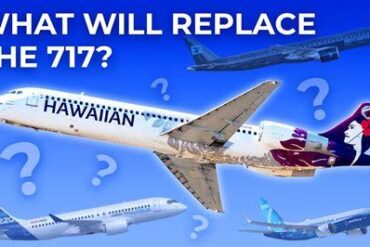
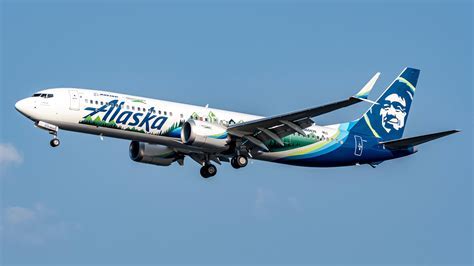
Hawaiian’s interisland workhorse, the Boeing 717, is another fleet on the chopping block. These aircraft, uniquely suited for short, high-cycle flights, face retirement due to age and part availability. Tackett signaled that the 737, not a smaller regional jet, is the current frontrunner to replace them, possibly by:
- Reassigning older 737-800/900NGs to Hawaii.
- Using 737 MAXs between mainland and island routes in a dual-role capacity.
- Painting these aircraft in Hawaiian’s livery for brand continuity.
The alternative—introducing Embraer E-Jets or A220s—would reintroduce the multi-type complexity Alaska is determined to avoid. Thus, converting part of the Boeing 737 fleet for interisland operations makes logistical and strategic sense.
Operational Base Strategy: Streamlining With Aloha
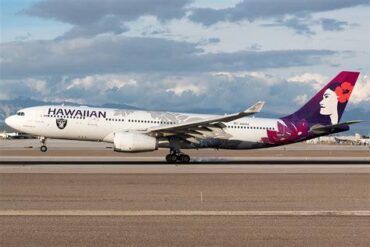
Consolidating operations around just two aircraft types in Hawaii—the 737 and the A330— would allow for streamlined crew management, ground operations, and maintenance. The Boeing 737 could operate:
- Interisland flights (replacing the 717).
- Mid-haul mainland routes (replacing the A321neo).
- Select thinner long-haul services where a widebody isn’t justified.
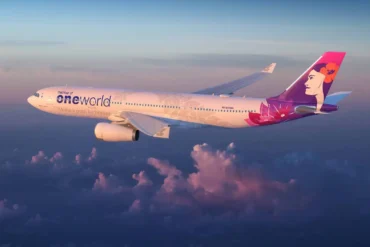
Meanwhile, the Airbus A330s—recently confirmed to receive full interior refurbishments—would serve all transpacific routes that require more capacity and cargo space.
The move also aligns with Alaska’s wider strategy of expanding 787 long-haul operations from Seattle, while closing the 787 base in Honolulu. The twin-brand model therefore hinges on logistics, not ideology.
Financial and Fleet Rationalization Benefits
Repainting 737 MAX aircraft into Hawaiian livery offers multiple tangible benefits:
- Brand loyalty preservation: Maintaining Hawaiian’s distinctive identity is crucial in a competitive leisure market.
- Fleet cost optimization: Fewer aircraft types mean lower costs across training, spare parts, and ground operations.
- Flexibility: 737 MAX aircraft can be moved between brands as demand requires, especially if crew training is harmonized.
- Simplified leasing and procurement: Boeing 737 MAX availability is significantly higher, with easier scalability compared to Airbus A321neos.
Additionally, it enables the company to make use of existing Boeing 737 pilot pools, avoiding the need to train and staff a small, separate A321neo division.
Strategic Hurdles: Aesthetic Meets Logistical
The main obstacle to this plan lies not in aviation physics, but in public perception and marketing. Hawaiian Airlines passengers are accustomed to an aesthetic that mirrors the island lifestyle: lei greetings, purple-hued liveries, and a softer onboard product. Painting a 737 in that same livery may maintain the visual link, but passengers might notice differences in the hard product and onboard layout compared to the A321neo or widebodies.
Thus, if Alaska does repaint its 737s, it must also consider onboard branding—seat design, service elements, and in-flight entertainment—tailored to Hawaiian expectations.
Looking Ahead: Fleet Futures and Brand Symbiosis
The Alaska-Hawaiian merger represents a rare opportunity in modern aviation: to retain the strength of two well-loved brands while building a sustainable, harmonized fleet. Painting Boeing 737 MAXs into Hawaiian livery isn’t just a branding move; it’s a calculated decision to fuse emotional loyalty with operational logic.
Despite the A321neo’s undeniable capability—particularly its extended range and field performance—Alaska’s preference for Boeing and cost-parity points strongly toward phasing it out. If so, we are likely to see an increasing number of 737 MAX aircraft adorned in Hawaiian Airlines colors, soaring over the Pacific, symbolizing a new era of synergy.
In this configuration, Alaska Airlines gains what it has always sought: consistency, control, and efficiency. Hawaiian, meanwhile, retains its spirit and presence across island and mainland skies.