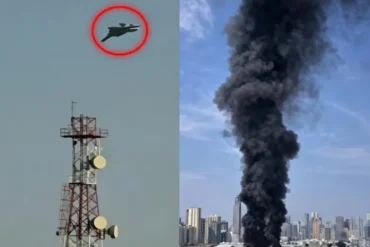
The Kuwait International Airport drone strike has marked a sharp escalation in the unfolding 2026 Iran crisis, bringing the realities of regional conflict directly into the heart of civilian aviation. A targeted attack involving Iranian drones struck critical infrastructure at the airport, killing one individual on the ground and injuring more than 60 others. The incident underscores the increasingly blurred lines between military operations and civilian exposure in volatile geopolitical environments.
The strike came in direct response to overnight US military actions against Iran, triggering a swift retaliation that extended beyond traditional military targets. Kuwait, a strategic US ally in the Middle East, found itself caught in the crossfire, with its primary aviation hub sustaining both physical damage and operational disruption. The airport, a key connector for regional and international travel, became an unintended yet highly symbolic casualty of escalating hostilities.
Despite the severity of the attack, Kuwait International Airport (KWI) demonstrated notable resilience. Operations resumed relatively quickly compared to similar incidents globally, though the aftermath continues to ripple across airline schedules, passenger movements, and regional airspace coordination.

Drone Strike Impact on Kuwait International Airport Operations
The drone attack caused significant structural damage to Terminal One, forcing authorities to temporarily suspend operations and close Kuwaiti airspace. This immediate shutdown led to widespread disruption, with inbound flights rerouted to nearby airports such as Dammam in Saudi Arabia, while outbound services faced cancellations and delays.
The closure of airspace is not merely a procedural response; it reflects the real-time threat assessment faced by aviation authorities. Civilian aircraft cannot safely operate under conditions where missile and drone activity remains a possibility. As a result, airlines were compelled to make rapid adjustments, prioritizing passenger safety over schedule adherence.
Even after airspace reopened, the recovery has been uneven. Flight delays and cancellations continue to accumulate, placing Kuwait among the most disrupted airports globally on the day of the incident. The knock-on effects have extended beyond Kuwait, influencing flight paths and schedules across the broader Middle East.
Human Cost and International Reaction
At the center of the tragedy is the confirmed death of an Indian national, highlighting the international human dimension of what might otherwise be viewed as a regional conflict. Injuries to over 60 individuals further emphasize the civilian toll of military escalation, drawing renewed calls for restraint from global leaders.
India’s Ministry of External Affairs issued a firm statement condemning attacks on civilian infrastructure, reinforcing a widely held international norm that airports and passenger facilities should remain off-limits in conflict scenarios. The statement reflects growing concern that such incidents could set dangerous precedents if left unchecked.
The targeting—or collateral damage—of aviation infrastructure raises urgent questions about compliance with international humanitarian law, particularly regarding the protection of non-combatants. Airports, by their nature, serve millions of civilians and are critical to humanitarian logistics, making their vulnerability especially alarming.
Kuwait Airways and Regional Airline Disruptions
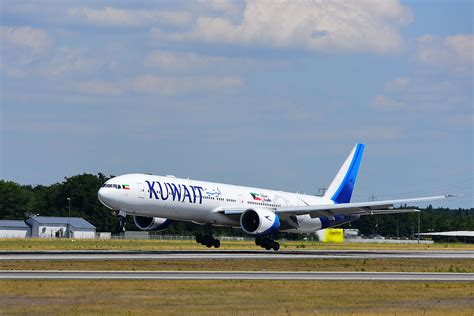
As the dominant carrier at KWI, Kuwait Airways bore the brunt of operational disruption. Accounting for nearly 46% of daily departures, the airline’s temporary suspension had immediate and far-reaching consequences. Flights already in the air continued to their destinations, but most scheduled services were either delayed or canceled.
To mitigate passenger frustration, Kuwait Airways implemented a flexible rebooking policy, waiving all cancellation and change fees for affected travelers. This move, while necessary, signals the scale of disruption facing the airline and its customers.
Other regional carriers, including Jazeera Airways, which represents approximately 37% of departures, also experienced significant operational strain. The cumulative effect has been a cascading disruption across airline networks, particularly for routes connecting Europe, Asia, and the Gulf.
Flight Data Reveals Scale of Aviation Disruption
Data from aviation analytics firm Cirium paints a stark picture of the day’s disruption. Of the 92 scheduled departures from Kuwait International Airport, a substantial portion was either delayed or canceled. At the time of reporting:
- 8 departures and 10 arrivals were canceled
- 15 departures and 8 arrivals experienced delays
These figures only capture part of the impact. The dynamic nature of the situation means delays can quickly cascade, affecting aircraft rotations, crew availability, and airport slot management across multiple countries.
Airlines such as Emirates, Qatar Airways, Etihad Airways, and IndiGo were among those forced to adapt, highlighting the interconnected nature of global aviation. A single disruption point like Kuwait can send shockwaves through the entire network, particularly in a region that serves as a major transit corridor.
Strategic Implications for Global Aviation Security
The attack on Kuwait International Airport is more than an isolated incident; it reflects a broader shift in how modern conflicts intersect with civilian infrastructure. The increasing use of drones in asymmetric warfare introduces new vulnerabilities for airports, which are traditionally designed to handle logistical challenges rather than active threats.
This evolving risk landscape is already reshaping global flight corridors, with airlines opting for longer, safer routes to avoid potential conflict zones. The result is increased fuel consumption, extended travel times, and higher operational costs—factors that ultimately affect passengers worldwide.
Moreover, the incident reinforces the urgency of enhancing airport security systems, particularly against low-altitude drone threats. Traditional radar systems are often ill-equipped to detect smaller UAVs, necessitating investment in advanced detection and countermeasure technologies.
Aviation Resilience Tested in Conflict Zones
Kuwait International Airport’s rapid partial recovery demonstrates the resilience of modern aviation infrastructure, but it also exposes its limits. While systems can be restored and schedules adjusted, the psychological impact on travelers and crew is harder to quantify.
Passengers navigating the aftermath faced uncertainty, rerouted journeys, and heightened anxiety—an experience increasingly common in regions affected by geopolitical instability. Airlines, meanwhile, must balance operational efficiency with the unpredictable realities of conflict-driven disruptions.
The events in Kuwait serve as a stark reminder: in an interconnected world, aviation is both a lifeline and a vulnerability. As tensions continue to unfold, the industry must adapt quickly, not only to maintain operations but to safeguard the millions who rely on it every day.