Delta Air Lines has joined forces with United, Azul Airlines, Virgin Atlantic, Royal Air Maroc, and Lufthansa in a bold move to harness artificial intelligence for ticket pricing and ancillary services. This coalition marks a fundamental shift from legacy revenue management systems to real‑time predictive algorithms capable of processing billions of data points per minute. As airlines race to deploy advanced AI engines like Fetcherr’s, travelers face a new era of dynamic, hyper‑personalized fares that could both unlock unprecedented bargains and drive prices to unforeseen heights.
The traditional airfare ecosystem relied on seasonal forecasts, competitor monitoring, and manual adjustments to fill seats while protecting yield. Today, that model is being upended. Fetcherr’s AI engine, developed in Tel Aviv and proven with Azul Airlines in Brazil, is already live on roughly 3% of Delta’s domestic network and slated to expand to 20% by the end of the year. By continuously analyzing real‑time demand signals, market trends, and competitive moves, the AI refines fare curves on the fly, searching minute by minute for the optimal price point that maximizes revenue without deterring bookings.
Early trials in Brazil demonstrated revenue uplifts of up to 9% for Azul, convincing Delta executives of AI’s profit‑boosting potential. Yet the U.S. market’s complexity and competitiveness pose a sterner test for Fetcherr’s models. Delta has begun cautiously—rolling out AI pricing on select routes, monitoring traveler reactions, and fine‑tuning algorithms to balance profitability with customer trust. Observers note that how Delta navigates this phase will influence rivals’ strategies and potentially reshape global pricing norms.
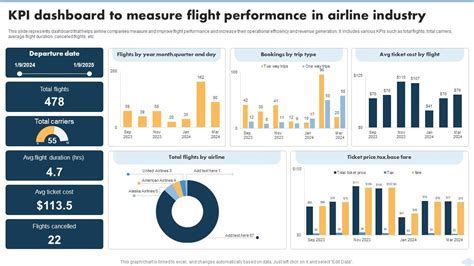
The Mechanics of Real‑Time Predictive Pricing
At the heart of this transformation lies Fetcherr’s engine, which ingests live data streams—from booking patterns and weather forecasts to social media buzz and sporting event calendars—to generate a continuously evolving demand forecast. Unlike static fare classes, the model treats every seat as a unique commodity, adjusting prices based on real‑time elasticity estimates. When demand spikes unexpectedly, the system triggers upwards adjustments; when searches falter, it deploys targeted discounts to stimulate bookings. The result is a seamless pricing continuum, where fare buckets give way to infinitely variable prices tailored to current conditions.
Delta’s choice of Fetcherr reflects a departure from older revenue‑management vendors. By embracing machine‑learning frameworks borrowed from financial markets, Fetcherr’s approach prioritizes speed and granularity. Traditional systems might update fares hourly, but the new AI can generate price recommendations every few minutes, scanning billions of potential fare combinations. This level of agility offers airlines a competitive edge in responding to sudden market shocks, whether a rival’s flash sale or an unexpected surge in holiday travel searches.
Micro‑Targeted Pricing: The Passenger Experience
Perhaps the most controversial aspect of AI‑driven pricing is hyper‑personalization. As airlines collect data on browsing habits, loyalty status, device type, and booking frequency, AI can tailor fares to individual profiles. A Medallion member known to book last‑minute upgrades may see higher base fares, while a price‑sensitive leisure traveler browsing multiple dates could receive aggressive discounts. By shifting from one‑size‑fits‑all to bespoke pricing engines, carriers challenge long‑held notions of fare transparency and fairness.
For frequent flyers, this raises complex trade‑offs. Those who have invested in elite status might unwittingly become high‑value targets for premium pricing. Conversely, occasional travelers could benefit from time‑sensitive deals if the AI identifies their price elasticity correctly. The net effect on consumer trust remains to be seen: will passengers embrace personalized offers as rewards for loyalty, or rebel against invisible algorithms that make comparison shopping impossible?
Balancing Profit and Passenger Trust
Delta projects that AI can cut manual revenue‑management workloads by up to 60%, freeing analysts to focus on strategic initiatives rather than spreadsheet updates. The expectation of higher yields and leaner operations is tantalizing for airline CFOs, particularly in an industry accustomed to razor‑thin margins. Yet with every unexplained fare jump comes risk. Travelers discovering that their ticket price soared by hundreds of dollars within minutes may feel manipulated, eroding the brand loyalty carriers work hard to build.
Delta’s strategy has been to test AI pricing on low‑risk, short‑haul routes before scaling to high‑volume segments. Customer‑service teams are on alert to field questions about rapid fare fluctuations, and marketing efforts emphasize AI’s role in delivering better deals during off‑peak periods. By blending cautious rollout with proactive communication, Delta aims to maintain trust even as it pushes pricing boundaries.
Transparency Challenges in a Personalized World
As pricing becomes individualized, long‑standing travel hacks—comparing multiple portals, clearing cookies, switching devices—may lose efficacy. Two passengers could sit side by side on the same flight yet pay dramatically different fares. For consumer advocates, this raises alarms about price opacity: how can regulators ensure fairness when no uniform fare exists?
In response, lawmakers in Europe and North America are scrutinizing AI’s potential for market manipulation. Delta and its partners operate within existing dynamic‑pricing legal frameworks, but they may soon face new disclosure requirements—mandating airlines to reveal the factors influencing fare changes or to limit personalization based on sensitive data. Airlines will need to strike a careful balance between leveraging data for profit and complying with emerging transparency standards.
Fetcherr’s Vision and Industry Ambitions
Founded in 2019, Fetcherr has positioned itself as the next‑generation pricing engine for airlines. By importing financial modeling techniques—such as volatility forecasting and order‑book simulation—into aviation, the startup aims to disrupt legacy providers. Its success with Azul served as a proof‑point, but Delta represents its most consequential partnership to date.
Fetcherr’s leadership envisions a marketplace where AI continuously calibrates ticket prices across global networks, optimizing yield for carriers and, in some cases, passing savings to travelers. If Delta’s trials deliver on revenue promises without sparking backlash, Fetcherr could secure deals with other major airlines, further accelerating the shift to AI‑native pricing architectures.
Competition and Technology Partnerships
Delta’s AI initiative has not gone unnoticed. Rival carriers, including American Airlines and United, are piloting their own machine‑learning models—though approaches vary. United, for instance, is focusing initial AI deployments on ancillary revenue streams like seat upgrades, baggage fees, and onboard services. By testing personalization on these lower‑stakes products, United hopes to refine algorithms before applying them to base fares.
Meanwhile, technology titans PROS and ATPCO underpin much of the industry’s infrastructure. PROS offers dynamic‑pricing platforms that incorporate AI‑driven demand forecasts, while ATPCO works to distribute continuous pricing data to online travel agencies and global distribution systems. Lufthansa’s parent group is exploring “infinite” pricing—where fare classes dissolve into a fluid range—leveraging these technology partners to pilot continuous‑pricing prototypes on select routes.
Airlines such as Virgin Atlantic and Royal Air Maroc are in exploratory discussions with Fetcherr and other AI providers. These carriers operate in highly competitive markets where margin pressure is intense. Their interest underscores a broader industry trend: as AI pricing proves its worth, no major airline wants to cede ground in a marketplace driven by milliseconds and micro‑adjustments.
Potential Outcomes: Bargains and Backlash
The integration of AI into ticket pricing holds the promise of smarter deals. During demand lulls, algorithms can identify the most opportune moments for price cuts, offering savvy travelers flash sales that fill empty seats. With granular demand forecasting, airlines can optimize capacity, reducing waste and lowering unit costs—savings that could, potentially, be passed on to passengers.
Conversely, AI’s ruthless pursuit of yield may drive prices to eye‑watering levels during peaks—holidays, major sporting events, or last‑minute business trips. The same machine that spots bargains can also detect the maximum price a customer is willing to pay, risking sticker shock and fueling perceptions of unfairness. If two neighbors searching the same flight receive vastly different offers, the notion of a “fair market price” may evaporate.
Regulatory Watch and Consumer Protections
Regulators around the globe are taking note. In the European Union, strict data‑privacy rules under GDPR may constrain how much personal browsing information airlines can use for pricing. In the United States, consumer‑protection agencies and advocacy groups are debating whether to require airlines to disclose key algorithmic parameters or to impose limits on personalization levels.
Airlines argue that dynamic, AI‑driven pricing benefits consumers by creating more opportunities for lower fares. However, they may soon face mandates for greater transparency, such as publishing real‑time average fares or offering customers explanations for price changes. Navigating these evolving regulatory landscapes will be critical for carriers seeking to maintain both compliance and competitive advantage.
The Future of Ticket Shopping
As AI takes the controls of airfare, passengers must adapt. No longer will booking a flight feel like negotiating with a human pricing manager; instead, travelers will contend with algorithms that know their habits and predict their willingness to pay. Smart consumers may need to diversify search methods, monitor price alerts more frequently, and remain flexible with travel dates to secure the best deals.
For airlines, the stakes are high. AI promises operational efficiency, sharper market responsiveness, and stronger yields. But the quest for profit must be balanced against the risk of alienating customers. Those carriers that succeed will be the ones that leverage AI ethically—offering personalization while preserving trust and transparency.
The era of simple fare charts has ended. A brave new world of continuous, hyper‑personalized pricing is upon us, and Delta Air Lines, alongside United, Azul, Virgin Atlantic, Royal Air Maroc, and Lufthansa, is leading the charge. For travelers, the question is no longer whether AI will shape ticket prices—but how they will navigate a marketplace where every click, loyalty point, and abandoned cart informs the next fare they see.