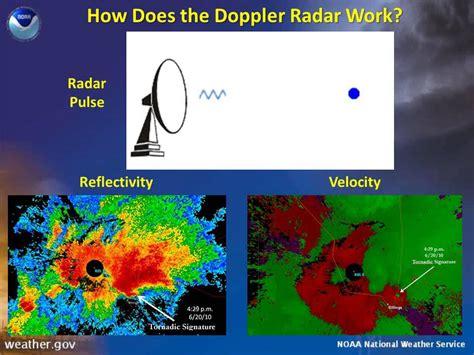
Doppler radar systems play a crucial role in tracking the movement and position of various targets. These systems work by sending out pulses of radio waves. As these waves travel, the system monitors their phase, which refers to their shape and position. By analyzing the change in phase between the transmitted pulse and the received echo, we can determine whether a target is moving toward or away from the radar. A positive phase shift indicates motion toward the radar, while a negative shift suggests motion away.
All modern radar systems utilize Doppler technology. In the realm of aviation, Doppler navigation was widely used in commercial flights during the 1960s. Although it has been largely replaced by inertial navigation systems, some older civil and military aircraft still rely on it well into the 21st century. The equipment typically includes a transmitter/receiver unit, a processing unit, and a gyro-stabilized antenna platform.
The antenna generates four beams and rotates via a servo mechanism to align with the aircraft’s path. This rotation helps balance the Doppler shift from the left and right antennas. A synchro sends the platform angle information to the flight deck, allowing pilots to monitor the ‘drift angle.’ Ground speed is calculated based on the Doppler shift between the forward and aft beams, which are displayed on the flight deck as a single instrument.
Some aircraft also feature an additional ‘Doppler Computer,’ a mechanical device that uses counters to show distance along the track and across the track difference. This computer integrates with the aircraft’s compass, enabling pilots to set a desired track between two waypoints over water, following a great circle route.