Description
The term “due regard” doesn’t have a single, clear definition. However, according to the Chicago Convention Chapter One, which outlines general principles, it states that, “…States undertake, when issuing regulations for their state aircraft, that they will have due regard for the safety of navigation of civil aircraft.”
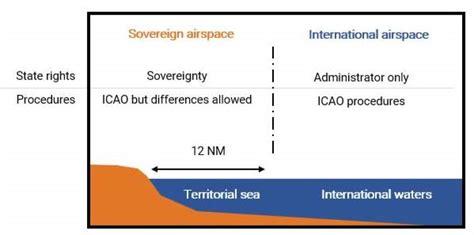
It’s important to note that the International Civil Aviation Organisation (ICAO) defines “state” aircraft as those used in military, customs, and police services. There are times when certain operations can’t adhere to ICAO standards and procedures. These situations often involve politically sensitive missions, military operations, or classified tasks. When such missions don’t follow ICAO guidelines, they are considered to be conducted under the “due regard” principle. The aircraft commander must ensure that operations are carried out with careful consideration for the safety of all civil traffic.
Effects
Crews operating under the “due regard” principle may not be required to communicate with air traffic control (ATC) or use their SSR transponders. This can lead to ATC being unaware of their intentions, making it difficult to maintain the necessary separation between aircraft. If civil traffic alters its flight path unexpectedly, dangerous situations could arise because the operational aircraft is functioning under the assumption that civil planes will behave predictably.
Typical Scenarios
Military aircraft frequently conduct exercises over international waters. While these operations can be communicated to ATC, the nature of such activities and the application of “due regard” can make coordination challenging. Maintaining only 500 feet of separation might not be enough to prevent civil aircraft from receiving alerts from the Airborne Collision Avoidance System (ACAS). This assumes that aircraft operating under “due regard” are using their SSR transponders.
Defenses
Some aerial activities may clash with the ability of state aircraft to apply “due regard,” prompting authorities to consider creating dedicated airspace structures for exclusive use or, in some cases, total segregation. If this isn’t feasible, there are several steps that state aircraft operators and pilots can take to reduce the impact of “due regard” on civil traffic:
-
Flight Preparation: Coordinating ahead of time with national airspace/ATC authorities can help minimize communication issues. Aircraft commanders should familiarize themselves with the types of civil aircraft operations, the organization of airspace, responsible ATS units, ATS routes, and applicable regulations.
-
Flight Planning: If a flight plan is filed, a note can be added in the remarks section indicating where “due regard” will start and end.
-
Flight Operations: Before declaring “due regard,” aircraft commanders should meet specific conditions. For example, the aircraft could operate in Visual Meteorological Conditions (VMC), stay within surveillance and radio communication range of radar facilities, or use airborne radar to maintain separation from other aircraft. Additionally, they should operate outside controlled airspace when possible and away from busy traffic areas.