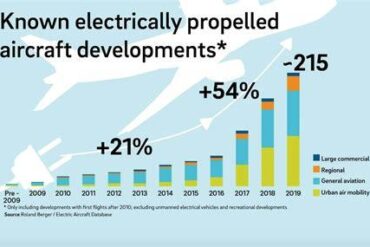
Aviation stands at the brink of a paradigm shift. With carbon neutrality set as a global goal by 2050, the pressure on the aerospace sector to decarbonize intensifies daily. Among the most promising avenues in this transformation is the electric airplane engine — a field that, until recently, was constrained by power limitations. However, a groundbreaking development from MIT’s Gas Turbine Laboratory (GTL) now redefines what’s possible.
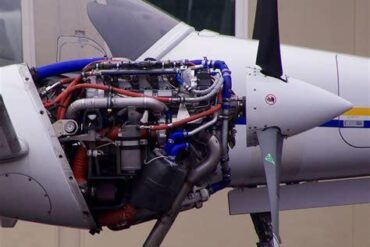
At the heart of this innovation is a 1-megawatt electric motor, meticulously engineered to balance power, weight, and performance. Traditional electric motors used in aviation are confined to small-scale aircraft, delivering only hundreds of kilowatts. But MIT’s creation, aimed at supporting commercial and regional aircraft, delivers an unprecedented leap in power without proportionally increasing weight.
The urgency of this innovation stems from a sobering reality: aviation contributes over 2.5% of global CO₂ emissions, with the bulk coming from large, single-aisle jets. Electrifying these aircraft could dramatically reduce the industry’s environmental impact, provided the engines can deliver high thrust while maintaining a low mass-to-power ratio.

The Architecture Behind the Power: Engineering Ingenuity
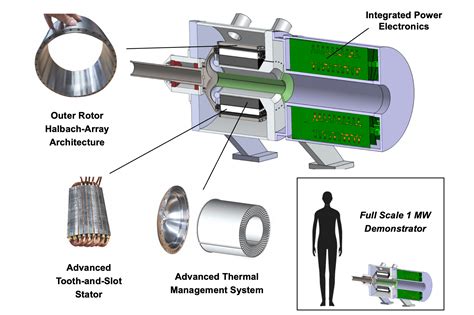
MIT’s motor is a composite of highly refined components, designed with relentless precision:
- A high-speed outer rotor, embedded with permanent magnets of varying polarity orientations.
- A low-loss stator, engineered with complex copper windings to reduce energy dissipation.
- A cutting-edge heat exchanger, capable of sustaining optimal thermal conditions under megawatt-class power generation.
- An array of 30 custom-built power electronics boards, intricately synchronized to manage current flow with minimal loss.
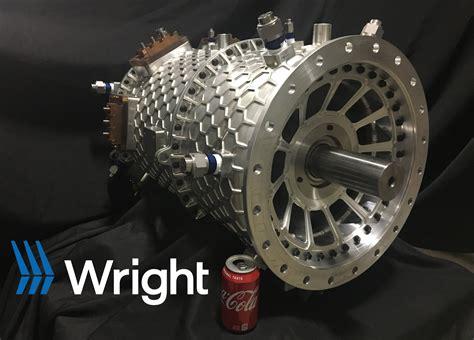
The result is a compact unit, comparable in size to a checked airline suitcase and lighter than an average adult passenger, delivering peak mechanical and electrical performance. Its modular, tightly integrated design also ensures minimal transmission loss and efficient air cooling through the embedded heat exchanger.
Hybrid and All-Electric Propulsion: Flexibility for Future Aircraft
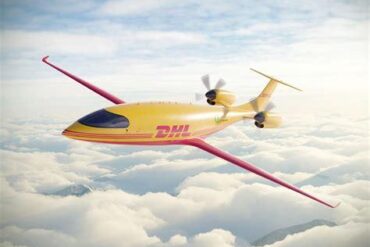
This motor is designed with dual applicability. For fully electric aircraft, it could be powered by next-generation batteries or hydrogen fuel cells. Alternatively, it can serve in a hybrid-electric setup, supplementing a traditional turbofan with electric propulsion during takeoff, climb, or cruise phases.
Such hybrid systems offer a balanced approach, significantly reducing fuel consumption and emissions without overhauling existing aerospace infrastructure. The motor could also enable distributed propulsion architectures, where multiple units are embedded along an aircraft’s wing or fuselage, enhancing aerodynamic efficiency and flight control.
Thermal Management: The Hidden Challenge of Scaling Power
High-powered electric motors naturally generate considerable heat. Left unchecked, thermal buildup can degrade performance and damage components. The MIT design addresses this through an advanced thermal management system, which integrates seamlessly with the rotor-stator assembly. The heat exchanger, using a novel internal flow channel design, dissipates heat rapidly while maintaining structural integrity and compactness.
This innovation ensures that each module remains well below critical temperatures, even under prolonged operation, making it viable for extended commercial flights.
A System Co-Optimized from the Ground Up
According to Professor Zoltán Spakovszky, project leader and director of MIT’s GTL, the electric motor represents a “truly co-optimized integrated design.” Unlike conventional approaches where electrical, thermal, and mechanical systems are developed independently, this motor is the result of a unified design methodology.
Every element — from rotordynamics to magnetic topology, circuit board layout to mechanical tolerances — has been fine-tuned using extensive simulation and lab validation. This interdisciplinary approach is rare in aerospace propulsion and represents a template for future electric aviation projects.
Testing and Validation: Engineering Under Pressure
The MIT team did not limit their work to theoretical design. Each subsystem — the stator, rotor, cooling system, and control electronics — has undergone rigorous stress testing. The components have been pushed beyond normal operating parameters to validate long-term durability and performance margins.
As of late 2024, the team is preparing for full system integration and prototype testing, a critical milestone that, if successful, will establish the motor as a viable candidate for next-gen electric aircraft propulsion.
Industrial Backing and Cross-Disciplinary Collaboration
This ambitious initiative is backed by Mitsubishi Heavy Industries (MHI) and involves collaboration across MIT’s Laboratory for Electromagnetic and Electronic Systems (LEES). Faculty, doctoral researchers, and industry partners have contributed expertise in aerodynamics, power electronics, thermal analysis, and advanced manufacturing techniques.
This fusion of talents ensures that the motor design not only excels in the lab but also remains scalable and manufacturable for real-world deployment.
Scaling Up: Toward Multi-Megawatt Electric Flight
While the 1-megawatt threshold marks a significant milestone, the real promise lies in scaling this technology to even larger capacities. Multi-megawatt systems could power transcontinental aircraft, effectively replacing fossil-fuel propulsion on long-haul routes.
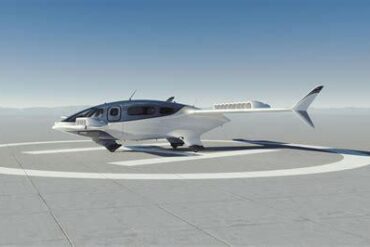
The modular nature of MIT’s design means that parallel motors can be deployed across aircraft wings, offering redundancy, adaptability, and distributed propulsion configurations. This is especially relevant as aerospace companies explore blended wing body aircraft and vertical takeoff platforms, which demand both high power density and system flexibility.
Implications for Sustainable Aviation Policy
Governmental bodies, including the FAA and EASA, are increasingly directing funding toward green aviation initiatives. The MIT motor aligns closely with these regulatory visions, offering a technologically mature, environmentally viable propulsion alternative.
Moreover, its hybrid-friendly configuration could serve as a transitional solution while battery and fuel cell technology catch up to the demands of long-distance commercial flight.
Conclusion: Propelling the Future, Electrically
The successful deployment of MIT’s 1-megawatt electric motor would not just mark a technological victory — it would rewrite the narrative of air travel in the 21st century. As we seek alternatives to carbon-intensive aviation, electric propulsion stands out not just for its environmental benefits, but for its potential to revolutionize aircraft design, efficiency, and performance.
The journey to zero-emission aviation is undoubtedly long and complex. But with innovations like MIT’s electric airplane engine, we now possess the tools — and the vision — to make it achievable.