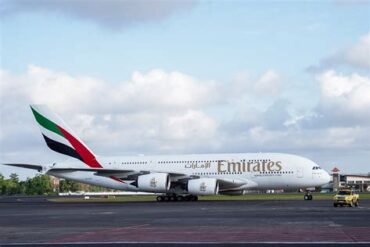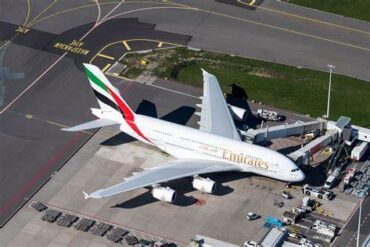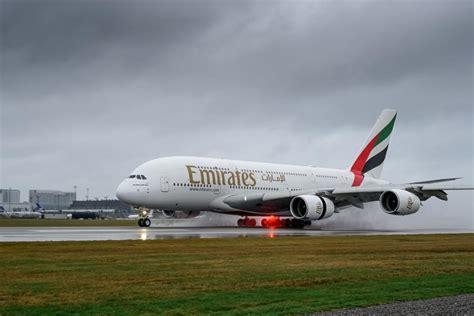
Emirates is preparing to close a short but memorable chapter in its Scandinavian operations. The airline will soon remove the Airbus A380 from its route between Dubai International Airport (DXB) and Copenhagen Kastrup Airport (CPH), marking the end of superjumbo operations on this important European connection. While the decision signals the departure of one of aviation’s most iconic aircraft from Denmark’s busiest airport, it does not mean reduced service. Instead, Emirates is implementing a new strategy designed to increase total capacity while improving connectivity through its Dubai hub.
The change highlights how modern airlines constantly adapt aircraft deployment to meet evolving travel patterns. For Copenhagen passengers, the shift means saying goodbye to the towering double-decker aircraft that has defined long-haul luxury for many travelers. At the same time, the airline is introducing more frequent flights using different widebody aircraft, creating greater flexibility for both local travelers and global connections.
Emirates’ Airbus A380 Era in Copenhagen
Emirates’ relationship with the Airbus A380 in Copenhagen has been intermittent but memorable. The aircraft returned to Denmark in January 2025, restoring a route that had been suspended since the early months of the COVID-19 pandemic. Prior to that, the superjumbo had last appeared at Copenhagen Kastrup Airport in March 2020, when global travel disruptions forced airlines to ground large portions of their fleets.
The return of the A380 in 2025 was widely seen as a milestone. Copenhagen became Emirates’ 21st A380 destination in Europe and the 51st globally, reaffirming the airline’s commitment to deploying its flagship aircraft on high-demand international routes.
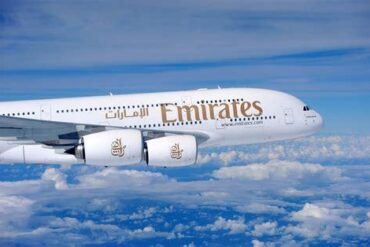
For aviation enthusiasts and frequent travelers alike, the A380’s arrival at Copenhagen once again brought the spectacle of the world’s largest passenger aircraft to Denmark. With its distinctive double-deck design, massive wingspan, and quiet engines, the aircraft became a recognizable presence on the airport’s long-haul schedule.
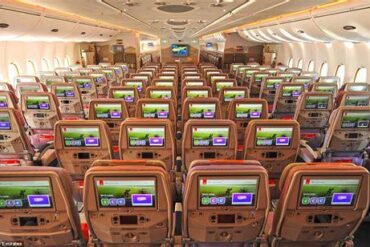
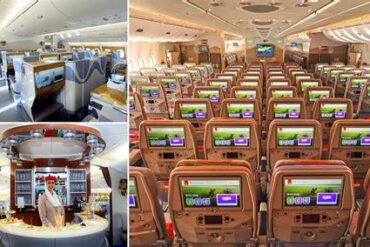
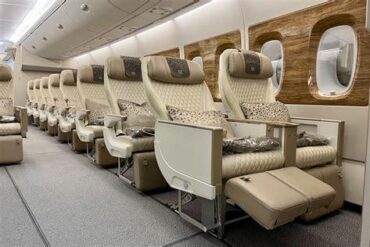
Emirates deployed its high-density two-class configuration on the route. This layout includes:
- 58 lie-flat seats in Business Class
- 557 seats in Economy Class
- Total capacity of 615 passengers
While this configuration omits the airline’s well-known First Class suites and onboard shower spa, it maximizes passenger capacity, making it particularly suitable for routes with strong leisure and connecting traffic.
The Final Months of A380 Service
According to aviation scheduling data from Cirium, Emirates will officially end Airbus A380 operations between Dubai and Copenhagen on May 31, 2026. Until that date, the airline will continue operating its daily A380 service under the same schedule that has been used since the aircraft returned to the route.
The current flight schedule has been carefully designed to optimize connections at Dubai International Airport, one of the world’s largest global transit hubs.
Flight EK151 departs Dubai at 07:30 local time, allowing passengers arriving from overnight long-haul flights to connect smoothly onto the Copenhagen service. The flight covers the roughly 4,800-kilometer journey in approximately eight hours, arriving in Denmark at 12:30 local time.
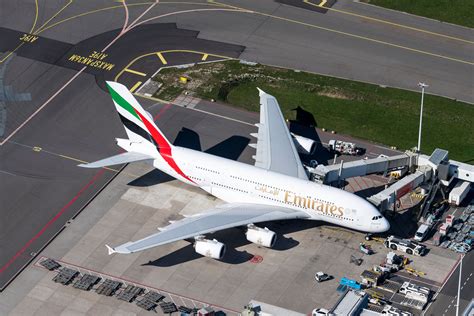
This midday arrival provides travelers with a convenient entry into the Danish capital. Visitors gain most of the afternoon to explore the city, while returning residents benefit from a comfortable daytime arrival.
The return flight, EK152, departs Copenhagen at 14:45, after a ground turnaround of just over two hours. With a flight time of seven hours and ten minutes, the aircraft arrives back in Dubai at 00:55 the following day, perfectly timed for onward overnight connections to destinations across Asia, Africa, and Australia.
For the remaining months of service, the aircraft operating these flights will continue to feature the 615-seat configuration, ensuring consistency for passengers already booked on the route.
Why Emirates Is Removing the Superjumbo
At first glance, retiring the A380 from Copenhagen might appear to signal declining demand. In reality, the opposite is true. Emirates is increasing capacity on the route by switching from one daily flight to two daily flights, using smaller but more flexible widebody aircraft.
Operating two A380 flights per day would likely exceed the route’s demand. Instead, deploying different aircraft allows the airline to spread capacity across multiple departure times, which benefits both passengers and the airline’s network planning.
This strategy reflects a broader industry shift toward frequency over aircraft size. Travelers increasingly value flexible schedules and better connection options rather than simply larger planes.
The Airbus A350 and Boeing 777 Take Over
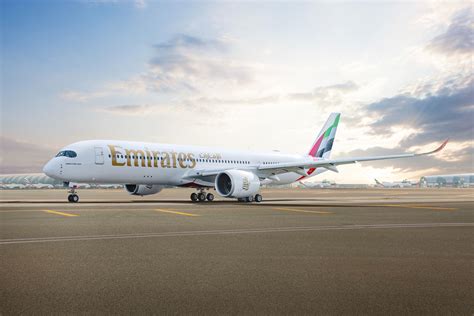
Beginning June 1, 2026, Emirates will operate two daily flights between Dubai and Copenhagen using the Airbus A350-900 and the Boeing 777.
The typical configuration will involve:
- Airbus A350-900 with 298 seats
- Boeing 777-300ER with 421 seats
Combined, these two aircraft will provide 719 seats per day in each direction, representing a 16.9% increase in capacity compared with the 615 seats previously offered by the A380 service.
Later in December 2026, the Boeing 777-300ER will be replaced by the Boeing 777-200LR, which carries 302 passengers. Even with this change, the route will maintain strong seat availability and operational flexibility.
This combination of aircraft also aligns with Emirates’ broader fleet strategy. The airline is gradually introducing new-generation Airbus A350 aircraft, which offer improved fuel efficiency, lower operating costs, and enhanced passenger comfort.
A Strategic Shift Toward Connectivity
The real advantage of this aircraft swap lies in the ability to provide two separate daily arrival windows into Dubai. This dramatically increases the number of onward connections available to passengers traveling beyond the Middle East.
Dubai functions as a global crossroads linking Europe, Asia, Africa, and Oceania. By splitting capacity across two flights instead of one, Emirates can connect Copenhagen travelers to a wider range of destinations with shorter transfer times.
For example, passengers arriving in Dubai from Copenhagen may now find improved connections to cities such as Bangkok, Singapore, Sydney, Johannesburg, and Mumbai. The increased frequency also reduces reliance on a single departure, which improves schedule reliability during operational disruptions.
The End of a Superjumbo Sight in Denmark
For aviation fans in Scandinavia, the removal of the A380 will still feel like the closing of a special era. The aircraft remains one of the most visually striking machines ever built for commercial aviation, and its presence at an airport always creates a sense of occasion.
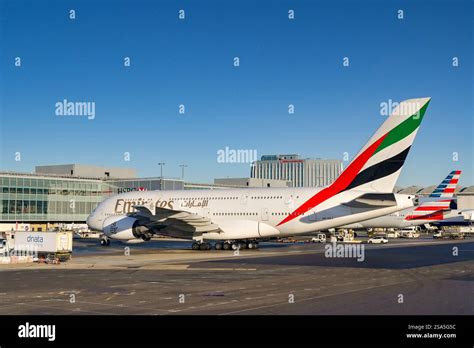
Copenhagen will join several other cities where Emirates has gradually transitioned away from the A380 in favor of more versatile aircraft. The shift reflects broader changes in airline economics, including fuel efficiency, operational flexibility, and evolving passenger demand.
Yet even as the A380 departs Copenhagen, the route itself continues to grow. Increased flight frequency, higher total seat capacity, and the introduction of newer aircraft ensure that the connection between Denmark and Dubai remains stronger than ever.
In many ways, the farewell to the superjumbo is less about decline and more about evolution—an example of how airlines constantly reshape their networks while maintaining the global links that travelers depend on.