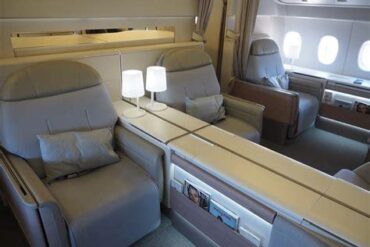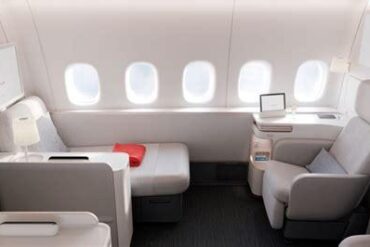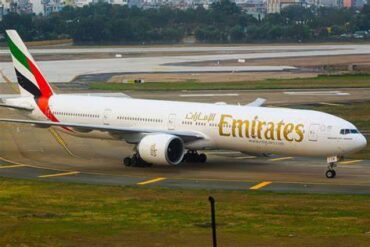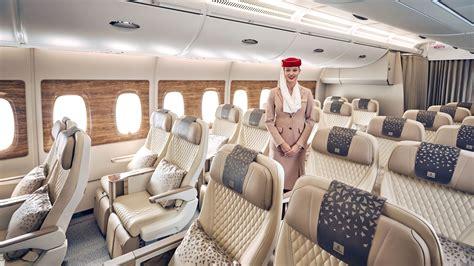
Emirates Premium Economy has received a major endorsement from The Points Guy, which has named it the world’s best premium economy product for 2026. That puts it alongside Air France La Première and Qatar Airways Qsuite, which took the top honors in first class and business class. The three products occupy different parts of the aircraft, but the ranking shows how far Emirates has pushed its newest cabin.
Awards in aviation can be subjective, and different publications frequently reach different conclusions. Even so, being ranked first by a major travel publication carries prestige because airlines spend heavily developing cabins designed to stand apart. For Emirates, the recognition is particularly notable because premium economy is still a young part of its passenger offering. The airline revealed the cabin in January 2021, making its rise to the top of the segment remarkably quick.
The award arrives at an interesting moment for Emirates. The airline is not simply maintaining the existing product; it has already prepared a substantially improved premium economy seat. The cabin that won The Points Guy’s 2026 award may soon become the foundation for an even stronger product.
Why Emirates Premium Economy Stands Out in 2026
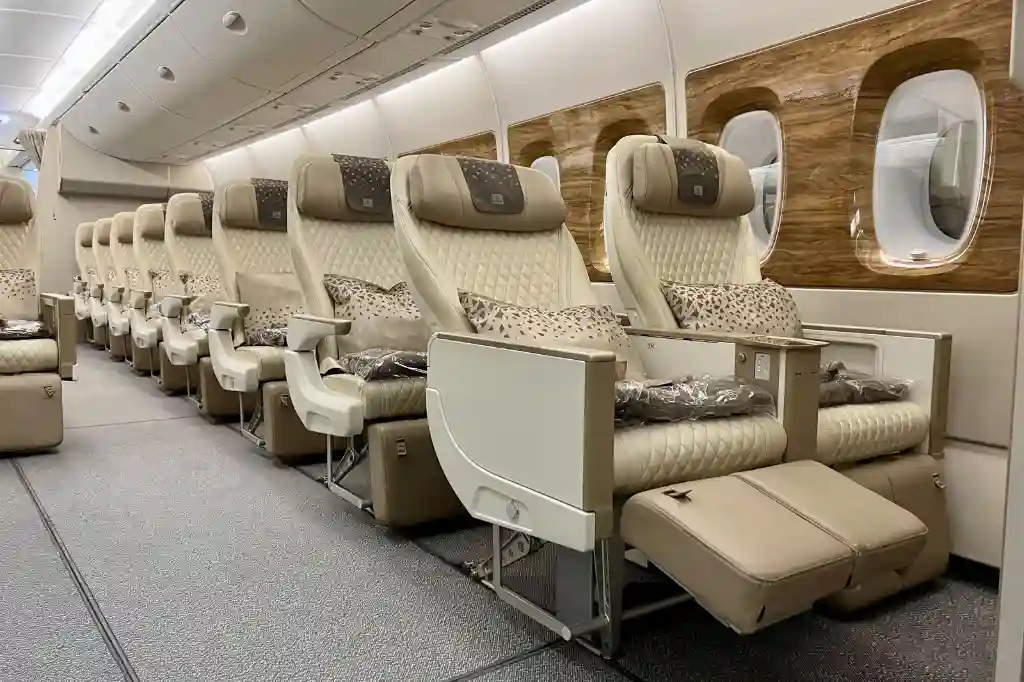
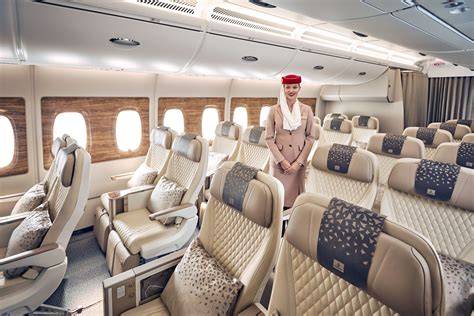
At first glance, Emirates’ current premium economy seat does not look revolutionary. The airline uses the Recaro PL3530, a widely adopted premium economy seat. There is no dramatic privacy shell or complex transformation, and some features common elsewhere are missing.
There is no built-in privacy divider between neighboring passengers, for example, and the seat does not offer wireless charging. Its entertainment screen is 13.3 inches, or 33.8 centimeters, which is competitive but not class-leading. In other words, the hardware alone does not completely explain why Emirates has reached the top of the segment.
The most important advantage is space. Emirates gives passengers approximately 40 inches of seat pitch, compared with around 38 inches at many competing airlines. Two inches can sound insignificant when presented on a specification sheet, but the difference becomes much more obvious on a long-haul flight, particularly when passengers recline, stretch their legs, or try to work comfortably.
The current seat also offers roughly eight inches of recline. Generous pitch and substantial recline create a relaxed environment without the space consumed by business class. On the A350, Emirates goes further by installing seven premium economy seats across each row rather than eight, allowing a wider seat than many passengers expect in this cabin.
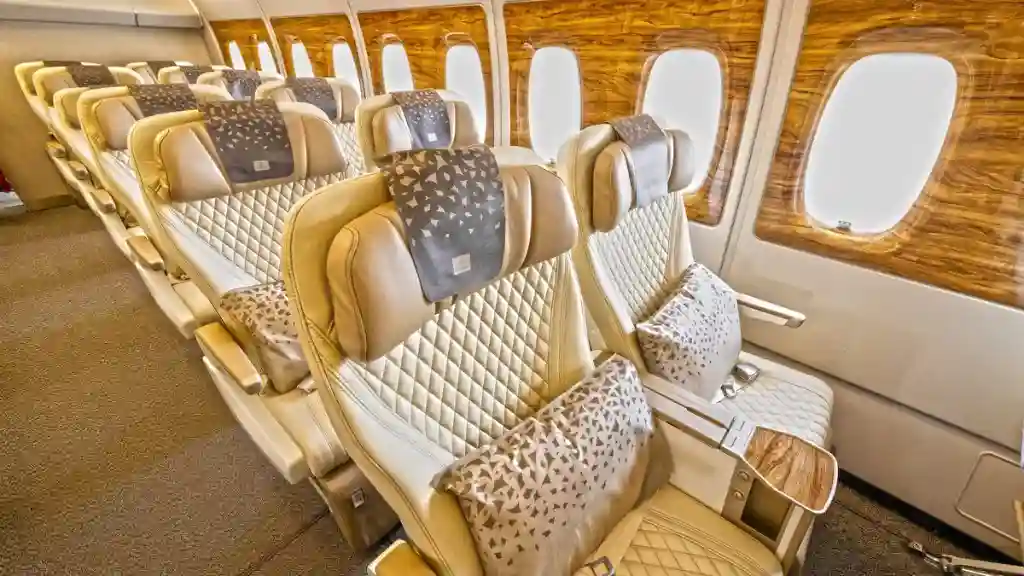
The result is an important lesson about premium economy. The most impressive cabin is not necessarily the one with the most technological tricks. A comfortable seat with meaningful legroom can outperform a more elaborate design that sacrifices space.
Emirates Service Makes the Cabin Feel More Premium
The seat explains part of the appeal, but Emirates’ service and catering are arguably even more important. Premium economy occupies a relatively small part of the airline’s widebody aircraft, and that creates a service advantage. On aircraft with first class, premium economy is normally the second-smallest cabin. On aircraft without first class, it is the smallest.
That arrangement helps Emirates provide more focused attention. The airline assigns dedicated flight attendants to premium economy, an approach that is not universal across the segment. Passengers receive service from crew members focused on a limited number of customers rather than being handled as an extension of economy.
Catering is another major part of the experience. Emirates has invested heavily in premium economy meals, using seasonal menus and regional influences rather than treating the cabin as simply an upgraded version of economy. Meals are served on quality china with metal cutlery, while portions and presentation feel substantially more substantial.
The beverage selection is also unusually extensive for premium economy. Passengers can access a broad range of drinks, including selected business-class options. That does not make the cabin business class, but it creates a clearer boundary between premium economy and standard economy.
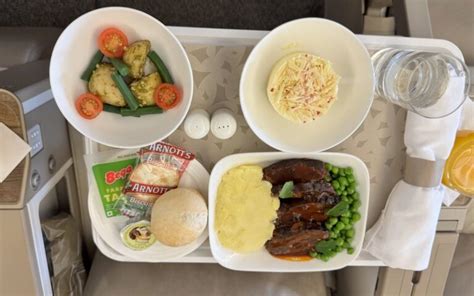
Emirates also adds smaller details that strengthen the product. Collectible amenity kits give passengers something tangible beyond the flight, while the airline’s ICE entertainment system provides a huge library of movies, television programs, music, and other content. That reputation makes entertainment an important part of the cabin.
A Rapid Roll-Out Across the Emirates Fleet
Emirates revealed its premium economy cabin in early 2021, but passengers had to wait until August 2022 to fly in it. The first aircraft to introduce the cabin was an Airbus A380-800, and the superjumbo became the starting point for Emirates’ premium economy expansion.
The airline subsequently brought the cabin to retrofitted Boeing 777-300ER aircraft in 2024. The Airbus A350-900 fleet was designed with premium economy from the beginning, making it central to the airline’s long-term strategy.
By the figures in the reference data, Emirates has 269 passenger aircraft in the relevant fleets, with 133 equipped with premium economy, representing roughly 49% of that total. All 27 A350-900s and all 10 Boeing 777-200LRs have the cabin. By contrast, only 53 of 116 A380s and 43 of 116 777-300ERs had received the product at the point represented by those figures.
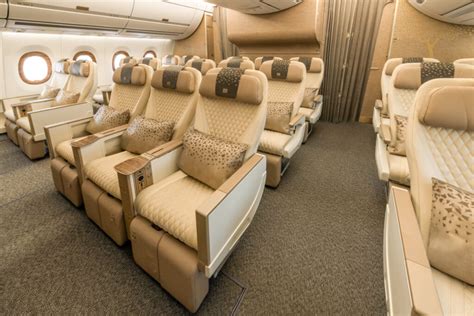
The retrofit program is therefore still significant. Emirates plans to retrofit 110 A380s with premium economy, while six are expected to leave the fleet rather than receive the cabin. The airline also plans to refurbish most 777-300ERs, with 43 already completed in the supplied fleet data.
The layouts vary by aircraft. Emirates installs 24 premium economy seats on its 777s, arranged eight abreast. The A350 has a seven-abreast configuration with either 21 or 28 seats. A380s offer 56 premium economy seats, although the location differs between configurations. Most have the cabin on the main deck ahead of economy, while retrofitted high-density A380s can place it on the upper deck ahead of business class.
Emirates Has Already Designed the Next Generation
Perhaps the most remarkable part of the story is that Emirates unveiled another premium economy seat on September 3, 2026. The timing was unexpected because the existing product has only been in service for several years, but the new design addresses several of the weaknesses that prevented the current seat from being truly revolutionary.
The next-generation seat will be electrically powered and will introduce a full-height retractable privacy divider. Privacy has become an increasingly important feature in premium cabins, and bringing it into premium economy gives Emirates a way to make the product feel substantially more exclusive without turning the seat into a miniature business-class suite.
The new seat also introduces Emirates’ U-Dream headrest, with adjustable wings that support passengers’ heads more effectively. It is also being introduced in economy, but its inclusion in premium economy should make sleeping and resting more comfortable during overnight flights.
Technology receives a significant upgrade as well. The new seat retains its 4K UHD touchscreen display, but now adds wireless charging and a smartphone holder integrated into the tray table. These may appear to be small changes, yet they address exactly the kinds of practical frustrations passengers experience when using personal devices during a long flight.
There is one trade-off. The new seat will be slightly wider but lose approximately one inch of pitch. Even after that reduction, the pitch remains slightly above the industry standard. On many long flights, the wider seat, improved headrest, privacy divider, charging capability, and device storage could create a stronger package than simply maximizing legroom.
The new seat will debut on newly delivered Airbus A350 aircraft. Emirates will continue retrofitting A380s and 777s with the existing premium economy product, meaning passengers will encounter two generations of the cabin for some time. It is also not yet clear from the supplied information whether the first Boeing 777-9 deliveries will receive the new premium economy seat.
Why The Award Matters Beyond Emirates
Emirates’ success is also significant because premium economy is becoming one of aviation’s most important cabin classes. The concept dates back to the early 1990s, when EVA Air helped pioneer it, but it became much more widespread during the 2010s. Today, most major global airline groups offer some form of premium economy, particularly on long-haul routes.
The economics are compelling. Premium economy seats occupy less space than business class while generating more revenue than standard economy. Travelers also increasingly want better comfort without paying business-class prices.
That creates a sweet spot. A passenger may not need a fully flat bed, direct aisle access, or a private suite, but may still be willing to pay substantially more for better food, more space, attentive service, and a more comfortable seat. Emirates appears to understand that demand particularly well.
Emirates is also the only one of the three major Gulf carriers to have fully committed to a conventional premium economy product. Etihad has offered Economy Space on some widebody aircraft, while Qatar Airways has marketed certain former premium economy seats at a premium on used aircraft. Emirates, by contrast, has made premium economy central to its fleet investment strategy.
Emirates Premium Economy Is Moving the Benchmark
The Points Guy’s 2026 ranking places Emirates Premium Economy, Air France La Première, and Qatar Airways Qsuite at the top of their respective cabin categories. That does not mean a premium economy seat offers the same experience as an elite first-class or business-class product. It means Emirates has achieved something more specific: it has created a product that is exceptionally strong within its own market.
The current seat wins through space, comfort, service, food, drinks, amenities, and entertainment rather than through flashy innovation alone. The forthcoming seat then addresses many of the features missing from the existing design, including privacy, wireless charging, improved head support, and integrated smartphone storage.
That gives Emirates an unusual advantage. It has already been recognized as the segment leader, yet its next-generation product appears designed to close remaining gaps. As premium economy expands, especially on long-haul routes, Emirates is positioning itself as a carrier defining what the cabin should become.
For travelers, that may be the most important consequence of the award. Premium economy is no longer simply economy with extra legroom. At its best, it is a carefully designed long-haul experience in its own right. Emirates’ award confirms that shift, while its new seat suggests competition will intensify.