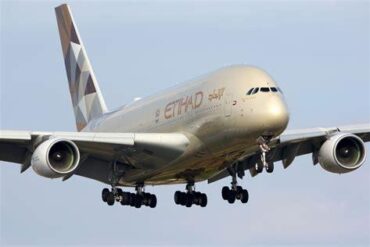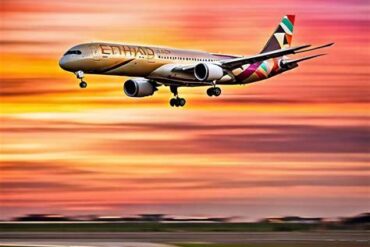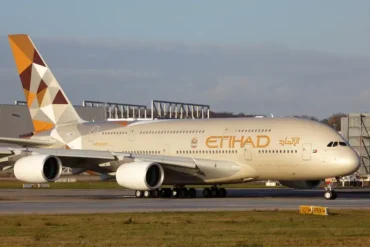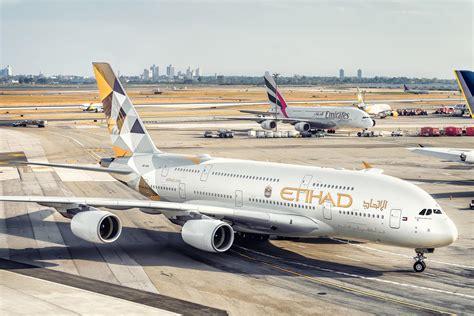
Etihad Airways is preparing for a defining year in its widebody strategy as additional Airbus A380 aircraft return to service and unlock new long-haul opportunities across its global network. With seven superjumbos already active, two more scheduled to rejoin the fleet in 2026, and a tenth positioned as a strategic spare, the carrier is orchestrating the most ambitious resurrection of the double-decker since its post-pandemic pause. The result is a surge in capacity, fresh route possibilities, and a renewed emphasis on high-density premium travel.
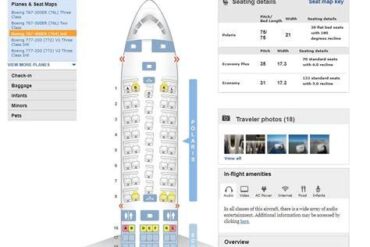
Operational decisions surrounding the A380 are tightly linked to demand patterns at Abu Dhabi International Airport, where the airline continues to shape itself as one of the fastest-growing full-service network carriers in the world. The aircraft’s sheer scale—486 seats divided among The Residence, first class, business class, and economy—gives Etihad significant leverage in slot-restricted or premium-heavy markets. Its resurgence signals a decisive shift toward deeper international connectivity.
Next summer’s lineup positions the A380 as a centerpiece of Etihad’s strategy rather than a seasonal novelty, with substantial implications for connecting traffic and long-haul competitiveness. As more airframes re-enter operation, additional services or increased frequencies are highly probable.
Etihad Introduces the A380 to Tokyo Narita for the First Time
Etihad’s decision to deploy the A380 to Tokyo Narita marks a milestone in the carrier’s 15-plus years serving the Japanese capital. Despite previously operating a variety of widebody types—including the A330-200, A340-500, A340-600, Boeing 777-300ER, 787-9, 787-10, and the current A350-1000—the superjumbo had never before appeared on the route. That changes on June 16, just in time for the summer high-demand period.
This upgrade replaces the A350-1000, which offers significantly more belly-hold cargo capability. The shift therefore signals a strong bet on passenger demand rather than freight optimization. Japan’s freight-driven market makes this a notable trade-off, but the focus on connecting travelers—who represent nine out of every ten passengers on this route—suggests a strategic push toward premium long-haul volume and European connectivity.
Connecting Traffic Drives the Decision
Booking data for the 12 months to September 2025 underlines the importance of connecting routes. The majority of Etihad’s Narita traffic connects onward through Abu Dhabi to Europe. Cities such as London, Paris, Barcelona, Milan, Madrid, Dublin, Rome, Tel Aviv, Istanbul, and Brussels consistently dominate connecting itineraries.
The A380’s capacity is tailor-made for this pattern. High-frequency European services allow tight, reliable connections, while the superjumbo’s multi-class layout provides the premium density demanded on long-haul itineraries.
Flight Times for Next Summer’s Schedule
The daily Narita service operates on the following schedule:
- Abu Dhabi → Tokyo Narita: 9:25 pm – 12:45 pm (+1)
- Tokyo Narita → Abu Dhabi: 6:00 pm – 12:20 am (+1)
The timing reinforces the route’s role as a bridge between Asia and Europe via Abu Dhabi, fitting neatly into Etihad’s established connection banks.
Five A380 Routes Set for Summer — With More Likely
Etihad has outlined five A380 destinations for next summer, each representing a core market with strong premium and connecting traffic. The airline plans to operate the superjumbo to:
- London Heathrow (up to 19 weekly flights)
- Paris Charles de Gaulle (daily)
- Singapore (daily)
- Toronto (daily)
- Tokyo Narita (daily)
Singapore returned to the A380 roster in early 2025, followed by Toronto. Tokyo will be the third recent addition as Etihad intensifies its widebody rotation. Although the airline’s leadership has historically noted limited markets requiring A380-scale demand, the ongoing reintroduction of additional aircraft suggests that either demand patterns are shifting or the carrier sees distinct competitive advantages in specific long-haul corridors.
A380 Departures Reach Their Highest Volume Since 2023
In July, Etihad’s A380 operation is scheduled for 47 weekly departures from Abu Dhabi. This represents 4% of all passenger flights and 9% of widebody services, making the A380 the least-used twin-aisle type after the 787-10. Still, this is the most intensive A380 schedule since the type’s post-pandemic restoration.
Depending on the day of the week, travelers will see six to seven daily A380 takeoffs, with the higher end appearing most days. On July 2, for example, departures will roll across the day at 2:15 am (Toronto), 2:20 am (Heathrow), 2:30 am (Paris), 8:05 am (Heathrow), 2:05 pm (Heathrow), 9:20 pm (Singapore), and 9:25 pm (Tokyo Narita).
Although higher volumes have existed—eight daily departures were recorded in July 2019—the upcoming schedule marks a return to pre-pandemic ambition. If the ninth A380 frame becomes operational on time, additional destinations or frequency increases are well within reach.
The Outlook: More A380s, More Reach, More Strategic Flexibility
Etihad’s A380 resurgence represents more than capacity growth. It signals a long-term commitment to premium-heavy trunk routes, a renewed emphasis on Abu Dhabi’s role as a global connecting hub, and a finely tuned approach to widebody fleet utilization. As the airline leans further into long-haul competition and network expansion, the superjumbo becomes both a commercial asset and a statement of intent.
Upcoming months will reveal whether Etihad extends the A380 to new markets or increases frequencies on existing ones, but the trend is clear: the double-decker era in Abu Dhabi is not only back—it is accelerating.