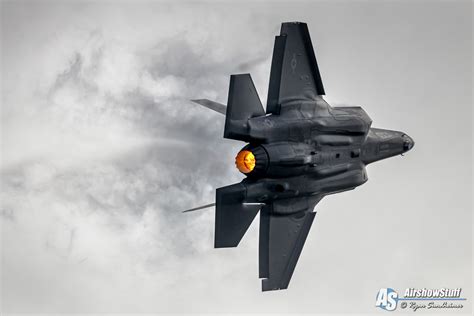
The recent decisions by Spain and Switzerland to step back from the Lockheed Martin F-35 Lightning II program mark a significant turning point in Europe’s long and uneasy relationship with American defense technology. For decades, European states have relied heavily on U.S. aircraft for both capability and interoperability within NATO. But now, mounting concerns over costs, strategic dependency, and the risks of political leverage are driving nations toward indigenous solutions, even at the cost of immediate combat capability.
At its core, this debate is about control versus dependence. By buying into the F-35, nations secure access to one of the most advanced fifth-generation fighters in existence. Yet they also surrender autonomy over upgrades, maintenance, and operational data to Washington. As alliances shift and trade disputes grow more bitter, the cost of dependence is no longer seen as acceptable.
Spain’s Break With the F-35
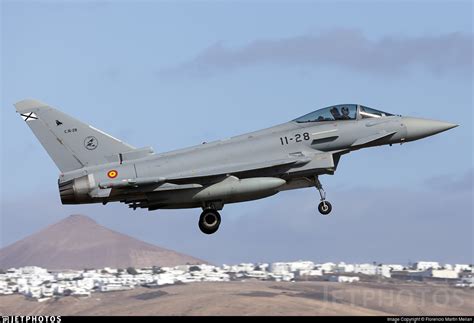
Spain’s decision to forgo the F-35B in favor of expanding its fleet of Eurofighter Typhoons shocked many within NATO. For years, it was assumed Madrid would purchase the F-35B to replace its aging Harrier jump jets, particularly for carrier operations aboard the Juan Carlos I. Instead, Spain chose to double down on the Future Combat Air System (FCAS), an ambitious Franco-German-Spanish program designed to deliver a sixth-generation fighter in the coming decades.
The choice comes at a price. Spain’s navy will now face a capability gap, as no European fighter currently matches the short takeoff and vertical landing (STOVL) features of the F-35B. Yet the long-term gains are significant. Billions of euros will be invested into European supply chains, supporting local jobs, nurturing aerospace expertise, and sustaining defense sovereignty. Madrid’s calculus is clear: better to accept a temporary gap than tie the nation’s future to a U.S.-controlled platform.
Switzerland’s Changing Calculus
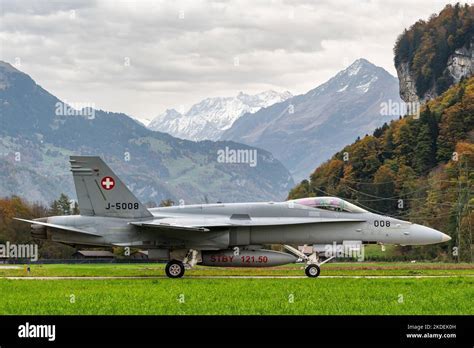
While Spain acted from industrial ambition, Switzerland is being driven by economics and trust. In 2022, a national referendum approved the purchase of 36 F-35As for 6 billion Swiss Francs. But only a year later, cracks began to show. Washington privately admitted the contract was not fixed and subject to inflation, potentially adding another 650 million Francs to the deal. Soon after, the United States imposed new tariffs on Swiss exports, souring Bern’s confidence in American reliability.
The backlash was swift. A growing number of Swiss lawmakers and citizens began calling for the deal to be scaled back—or scrapped entirely. For a neutral country with no domestic aerospace base, the F-35 offered cutting-edge technology. But the prospect of spiraling costs, combined with dependence on a foreign supply chain, revealed an uncomfortable truth: sovereignty is undermined when critical national defense assets remain under another power’s control.
The Sustainment Monopoly Problem
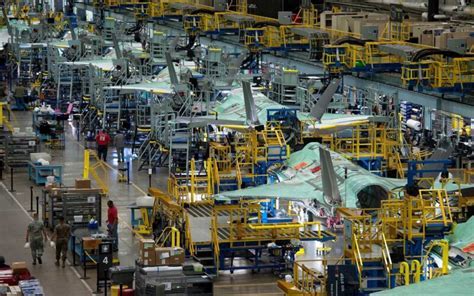
Critics of the F-35 have long argued that its most dangerous feature is not its cost, but its sustainment monopoly. Every major upgrade, every software patch, and every element of predictive maintenance must pass through Lockheed Martin and, ultimately, Washington. Nations flying the F-35 are not simply purchasing hardware—they are buying into a permanent ecosystem controlled by the United States.
This dependence is tolerable in times of political harmony. But as Europe has learned in recent years, alliances can fray quickly when economic disputes erupt or when Washington elects leaders less inclined toward NATO unity. For many, the risk is no longer acceptable.
Eurofighter and FCAS: Europe’s Answer
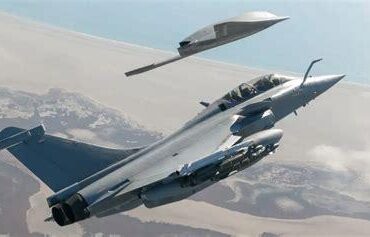
In contrast, European aircraft like the Eurofighter Typhoon offer not only proven performance but also greater flexibility. Unlike the F-35, the Typhoon’s upgrade pathways are controlled by European stakeholders, allowing nations to adapt the fighter to evolving threats without external approval. It lacks stealth and some advanced features, but it remains a potent multirole aircraft with modern electronic warfare and weapons capabilities.
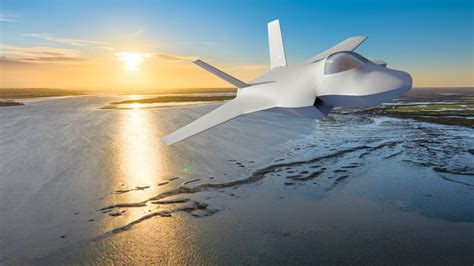
Meanwhile, the Future Combat Air System (FCAS) represents Europe’s boldest step toward defense autonomy. With a sixth-generation vision that includes stealth, manned-unmanned teaming, advanced cloud-based command networks, and next-generation electronic warfare, FCAS promises to deliver far more than a replacement fighter. It is designed as a system-of-systems, integrating drones, sensors, and combat cloud data sharing. The challenge, however, lies not in technology but in Europe’s chronic industrial fragmentation. Without unity of purpose, aligned budgets, and workshare agreements, FCAS risks suffering the same fate as earlier joint programs that collapsed under the weight of competing national interests.
Economic and Strategic Stakes
Defense procurement is not merely about aircraft capability—it is about where money flows. Every euro spent on the F-35 strengthens the U.S. defense industry, while every euro spent on European projects supports jobs, maintains technical expertise, and reinforces Europe’s industrial base. Spain’s decision keeps money circulating within Europe, while Switzerland’s initial deal with Lockheed would have exported billions abroad.
This economic reality underscores the deeper lesson: autonomy is purchased not just with technology, but with sustained investment in one’s own industries. Nations that outsource too much of their defense procurement risk hollowing out their local expertise, leaving them dependent on foreign suppliers for decades.

The Risks of Dependence
Beyond economics, dependence introduces political vulnerability. By relying on U.S. platforms, European nations expose themselves to shifts in American domestic politics. An administration less committed to NATO or more prone to trade disputes could use sustainment and upgrade approvals as leverage. This turns what should be a matter of national defense into a geopolitical bargaining chip.
For Spain, rejecting the F-35 is a form of insurance policy. For Switzerland, the realization came later, but the concerns are the same. Both countries have recognized that long-term autonomy is worth the short-term sacrifice of capability.
What Europe Must Do Next
Europe’s pivot away from the F-35 will succeed only if it addresses its own internal obstacles. Without unity, programs like FCAS risk collapse. The continent has the talent, industrial base, and funding to build world-class fighters, but political fragmentation has historically doomed ambitious projects. Achieving industrial consolidation, aligning intellectual property rights, and maintaining political will are essential.
Three lessons stand out:
- Autonomy is expensive, but dependence can cost far more in the long run.
- Hardware is meaningless without control over sustainment, software, and upgrades.
- Fragmentation is Europe’s greatest strategic liability.
Conclusion: The Future of European Skies
The F-35 is a technological marvel, but it is also a Trojan horse for dependence. Spain has already chosen the harder road, betting on Europe’s industrial future. Switzerland is reconsidering its deal under mounting economic and political doubts. Both cases reveal a fundamental truth: in the 21st century, the real battlefield is not only in the skies, but in who controls the data, the upgrades, and the industrial ecosystem behind the fighter.
If Europe can unify behind programs like FCAS, it has the potential to build a sixth-generation fighter that is not just competitive, but sovereign. If it cannot, the continent risks repeating the same dependency cycle with the next generation of aircraft, ensuring that non-European powers continue to dictate the future of Europe’s air defense.
The question is no longer whether Europe can build advanced fighters. It is whether Europe can build the unity needed to ensure its skies remain under European control.