EVA Airways Corporation, commonly known as EVA Air, stands as a towering figure in the global aviation industry, a testament to Taiwanese innovation and commitment to quality. Founded on March 8, 1989, and commencing operations on July 1, 1991, EVA Air has rapidly ascended to become one of Taiwan’s two largest airlines, alongside the state-owned China Airlines. Headquartered in Luzhu, Taoyuan City, Taiwan, this privately owned airline operates an extensive network of passenger and dedicated cargo services, connecting over 40 international destinations across Asia, Australia, Europe, and North America. Remarkably, its network is entirely international, with no domestic routes under the EVA Air banner itself. The airline’s dedication to superior service and operational excellence has earned it a prestigious 5-star rating from Skytrax, a distinction held by only a select few carriers worldwide. Operating under the insightful slogan, “Sharing the World, Flying Together,” EVA Air is an integral part of the formidable Evergreen Group, a global shipping conglomerate. Its commitment to innovation is perhaps best exemplified by its pioneering introduction of the Premium Economy class in 1991, a concept that has since been adopted by numerous airlines globally.
EVA Air’s journey began as an ambitious vision of Chang Yung-fa, the chairman of the Evergreen Marine Corporation. During the company’s 20th-anniversary celebration in September 1988, Chang announced intentions to establish Taiwan’s first private international airline, seizing the opportunity presented by the Taiwanese government’s liberalization of the air transportation system. This move required significant global experience and financial capital, which the Evergreen Group possessed in abundance. The airline, initially conceived as “Evergreen Airways,” was formally established as EVA Airways Corporation in March 1989, a name change necessitated to avoid confusion with the unrelated Evergreen International cargo airline. By October 1989, the fledgling airline placed a monumental US$3.6 billion order for 26 aircraft, including Boeing 747-400 and McDonnell Douglas MD-11 airliners, signaling its serious intent to become a major international player.
The Genesis and Ascent of EVA Air: A Timeline of Innovation
Launch and Early Operations (1989-1991)
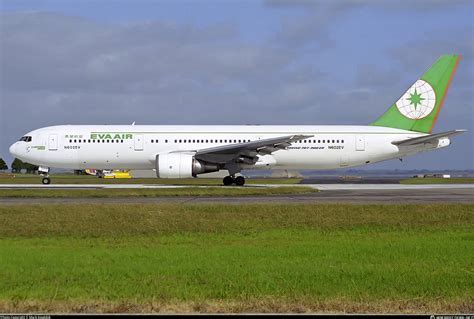
With its formal establishment in March 1989, EVA Air embarked on an ambitious journey. The initial fleet comprised Boeing 767-300ER aircraft, configured with business and economy class seating. On July 1, 1991, EVA Air’s inaugural flight took to the skies, marking the beginning of commercial operations. The first destinations served from its Taipei hub included key Asian cities: Bangkok, Seoul, Jakarta, Singapore, and Kuala Lumpur. These early 767s sported a slightly different livery than the standard design adopted in 1992. By the close of its first year, EVA Air had already expanded its network to include more East Asian cities and its first European gateway, Vienna. This rapid expansion underscored the airline’s ambition and the robust demand for its services, culminating in first-year revenues reaching an impressive US$40 million.
Pioneering Expansion in the 1990s
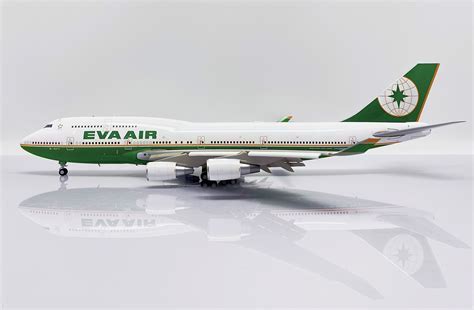
The 1990s were a period of significant growth and groundbreaking innovation for EVA Air. In 1992, the airline received the first of its Boeing 747-400 aircraft, a game-changer that enabled the launch of transpacific flights to Los Angeles in December of that year. It was on these 747s that EVA Air introduced its revolutionary Premium Economy class, initially branded as “Economy Deluxe.” This was a world-first, offering passengers a wider 2-4-2 abreast configuration, enhanced legroom with legrests, individual seatback video screens, and upgraded meal services. The Economy Deluxe cabin, later rebranded as “Evergreen Deluxe” and then “Elite Class,” proved immensely popular, setting a new standard in passenger comfort. EVA Air’s 747s were configured with 104 premium economy seats as part of a four-class layout, which also included first, business, and standard economy classes. Throughout 1993, the airline continued its expansion, adding Seattle, New York, and further enhancing services to Bangkok and Vienna using its growing fleet of Boeing 747-400s.
By 1994, EVA Air was a formidable presence, serving 22 destinations worldwide and carrying over 3 million passengers annually. A significant milestone was achieved in 1995 when the airline posted its first profit, reporting revenues of US$1.05 billion, a year ahead of its own projections. This financial success was bolstered by its impeccable safety record, which stood in stark contrast to its primary competitor at the time, China Airlines. This commitment to safety was formally recognized when EVA Air received IOSA (IATA Operational Safety Audit) certification and, in 1997, achieved simultaneous official ISO 9002 certification for its Passenger, Cargo, and Maintenance Services. April 1995 marked the commencement of dedicated EVA Air Cargo operations, with McDonnell Douglas MD-11 freighters flying weekly to Taipei, Singapore, Penang, San Francisco, New York, and Los Angeles. The cargo fleet quickly expanded to five freighters by year-end. Simultaneously, EVA Air ventured into the domestic Taiwanese market by acquiring shares in Makung International Airlines, Great China Airlines, and Taiwan Airways. On July 1, 1998, these carriers, along with EVA’s existing domestic operations, merged to form UNI Air, EVA Air’s domestic and regional subsidiary based in Kaohsiung.
Maturation and Fleet Modernization in the Early 2000s
The new millennium saw EVA Air embark on its first major long-haul fleet renewal program. In 2000, the airline became one of the launch customers for the Boeing 777-300ER, placing a significant order for four aircraft plus eight options. Concurrently, it ordered three Boeing 777-200LRs. This strategic move aimed to deploy the Boeing 777s on its crucial United States and European routes. In January 2001, EVA Air diversified its fleet further by ordering its first Airbus aircraft, the A330-200, intended for regional Asian services. The airline’s stock began trading publicly on the Taiwan Stock Exchange in 2001, a significant step in its corporate development. The early 2000s also brought challenges; internal corporate reforms in 2002 led to staff reductions and streamlined management, a process initiated in response to the 1997 Asian financial crisis. The 2002–2003 SARS outbreak further impacted passenger traffic, particularly on medium-haul flights in Southeast Asia, though long-haul routes to North America, Japan, and Europe remained relatively less affected. In 2004, EVA Air firmed up its commitment to the Boeing 777 platform by converting its remaining eight options for Boeing 777-300ERs into firm orders. The first of these flagship aircraft entered service in July 2005, heralding a comprehensive revamp of EVA Air’s cabins. This included the introduction of lie-flat seats in its new Premium Laurel business class and an upgraded premium economy product, the new Elite Class cabin. The Airbus A330s were introduced with two-class Premium Laurel and Economy cabins, further enhancing the passenger experience on regional routes.
Strategic Repositioning and Global Reach (Late 2000s – Early 2010s)
In 2007, EVA Air announced a significant enhancement to its North American network with a nonstop service from Taipei to New York (Newark Liberty International Airport), leveraging the capabilities of its new long-range Boeing 777-300ERs. This period also saw adjustments to its European network, with a temporary withdrawal of passenger service to Paris, which was later resumed in January 2009 with twice-weekly flights. Services to Auckland were suspended in 2008. A major development during this time was the preparation for increased direct flights to China, following the initiation of weekly charter flights in July 2008 due to changes in the Three Links travel agreements. The airline faced economic headwinds, particularly from a 34% surge in fuel prices during 2007-2008, contributing to a US$61.2 million loss in 2007. In response, EVA Air implemented cost-saving measures, including flight schedule reductions and fee increases. Despite these challenges, the carrier returned to profitability by the first quarter of 2009. Recognition for its quality service continued, with Travel+Leisure naming EVA Air one of the top 10 international airlines in its World’s Best Awards in August 2010.
The early 2010s marked another phase of dynamic expansion. In March 2010, EVA Air launched services to Toronto, further strengthening its North American presence. November 2010 saw the commencement of nonstop flights connecting the conveniently located Taipei Songshan Airport with Tokyo Haneda Airport. This period also saw Chang Kuo-wei, son of founder Chang Yung-fa, return as EVA Air’s president, under whose leadership the carrier recorded increased sales and yearly profits. A pivotal strategic move came with the announcement in early 2011 of its application for airline alliance membership. On June 18, 2013, EVA Air officially became a full member of Star Alliance, significantly expanding its global reach and connectivity for passengers. Further North American expansion was announced in October 2014, with new routes to Houston (launched in 2015) and Chicago (launched in 2016), increasing its North American flight frequency from 55 to 63 flights per week. Demonstrating its commitment to a modern fleet, in October 2015, EVA Air announced its intent to purchase up to 24 Boeing 787 Dreamliners and two additional Boeing 777-300ER jetliners, becoming a launch customer for the 787-10 variant.
Recent Developments and Continued Excellence
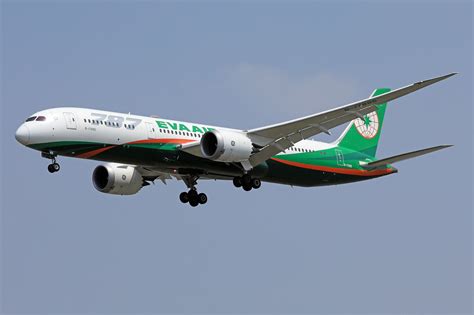
November 2015 saw EVA Air unveil a new, more contemporary livery on its Boeing 777-300ER. A significant leadership transition occurred in March 2016 following the death of Evergreen Group chairman Chang Yung-fa in January 2016. Chang Kuo-Wei, who had inherited control, was removed as chairman and replaced by Lin Pang-Shui (Steven Lin). Chang Kuo-Wei subsequently went on to establish a new airline, Starlux Airlines. Despite these internal changes, EVA Air’s commitment to excellence remained unwavering. In June 2016, it was recognized as one of only eleven airlines globally to receive a Skytrax 5-star rating. A touch of elegance was added in August 2017 with the unveiling of its third-generation uniform, designed by the renowned fashion house Shiatzy Chen, which were rolled out in November 2017. The fleet modernization continued with the delivery of its first Boeing 787-9 Dreamliner on October 2, 2018, followed by its first Boeing 787-10 Dreamliner in June 2019. These aircraft represent the future of EVA Air’s long-haul and regional operations, promising enhanced efficiency and passenger comfort.
Corporate Affairs: The Backbone of EVA Air
Business Performance and Management
EVA Air’s financial performance has shown resilience and growth over the years, despite industry volatility. For instance, in 2019, prior to the global pandemic, the airline reported operating revenue of NT$135 billion and carried 12.9 million passengers with a passenger load factor of 83.3%. While 2020 saw a significant dip due to COVID-19, with revenue at NT$79.6 billion and only 2.3 million passengers, the airline demonstrated a strong recovery. By 2023, operating revenue surged to NT$187 billion, with a net profit of NT$21.5 billion, carrying 11.3 million passengers and achieving a passenger load factor of 83.1%. This recovery underscores the airline’s robust business model and adaptability. As of December 2023, EVA Air employed 10,982 people and operated a fleet of 87 aircraft.
The airline’s headquarters, the EVA Air Building, is strategically located in Luzhu, Taoyuan City, near its primary hub at Taoyuan International Airport. Leadership, as of recent reports, includes Chairman Lin Bou-Shiu and President Sun Chia-Ming. The president is central to managing EVA’s business operations, supported by a board that oversees various divisions, including catering and maintenance. EVA Air is largely privately owned, with Evergreen Marine Corporation, Evergreen founder Chang Yung-fa’s estate, and Evergreen International Corporation being primary shareholders. Foreign investors and individual stockholders also hold a significant portion of shares.
Cultural Identity and Branding
EVA Air has cultivated a unique cultural identity. Its in-flight cabin announcements are thoughtfully delivered in Taiwanese (Hokkien), Mandarin, Hakka, and English, among other languages, reflecting its Taiwanese heritage and international reach. The airline has also incorporated Taiwanese folk songs, such as an orchestral version of “Longing for Spring Wind” performed by the Evergreen Symphony Orchestra, into its boarding music, creating a distinct and welcoming ambiance. The airline’s distinctive green and orange color scheme, while sometimes interpreted through a political lens in Taiwan, primarily symbolizes durability (dark green) and technological innovation (orange). The name “EVA” itself is derived from the first two letters of “Evergreen” and the first letter of “Airways,” always spelled in capital letters and pronounced “E-V-A,” though its ICAO callsign is pronounced “Eva.” The tail globe logo is designed to represent stability and reliability, with its unique positioning signifying service innovation. The livery has evolved, with the initial 1991 design updated in 2002 and again in late 2015 to a more modern aesthetic, featuring dark green on the aircraft’s belly and a refined tail logo. Uniforms too have seen changes, with the current dark green dresses and cropped jackets, distinguished by orange highlights for chief pursers, replacing earlier designs in 2003 and updated again in 2017.
Marketing slogans have evolved over time, from “Flying into the Future” (2016–present) to earlier phrases like “Sharing the world, flying together.” These slogans reflect the airline’s ongoing commitment to connecting people and cultures across the globe.
Diverse Operations: Beyond Passenger Flights
EVA Air Cargo: A Global Logistics Leader
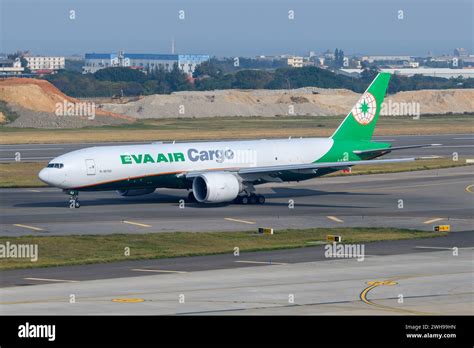
Established concurrently with its passenger operations, EVA Air Cargo has become a significant player in the global air freight market. It operates extensive facilities in Europe, Asia, and North America, specializing in the transportation of diverse goods, including high-tech equipment, delicate museum artwork, and even live zoological specimens. EVA Air has consistently aimed for a balanced revenue stream, with a target of a 50/50 split between passenger and cargo operations. The cargo fleet primarily consists of Boeing 777F aircraft, supplemented by belly cargo space on its passenger aircraft. Historically, it operated Boeing 747-400 and MD-11 dedicated freighters. Key cargo hubs include its European Cargo Center in Brussels (established in 2003) and its Southern China Cargo Center in Hong Kong (opened in 2006). EVA Air Cargo has consistently ranked among the world’s top air freight companies, recognized for its service excellence and operational efficiency, including handling sensitive cargo like the transport of two giant pandas gifted to the Taipei Zoo in 2008.
Maintenance and Support Services
Beyond its core flying operations, EVA Air encompasses vital support divisions. These include state-of-the-art pilot and cabin attendant training facilities, Evergreen Sky Catering, and Evergreen Airline Services for ground support. A cornerstone of its technical excellence is its partnership with General Electric in Evergreen Aviation Technologies Corporation (EGAT), established in 1998. EGAT is a world-class heavy maintenance and aircraft overhaul service provider, catering not only to EVA Air’s fleet but also to other international airlines. Notably, EGAT has handled complex projects such as the modification of four Boeing 747 Large Cargo Freighter aircraft for Boeing’s 787 Dreamliner production program, showcasing its advanced engineering capabilities.
Global Network: Connecting Continents
Most EVA Air flights originate from its primary hub at Taoyuan International Airport (TPE) near Taipei, where its operations are concentrated in Terminal 2. Kaohsiung International Airport (KHH) also serves as a significant base for EVA Air and its subsidiary UNI Air. Bangkok’s Suvarnabhumi Airport (BKK) acts as a key focus city, particularly for westerly connections to its European destinations, although Paris, Munich, and Milan are served non-stop from Taipei. Vienna enjoys both non-stop and via-Bangkok services. Historically, Taiwan’s political status posed challenges to route expansion, but EVA Air adeptly utilized Hong Kong and Macau as interline points for China-bound travel before direct links were established. Regular charter flights to China began in 2008, evolving into scheduled, direct cross-strait operations later that year.
EVA Air has consistently expanded its global footprint. The Houston route commenced in June 2015, followed by Chicago in November 2016. While a service to Istanbul launched in March 2016 was later discontinued, the airline successfully added daily services to Cebu, Philippines (March 2016) and Chiang Mai, Thailand (July 2018). Looking ahead, EVA Air has announced the commencement of flights from Taipei to Dallas/Fort Worth (DFW) starting November 3, 2025, marking its seventh destination in the United States and further solidifying its North American network.
Extensive Codeshare Partnerships
To broaden its network reach and offer passengers seamless travel experiences, EVA Air maintains codeshare agreements with a multitude of prestigious airlines. These partners include fellow Star Alliance members like Air Canada, Air China, Air India, Air New Zealand, All Nippon Airways (ANA), Asiana Airlines, Avianca, Singapore Airlines, Thai Airways International, Turkish Airlines, and United Airlines. Other codeshare partners include Aegean Airlines, Air Macau, Bangkok Airways, Copa Airlines, Hainan Airlines, Hong Kong Airlines, Juneyao Air, and Shandong Airlines, as well as its subsidiary, UNI Air.
The Modern EVA Air Fleet: Efficiency and Comfort
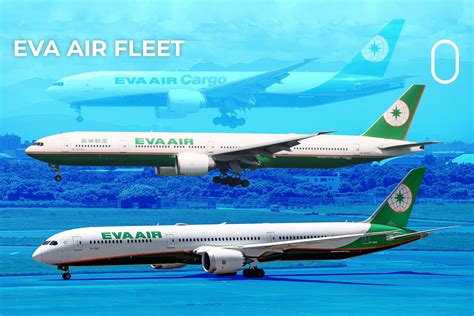
As of early 2025, EVA Air operates a sophisticated and relatively young fleet of 87 aircraft, with an additional 51 on order, underscoring its commitment to modernization and expansion. The passenger fleet is a mix of Airbus and Boeing aircraft tailored for different route requirements.
- Airbus A321-200: 17 aircraft primarily for regional routes, to be retired and replaced by Airbus A321neo by 2032.
- Airbus A321neo: 18 on order, with deliveries scheduled between 2029 and 2032.
- Airbus A330-300: 9 aircraft, serving medium-haul routes, set to be replaced by Boeing 787-9s by 2029.
- Airbus A350-1000: 24 on order, slated to replace older Boeing 777-300ERs, with deliveries from 2026 to 2030.
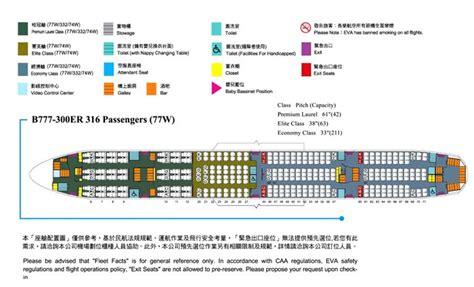
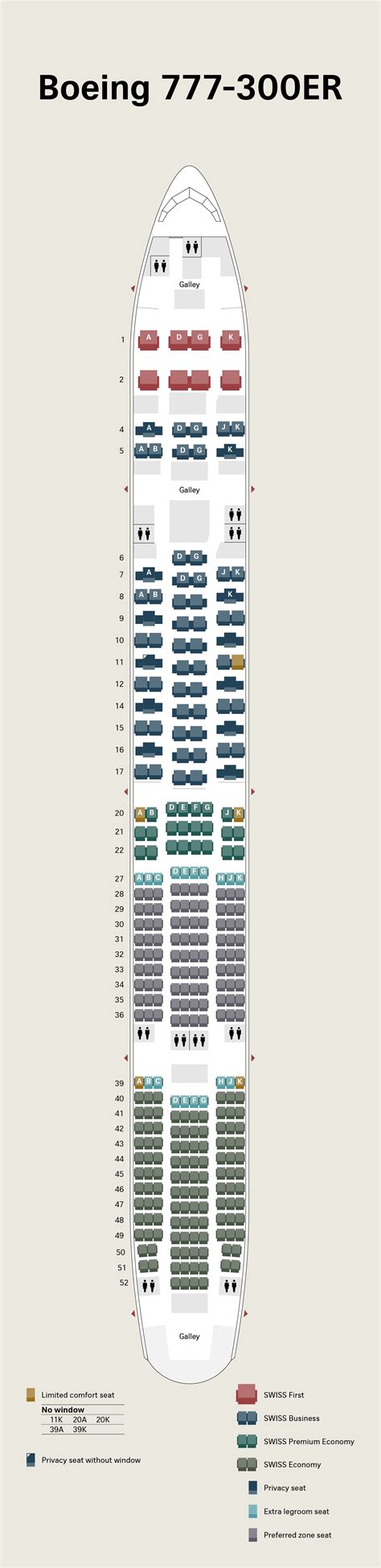
- Boeing 777-300ER: 33 aircraft forming the backbone of the long-haul fleet. Some older models will be replaced by the A350-1000, and three are scheduled for freighter conversion starting in 2025.
- Boeing 787-9 Dreamliner: 4 in service, with more on order (totaling at least 9, some converted from 787-10 orders). These are progressively replacing the A330-300s, with future deliveries featuring Premium Economy.
- Boeing 787-10 Dreamliner: 12 in service, with 5 more on order, primarily for high-density regional and medium-haul routes.
The EVA Air Cargo fleet comprises 9 Boeing 777F freighters, with an additional 3 Boeing 777-300ER/SF (Special Freighter) conversions on order, set for delivery from 2025. This modern freighter fleet ensures efficient and reliable cargo transportation worldwide.
Historically, EVA Air has operated a variety of aircraft, including the iconic Boeing 747-400 (both passenger and combi versions, retired in 2017 and 2015 respectively), McDonnell Douglas MD-11 (passenger and freighter), MD-90, Boeing 767-200/300ER, and Airbus A330-200. The transition to a more streamlined and fuel-efficient fleet, centered around the Boeing 777, Boeing 787, and Airbus A350/A321neo families, reflects EVA Air’s strategic focus on operational efficiency and environmental responsibility.
Iconic Special Liveries
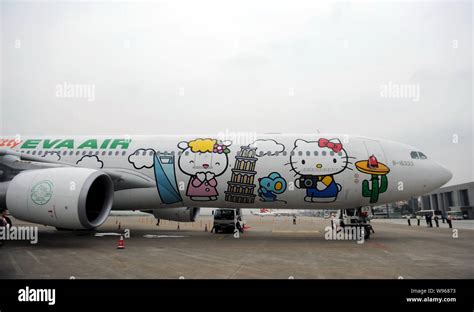
EVA Air is renowned for its eye-catching special liveries, particularly its collaboration with Sanrio for the Hello Kitty Jets. First launched in 2005 on A330-200s, these themed aircraft featured Hello Kitty characters on the exterior and a complete Hello Kitty motif for interior furnishings, amenities, and even meals. The popularity of these jets led to their reintroduction in 2011 on new Airbus A330-300s and later on Boeing 777-300ERs, with various themes like “Magic Stars,” “Loves Apples,” “Around the World,” “Speed Puff,” “Happy Music,” “Hand in Hand,” and the Kikilala-themed “Shining Star.” Over the years, some themes have been updated or replaced, such as the “Bad Badtz-Maru Travel Fun” and “Gudetama Comfort Flight” liveries. In November 2024, a new “Hello Kitty Pinky jet” was unveiled on an Airbus A321-200. Beyond Hello Kitty, EVA Air also featured a special “Rainbow” livery on its first three Boeing 777-300ERs, one of which was showcased at the 2006 Farnborough Airshow. An A330-200 also sported a floral-inspired design for the 2010 Taipei International Flora Exposition.
Superior In-Flight Services and Passenger Experience
EVA Air prides itself on delivering a superior passenger experience across all cabin classes, consistently earning accolades for its service quality.
Cabin Classes: A Spectrum of Comfort
EVA Air offers a range of cabin classes designed to meet diverse traveler needs:
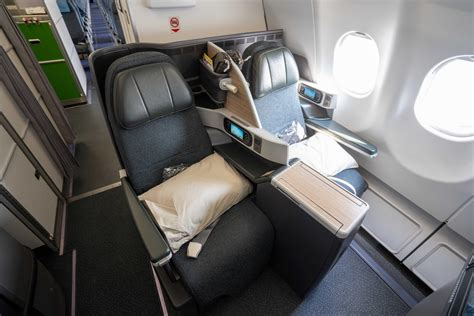
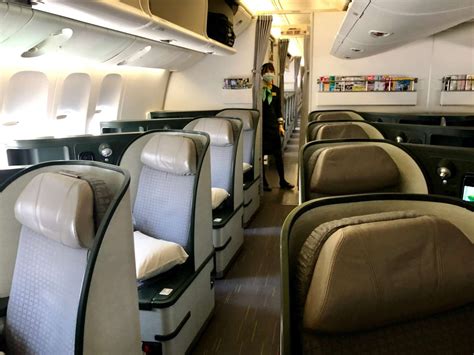
- Royal Laurel Class: EVA Air’s flagship business class, available on Boeing 777 and 787 aircraft. It features reverse herringbone configured seats that convert into fully lie-flat beds, offering direct aisle access for every passenger. Seats are pitched at 79-76 inches and are 26-23 inches wide, equipped with large personal entertainment screens, laptop power, and multi-port connectors. The Designworks (a BMW Group company) designed seats on the 787 further enhance this luxurious experience.
- Premium Laurel Class: The business class product on Airbus A330 aircraft. These pod-style seats convert to angled lie-flat beds with a pitch of 61 inches and are arranged in a 2-2-2 configuration. Laptop power and personal entertainment systems are standard.
- Business Class: Offered on Airbus A321 aircraft for short-haul routes, featuring 8 recliner seats with a 45-inch pitch, 10.6-inch entertainment screens, and power outlets.
- Premium Economy Class: Pioneered by EVA Air, this cabin is available on Boeing 777 and newer Boeing 787-9 aircraft. It offers wider seats (2-4-2 configuration on B777s), more legroom (38-40 inch pitch), adjustable winged headrests, footrests, and larger personal entertainment screens. Passengers receive enhanced meal services and amenity kits.
- Economy Class: Available on all aircraft, Economy Class seats feature an 840 mm (33-inch) pitch, touchscreen personal entertainment screens (except on some A321s which have overhead screens), sliding seat cushions, and adjustable winged headrests. Seating is typically 3-3-3 on Boeing 777s and 787s, and 2-4-2 on A330s. Newer Economy cabins on the B777-300ER and B787 feature improved entertainment systems and USB/AC power ports.
In-Flight Entertainment and Catering
EVA Air’s Star Gallery Audio Video on Demand (AVOD) system is available in all classes (except A321 Economy), offering a wide selection of movies, TV shows, music albums, and interactive games. The airline’s inflight magazine, enVoyage, and duty-free shopping through EVA Air Sky Shop complement the entertainment offerings. Wi-Fi connectivity is also available on many aircraft.
Catering on EVA Air is a highlight, with a variety of Western and Eastern meal selections, varied by route and season. Special meals can be pre-ordered. In Royal Laurel and Premium Laurel Class, passengers can often pre-order gourmet entrées, including renowned dishes from Din Tai Fung. A self-service refreshment bar and premium wine selections are also features of the Royal Laurel experience.
Lounges and Frequent Flyer Program
EVA Air operates its exclusive EVA AIR Lounges at major airports, including four distinct lounges at its Taoyuan International Airport hub: The Garden, The Infinity, The Star, and The Club by EVA Air, each catering to different tiers of eligible passengers. These lounges offer refreshments, business facilities, and comfortable relaxation areas. The Infinity MileageLands frequent flyer program allows members to earn and redeem miles for flights, upgrades, and other rewards. It features four tiers: Green, Silver, Gold, and Diamond, each offering escalating benefits, including lounge access, extra baggage allowance, and priority services. Miles can also be earned and redeemed with Star Alliance partners.
Safety, Incidents, and Labor Relations
EVA Air maintains an exemplary safety record, having experienced no aircraft losses or passenger fatalities throughout its operational history. It is consistently ranked among the world’s safest airlines by various aviation safety rating agencies. However, like any major airline, it has encountered incidents. Notable occurrences include a near-miss incident involving a Boeing 777-300ER and Mount Wilson near Los Angeles in December 2016 due to an air traffic control error, a taxiing incident at Toronto Pearson International Airport in December 2017 where a Boeing 777-300ER struck a pole, and a ground collision at Tokyo Haneda Airport in June 2023 where an EVA Air A330-300’s winglet struck a Thai Airways A330-300. These incidents did not result in passenger injuries but highlighted the ongoing challenges in aviation operations.
In terms of labor relations, EVA Air faced a significant challenge in June 2019 when the Taoyuan Flight Attendants Union (TFAU) initiated an air strike, which became the longest in Taiwan’s aviation history. The strike, lasting until July 10, 2019, resulted in approximately 1440 flight cancellations and affected over 280,000 passengers, causing substantial financial losses for the airline. An agreement was eventually reached, addressing various labor concerns.
Despite these challenges, EVA Air continues to be a symbol of Taiwanese excellence in the aviation sector, renowned for its commitment to safety, service quality, and innovation. Its journey from a fledgling private airline to a globally respected 5-star carrier is a remarkable story of ambition and dedication, truly embodying its slogan of “Sharing the World, Flying Together.”