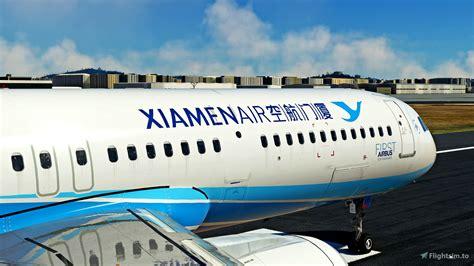
XiamenAir, officially known as Xiamen Airlines, stands as a prominent and highly respected passenger airline headquartered in Xiamen, Fujian province, China. Since its inception on July 25, 1984, XiamenAir has carved a unique path in the competitive Chinese aviation landscape, distinguished as the first airline in the People’s Republic of China to operate independently as an enterprise, rather than as a direct arm of the Civil Aviation Administration of China (CAAC). This pioneering spirit has defined its trajectory for four decades, allowing it to cultivate a strong brand identity, an extensive network, and a reputation for quality service. The airline’s primary operational hubs are strategically located at Xiamen Gaoqi International Airport and Fuzhou Changle International Airport, with crucial secondary hubs at Beijing–Daxing International Airport and Hangzhou Xiaoshan International Airport. These hubs form the backbone of a sprawling network that connects numerous domestic and international destinations.
XiamenAir’s corporate structure is notable, with China Southern Airlines holding a majority stake of 55%, Xiamen C&D Group possessing 34%, and Fujian Investment and Development Group Co., Ltd. owning the remaining 11%. This blend of state-owned enterprise backing and local investment has provided a stable foundation for growth and innovation. Under the leadership of Chairman Zhao Dong and President & CEO Xie Bing (previously Wang Zhixue was General Manager), the airline has navigated the complexities of the aviation market with considerable success. Its commitment to passengers is further exemplified by its frequent-flyer program, Egret Miles, and its membership in the prestigious SkyTeam global airline alliance since November 21, 2012, making it the first mainland Chinese airline outside of the “Big Three” (Air China, China Eastern, and its parent China Southern) to join such an alliance.
The airline operates an impressive fleet, which, as of recent counts, stands at 172 aircraft, serving over 103 destinations. This operational scale translates to approximately 3,500 to 4,000 flights per week, carrying nearly 25 million passengers annually. Beyond its core operations, XiamenAir extends its influence through significant shareholdings in subsidiaries Hebei Airlines (99.47%) and Jiangxi Air (60%), the latter being established from the former Xiamen Airlines Nanchang Branch. This strategic expansion broadens its reach and market penetration within China. The airline’s headquarters are situated at 22 Dailiao Road, Xiamen, a testament to its deep roots in the city that bears its name. A distinctive feature of XiamenAir’s in-flight experience is the inclusion of announcements in Minnan, a local dialect, alongside Mandarin and English, reflecting its strong regional identity and connection to Fujian province. This unique touch is voiced by Xia Hui, a respected former broadcaster.
The Genesis of XiamenAir: Pioneering a New Era in Chinese Aviation
The story of XiamenAir is intrinsically linked to the development of Xiamen as a Special Economic Zone and the broader reforms in China’s aviation sector. The history of aviation in Xiamen itself dates back to 1928 with the Xiamen Wutong Civil Aviation Academy. However, consistent civil air transport was frequently disrupted by historical events, including the Japanese invasion and subsequent political changes. For a significant period, Xiamen, situated on the front of the Taiwan Strait, lacked its own civil aviation airport, forcing residents to rely on sea or rail for travel. This deficiency became particularly acute with the establishment of the Xiamen Special Economic Zone. The impetus for Xiamen Gaoqi Airport’s construction, approved in January 1982 and completed in October 1983, was a direct response to this need. Yet, the airport initially lacked a hub airline, which limited its capacity to spur regional development.
The idea for a Xiamen-based airline emerged during the airport’s opening ceremony. Zhang Ru, then Vice Governor of Fujian Province, proposed a cooperative venture between the CAAC and Fujian Province to Shen Tu, Director of the CAAC. This proposal received immediate support. Initial explorations even included discussions with Aloha Airlines in October 1983, with its chairman Chen Qing visiting Xiamen to consider a Sino-foreign joint venture. Wu Zhongliang, involved in Xiamen Airlines’ establishment, recalled that Aloha Airlines even contemplated moving its base to Xiamen. However, this joint venture plan, drafted by the Xiamen Municipal Government as “Conceptual Plan and Opinions on Sino-foreign Joint Venture to Operate China Xiamen Special Zone United Airlines Co. Ltd.,” was ultimately rejected by the CAAC, Fujian Province, and Xiamen City due to concerns over air rights and other complex issues.
This led to a renewed focus on a domestic partnership. On March 2, 1984, the CAAC and Fujian Provincial Government jointly issued the “Approval of Agreement on Joint Venture Operation of Xiamen Airlines Co. Ltd.” This pivotal document paved the way for the official establishment of Xiamen Air Co. Ltd. on July 25, 1984. It was a landmark event, creating China’s first comprehensive local airline company structured as a joint venture between the central government (represented by the CAAC, specifically its Shanghai Administration) and local entities (Xiamen Special Economic Zone Construction Development Company and Fujian Investment Enterprise Company). Gaoqi Airport was naturally selected as its operational base. Despite its ambitious charter, Xiamen Airlines began with modest resources: an initial investment of 20 million RMB that was not immediately available, and a registered bank account with only 5,000 RMB, devoid of any aircraft or even a distinct livery. Its early operations relied on wet-leased aircraft. The first official flight, utilizing a wet-leased Boeing 737, took place on January 5, 1985, connecting Xiamen to Beijing Capital Airport. This was swiftly followed by routes to Guangzhou and Shanghai, operated with aircraft from the CAAC’s Shanghai and Guangzhou administrations (the latter being the precursor to China Southern Airlines). A significant step towards autonomy occurred on February 12, 1985, with the lease of its first dedicated Boeing 737-200. By December 18, 1985, a board decision led to the transfer of the CAAC Shanghai Administration’s shares to the CAAC Guangzhou Administration, consolidating its early partnership structure, which became effective January 1, 1986. The first aircraft officially based in Xiamen, a Boeing 737-200, arrived on November 16, 1986, marking a true beginning for its independent operations from its home city. The introduction of a second 737-200 in November 1987 coincided with a crucial financial milestone: Xiamen Airlines achieved its first profit of 3.17 million RMB, reversing three years of initial operating losses and setting a precedent for sustained profitability that would last for an impressive 27 consecutive years.
Navigating Growth: Expansion, Modernization, and Branding
Xiamen Airlines embarked on a journey of strategic expansion and modernization throughout the late 1980s and 1990s, distinguishing itself through innovative approaches to corporate organization, operational management, and transportation services. At its founding, it was deliberately positioned as an independently accounted, self-financing limited liability company, a novel concept in China’s state-dominated aviation sector at the time. This autonomy allowed for greater flexibility and responsiveness. In 1989, the airline undertook significant reforms across its organizational structure, personnel management, labor distribution, housing system, medical insurance, and employee benefits. A further step towards modern employment practices was taken in 1997 with the implementation of a contract system for all employees.
The airline’s fleet and brand identity also evolved. On August 8, 1988, Xiamen Airlines celebrated a significant milestone by taking delivery of its first brand-new passenger aircraft directly from Boeing – a Boeing 737-25C Advanced, registration B-2524. This aircraft was notably the last Boeing 737 classic airliner produced by Boeing Civil Aircraft. Prior to this, the airline had operated older aircraft acquired from China Southern Airlines and Southwest Airlines. The B-2524 served faithfully until its retirement in 2003, when it was resold to Blue Dart Express. In 1991, a pivotal year for its branding, the General Administration of Civil Aviation (GACA) approved Xiamen Airlines’ adoption of the “Blue Sky and White Heron” as its corporate logo, an emblem that would become synonymous with the airline for years. The white egret, a bird commonly found in Xiamen, symbolized grace and aspiration. This same year, the CAAC underwent a significant restructuring, separating its governmental and enterprise functions, leading to the formal establishment of China Southern Airlines. Consequently, the shares previously held by the CAAC Guangzhou Administration were officially transferred to the newly formed China Southern Airlines, solidifying its parent-subsidiary relationship.
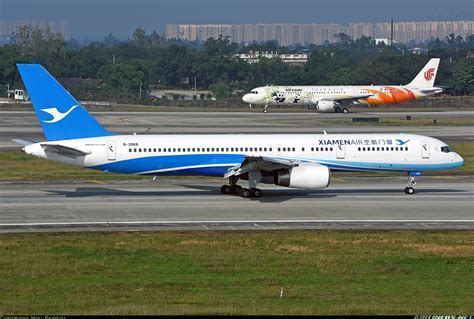
The fleet continued to grow with the introduction of larger aircraft. On August 12, 1992, Xiamen Airlines welcomed its first Boeing 757-200, registered as B-2819. This delivery was particularly noteworthy as it was the 100th aircraft delivered by Boeing to the Chinese civil aviation system. The Boeing 757 played a crucial role in Xiamen Airlines’ expansion on domestic and regional routes, offering increased capacity and range. This specific aircraft, B-2819, was retired in 2008 and subsequently sold to Blue Dart Aviation, which converted it into a cargo plane. The year 2000 marked Xiamen Airlines’ entry into the international arena with the launch of its first international service between Xiamen and Bangkok, Thailand, operating as flights MF897/8. This was a significant step, signaling the airline’s ambitions beyond domestic Chinese skies.
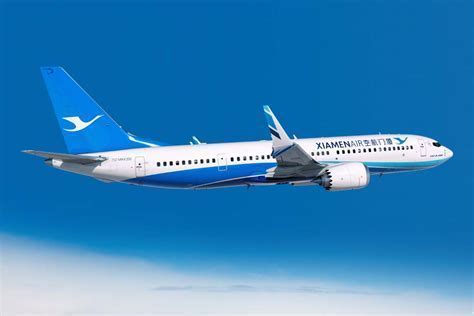
A major rebranding initiative took place on July 25, 2012, coinciding with the airline’s 28th anniversary. Xiamen Airlines unveiled a new visual identity, transitioning from the long-standing “Blue Sky with White Heron” to the more dynamic “One Heron Flying High.” The aircraft livery theme also changed, moving from “Reform Music” to “Sea and Sky,” reflecting a more modern and internationally-oriented image. This comprehensive rebranding effort involved the expertise of renowned Chinese design master Chen Youjian and TEAGUE, the design team frequently appointed by Boeing, underscoring the airline’s commitment to a refreshed and globally appealing brand, which also saw the more common branding as XiamenAir. The last of its Boeing 757 passenger aircraft, B-2868, was honorably retired on December 1, 2018, after completing its final flight from Shanghai Hongqiao to Xiamen. This event marked the end of Boeing 757 passenger operations in Greater China, a poignant moment for an aircraft type that had served the region well.
Reaching New Horizons: Intercontinental Flights and SkyTeam Membership
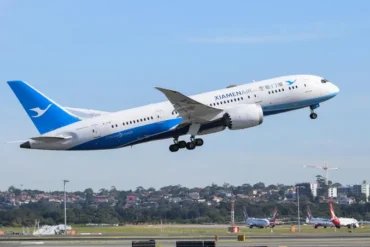
The early 21st century saw XiamenAir boldly step onto the intercontinental stage, a strategic move enabled by the acquisition of wide-body Boeing 787 Dreamliner aircraft. These modern, fuel-efficient jets opened up possibilities for long-haul routes, significantly expanding the airline’s global footprint. The first foray into Europe commenced on July 26, 2015, with the launch of a direct service from Xiamen to Amsterdam, a key European hub. This was followed by services to Paris starting December 11, 2018. Australia became the next intercontinental frontier, with flights to Sydney commencing on November 30, 2015, and to Melbourne a year later, catering to both business and leisure travel, as well as the significant student and expatriate communities.
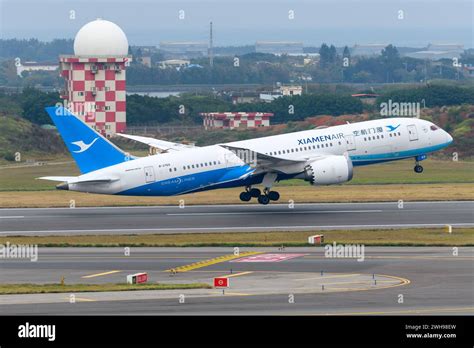
North America was soon added to the expanding route map. XiamenAir’s inaugural service to the continent was to Vancouver, Canada, launched on July 26, 2016. The United States followed, with the first service to Seattle, a city with strong ties to Boeing. Subsequently, routes to Los Angeles and New York were established, connecting major economic and cultural centers across the Pacific. This rapid intercontinental expansion was supported by the strengthening of its domestic network and the establishment of numerous operational bases. By early 2020, XiamenAir had strategically developed bases at Fuzhou Changle International Airport, Nanchang Changbei International Airport, Hangzhou Xiaoshan International Airport, Tianjin Binhai International Airport, Changsha Huanghua International Airport, Quanzhou Jinjiang International Airport, Chongqing Jiangbei International Airport, and Shanghai Hongqiao International Airport. A significant operational shift occurred in 2020 when its Beijing operations moved from the congested Beijing Capital International Airport to the new, state-of-the-art Beijing Daxing International Airport.
A crowning achievement in its international development was its integration into a global airline alliance. On November 17, 2011, XiamenAir signed a memorandum of understanding with SkyTeam. The formal induction took place on November 21, 2012, when XiamenAir officially became the 19th member of SkyTeam. This membership was a landmark, making it the first airline in mainland China, apart from the three major state-owned carriers (Air China, China Eastern, and its own parent, China Southern Airlines) and Shanghai Airlines (which joined as an affiliate member), to gain full membership in one of the world’s three major airline alliances. By joining SkyTeam, XiamenAir added three new hub cities to the alliance’s network – Xiamen, Fuzhou, and Hangzhou – significantly enhancing SkyTeam’s presence in Southeast China and offering XiamenAir passengers seamless travel to a vast array of global destinations. It is worth noting that China Southern Airlines, XiamenAir’s parent company, subsequently withdrew from SkyTeam on January 1, 2019, but XiamenAir has remained a valued and active member of the alliance.
Modern Fleet: Embracing Efficiency and Diversification
XiamenAir’s fleet strategy has historically been centered around Boeing aircraft, maintaining an all-Boeing fleet for an impressive 37 years since its foundation. This approach offered benefits in terms of maintenance, pilot training, and operational consistency. However, in a significant strategic shift, XiamenAir announced in October 2022 its decision to introduce Airbus aircraft into its fleet. This move marked the end of its exclusive relationship with Boeing and ushered in a new era of a dual-manufacturer fleet, comprising both Airbus and Boeing aircraft. The initial order was for 15 Airbus A321neos under operating leases, with deliveries commencing to enhance its narrow-body capacity for domestic and regional routes.
As of February 2024, the XiamenAir fleet (excluding its subsidiaries Hebei Airlines and Jiangxi Airlines, which operate their own distinct fleets though sometimes draw from XiamenAir’s orders or stock) is a robust mix of modern aircraft. The narrow-body contingent is primarily composed of the Boeing 737 family. This includes:
- Boeing 737-700: 5 aircraft, typically configured with 8 business class and 120 economy class seats.
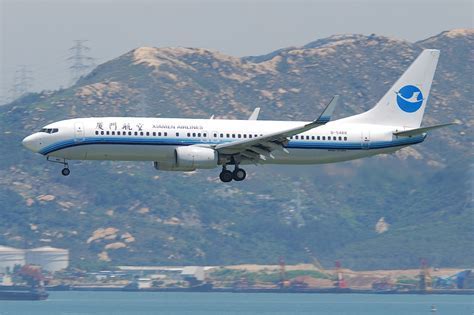
- Boeing 737-800: A substantial fleet of 115 aircraft, making it the backbone of domestic and regional operations. These aircraft feature various configurations, including 8 business/156 economy, 8 business/162 economy, or an all-economy layout with 184 seats.
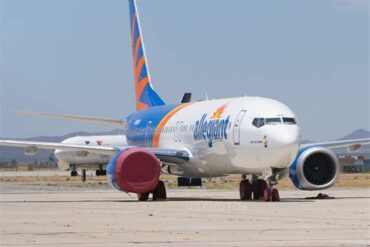
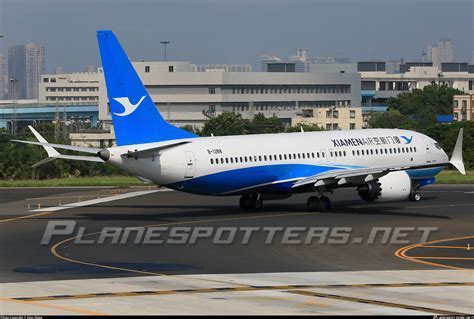
- Boeing 737 MAX 8: 22 aircraft are in service, with 13 more on order. These are configured with 184 economy class seats and represent the latest generation of the 737 family, offering improved fuel efficiency and passenger comfort. Deliveries commenced in May 2018.
The airline is also set to introduce the Boeing 737 MAX 10, with 10 aircraft on order, transferred from its parent company, China Southern Airlines. This larger variant will provide additional capacity on high-demand routes.
On the Airbus side, the fleet currently features:
- Airbus A321neo: 17 aircraft are in service, with an additional 18 on order. These are configured with 8 business class and 200 economy class seats, totaling 208. These aircraft are crucial for modernizing its narrow-body fleet and increasing capacity efficiently.
- Airbus A320neo: 20 aircraft are on order, with deliveries expected to begin from 2024, further diversifying its narrow-body options.
For its long-haul intercontinental services, XiamenAir relies on the Boeing 787 Dreamliner series:
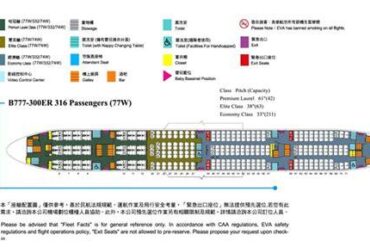
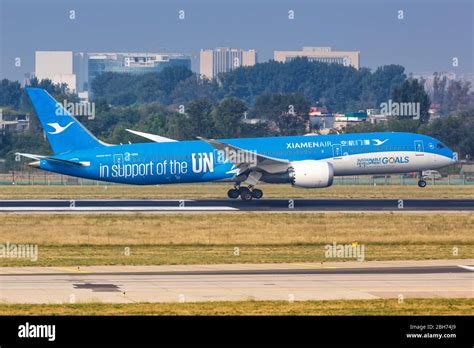
- Boeing 787-8: 6 aircraft, configured with 4 first class, 18 business class, and 215 economy class seats, totaling 237 passengers. These were the first wide-body aircraft to enable XiamenAir’s ambitious long-haul expansion.
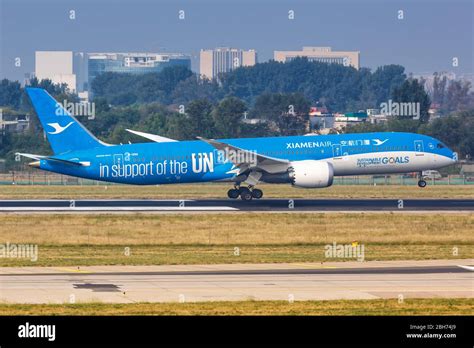
- Boeing 787-9: 6 aircraft are in service, with 3 more on order (transferred from China Southern Airlines). This larger variant offers a configuration of 30 business class and 257 economy class seats, totaling 287 passengers, providing enhanced capacity and premium offerings on key international routes.
In addition to its passenger fleet, XiamenAir has also ventured into dedicated cargo operations with the XiamenAir Cargo division. This includes at least one Boeing 737-800BCF (Boeing Converted Freighter), signaling its intent to capture a share of the growing air freight market. The overall average fleet age is commendably young, around 9 years, reflecting a commitment to operating modern and efficient aircraft. Historically, XiamenAir has operated other Boeing models, including the Boeing 737-200, Boeing 737-300, Boeing 737-500, and the iconic Boeing 757-200.
Cabin Services and Passenger Experience
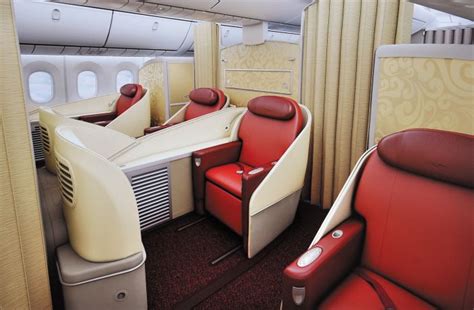
XiamenAir strives to provide a high-quality passenger experience across its service classes. On domestic routes within China, the airline typically offers a first-class service that utilizes business-class style seating, providing enhanced comfort and amenities for premium domestic travelers. For its international and regional routes, XiamenAir offers distinct Business Class and Economy Class services. The introduction of the Boeing 787 Dreamliner significantly elevated its premium offerings. The Boeing 787-8 aircraft feature 180-degree lie-flat seats in both First Class and Business Class, ensuring a comfortable journey for long-haul passengers. All seats across all three classes (First, Business, and Economy) on these aircraft are equipped with the Panasonic EX3 personal in-flight entertainment system, complete with individual screens, charging outlets, and USB ports, allowing passengers to stay entertained and connected. Furthermore, select Boeing 787 aircraft, specifically registrations B-2760, B-2761, B-2762, and subsequent Boeing 787-9 deliveries, are equipped with in-flight Wi-Fi access, a much-appreciated amenity for modern travelers. The airline’s commitment to passenger comfort is also evident in the thoughtful cabin design and attentive service provided by its crew. The unique in-flight announcements in Mandarin, English, and the local Minnan dialect add a distinctive cultural touch, particularly appreciated by passengers from or traveling to the Fujian region.
Strategic Alliances and Partnerships
Beyond its full membership in the SkyTeam alliance, which grants passengers access to a vast global network of flights, lounges, and reciprocal frequent flyer benefits, XiamenAir has cultivated a range of codeshare agreements and joint venture partnerships. These strategic collaborations expand its route network virtually, allowing it to offer more destinations and seamless travel options to its customers. XiamenAir’s codeshare partners include prominent international carriers such as Air France, China Eastern Airlines, China Southern Airlines, Garuda Indonesia, Japan Airlines, KLM, Korean Air, Malaysia Airlines, Mandarin Airlines, Philippine Airlines, Qatar Airways, Saudia, and Vietnam Airlines. These agreements enable XiamenAir to place its ‘MF’ flight code on services operated by these partner airlines, and vice-versa, simplifying ticketing and baggage handling for connecting passengers.
Furthermore, XiamenAir has entered into deeper joint venture agreements with key SkyTeam partners: Air France, KLM, and its parent company, China Southern Airlines. Joint ventures are more comprehensive partnerships that often involve revenue sharing, coordinated schedules, and joint marketing efforts on specific routes or regions. These JVs, particularly with Air France-KLM, strengthen XiamenAir’s competitive position on routes between China and Europe, offering passengers a wider array of flight choices and more harmonized services. The joint venture with China Southern Airlines allows for closer cooperation on domestic and international routes, leveraging the strengths of both carriers.
Safety Record: Addressing Incidents
While XiamenAir has generally maintained a strong safety record over its many years of operation, it has experienced incidents that are important to acknowledge. The most serious accident in the airline’s history occurred on October 2, 1990. Xiamen Airlines Flight 8301, a Boeing 737-200 (registration B-2510) en route from Xiamen to Guangzhou, was hijacked shortly after takeoff. During the landing attempt at Guangzhou Baiyun International Airport (the old airport), the hijacked aircraft lost control and collided with two other aircraft on the ground: a parked China Southwest Airlines Boeing 707 (B-2402) and a China Southern Airlines Boeing 757 (B-2812) that was preparing for departure. The tragic event resulted in the deaths of 128 people in total, including passengers and crew from all three aircraft, as well as individuals on the ground. This incident led to significant reviews of airport security and emergency response procedures in China.
More recently, on August 16, 2018, XiamenAir Flight 8667, a Boeing 737-800 (registration B-5577) arriving from Xiamen, experienced a runway excursion upon landing at Manila’s Ninoy Aquino International Airport in the Philippines. The incident occurred amidst heavy monsoon rains and poor visibility. The aircraft skidded off the end of the runway after what was reportedly its second landing attempt. Fortunately, all 157 passengers and crew members on board were unharmed and evacuated safely. However, the aircraft sustained substantial damage, and its position on the runway led to the closure of NAIA’s main international runway (06/24) for an extended period, causing significant flight disruptions. These incidents, while infrequent, underscore the inherent challenges in aviation operations and the continuous need for rigorous safety protocols and training.
A Future-Oriented Airline with Deep Roots
XiamenAir has evolved from a pioneering regional carrier into a significant international airline with a global reach, all while maintaining its distinct identity and commitment to its home base in Xiamen. Its journey reflects the dynamic growth of the Chinese aviation industry and its increasing integration with the global air transport network. The airline’s strategic decisions, from its early independent operational model to its SkyTeam membership, fleet modernization including the recent introduction of Airbus aircraft, and expansion of intercontinental routes, demonstrate a forward-looking approach. The “A Heron Flying High” logo aptly symbolizes its aspirations and achievements. With a strong foundation, a modern fleet, and a clear vision for the future, XiamenAir is well-positioned to continue its upward trajectory, connecting China with the world and serving millions of passengers with its characteristic blend of efficiency and Fujianese hospitality.