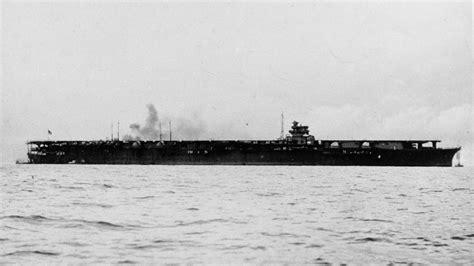
World War II’s Pacific Theater was defined by vast oceans, relentless air power, and the rise—and fall—of the aircraft carrier as the ultimate symbol of naval dominance. At the beginning of the war, Imperial Japan possessed one of the most formidable carrier fleets on Earth, capable of projecting power across thousands of miles. By the end, that same fleet had been shattered, its ships resting silently beneath the waves.
This is the full, unflinching account of every Japanese aircraft carrier sunk during World War II, told through the battles that changed history and the decisions that sealed their fate.
The Rise of Carrier Warfare in the Pacific
The attack on Pearl Harbor in December 1941 announced a new era. Battleships, once kings of the sea, suddenly looked vulnerable. Aircraft carriers—floating airbases—had become the decisive weapon. Japan understood this early and used it with devastating efficiency.
Yet beneath this early success lay a dangerous contradiction: Japan’s naval doctrine still revered battleships, even as carriers proved their superiority. That hesitation would prove catastrophic when the tide of war turned.
By mid-1942, the Pacific had become a proving ground where strategy, technology, and timing collided with lethal consequences.
Shōhō: The First Carrier Lost at Coral Sea
The Shōhō began life not as a carrier, but as a submarine support vessel—a telling example of Japan’s improvisation under pressure. Converted into a light carrier, it was thrust into frontline service during the Battle of the Coral Sea in May 1942.
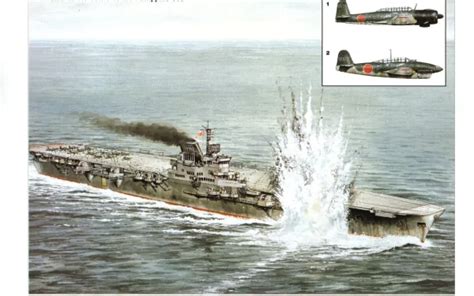
American aircraft from USS Lexington and USS Yorktown found Shōhō exposed. Dive bombers descended with precision, turning the ship into a blazing wreck within minutes. The now-famous radio call—“Scratch one flattop”—marked a psychological turning point.
Out of 834 crew members, 631 perished, making Shōhō the first Japanese carrier sunk in the war—and a warning of what was to come.
Akagi, Kaga, Sōryū, and Hiryū: Catastrophe at Midway
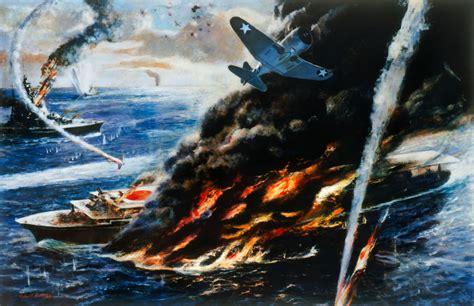
The Battle of Midway in June 1942 was not just a defeat—it was a disaster that permanently altered Japan’s naval power.
Akagi: Flagship Destroyed from Within
The flagship Akagi embodied Japan’s naval pride. But pride offered no protection when American dive bombers struck. A single bomb penetrated the flight deck and detonated among fueled and armed aircraft.
The result was devastating: internal explosions tore the carrier apart, leaving it beyond saving.
Kaga: Overwhelmed by Precision Bombing
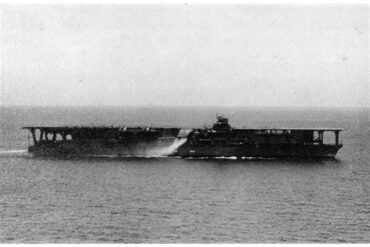
The Kaga suffered a similar fate. Multiple bomb hits ignited catastrophic fires across its decks. Attempts to fight the flames failed as ammunition and aviation fuel turned the ship into an uncontrollable inferno.
Earlier torpedo attacks had failed completely—highlighting how dive bombing, not torpedoes, became the primary method of destroying carriers during the war.
Sōryū: A Floating Powder Keg Ignites
The Sōryū was struck while fully loaded with armed aircraft. The bombs triggered a chain reaction, igniting fuel and munitions across the ship. Flames engulfed the vessel almost instantly.
Captain Ryusaku Yanagimoto chose to remain aboard, going down with his command as the ship slipped beneath the Pacific.
Hiryū: The Final Blow at Midway
The last surviving carrier, Hiryū, managed to launch counterattacks before being located. American dive bombers, led by Dick Best, delivered the final blows.
With Hiryū’s sinking, Japan lost four frontline carriers in a single battle—a loss from which it would never fully recover.
Ryūjō: The Eastern Solomons Strike
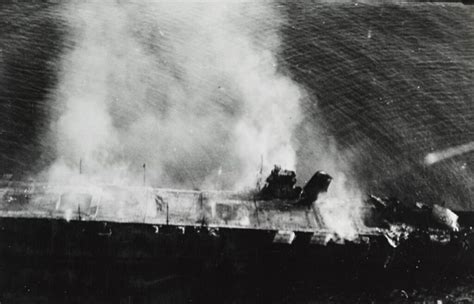
In August 1942, the Ryūjō entered the fray during the Battle of the Eastern Solomons. Already known for stability issues, the carrier proved vulnerable under concentrated attack.
Bomb hits crippled the vessel, and a rare successful torpedo strike sealed its fate. Flooding caused the ship to capsize and sink—a stark reminder that even unreliable weapons could be deadly when they worked.
Conversion Carriers: Chūyō and the Cost of Improvisation
Japan’s response to Midway was swift but desperate: converting passenger liners into carriers.
The Chūyō, formerly the liner Nitta Maru, became one such vessel. In December 1943, it was intercepted by the submarine USS Sailfish. Multiple torpedo hits sent it to the bottom.
The sinking carried a tragic footnote: American POWs aboard were lost alongside Japanese crew, underscoring the indiscriminate brutality of submarine warfare.
Escort and Hybrid Carriers: Nigitsu Maru and Akitsu Maru
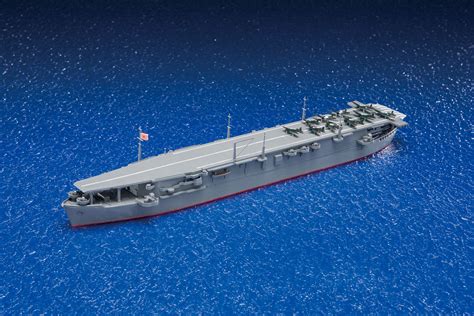
Not all carriers fit the classic mold. Ships like Nigitsu Maru and Akitsu Maru blurred the line between transport and combat vessel.
Nigitsu Maru lacked a flight deck and served mainly as an aircraft ferry. It was sunk by USS Hake in January 1944 after torpedo strikes proved fatal.
Akitsu Maru, operated by the Japanese Army rather than the Navy, could launch aircraft but not recover them. In November 1944, USS Queenfish struck with torpedoes that detonated onboard depth charges, causing a catastrophic explosion that killed over 2,000 personnel.
The Philippine Sea: The “Great Marianas Turkey Shoot”
By June 1944, Japan’s carrier force had been rebuilt—but not its experienced pilots. The Battle of the Philippine Sea exposed this weakness brutally.
Taihō: A Single Torpedo, A Fatal Mistake
The modern carrier Taihō was sunk by a single torpedo from USS Albacore. The damage alone might not have doomed the ship—but poor damage control did.
Ventilation systems spread flammable fumes throughout the vessel. One spark triggered a massive explosion, destroying the carrier from within.
Shōkaku: Veteran of Pearl Harbor Falls
The Shōkaku, a veteran of Pearl Harbor, met its end during the same battle. Multiple torpedo hits from USS Cavalla ignited uncontrollable fires.
Despite a long service record, the ship succumbed, taking over 1,200 sailors with it.
Hiyō: Air Power Strikes Again
The Hiyō, another converted liner, was finished by coordinated air attacks. Bombs and torpedoes combined to overwhelm its defenses, sending it to the depths.
Submarine Dominance: Taiyō, Unyō, and Shin’yō
As the war progressed, American submarines became silent executioners of Japan’s fleet.
- Taiyō survived multiple attacks before being destroyed by USS Rasher in 1944.
- Unyō was sunk by USS Barb during a convoy attack.
- Shin’yō, originally a German liner, was destroyed by USS Spadefish with multiple torpedo hits.
These sinkings revealed a harsh reality: Japan could no longer protect its carriers—even far from major fleet engagements.
Leyte Gulf: The Decoy Fleet’s Sacrifice
The Battle of Leyte Gulf in October 1944 marked Japan’s final gamble.
Zuihō, Zuikaku, Chiyoda, and Chitose
These carriers formed a decoy force intended to lure American fleets away from the invasion of Leyte.
It worked—but at an enormous cost.
- Zuihō was overwhelmed by air attacks.
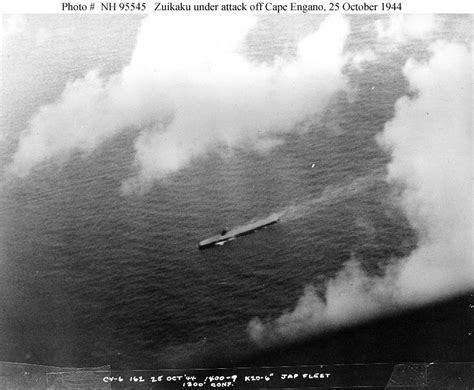
- Zuikaku, the last Pearl Harbor survivor, was sunk after repeated strikes.
- Chiyoda was destroyed with no survivors.
- Chitose followed shortly after, unable to withstand sustained bombardment.
The decoy mission succeeded tactically—but strategically, it failed. Japan’s carrier fleet was effectively annihilated.
Shinano: The Largest Carrier Lost
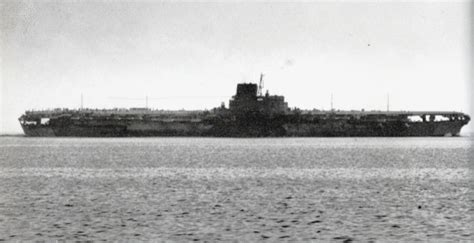
The Shinano was intended to change the course of the war. Converted from a Yamato-class battleship, it was the largest aircraft carrier of its time.
It never had the chance.
Just ten days after entering service, USS Archerfish struck with torpedoes. Poor compartmentalization and rushed construction doomed the ship. It sank on its maiden voyage—a symbol of ambition undone by haste.
Unryū and the Final Phase of the War
The Unryū, one of Japan’s last purpose-built carriers, was sunk in December 1944 by USS Redfish. By then, Japan’s navy was a shadow of its former strength.
Carriers were no longer strategic assets—they had become vulnerable targets.
Amagi: The Final Carrier to Fall
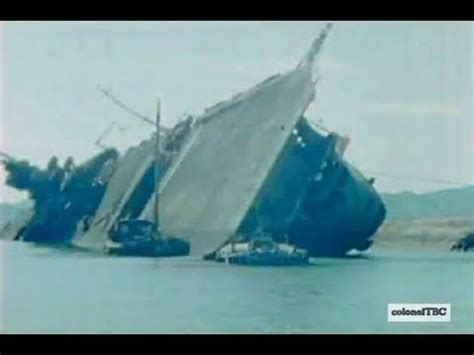
The Amagi holds a unique place in history: the last aircraft carrier ever sunk in wartime.
Hidden at Kure in 1945, it was discovered and repeatedly attacked by American aircraft. Continuous bombardment left it crippled, capsized, and abandoned.
It never saw meaningful combat. Its destruction symbolized the final collapse of Japan’s naval aviation power.
Why Japan Lost Its Carrier Fleet
The destruction of Japan’s carriers was not inevitable—it was the result of compounding failures:
- Strategic Misjudgment: Overreliance on battleships delayed full commitment to carrier warfare.
- Pilot Attrition: Experienced aviators were lost faster than they could be replaced.
- Damage Control Weakness: Poor training and flawed procedures turned survivable damage into fatal disasters.
- Industrial Limits: Japan could not match American shipbuilding capacity.
- Submarine Warfare: U.S. submarines systematically destroyed supply lines and capital ships alike.
Each sinking was a chapter, but together they told a single story: a navy outpaced by innovation, overwhelmed by production, and undone by its own assumptions.
The Legacy Beneath the Waves
Today, these carriers rest across the Pacific, silent relics of a war that reshaped the world. They are more than wrecks—they are time capsules of strategy, sacrifice, and transformation.
The fall of Japan’s carrier fleet marked the end of one era and the beginning of another, where air power, logistics, and adaptability defined victory.
History rarely offers second chances. In the case of Imperial Japan’s aircraft carriers, the lesson was written in steel—and sealed beneath the sea.