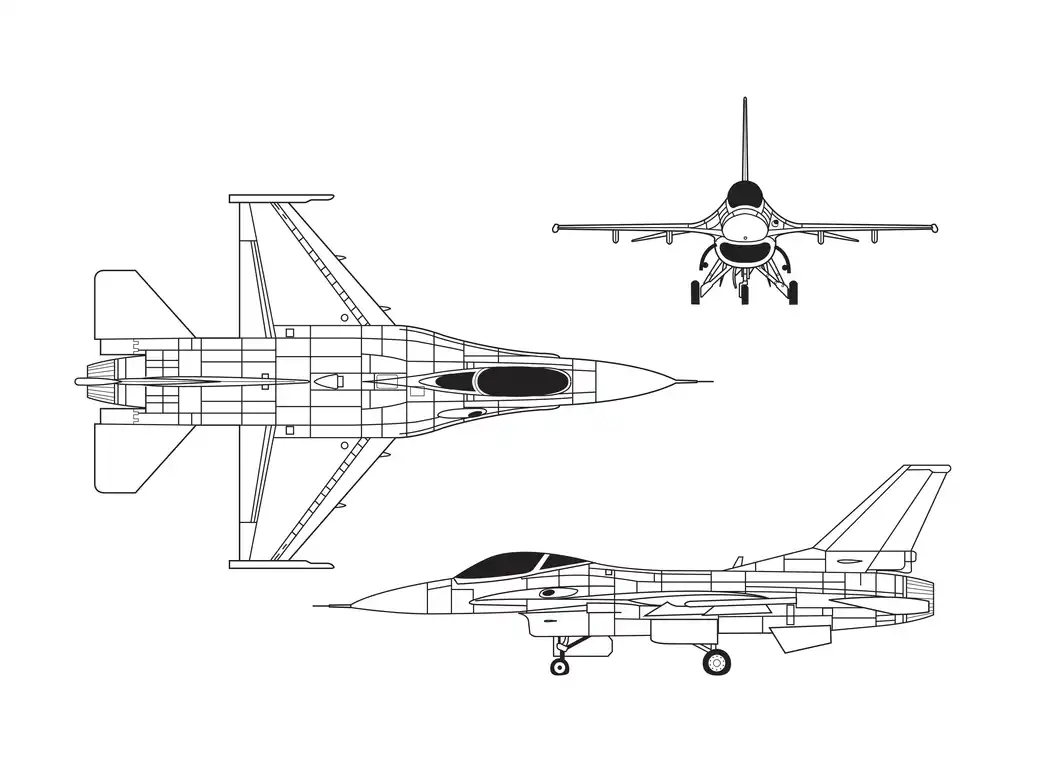
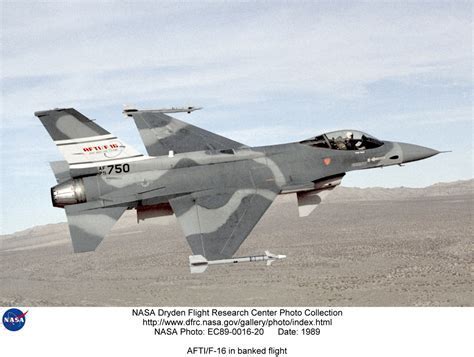
The F-16 Advanced Fighter Technology Integration (AFTI) program was a groundbreaking project jointly developed by the United States Air Force (USAF), the United States Navy (USN), and NASA. The program aimed to explore and validate cutting-edge aerodynamic, avionics, and flight control technologies by modifying an existing F-16 fighter jet. As a highly influential testbed, the F-16 AFTI contributed to shaping modern combat aircraft by integrating advanced flight control systems, avionics, and pilot interface technologies.
Development and Modifications
Origin of the Prototype
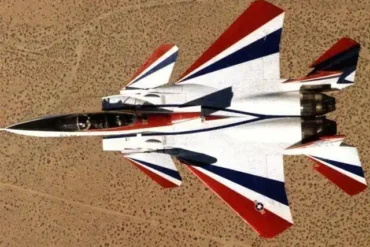
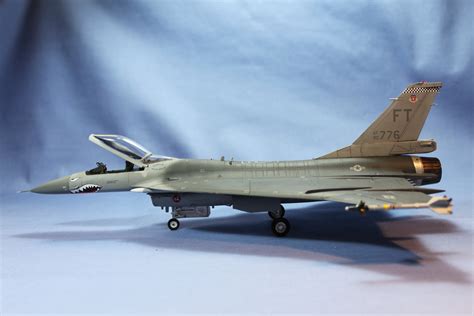
The F-16 AFTI program utilized the sixth F-16A prototype (serial number 75-0753) as its test platform. The aircraft was extensively modified, with one of the most visually distinctive changes being the addition of movable canards mounted beneath the intake, enhancing maneuverability and flight control. These modifications were instrumental in evaluating Controlled Configuration Vehicle (CCV) technology, a concept aimed at improving an aircraft’s agility through fly-by-wire flight control enhancements.
Objectives and Key Technologies
The AFTI F-16 was designed to test and refine multiple advanced aeronautical systems. The primary objectives included:
- Demonstrating digital flight control systems (DFCS) for enhanced maneuverability
- Evaluating voice-command cockpit interfaces to streamline pilot workload
- Testing helmet-mounted display (HMD) systems for rapid target acquisition
- Developing automated attack systems to enhance mission efficiency
Advanced Technologies and Innovations
Digital Flight Control System (DFCS)
The F-16 AFTI was among the first aircraft to feature a full-authority three-axis digital fly-by-wire control system. Unlike traditional mechanical flight controls, this system allowed for precise electronic control of the aircraft’s aerodynamic surfaces. The DFCS enabled unique capabilities, including XYZ-axis translational flight, which allowed the aircraft’s nose to shift up to six degrees off-axis without altering overall flight path—enhancing targeting and agility.
Voice Command Input Device (VCID)
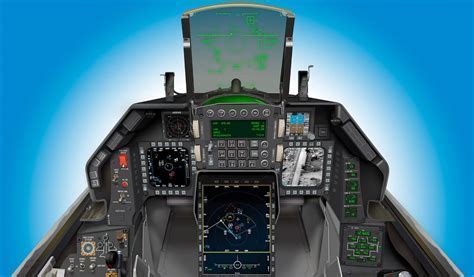
One of the most forward-thinking integrations in the F-16 AFTI was the Voice Command Input Device (VCID). This system included a 256-word vocabulary, enabling pilots to issue verbal commands to the avionics suite. With a recognition accuracy of 90%, it marked a major step in human-machine interface (HMI) development, reducing the need for manual input and enhancing situational awareness in high-intensity environments.
Helmet-Mounted Display (HMD) System
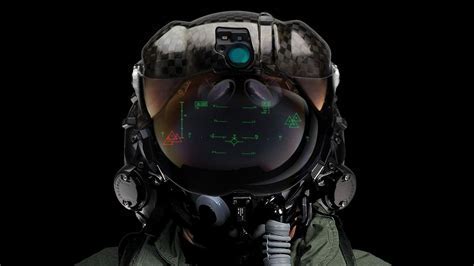
The helmet-mounted display (HMD) provided a revolutionary targeting enhancement. The system linked radar and Forward-Looking Infrared (FLIR) sensors to the pilot’s line of sight, allowing weapons to be aimed simply by looking at a target. This technology vastly improved engagement speeds and tracking accuracy, setting the foundation for modern high-off-boresight missile capabilities.
Automated Maneuvering Attack System (AMAS)
The Automated Maneuvering Attack System (AMAS) integrated real-time sensor data with digital flight control to optimize attack paths, particularly in low-altitude ground support missions. The system autonomously planned engagement routes, increasing pilot reaction time and combat effectiveness in dynamic battle environments.
Testing Phases and Results
Phase 1: Digital Flight Control Validation (1981–1983)
The initial 275 test flights focused on evaluating the DFCS. These tests demonstrated the viability of electronically controlled flight surfaces, proving their effectiveness in enhancing maneuverability, stability, and responsiveness.
Phase 2: Sensor and Avionics Integration (1983–1987)
During this phase, FLIR sensors were mounted near the aircraft’s wing roots to support AMAS testing. The objective was to refine automated targeting and attack strategies under realistic combat scenarios. These tests confirmed that computer-assisted flight controls could significantly enhance low-level strike missions.
Phase 3: Tactical Operations and Further Applications (1988–1992)
By the late 1980s, the F-16 AFTI played a crucial role in NASA’s Close Air Support (CAS) and Battlefield Air Interdiction (BAI) research. Additionally, it was instrumental in testing the Automatic Ground Collision Avoidance System (A-GCAS), a technology now standard in modern fighter jets to prevent controlled flight into terrain (CFIT) accidents.
Impact and Legacy
Technological Contributions
The technologies pioneered by F-16 AFTI had far-reaching effects on fighter jet evolution. Concepts such as digital flight controls, voice command systems, and helmet-mounted targeting became foundational technologies in modern aircraft, including the F-16C/D, F-22 Raptor, and F-35 Lightning II.
Industry Recognition
In 1987, the F-16 AFTI program received the Theodore von Kármán Award from the United States Air Force, acknowledging its outstanding contributions to aeronautical engineering and fighter jet development.
Influence on Future Aircraft
The lessons learned from the F-16 AFTI extended beyond the F-16 platform. NASA and other defense agencies incorporated these innovations into experimental aircraft such as the F-16XL and X-31, as well as UAVs, further advancing automated flight control research.
Additional Testing and Research
Ultra-Low Altitude Flight Trials
To refine the A-GCAS system, F-16 AFTI conducted numerous ultra-low-altitude flight tests, ensuring that the system could autonomously detect and avoid terrain obstacles in high-speed, low-level operations.
Cross-Agency Collaboration
The NASA Dryden Flight Research Center used the F-16 AFTI to further develop advanced flight algorithms, which were later implemented in multiple experimental aircraft programs. This collaboration helped bridge military and civilian aerospace advancements.
Frequently Asked Questions (FAQs)
What was the main purpose of the F-16 AFTI program?
The F-16 AFTI program aimed to test and validate advanced fighter technologies, particularly in digital flight control, pilot interfaces, and automated targeting systems. It served as a testbed for innovations that later became standard in modern fighter aircraft.
How did the F-16 AFTI differ from standard F-16 models?
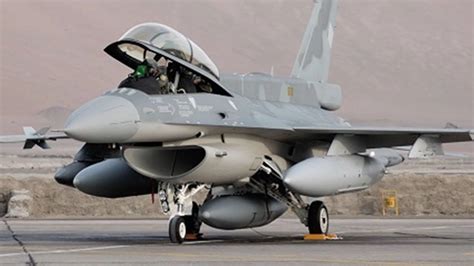
Unlike standard F-16A/B models, the AFTI variant featured movable canards, a full digital fly-by-wire control system, a voice-command cockpit, and helmet-mounted targeting, significantly improving its maneuverability and operational efficiency.
What lasting impact did the F-16 AFTI have on modern fighter jets?
The F-16 AFTI introduced several key technologies, including digital flight control systems, voice-command avionics, and helmet-mounted targeting, which later influenced aircraft such as the F-16C/D, F-22, and F-35. These advancements continue to shape modern aerial combat and automation.
The F-16 AFTI program remains a testament to pioneering aeronautical research, directly contributing to the evolution of fighter aircraft technology and advancing the capabilities of modern combat aviation.