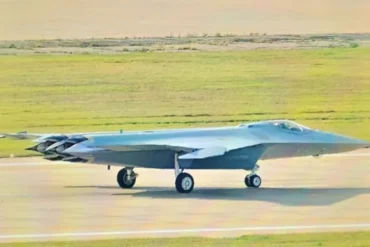
Stealth aircraft are the spearhead of modern aerial warfare. As radar and air defense systems grow more sophisticated, the capacity to evade detection and deliver surgical precision strikes has become more crucial than ever. Air superiority is no longer just about speed and firepower — it’s about remaining unseen, dominating digitally, and striking before an adversary even knows what hit them. In the following analysis, we explore the top six stealth combat aircraft in the world — platforms that define the pinnacle of aviation engineering and defense strategy.
The Rise of Stealth: From Theory to Tactical Dominance
The origins of stealth aviation date back to the Cold War era. Initially experimental, stealth technology matured in the late 20th century with a mix of radar-deflecting geometry and advanced composite materials. By the 1990s and early 2000s, these once-theoretical platforms became operational realities. Today’s fifth-generation stealth aircraft boast low radar cross-sections, high maneuverability, internal weapons storage, and sophisticated electronic warfare suites. This combination allows them to penetrate deep into enemy territory while remaining nearly invisible.
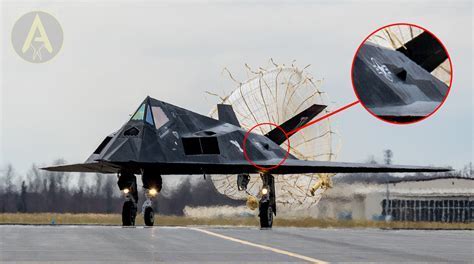
The competitive landscape of stealth warfare is led by a handful of nations: the United States, Russia, China, France, and India. While their respective platforms differ in philosophy, engineering, and deployment strategy, they share a common objective — to dominate the skies with impunity.
F-22 Raptor: America’s First True Stealth Fighter
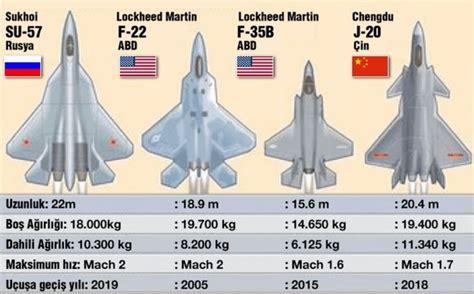
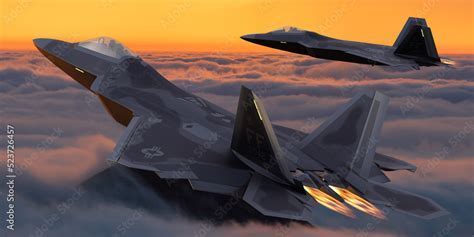
The Lockheed Martin F-22 Raptor is often regarded as the gold standard of air superiority. Developed under the Advanced Tactical Fighter program and introduced in 2005, the F-22 incorporates a finely honed balance of stealth, agility, and situational awareness. With thrust-vectoring engines and superior acceleration, the Raptor is built for air dominance, not ground strike.
Its twin Pratt & Whitney F119-PW-100 engines enable sustained supercruise at Mach 1.8, without using afterburners — reducing infrared signature. The airframe’s edges and panels are meticulously aligned to deflect radar waves, while its internal weapons bays preserve its stealth profile. The AN/APG-77 AESA radar, combined with sensor fusion, gives pilots unmatched battlefield awareness.
While production ceased in 2012, around 120 combat-ready units remain in the U.S. Air Force, making it a formidable yet exclusive asset.
F-35 Lightning II: The Global Stealth Workhorse
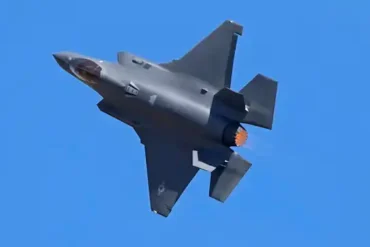
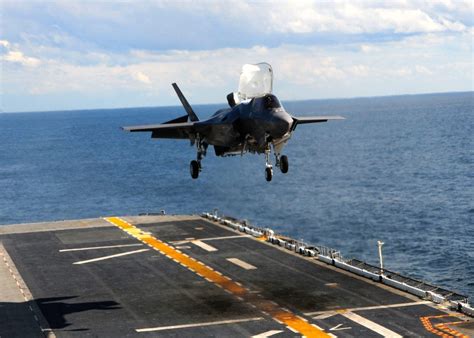
Unlike the F-22, which focuses on air-to-air supremacy, the Lockheed Martin F-35 Lightning II was conceived as a multirole stealth platform capable of deep strike, reconnaissance, and electronic warfare. It comes in three variants — the F-35A (conventional), F-35B (short takeoff/vertical landing), and F-35C (carrier-based) — and is used by more than a dozen countries.
With over 1,000 units deployed globally, the F-35 features an advanced sensor suite, low-observable design, and secure datalinks for network-centric warfare. Its internal weapons storage preserves stealth, while its Distributed Aperture System (DAS) and Electro-Optical Targeting System (EOTS) make it lethal in both BVR (beyond visual range) and close engagements.
What sets the F-35 apart is its role as a force multiplier — sharing data with ground forces, other jets, and naval platforms to enhance overall mission effectiveness.
Chengdu J-20 Mighty Dragon: China’s Stealth Challenger
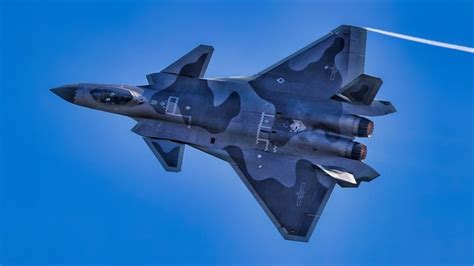
China’s entry into the stealth arena, the Chengdu J-20, represents a quantum leap for the People’s Liberation Army Air Force (PLAAF). Nicknamed the “Mighty Dragon,” the J-20 is a long-range, twin-engine stealth fighter intended to rival U.S. fifth-generation aircraft.
Its canard-delta configuration and DSI (diverterless supersonic inlet) help minimize radar signature, while internal bays store missiles to maintain stealth. The airframe appears optimized for interceptor roles, with extended range and high-speed penetration capability. Over 200 J-20s are reportedly in service, with newer variants incorporating domestically-produced WS-10C engines replacing older Russian AL-31F units.
The J-20’s strength lies in its strategic design: it can strike high-value targets deep inside contested zones, deny air access, and assert dominance over disputed territories in the Indo-Pacific.
Sukhoi Su-57 Felon: Russia’s First True Stealth Aircraft
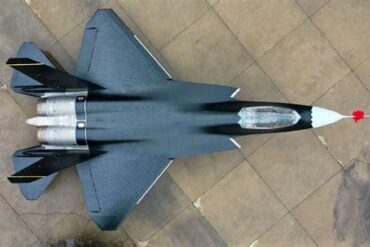
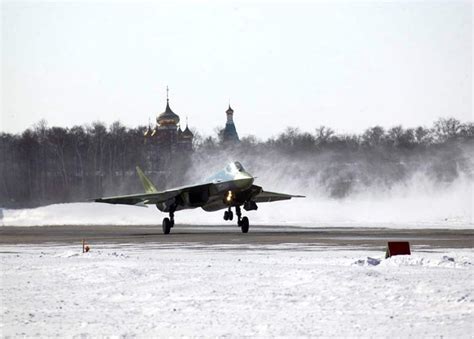
Russia’s answer to fifth-generation fighters is the Sukhoi Su-57 Felon. Despite a challenging development path, including technical setbacks and financial constraints, the Su-57 entered limited service in 2020. It integrates stealth characteristics with supermaneuverability, a trait deeply embedded in Russian air doctrine.
The Su-57 features internal weapons bays, an AESA radar suite, and infrared search and track (IRST) systems. It’s designed for air superiority, ground attack, and electronic warfare, offering a multirole capability similar to its Western counterparts.
However, as of 2025, the fleet remains limited. Russia has ambitious plans to scale production by the end of the decade, though operational capability is still under scrutiny due to quality control issues and limited stealth materials.
Dassault Rafale: Europe’s Adaptive Combat Jet
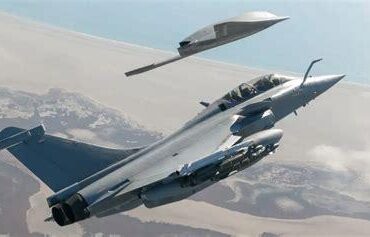
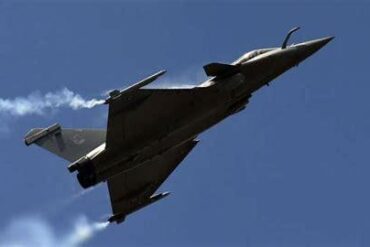
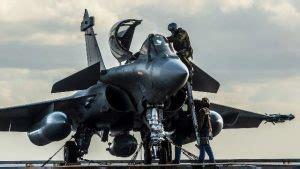
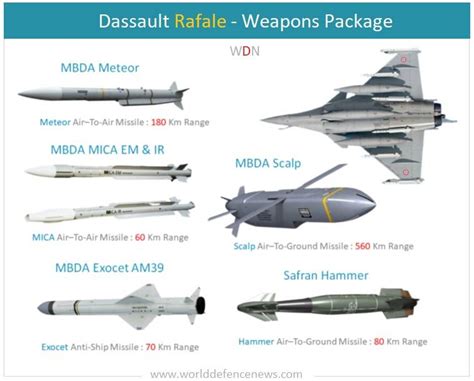
Although not a pure stealth aircraft, the Dassault Rafale brings a unique balance of stealth features, combat versatility, and electronic warfare sophistication. Operational since 2001, the Rafale has served with distinction in multiple conflict zones from Libya to the Middle East.
Its twin-engine design and delta wing-cantered build enable high agility. The aircraft uses radar-absorbent materials and refined shaping to reduce its radar cross-section. Where it truly shines is in SPECTRA, its electronic warfare suite. SPECTRA includes jammers, decoys, and threat detection, enhancing survivability and increasing mission success in high-threat environments.
France, India, Qatar, and several others have chosen Rafale for its adaptability, and the aircraft remains a strong export success in a crowded market.
Sukhoi Su-30MKI: India’s Dominant Combat Platform
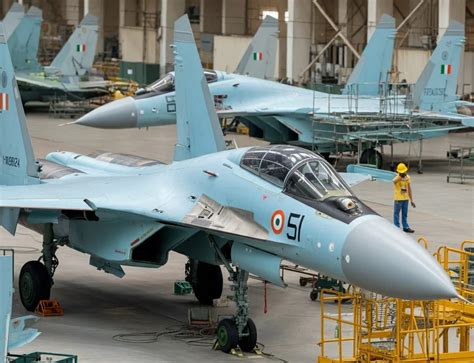
While technically a 4.5-generation fighter, India’s Sukhoi Su-30MKI incorporates some stealth features through radar-absorbent coatings and minor structural modifications. Co-developed by Russia’s Sukhoi and India’s HAL, it serves as the primary air superiority and strike aircraft of the Indian Air Force.
With over 260 aircraft operational, the Su-30MKI offers deep strike range, heavy weapons payload, and extensive upgrade potential. It may lack stealth at a fifth-gen level, but its modernized avionics, twin AL-31FP engines, and BrahMos missile compatibility keep it relevant in today’s combat scenarios.
Current modernization efforts aim to integrate Uttam AESA radars, infrared tracking, and electronic countermeasures, inching it closer to fifth-gen standards.
The Future of Stealth: Evolving Threats and New Frontiers
The evolution of stealth aircraft does not stop at current fifth-generation platforms. Programs such as NGAD (Next Generation Air Dominance) in the U.S., FCAS (Future Combat Air System) in Europe, and Russia’s Su-75 Checkmate hint at a sixth-generation future where stealth is only part of the equation.
Expect greater emphasis on AI-piloted missions, loyal wingman drones, cognitive electronic warfare, and hypersonic weapon integration. Meanwhile, adversaries continue to develop multi-band radar systems, passive detection networks, and quantum radar, challenging the very foundation of stealth.
As air forces evolve, the edge will belong to those who combine invisibility with information dominance, enabling first-look, first-shot, first-kill capability across multi-domain battlefields.
In an era defined by contested skies and precision warfare, stealth combat aircraft are more than military hardware — they are geopolitical signals, symbols of industrial prowess, and agents of airpower dominance. As newer technologies emerge and strategic priorities shift, the stealth race continues, reshaping the very nature of aerial combat.