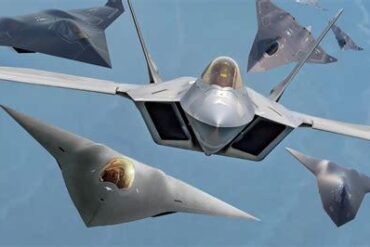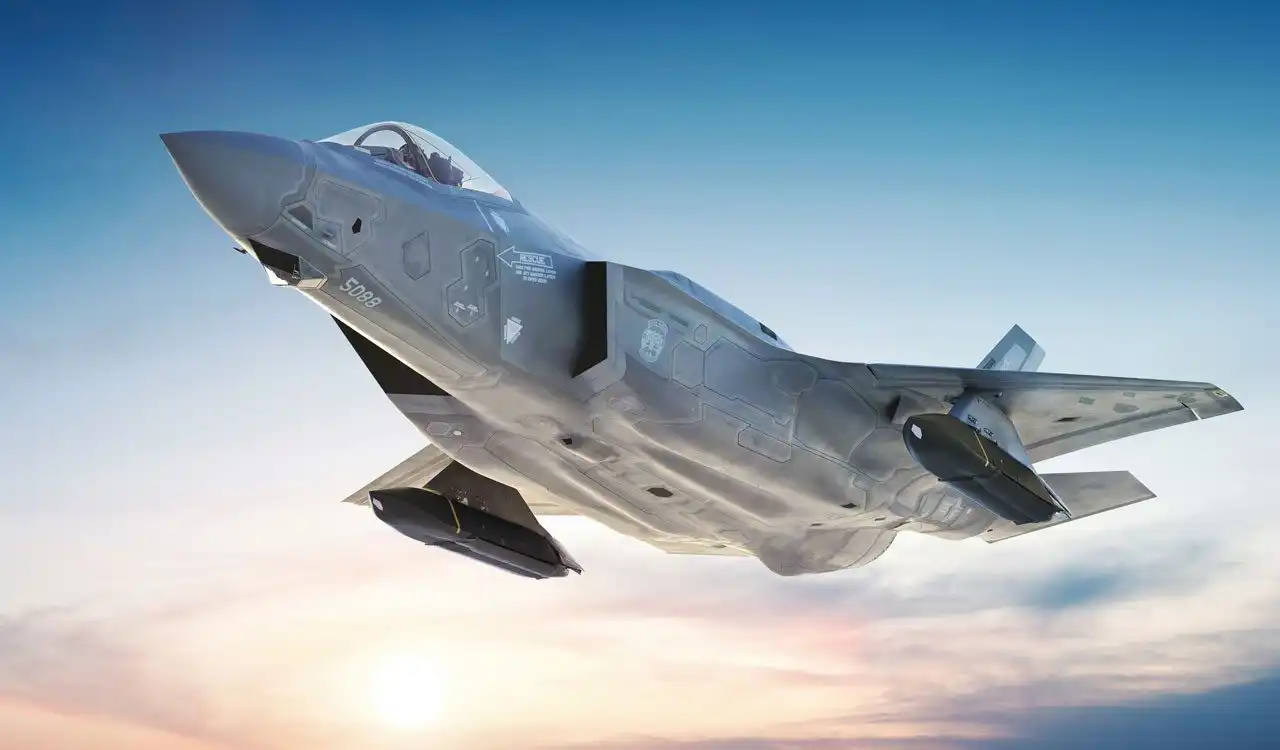
As the Lockheed Martin F-35 Lightning II continues to define fifth-generation airpower across multiple allied nations, a global discussion intensifies over viable alternatives to this high-cost, high-capability stealth fighter. Whether driven by budget constraints, technological divergence, or political considerations, several nations are exploring parallel platforms to either complement or replace the F-35. These alternatives range from upgraded 4.5-generation fighters to sixth-generation projects currently in development. Each contender brings a unique blend of advantages and compromises, influenced by industrial capacity, strategic autonomy, and geopolitical alignment.
Eurofighter Typhoon: A European Multi-Role Challenger
The Eurofighter Typhoon, co-developed by the UK, Germany, Italy, and Spain, stands as the most combat-proven 4.5-generation fighter in Europe. Though it lacks full stealth characteristics, its continuous avionics upgrades and integration of the Captor-E AESA radar have enhanced its operational viability in contested airspace.
We recognize its multi-role flexibility—capable of air superiority, interdiction, and close air support—but the aircraft is inherently limited by its manufacturing pace. With monthly production hovering at single digits, it is incapable of rapidly scaling to match any sudden withdrawal or reduction of F-35 deployments.
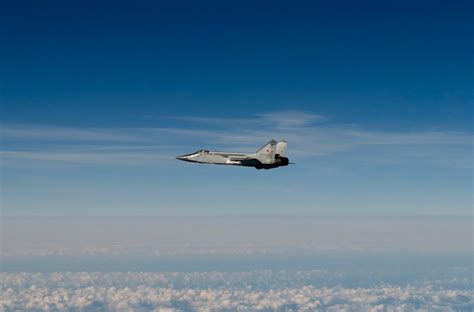
Strategically, the Typhoon’s value lies in European defense autonomy. As a joint European project, its adoption promotes defense industrial consolidation and reduces reliance on American platforms. However, its dependence on American-made weapons systems such as the AIM-120 AMRAAM and electronic warfare components undermines full independence.
Dassault Rafale: France’s Sovereign Strike Fighter
France’s Dassault Rafale presents an appealing proposition for countries seeking non-U.S. aligned airpower. Entirely domestically developed and manufactured, it offers nuclear delivery capability, battlefield versatility, and compatibility with a wide array of global weapons systems.
The Rafale has seen export success in Egypt, India, Qatar, and the UAE—underscoring its trustworthiness among diverse political regimes. Yet, like the Typhoon, it is not a stealth aircraft. Its visibility on radar is mitigated only in part by advanced electronic warfare suites, notably the SPECTRA system.
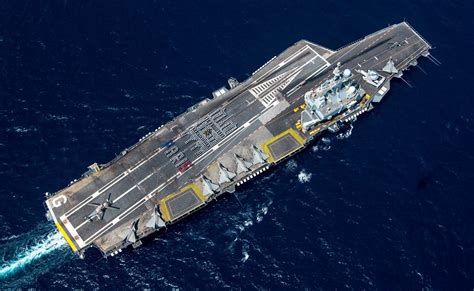
Despite the lack of stealth, its combat maturity, lower maintenance requirements, and fully sovereign supply chain make it one of the most balanced fourth-plus-generation platforms. However, it remains technologically a step behind the F-35 in terms of sensor fusion, networked operations, and low-observable survivability.
Saab Gripen E/F: Affordability Meets Tactical Flexibility
Sweden’s Saab Gripen E/F stands out as the most cost-effective Western fighter alternative to the F-35. With a single-engine configuration, low operational costs, and high sortie rates, it is particularly attractive to mid-tier air forces seeking NATO interoperability without absorbing the lifecycle costs of fifth-generation platforms.
The latest Gripen variants incorporate AESA radar, infrared search and track (IRST) systems, and modern data fusion technologies. It features a highly modular architecture, enabling rapid software upgrades and weapon system integration.
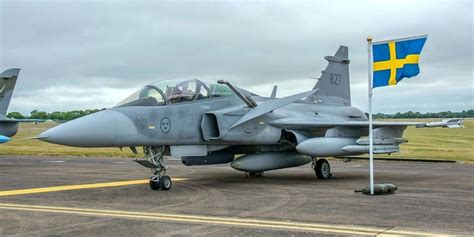
However, the Gripen’s range and payload capacity are markedly inferior to the F-35, reducing its effectiveness in deep-strike or sustained combat missions. Its procurement is also vulnerable to political influence, given its reliance on American-manufactured engines (General Electric F414) and armaments.
The Sixth-Generation Aspirations: FCAS and Tempest
With no true fifth-generation European alternative ready for deployment, attention turns to sixth-generation platforms such as the Future Combat Air System (FCAS) and Tempest. These programs embody Europe’s ambition to leapfrog into a post-F-35 era defined by AI-enhanced operations, unmanned-manned teaming, and directed energy weapons.
The FCAS, led by France, Germany, and Spain, envisions a system-of-systems architecture centered around a next-generation fighter supported by loyal wingmen drones and cloud-based battle management. Expected to enter service by 2035, FCAS represents a long-term commitment to strategic defense autonomy.
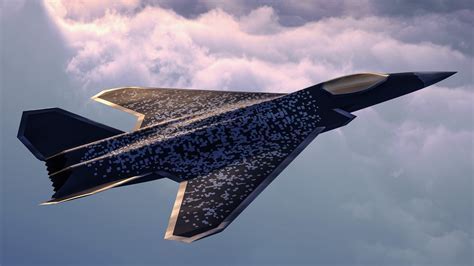
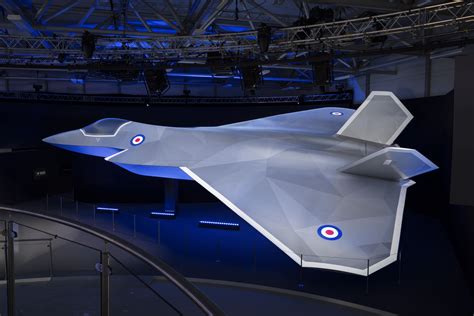
Meanwhile, the Tempest, spearheaded by the United Kingdom, in collaboration with Italy and Japan, prioritizes modularity, hypersonic capability, and laser weapon integration. Its concept emphasizes speed, adaptability, and integrated battlefield awareness—but its budget constraints and technological risk raise questions about its projected timeline.
Neither platform can serve as an immediate F-35 replacement. They remain in development, and the practical challenge lies in whether Europe can coordinate R&D timelines, align political will, and consolidate industrial capacity in time to meet operational demand by the 2030s.
The U.S. NGAD (F-47): Risk-Laden Replacement or Leap Ahead?
The Next Generation Air Dominance (NGAD) program, sometimes unofficially referenced as F-47, represents the United States’ own pursuit of a post-F-35 solution. Initially conceptualized as a low-cost complement to the F-35, NGAD has evolved into a high-end air superiority platform with a sixth-generation profile.
The program’s strategy is radically different: no fly-off testing phase, accelerated prototyping, and rapid transition into production—raising red flags over software reliability, systems integration, and sustainability. Critics in Congress have voiced skepticism over whether NGAD can deliver a deployable asset by its target 2028 first flight milestone, especially given the technological debt inherited from the F-35’s troubled development.
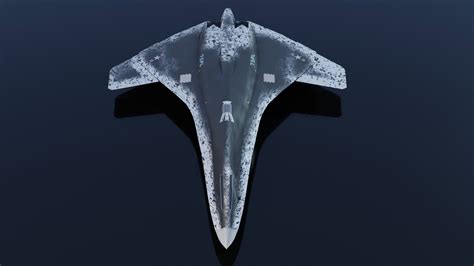
Moreover, the U.S. Air Force’s procurement strategy remains unclear—whether NGAD will supplement or replace F-35 fleets remains undecided. Should the program succeed, it could set a new standard for air dominance, but the risks of delays, budget overruns, and capability overlap with the F-35 persist.
Non-Western Fifth-Generation Competitors: Su-57 and J-20
From a purely technological standpoint, the Russian Su-57 and Chinese J-20 pose serious alternatives in terms of airframe design and kinetic performance. However, they are politically nonviable for Western or NATO-aligned nations.
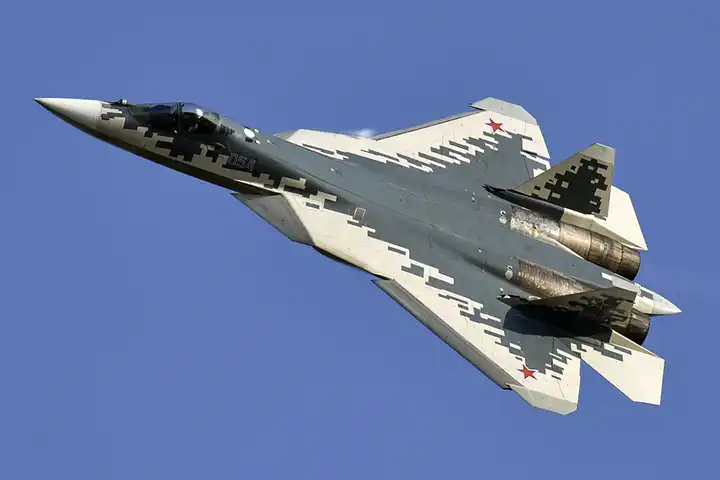
The Su-57 Felon integrates supercruise capability, 3D thrust vectoring, and limited stealth. Yet, the sanctions-driven collapse of its international supply chain, coupled with its low production rates and export restrictions, renders it unsuitable for most buyers outside of close Russian allies.
China’s J-20 Mighty Dragon and its carrier-based variant J-35 showcase impressive strides in stealth shaping, sensor integration, and range. Nevertheless, Western-aligned nations cannot realistically procure PLA-developed aircraft due to profound strategic and ideological incompatibility.
Strategic Trade-Offs and Operational Realities
Even the most advanced 4.5-generation fighters lack stealth, a defining advantage of the F-35 that allows deep penetration into anti-access/area denial (A2/AD) environments. For nations engaged in high-intensity conflict planning, this deficit is critical. Furthermore, sensor fusion, network-centric warfare capabilities, and low observable technologies embedded within the F-35 ecosystem currently remain unmatched.
Additionally, there are interoperability constraints. NATO’s defense architecture heavily favors U.S. platforms, and programs like nuclear sharing, which rely on B61 thermonuclear bomb certification, limit non-American replacements. Germany’s acquisition of the F-35 was driven by this specific requirement.
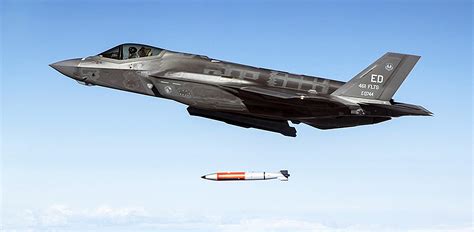
From a supply chain perspective, even European aircraft depend on U.S. technologies, particularly in missile systems and targeting pods, meaning a complete decoupling from American defense industrial influence is impractical in the near term.
Conclusion
No existing aircraft or developmental program can fully replace the F-35 in terms of stealth, network integration, and coalition interoperability. However, the future of global airpower may not demand one-to-one replacements. Instead, a hybrid fleet strategy, combining current-generation platforms with emerging sixth-generation fighters, unmanned combat aerial vehicles (UCAVs), and advanced munitions, is likely to dominate the coming decades.
For nations like Germany, this has already translated into a dual acquisition strategy—purchasing both F-35s for nuclear roles and Eurofighters for conventional missions. Other nations are pursuing similar hedging strategies to maintain readiness while awaiting the maturation of next-gen platforms.
In the interim, the global defense industry is being reconfigured around questions of sovereignty, affordability, and survivability, with the F-35 continuing to shape—but not monopolize—the future of fighter aviation.
FAQs
Can any current aircraft match the F-35’s stealth capabilities?
No current aircraft outside the U.S. matches the F-35’s combination of stealth, sensor fusion, and multi-domain operational capability. Most alternatives prioritize affordability or sovereignty over low observability.
Will the sixth-generation fighters like FCAS or Tempest replace the F-35?
Eventually, yes. But both are in early-stage development and face significant technological and political hurdles. They are unlikely to reach full operational capability before 2035.
Why don’t NATO countries just build a European stealth fighter now?
Efforts are underway via FCAS and Tempest, but stealth technology is extremely complex. Without extensive testing infrastructure and integrated supply chains, Europe cannot yet match U.S. lead in fifth-generation capabilities.