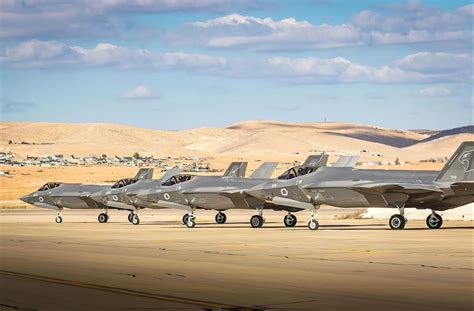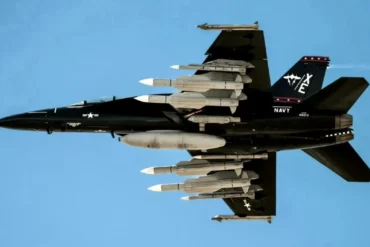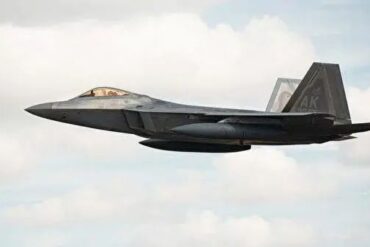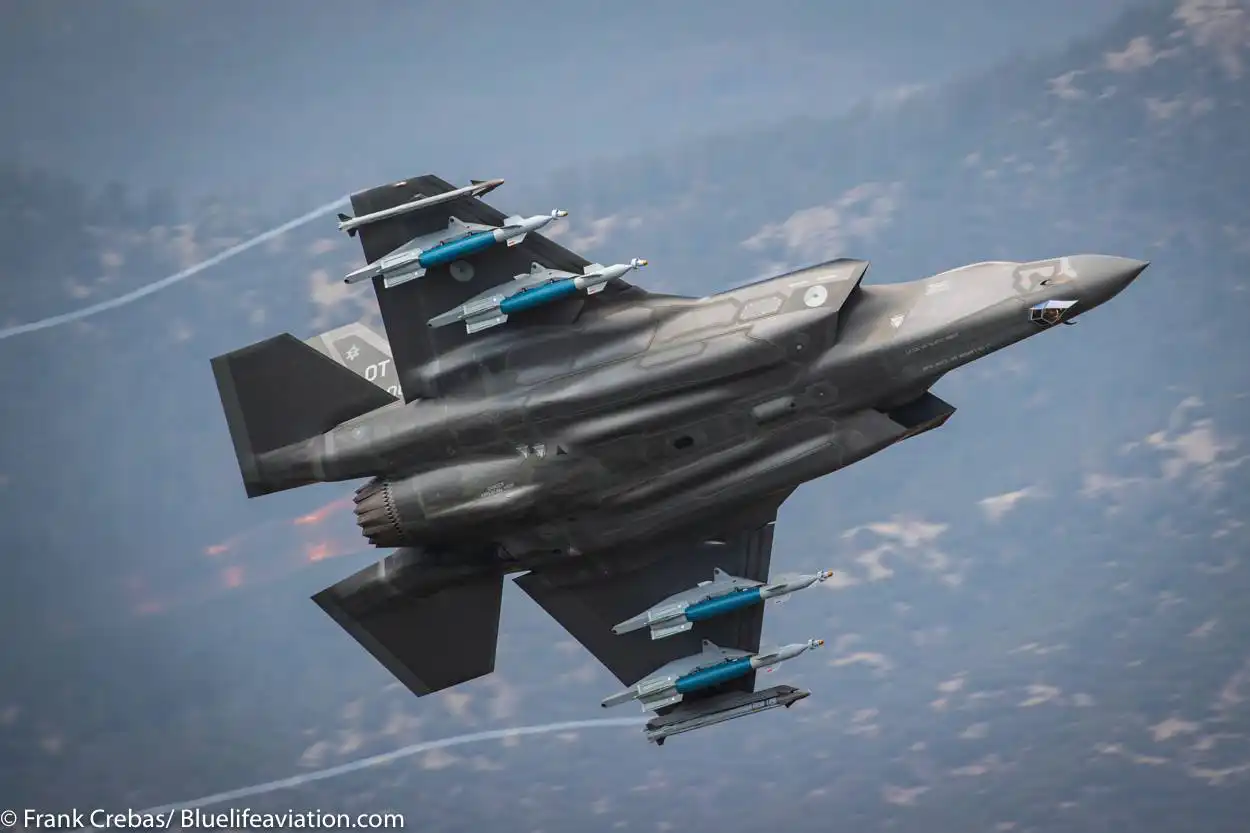
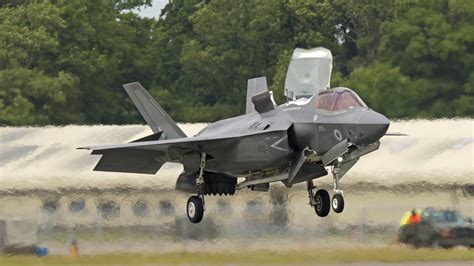
The F-35 Lightning II, developed by Lockheed Martin, represents the pinnacle of fifth-generation multirole combat aircraft—stealthy, sensor-fused, and digitally integrated. But when stealth takes a backseat to raw firepower, the F-35 enters its formidable configuration known as “Beast Mode”. In this state, the aircraft trades some of its low observability for overwhelming lethality, allowing it to deliver a maximum payload of up to 22,000 pounds of advanced weaponry. This hybrid transformation underscores the F-35’s versatility in modern air warfare, revealing a tactical evolution in design and combat doctrine.
The Strategic Shift: From Stealth to Firepower
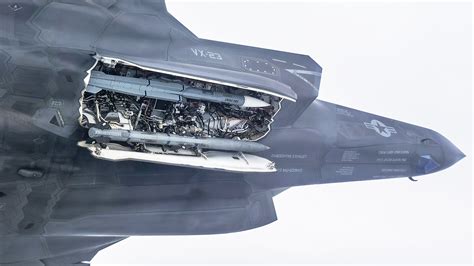
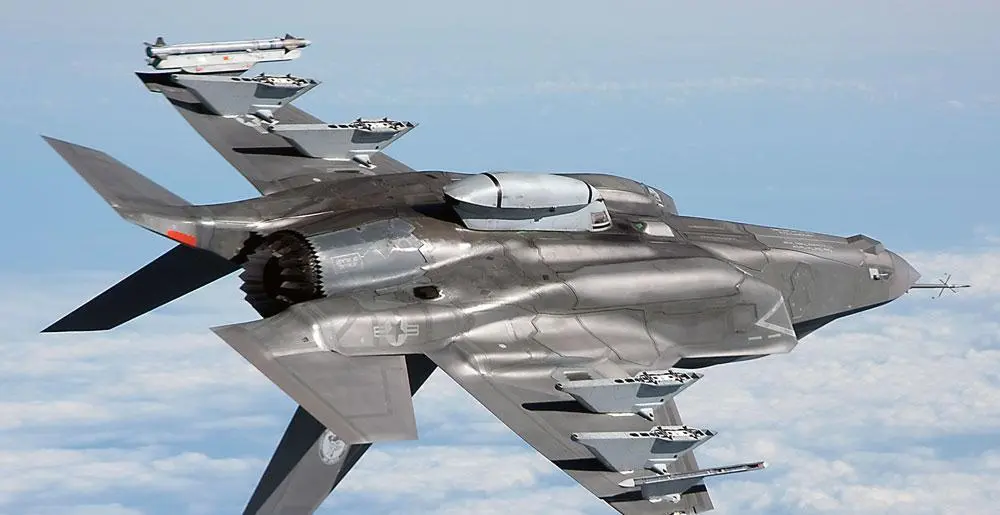
The F-35’s design prioritizes stealth and survivability by housing weapons internally. However, when the mission calls for air dominance through brute force, Beast Mode comes into play. By activating six external hardpoints—two under each wing and two along the fuselage—the aircraft effectively multiplies its strike capacity. While internal bays continue to host stealth-compatible armaments, the external mounts accommodate larger bombs and missile systems, enabling multi-target engagement, suppression of enemy defenses, and devastating ground strikes.
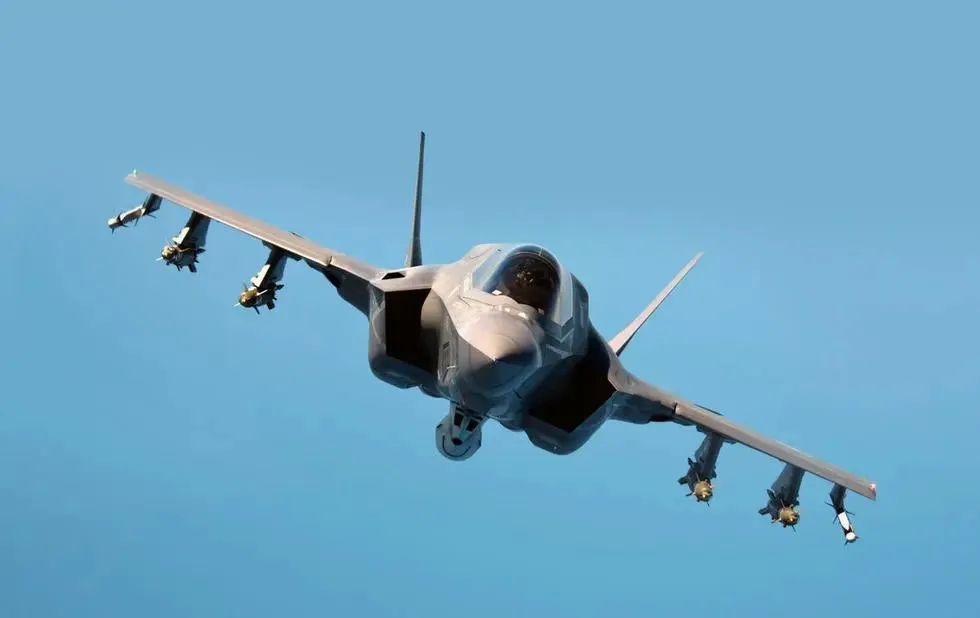
In Beast Mode, the F-35 abandons radar evasion as its primary objective. This shift is deliberate, typically deployed in airspaces where enemy air defense systems are already degraded or when air superiority has been established. It is in these scenarios that the aircraft’s true payload potential is unleashed—creating a flexible operational profile unmatched by traditional fourth-generation platforms.
Weapon Configurations: Precision Meets Volume
The F-35’s Beast Mode transforms it into a flying arsenal capable of deploying an extensive range of ordnance. This includes:
- AIM-9X Sidewinder: A short-range, infrared-guided air-to-air missile ideal for dogfights.
- AIM-120 AMRAAM: A radar-guided missile for medium-range aerial engagements.
- GBU-31 JDAM: A 2,000-pound GPS-guided bomb capable of striking fixed or mobile targets with high precision.
- AGM-158 JASSM: A stealth cruise missile for long-range, hardened target destruction.
- GBU-39/53 Small Diameter Bombs (SDB): Designed for high-target density missions with low collateral damage.
- APKWS Rockets: Laser-guided rockets for low-cost precision air-to-ground missions.
Internally, the aircraft still supports four stealth-compatible bays, preserving some radar-evading capacity when configured in a hybrid loadout. The external pylons, however, allow the deployment of heavier payloads, transforming the F-35 into a multirole strike platform capable of conducting close air support, SEAD/DEAD, and bunker-busting operations in a single sortie.
Operational Flexibility and Mission Profiles
Beast Mode is not just a firepower showcase—it is a mission-specific configuration optimized for dynamic battlefield conditions. For example, close air support (CAS) missions against irregular forces such as Hamas or the Houthis require saturation strikes over wide areas. In such environments, stealth is a secondary concern compared to the need for maximum ordnance coverage across dispersed and fortified targets such as underground tunnels or mobile rocket platforms.
Israeli Air Force deployment of the F-35I “Adir” during the October 2023 Middle East conflict marked the first confirmed use of Beast Mode in real-world combat. Israeli jets engaged targets in Gaza, Lebanon, and potentially Iranian infrastructure, utilizing externally mounted GBU-31 JDAMs. These missions validated the effectiveness of Beast Mode in asymmetrical warfare, where threat detection risks were relatively low but strike demands were high.
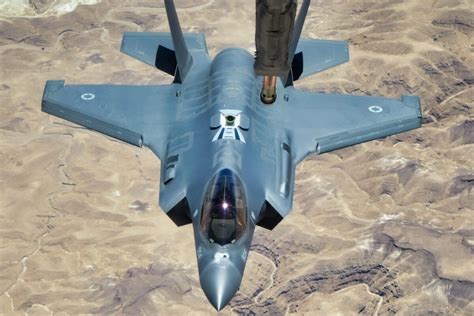
To mitigate the reduced stealth profile, Israeli engineers introduced low-observable pylons—featuring diamond-shaped cross-sections and radar-absorbent materials—which reduced radar cross-section to one-tenth of conventional aircraft. Additionally, electronic warfare suites like the ALQ-239 provided further masking during ingress and egress phases.
Engineering Trade-Offs and Tactical Risks
While Beast Mode unlocks superior combat power, it comes at a cost. By increasing aerodynamic drag and radar signature, the F-35 sacrifices its primary fifth-generation advantage—low observability. When equipped with external payloads, the jet’s detectability by systems like Russia’s S-400 jumps from 5% to 35%, posing significant risks in contested airspace.
Furthermore, the added weight impacts the aircraft’s maneuverability and range. The F-35’s max speed of Mach 1.6 is already modest compared to some legacy fighters like the F-15, and external weapons further reduce this agility. Fuel efficiency also drops, forcing reliance on external fuel tanks or aerial refueling, especially during long-range missions such as those involving Iranian targets.
Another drawback involves airframe fatigue. Combat analysts have noted that sustained operations in Beast Mode reduce the maintenance cycle of the F-35 from 6,000 to 4,500 flight hours due to increased structural stress. This shortens the long-term value proposition of the aircraft and raises logistical demands on support infrastructure.
Tactical Innovation: Hybrid Loadouts and Dynamic Deployment
One innovation that softens these limitations is the use of hybrid loadouts, wherein stealth-compatible internal weapons are supplemented with select external stores depending on mission phase. During penetration stages, the F-35 maintains stealth; in the strike phase, external pylons deploy, and electronic warfare systems compensate for stealth degradation. This form of dynamic mission planning reflects the adaptability of the F-35 in modern battle doctrines.
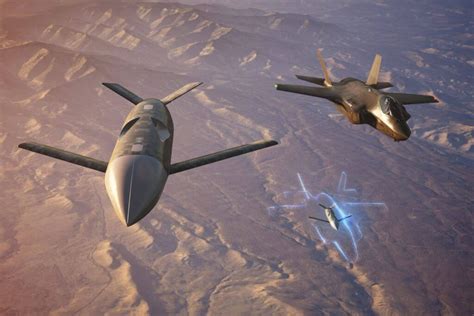
This hybrid strategy has also influenced joint force operations. The F-35, when operating in Beast Mode, can serve as a strike leader, coordinating with non-stealth aircraft, drones, and ground assets. For instance, the use of stealth UAVs as forward sensors or decoys allows Beast Mode-configured F-35s to maintain tactical standoff distances while delivering their payload with precision.
Debates and Doctrinal Implications
Critics argue that if Beast Mode becomes the norm, it questions the F-35’s design premise as a stealth-first platform. In such cases, deploying a fourth-generation strike-fighter like the F-15E or Eurofighter Typhoon, which can carry similar or larger payloads at lower cost, might be more efficient. This has fueled a doctrinal debate around force composition—suggesting future fleets may incorporate “loyal wingman” concepts, where sixth-generation stealth leaders operate in tandem with non-stealth “beast” platforms.
This discussion is particularly relevant as nations like the UK, Japan, and Australia evaluate the future structure of their air combat units. For example, Royal Air Force F-35Bs, though limited by short take-off vertical landing (STOVL) constraints, have tested Beast Mode configurations with Paveway IV bombs during training. However, actual combat deployment still favors stealth, reinforcing the selective use of Beast Mode in permissive environments.
Global Adoption and Strategic Implications
Although the U.S. Air Force has conducted extensive live-fire testing of F-35s in Beast Mode, it has yet to commit to routine combat use of this configuration. Operational doctrine still prioritizes stealth penetration for contested zones, especially against near-peer adversaries like China or Russia. However, in a post-stealth saturation environment, Beast Mode could emerge as a standard loadout for mop-up operations or for campaigns against non-state actors, where radar exposure is less threatening.
In a broader context, Beast Mode serves as a proof-of-concept for integrating modular lethality into stealth platforms. As future airframes evolve under the Next Generation Air Dominance (NGAD) program, features like optional external payloads, stealth-aware pylons, and multi-domain coordination will be fundamental to maintaining air supremacy.
FAQs About F-35 Beast Mode
What is the maximum payload the F-35 can carry in Beast Mode?
In Beast Mode, the F-35 can carry up to 22,000 pounds (10,000 kg) of weapons. This includes both internal weapon bays and six external hardpoints, supporting a combination of air-to-air missiles, precision bombs, and long-range strike weapons.
How does Beast Mode affect the F-35’s stealth capabilities?
Beast Mode compromises stealth by using external weapon pylons, which significantly increase the radar cross-section. Although some stealth mitigation techniques are applied—like low-observable mounts and electronic countermeasures—the configuration is more detectable and suited for low-threat environments.
Has Beast Mode been used in real combat?
Yes. The Israeli Air Force employed F-35I Adir jets in Beast Mode during the October 2023 Middle East conflict, targeting positions in Gaza, Lebanon, and potentially Iran. These operations marked the first confirmed combat deployment of the Beast Mode configuration.