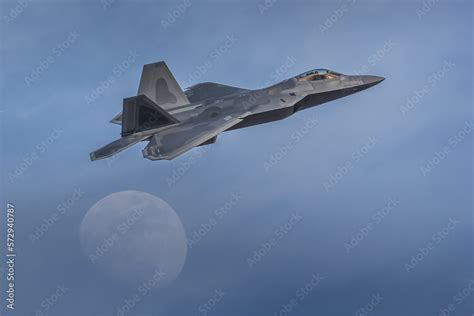
The F-22 Raptor is widely regarded as the pinnacle of fifth-generation air superiority fighters, combining stealth, agility, and advanced avionics. However, in certain combat scenarios where air dominance has been secured, the need for low observability diminishes. This is where the F-22’s “Beast Mode” configuration comes into play—maximizing its firepower at the cost of stealth.
The Concept of F-22 Beast Mode
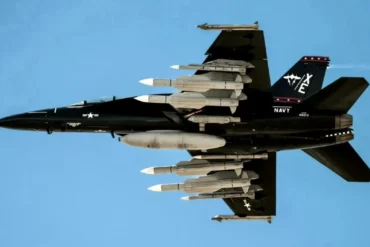
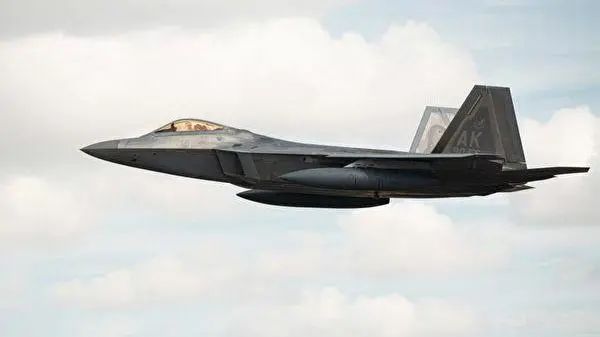
The F-22 Beast Mode is a non-stealth configuration that enables the Raptor to carry an overwhelming number of missiles for sustained air superiority. Traditionally, the F-22 relies on internal weapons bays to maintain its stealth profile. However, when stealth is no longer a priority, it can be equipped with external hardpoints, increasing its total missile capacity to a staggering 28 air-to-air missiles.
Strategic Purpose: The “Third Day” Warfare Concept
The Beast Mode loadout aligns with the U.S. Air Force’s “Third Day” warfare doctrine. This strategy assumes that in the initial days of combat, stealth fighters eliminate enemy radar and air defenses. Once these threats are neutralized, stealth becomes less critical, allowing fighters to maximize their firepower for extended battles.
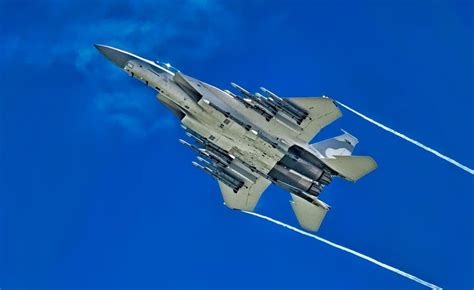
By transforming into a missile truck, the F-22 can adopt roles typically reserved for non-stealth aircraft like the F-15EX, but with the advantage of superior avionics, sensor fusion, and high-speed engagement capabilities.
F-22 Beast Mode Loadout
Internal vs. External Payload
In standard stealth mode, the F-22 carries 8 missiles within its internal weapons bays:
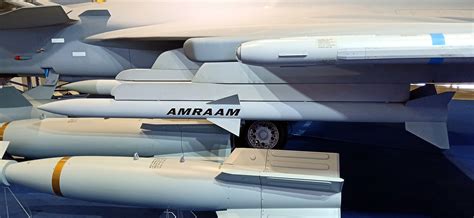
- 6 AIM-120 AMRAAMs (Advanced Medium-Range Air-to-Air Missiles)
- 2 AIM-9 Sidewinder missiles
However, in Beast Mode, the Raptor can mount up to 20 additional missiles on external hardpoints, bringing the total to 28 missiles. This configuration was successfully tested in 2022 at Tyndall Air Force Base, setting a record for the F-22’s payload capacity.
Weapons Configuration
- Internal Loadout: 6 AIM-120s + 2 AIM-9s
- External Hardpoints: Up to 20 AIM-120s and AIM-9s
- Total Weapon Cost: Over $14 million in missile value
This unprecedented payload allows the F-22 to overwhelm enemy aircraft, providing long-range engagement capabilities against multiple adversaries.
Trade-offs: Stealth vs. Firepower
While Beast Mode enhances firepower, it also comes with notable drawbacks:
1. Increased Radar Cross-Section (RCS)
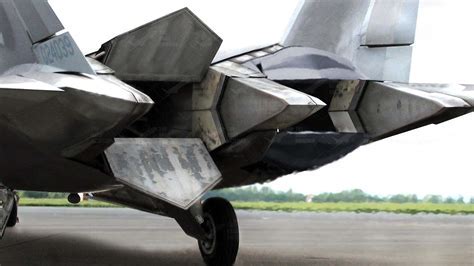
Stealth is one of the F-22’s greatest advantages, but external weapons drastically increase its RCS, making it more detectable by enemy radar.
2. Reduced Maneuverability
The added weight and aerodynamic drag impact the F-22’s agility. However, its thrust-vectoring engines partially compensate, maintaining superior dogfighting capabilities over most adversaries.
Technical and Operational Context
Comparison with F-35 Beast Mode
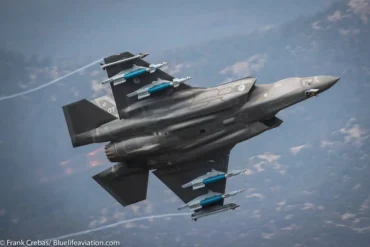
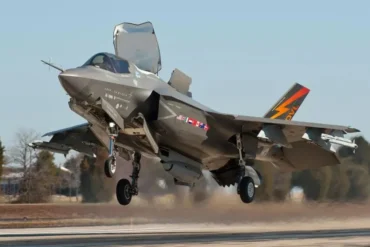
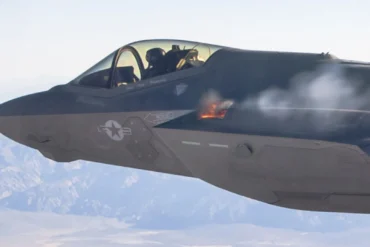
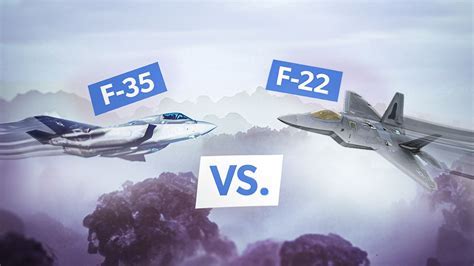
Both the F-22 and F-35 Lightning II feature a Beast Mode configuration. The F-35, in this mode, can carry up to 14 missiles, but the F-22 surpasses it with 28 missiles while maintaining superior speed and altitude capabilities.
| Feature | F-22 Beast Mode | F-35 Beast Mode |
|---|---|---|
| Total Missile Capacity | 28 missiles | 14 missiles |
| Speed | Mach 2.25 | Mach 1.6 |
| Service Ceiling | 65,000 feet | 50,000 feet |
| Stealth in Beast Mode | Significantly reduced | Reduced |
While the F-35 is optimized for multi-role operations, the F-22 excels in air dominance, making its Beast Mode particularly effective in high-threat air combat.
Historical Significance
The 2022 test of F-22 Beast Mode marked a significant milestone in its operational capability. Prior to this, the record for missile capacity was set in 2014, when the F-22 carried 22 missiles. The latest configuration proves that stealth fighters can be adapted for diverse combat scenarios, ensuring continued battlefield relevance.
Conclusion
The F-22 Raptor’s Beast Mode represents a tactical evolution in air combat strategy, transitioning from a stealth-dependent approach to overwhelming firepower when necessary. With its ability to carry 28 missiles, it stands as a formidable force multiplier, balancing advanced technology, raw firepower, and combat adaptability.
FAQ: F-22 Beast Mode
1. Does Beast Mode make the F-22 more vulnerable?
Yes, the addition of external weapons increases its radar signature, making it more detectable. However, this mode is intended for scenarios where air superiority is already secured, reducing the need for stealth.
2. How does the F-22 compare to the F-35 in Beast Mode?
While both aircraft can carry additional external weapons, the F-22 can mount up to 28 missiles, whereas the F-35 is limited to 14. Additionally, the F-22 has greater speed and altitude advantages, making it better suited for high-threat air combat.
3. When is Beast Mode used in combat?
Beast Mode is typically used after enemy air defenses are neutralized, allowing the F-22 to prioritize firepower over stealth. This strategy aligns with sustained air dominance operations where multiple enemy targets must be engaged simultaneously.