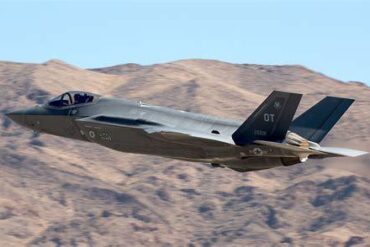
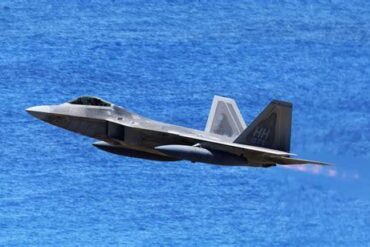
As one of the most technologically advanced fighter jets in existence, the Lockheed Martin F-35 Lightning II continues to be a focal point in defense spending, operational planning, and cost-efficiency debates across the United States Department of Defense (DoD). The cost per flight hour (CPFH) is among the most critical metrics by which the program is measured. This metric reflects the operational, maintenance, and sustainment expenses associated with each hour an F-35 is in the air. As of 2025, the projected CPFH stands at approximately $25,000, a target set by Lockheed Martin and reinforced through years of cost-reduction initiatives.
However, behind this promising figure lies a multi-layered narrative involving historical cost trends, operational sacrifices, sustainment challenges, and variant-specific discrepancies. This article provides a thorough and data-driven investigation of the F-35’s cost per flight hour in 2025, contextualizing it within a historical framework and evaluating the broader implications.
Understanding the F-35 Program’s Scope and Variants
The F-35 program encompasses three primary variants, each designed to meet the needs of different service branches:
- F-35A: Conventional takeoff and landing (CTOL), used by the U.S. Air Force
- F-35B: Short takeoff/vertical landing (STOVL), used by the U.S. Marine Corps
- F-35C: Carrier-based operations, used by the U.S. Navy
These variants, while sharing a baseline design and stealth capability, have vastly different operational environments and sustainment needs. Consequently, the CPFH is not uniform across the fleet, making aggregate cost analysis complex.
Lockheed Martin’s 2025 CPFH target of $25,000 is primarily associated with the F-35A, the most widely used and cost-optimized variant. Nevertheless, the B and C variants often incur higher costs due to their specialized mission profiles and engineering complexities.
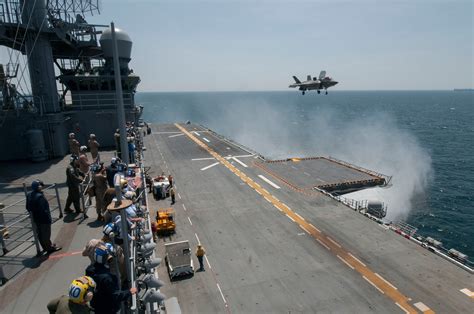
Historical Trajectory of F-35 Cost Per Flight Hour
The cost trajectory of the F-35 has evolved significantly since its early operational years. In 2014, CPFH estimates peaked at approximately $86,800, adjusted to constant 2012 dollars. This figure reflected early development costs, immature logistics systems, and inefficiencies in sustainment practices. From that point, a systematic cost-reduction campaign began.
By 2018, the CPFH for the F-35A dropped to $44,000, with further reductions to $35,000 by 2019. The downward trend continued, and by 2022, reports from the Joint Program Office (JPO) and independent assessments suggested a CPFH range of $33,600 to $34,000, again in constant 2012 dollars.
These figures represent a 61% reduction from 2014, made possible through strategic adjustments, including:
- Performance-Based Logistics (PBL) contracts with Lockheed Martin
- Investments in spare parts standardization and reliability improvements
- Data-driven predictive maintenance techniques
2025 Estimate: Ambition Meets Reality
The 2025 CPFH target of $25,000 remains ambitious but is reportedly within reach for the F-35A variant. This figure includes fuel, maintenance personnel, spare parts, and operational sustainment. However, it excludes acquisition costs or modernization upgrades.
Although Lockheed Martin has affirmed this figure as achievable, official DoD and GAO confirmations remain limited, casting some uncertainty over its universality. Nevertheless, the trendline supports a continued decline, particularly for F-35A units with mature maintenance ecosystems.
For F-35B and F-35C, 2025 CPFH figures are presumed to be higher, potentially in the $30,000 to $38,000 range, although public data remains sparse.
Sustainment Costs and Long-Term Challenges
While CPFH has declined, lifetime sustainment costs have escalated dramatically. A 2024 Government Accountability Office (GAO) report revealed a 44% increase in projected sustainment costs, from $1.1 trillion in 2018 to $1.58 trillion in 2024.
This rise comes despite efforts to cut flight hours, a tactic aimed at reducing overall operational expenses. For instance, Air Force flight hours for the F-35 fell from 230 to 187 annually between 2020 and 2023.
While this maneuver improves CPFH optics, it raises concerns about mission readiness, particularly when coupled with disappointing mission-capable (MC) rates, which averaged just 52% in 2023, far below the target of 90%.
Comparative Cost Analysis with Legacy Aircraft
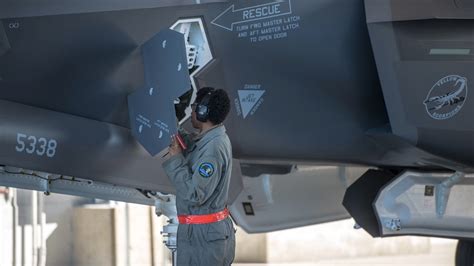
To further evaluate the F-35’s cost per flight hour, it is useful to compare it with legacy U.S. aircraft:
| Aircraft | CPFH (2015 USD) | Operational Role |
|---|---|---|
| A-10 Thunderbolt II | $17,716 | Close Air Support |
| F-15C Eagle | $41,921 | Air Superiority |
| F-16C Falcon | $22,514 | Multirole Fighter |
| F-35A Lightning II | $33,600–$34,000 (2022) | Stealth Multirole |
This data reveals the F-35’s elevated costs, largely driven by its stealth features, sensor fusion, and sophisticated logistics requirements. However, when adjusted for fifth-generation capabilities, the F-35 offers combat versatility and survivability that older airframes cannot match.
Variant-Specific Cost Complexities
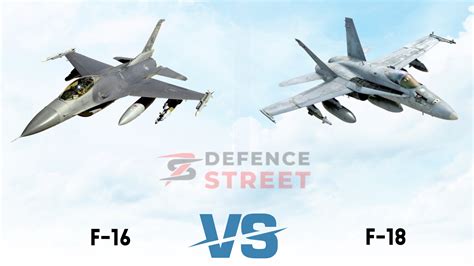
It is critical to differentiate between variants when assessing CPFH:
- F-35A is the most cost-efficient due to widespread use, easier maintenance, and Air Force infrastructure optimization.
- F-35B incurs higher CPFH due to lift-fan systems, STOVL mechanics, and vertical landing stresses.
- F-35C faces elevated costs linked to carrier deck operations, folding wings, and catapult/arrestor gear usage.
These cost disparities must be accounted for in budget allocations and fleet composition strategies, especially as the DoD plans to operate the F-35 platform through 2088.
Operational Trade-Offs and Readiness Concerns
A revealing facet of the CPFH debate is the trade-off between cost and capability. The decision to limit annual flight hours has immediate fiscal benefits but long-term readiness implications.
Lower flight hours mean:
- Less wear and tear (reducing CPFH)
- Lower fuel and maintenance costs
- Decreased pilot flight experience
- Delayed identification of systemic issues
Thus, the CPFH figure, while seemingly indicative of affordability, may obscure deeper readiness and sustainability issues. The DoD must walk a fine line between cost control and combat effectiveness, particularly as geopolitical threats evolve.
Table: F-35A Cost Per Flight Hour (CPFH) Over Time
| Year | CPFH (USD) | Notes |
|---|---|---|
| 2014 | $86,800 | Constant 2012 dollars |
| 2018 | $44,000 | F-35A, fiscal year |
| 2019 | $35,000 | F-35A, reduced from 2018 |
| 2022 | $33,600–$34,000 | All variants, 2012 dollars |
| 2025 | ~$25,000 (target) | Lockheed Martin estimate |
This table underlines a notable CPFH decline, achieved through years of targeted optimization, but also reveals how ambitious targets must contend with operational complexity and rising sustainment burdens.
Conclusion
The estimated F-35 cost per flight hour in 2025, hovering around $25,000, represents a significant stride toward affordability—particularly for the F-35A variant. However, this achievement is not uniform across variants, nor does it tell the whole story.
Beneath the surface lies a broader debate on sustainment economics, readiness degradation, and strategic compromises—many of which are shielded by the narrowing CPFH figure. With the DoD projecting F-35 usage through 2088, a vigilant approach to cost management, operational transparency, and mission readiness will be crucial to justify the platform’s long-term value.
FAQ
How accurate is the $25,000 cost per flight hour estimate for the F-35 in 2025?
The $25,000 figure is based on Lockheed Martin’s stated target, particularly for the F-35A variant. It reflects intensive cost-reduction efforts over the past decade. However, exact figures may vary by operational environment, maintenance infrastructure, and aircraft variant. Independent verification from DoD budget disclosures or GAO audits is limited, so the number should be viewed as an estimate rather than a confirmed value.
Why are sustainment costs for the F-35 increasing despite a lower CPFH?
While CPFH reductions are evident, lifetime sustainment costs have risen due to inflation, aging components, and expanded operational requirements. The increase to $1.58 trillion in 2024—up from $1.1 trillion in 2018—is also linked to deferred modernization, parts shortages, and challenges in achieving reliability targets. These broader costs are not fully captured by CPFH alone.
What impact do reduced flight hours have on CPFH and readiness?
Reducing annual flight hours helps decrease CPFH by minimizing fuel use and wear. However, this strategy has negative implications for pilot proficiency, maintenance cycle validation, and combat preparedness. The drop in mission-capable rates to around 52% in 2023 reflects the potential downside of over-prioritizing cost metrics at the expense of readiness.