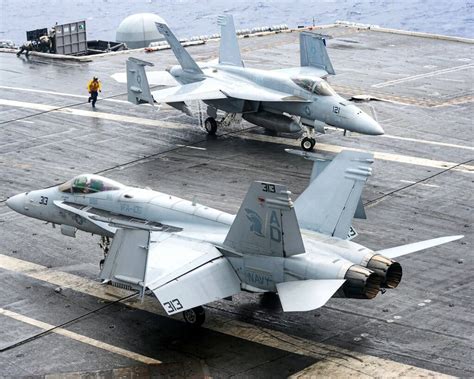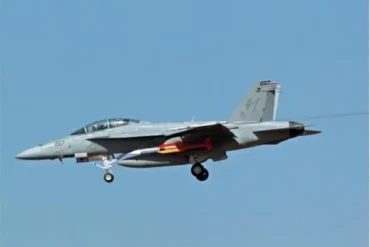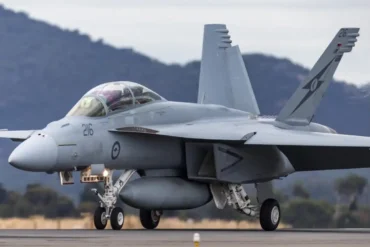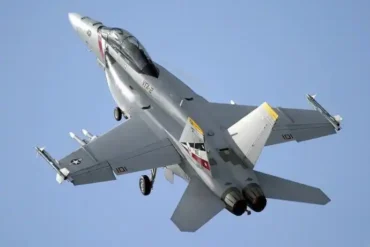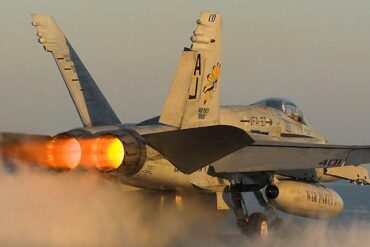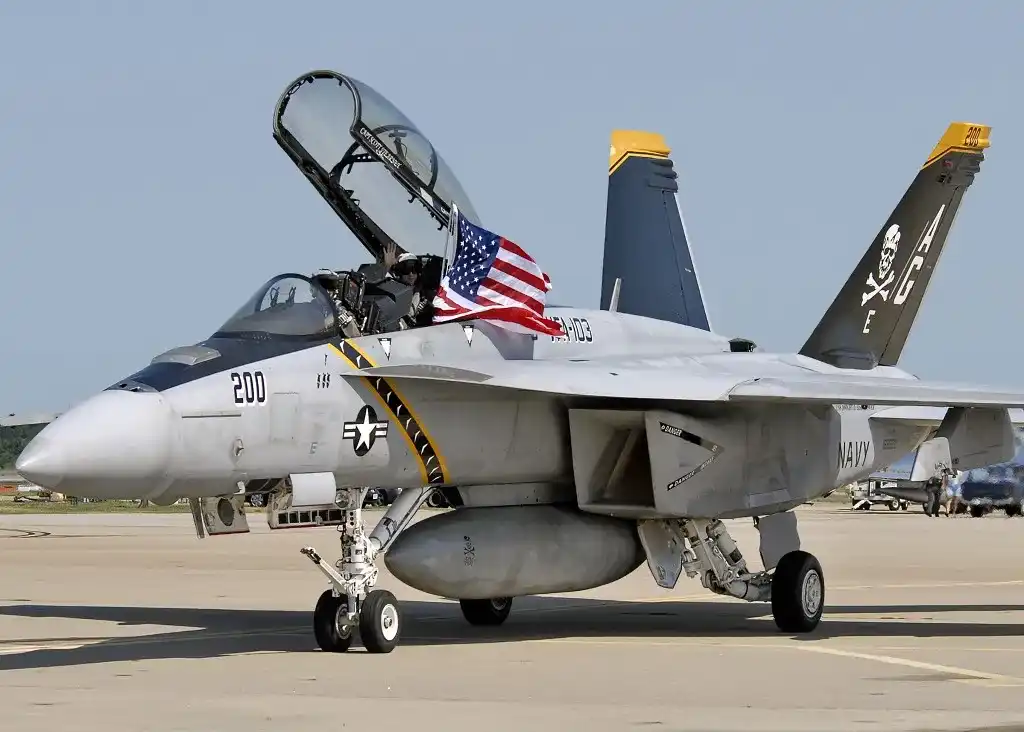
The F/A-18 Super Hornet, a multirole fighter aircraft, serves as the backbone of the U.S. Navy’s carrier air wings. Its combat radius—the maximum distance it can operate from its base while performing a mission and returning safely—varies significantly depending on altitude, payload, fuel load, and mission type. This article provides a detailed examination of the Super Hornet’s combat radius across different configurations, along with its fuel efficiency, payload flexibility, and enhancements in the Advanced Super Hornet variant.
Standard F/A-18E/F Super Hornet Combat Radius
High-Altitude Mission Profiles
The combat radius of the F/A-18E/F Super Hornet is heavily influenced by its operational altitude. A high-high-high profile—where the aircraft ingresses, attacks, and egresses at high altitudes—maximizes fuel efficiency and extends range. Here are notable figures based on U.S. Navy data:
- 660 nautical miles (1,222 km): Equipped with 2× MK84 laser-guided bombs, 1× AIM-120 AMRAAM, 3× 480-gallon external fuel tanks, and targeting/navigation pods.
- 638 nautical miles (1,181 km): Armed with 4× MK83 bombs, 3× external fuel tanks, and targeting/navigation pods.
- 571–598 nautical miles (1,057–1,107 km): Configurations with mixed air-to-ground and air-to-air payloads (e.g., AGM-65F Maverick or AGM-88 HARM anti-radiation missiles).
Even with 4-ton payloads, the combat radius remains close to 1,000 km, highlighting the Super Hornet’s robust strike capabilities.
Fuel and Payload Considerations
Fuel Load and External Tanks
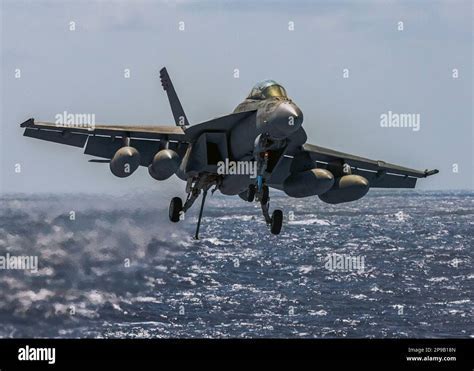
The F/A-18E/F Super Hornet achieves its extended range through an efficient fuel system. Its internal fuel capacity is 6,354 kg, and it can carry up to 5× 480-gallon external fuel tanks, adding 7,381 kg of fuel. This significantly enhances its endurance and mission range.
Engine Efficiency
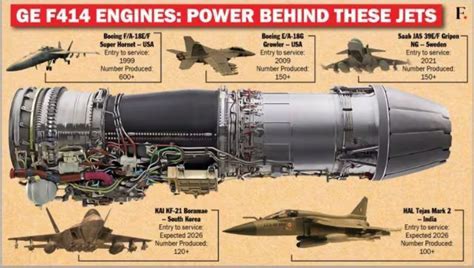
The aircraft is powered by two F414-GE-400 turbofan engines, each providing 22,000 lbf of thrust. The upgraded F414-EPE (Enhanced Performance Engine) boosts thrust to 26,400 lbf, improving fuel efficiency and climb rate.
Advanced Super Hornet: Enhancements for Extended Range
The Advanced Super Hornet, also known as the Silent Hornet, features multiple upgrades that extend its combat radius and survivability.
Conformal Fuel Tanks (CFTs)
- The addition of 1,590 kg (3,500 lbs) of fuel in CFTs increases the aircraft’s total combat radius by 241 km, pushing it beyond 1,200 km in certain mission profiles.
- These tanks also reduce aerodynamic drag, improving overall performance.
Stealth Upgrades
- Enclosed weapon pods reduce the radar cross-section (RCS), allowing safer penetration into enemy-controlled airspace.
- Lower radar visibility indirectly enhances the effective combat radius by reducing evasion maneuvers and fuel expenditure.
Engine Performance and Range Impact
- The F414-EPE engines not only increase thrust but also improve fuel burn rate efficiency, maximizing endurance.
- Enhanced afterburner efficiency reduces excessive fuel usage in high-speed operations.
Factors Influencing Combat Radius
Mission Profile
- High-altitude missions maximize fuel efficiency and range.
- Low-altitude strike missions (e.g., nap-of-the-earth flight) significantly reduce combat radius due to higher drag and fuel consumption.
Payload Weight and Drag Impact
- Heavier ordinance loads reduce available fuel for range extension.
- External fuel tanks offset payload-induced range penalties.
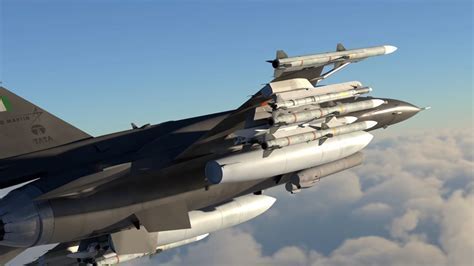
- Targeting pods (TFLIR, NFLIR) and air-to-air weapons create additional drag but remain mission-critical.
Comparison with Other Fighter Aircraft
F-35 Lightning II
- The F-35 prioritizes stealth and sensor fusion but has a slightly lower range than the Advanced Super Hornet in non-stealth missions.
- The Super Hornet’s external fuel tank flexibility allows superior mission endurance.
F-14 Tomcat (Retired in 2006)
- The F-14 had a longer unrefueled range but lacked modern avionics and stealth enhancements.
- The Super Hornet surpasses it in fuel economy, avionics, and multirole capability.
Su-35 Flanker-E (Russia)
- The Su-35 has a longer unrefueled range, but the Super Hornet’s aerial refueling capability and carrier integration provide superior operational flexibility.
- The Super Hornet’s AESA radar and advanced avionics offer better combat awareness.
Conclusion
The F/A-18 Super Hornet’s combat radius is highly mission-adaptable, ranging from ~1,000 km in standard configurations to over 1,200 km with conformal fuel tanks and stealth enhancements. With its fuel efficiency, payload flexibility, and survivability, the Super Hornet remains a cornerstone of U.S. and allied naval aviation.
FAQ
1. What is the maximum combat radius of the F/A-18 Super Hornet?
The maximum combat radius in a high-altitude strike mission is ~1,200 km with conformal fuel tanks and ~1,000 km in standard configurations with external fuel tanks.
2. How does the Super Hornet’s combat radius compare to the F-35?
While the F-35 Lightning II has a shorter range in conventional missions, its stealth capabilities compensate for reduced refueling needs. The Super Hornet’s ability to carry external fuel tanks allows for longer missions in non-stealth roles.
3. Does the Super Hornet’s range improve with aerial refueling?
Yes, the F/A-18 Super Hornet can be refueled mid-air using a KC-135, KC-10, or another Super Hornet in buddy refueling configuration, effectively extending its mission duration indefinitely.