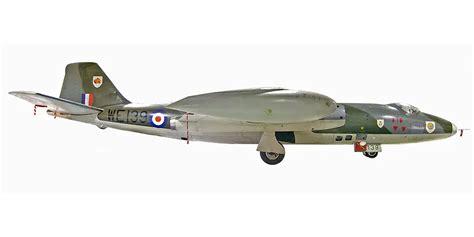
For much of its history, the Indian Air Force (IAF) has been associated with agile fighter aircraft, supersonic interceptors, and versatile multirole jets. Yet, hidden in plain sight for five full decades, India operated a dedicated fleet of medium bomber aircraft — the English Electric Canberra, a jet that would shape the strategic mindset of the IAF in ways seldom acknowledged by the public.
The Arrival of the Canberra: India’s Leap into Medium Bomber Aviation
In 1957, a significant chapter began in Indian military aviation history when the first batch of English Electric Canberra B(I)58 bombers arrived. Manufactured in the United Kingdom by English Electric at their Preston and Samlesbury factories, the Canberra was a British jet-powered medium bomber designed during the final years of World War II and entering service in the early 1950s. India was among the first nations outside NATO to acquire this aircraft, signaling both technological ambition and geopolitical assertion in the early post-independence decades.
The Indian Air Force eventually acquired around 54 Canberra aircraft, including both bomber and reconnaissance variants. Capable of flying at speeds exceeding 900 km/h, with a service ceiling over 48,000 feet, and a payload of 6,000 pounds of bombs, the Canberra was a technological marvel for its time. Its combination of altitude, speed, and range granted India the ability to strike deep into enemy territory, something few nations in the region could match during the mid-20th century.
Combat-Proven: The Canberra in Indo-Pakistani Wars
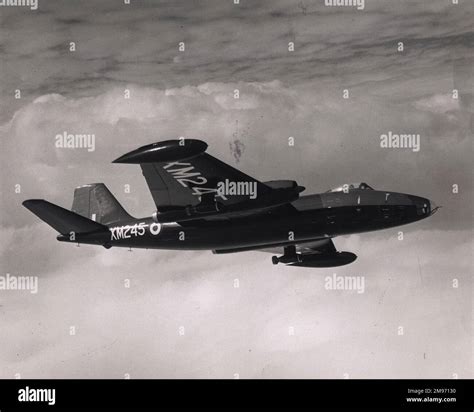
The Canberra’s operational relevance became starkly visible during two major conflicts: the 1965 Indo-Pakistani War and the 1971 Bangladesh Liberation War.
In 1965, the IAF launched bold night-time bombing raids over Pakistani targets using the Canberra. Perhaps most notable was the strike on Peshawar airbase, a daring mission that demonstrated not only India’s offensive reach but also the precision and endurance of the Canberra crews. These attacks played a crucial psychological role and disrupted Pakistani air operations at critical moments.
Six years later, in 1971, the Canberras returned to battle. During the Bangladesh Liberation War, they were used extensively to bomb Pakistani military installations, oil depots, and logistics hubs, particularly in what was then East Pakistan. Their contribution, while not always in the limelight, was instrumental in crippling enemy supply chains and communications, thereby accelerating the eventual Indian victory.
Versatility Beyond Bombing: Reconnaissance and Electronic Warfare
The Canberra was never a one-trick pony. Its sturdy airframe, spacious fuselage, and adaptability allowed it to be converted into platforms for high-altitude photo-reconnaissance and electronic warfare. Modified Canberra PR (Photo Reconnaissance) variants were used to capture vital intelligence imagery over disputed areas — a particularly valuable asset during times of heightened tensions along the Line of Control.
In parallel, some Canberras were converted for electronic countermeasure (ECM) roles. They were used to jam enemy radar systems, intercept communications, and support strike missions with electronic surveillance. These roles extended the aircraft’s operational value well into the jet age, long after more modern designs had entered Indian service.
India’s Unique Bomber Doctrine: A Detour, Not a Destination
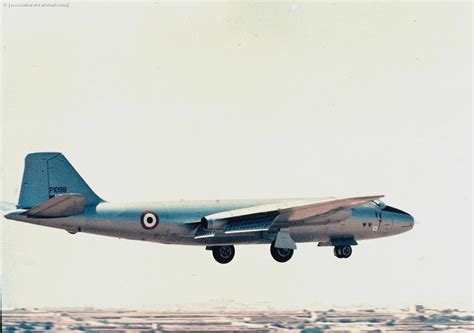
Despite its prolonged use of the Canberra, India never pursued a full-fledged strategic bombing doctrine in the traditional sense. Unlike the United States or Soviet Union, India never fielded heavy bombers like the B-52 Stratofortress or the Tu-95 Bear. The Canberra, though effective, was always a medium bomber — a tool for tactical and limited strategic missions rather than global power projection.
As Cold War geopolitics shifted and India’s defense strategy evolved, the focus moved toward fighter-bombers that could perform both air-to-air and air-to-ground roles. From the late 1960s onwards, the IAF introduced aircraft like the Sukhoi Su-7, MiG-21, MiG-27, and SEPECAT Jaguar, all of which gradually assumed many of the Canberra’s mission profiles but with greater survivability in modern combat scenarios.
By the early 2000s, aircraft like the Su-30MKI, equipped with precision-guided munitions and long-range cruise missiles, had taken over long-range strike duties, rendering the Canberra obsolete in the face of modern threats and integrated air defense systems.
Retirement in 2007: A Quiet Farewell to a Workhorse
After 50 years of active service, the Canberra was finally retired in 2007. Few military aircraft in Indian service have matched this kind of operational longevity. Its retirement marked the end of an era — not just for the aircraft, but for a philosophy of dedicated bomber deployment that the IAF had explored and ultimately evolved away from.
What made the Canberra’s retirement particularly poignant was the absence of a direct replacement. India had transitioned completely to multirole strike platforms. While these newer aircraft offered more flexibility and survivability, the symbolic presence of a dedicated bomber class disappeared with the Canberra’s departure.
The Canberra’s Legacy in Indian Air Power
The Canberra’s enduring contribution to Indian military aviation is often underplayed in both public discourse and military history. Yet, its operational impact is undeniable:
- Psychological and strategic leverage: In its time, the mere possession of bomber aircraft capable of deep strikes gave India a psychological edge in regional confrontations.
- Platform for doctrine development: The Canberra offered a platform around which India began to understand aerial strike doctrines, mission planning, electronic warfare, and reconnaissance strategies.
- Training and capability building: Its operation trained generations of aircrew in complex bombing missions, long-duration flights, and high-altitude operations.
The aircraft’s ability to adapt to changing roles — from bombing to photo intelligence to ECM — made it one of the most multi-dimensional platforms in Indian service during the Cold War era. It was also a showcase of Indian maintenance and logistical capabilities, keeping a British-built 1950s aircraft combat-relevant for half a century.
The Forgotten Icon of South Asia’s Skies
In many ways, the English Electric Canberra in IAF livery is a forgotten icon. It never generated the same emotional resonance as the MiG-21 or the tejas, nor did it possess the brute force of a heavy bomber to earn international notoriety. Yet, for five decades, it stood at the intersection of necessity and ambition — a reliable workhorse that allowed India to project military power, gather intelligence, and support combat operations across vastly diverse theaters.
Today, the few remaining Canberras are displayed in museums or memorialized in archival footage. But for veterans who flew them and for military historians tracking South Asia’s air power trajectory, the Canberra remains a symbol of quiet strength — not flashy, not headline-grabbing, but indispensable during its time.
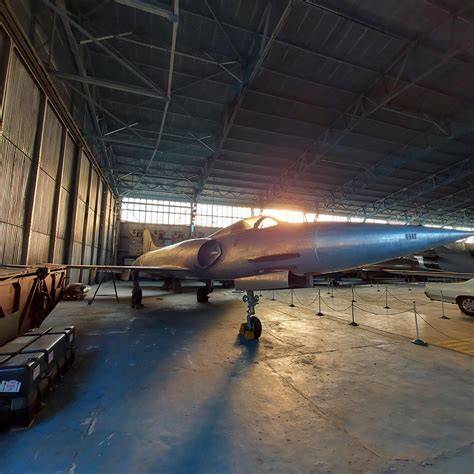
Its legacy continues not in hardware, but in doctrine, experience, and a reminder that air power is not always about dominance — sometimes, it’s about resilience, adaptability, and strategic foresight. The Canberra gave India all three.