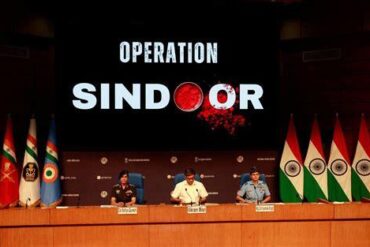
Operation Sindoor has emerged as a watershed moment in modern Indian airpower doctrine, marking a shift not just in tactics but in how the Indian Air Force (IAF) must conceive warfare in the future. The campaign’s success, despite early tactical missteps, is a testament to adaptability, technological leverage, and a maturing command structure. CDS General Anil Chauhan acknowledged the initial hurdles but highlighted how within just 90 hours, the IAF imposed punitive costs on Pakistan’s military infrastructure, forcing an unconditional ceasefire.
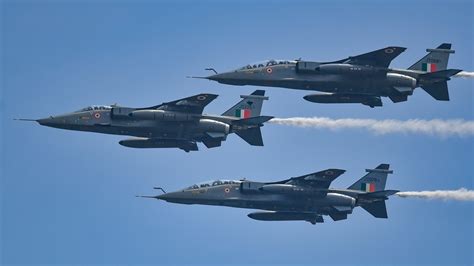
The operation’s decisive outcomes were not solely driven by superior firepower but by how the force rapidly integrated battle damage assessments (BDA), electronic warfare (EW) tactics, and air denial strategies into an evolving battlefield. Air Marshal A.K. Bharti encapsulated the ethos of the campaign succinctly: “Losses may occur, but victories must be decisive.”
Rewriting Doctrines: Learning from Sindoor and Ukraine
Warfare in the 21st century is being rewritten in real time. The Russia-Ukraine conflict, alongside Op Sindoor, has driven home the irrefutable truth: air superiority alone is not enough. The IAF has begun to recalibrate its doctrine around multi-domain awareness, joint-force synergy, and a deeply embedded learning culture.
By integrating military debriefs and post-strike assessments into institutional knowledge, the IAF aims to ensure that every operation lays the groundwork for future efficiency. These evolutions mirror broader trends where air power dominates not just the battlefield but the very decision cycles of adversaries.
Air Denial and Stand-Off Precision Strikes
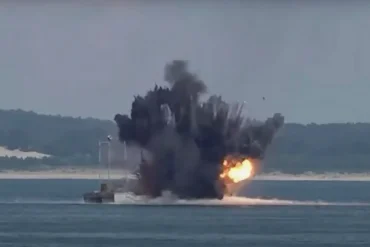
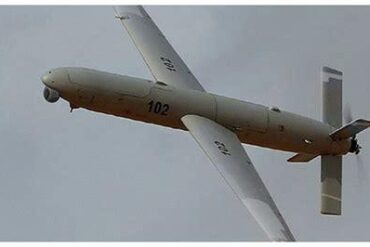
Modern conflicts rarely allow for close-in dogfights. Instead, adversaries have fortified their air defense systems, pushing combat aircraft to strike from greater depths. India responded effectively during Op Sindoor using stand-off air-launched cruise missiles (ALCMs) like BrahMos and SCALP, alongside loitering munitions such as Harop and SkyStriker.
These systems allowed the IAF to destroy hardened and time-sensitive targets without breaching hostile airspace, drastically reducing risk to pilots.
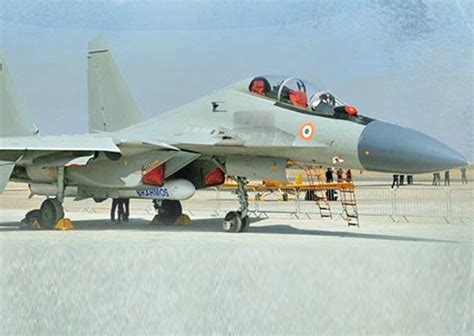
The rise of First Person View (FPV) drones, autonomous systems, and LEO satellite constellations for targeting and navigation illustrates the shift toward digitalized, precision-first aerial warfare.
Next-Gen Mobile Air Defenses: Shoot, Scoot, Survive
Gone are the days of static air defenses. Future air defense systems must be mobile, layered, and multi-domain capable. Operation Sindoor highlighted the urgent need for India to adopt shoot-and-scoot platforms, paired with soft-kill and hard-kill mechanisms to handle threats ranging from hypersonic missiles to drone swarms.
India must integrate Directed Energy Weapons (DEWs), integrated SEAD/DEAD planning, and even civil-defense drills to mitigate adversary saturation strikes. A seamless merger of air, land, and cyber defense protocols is the next logical step.
Missile Superiority: Retaining the Edge Against PL-15 and Beyond
India’s S-400 Triumf and Akash systems offer a formidable shield. However, to sustain missile superiority, fast-tracking indigenous projects like Kusha LRSAM (400 km) and Astra-II/III is critical. The PL-15, armed by Chinese J-10CEs in Pakistan’s inventory, poses a growing challenge.
To retain overmatch, India may also need to acquire R-37M missiles, with their extended 400km range, enabling beyond-visual-range (BVR) superiority in South Asian airspace.
EW Aircraft: The Crucial Gap in India’s Arsenal
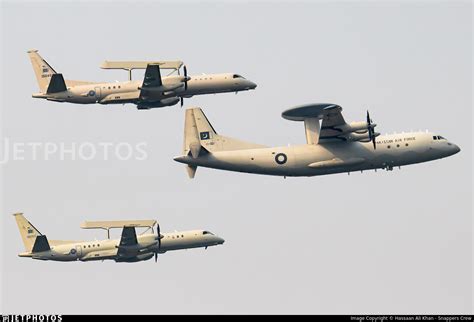
One of the most glaring revelations post-Sindoor is India’s shortfall in dedicated EW aircraft. Pakistan’s Falcon DA-20s, ZDK-03s, and Global 6000 EW platforms give it a decisive edge in electronic countermeasures and jamming.
While the Rafale’s SPECTRA suite has shown promise, India needs standalone EW platforms equipped with quantum sensors, anti-jam communication, EMP weapons, and miniaturized decoy systems. Such aircraft will act as force multipliers in contested electronic environments.
Secure Data Links and Net-Centric Warfare
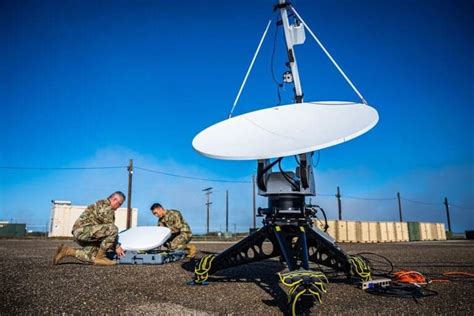
Modern battles are won not just through bombs and bullets, but through data supremacy. The IAF’s future depends on building jam-resistant, stealthy, secure data networks that enable real-time updates, weapon retargeting, and cross-domain kill chains.
Investments must focus on quantum encryption, edge AI processing, and low-latency data transfer across platforms. The Digital Battlefield must be as robust as the physical one.
Drones and Counter-UAS Dominance
Drones have emerged as the new artillery. Kamikaze drones, attritable swarms, and loitering systems will become central to India’s Suppression of Enemy Air Defenses (SEAD) doctrine. The IAF must prioritize:
- Indigenous surge production
- Mastery of navigation, propulsion, and AI
- Fielding jamming pods, directed energy, and kinetic interceptors for Counter-UAS (C-UAS) roles
Procurement Reform: From ICADS to Fast-Track Acquisitions
India’s Integrated Capability Development System (ICADS) and Defence Acquisition Procedure (DAP-2025) must evolve to embed real battlefield learnings. Op Sindoor exposed bottlenecks in acquisition and the need for continuous user-industry interface.
Fast-track acquisition channels must be legally strengthened for emergent and perishable technologies that lose relevance if delayed.
Multi-Domain Operations: Synchronizing Every Front
Air superiority now extends to space, cyber, and information domains. The IAF must function as part of a unified Multi-Domain Operations (MDO) framework where ISR inputs from satellites, UAS, OSINT, HUMINT, and even civilian sensors converge.
This requires secure, redundant networks, quantum-resistant cryptography, and edge AI compute to ensure a rapid Observe-Orient-Decide-Act (OODA) loop.
Space as the Final Frontier
To dominate future skies, India must dominate orbit. Sub-30-minute revisit rates using ELINT, COMINT, SAR, and EO/IR payloads are critical. Expansion of MEO/GEO constellations, completion of NavIC, and space-based PNT infrastructure are essential for GNSS-denied environments.
Strategic Messaging: Exposing the Nuclear Bluff
Op Sindoor set a new escalation threshold by launching precise, proportionate airstrikes under the nuclear overhang. Pakistan’s doctrine of full-spectrum deterrence was effectively neutralized, exposing its nuclear bluff. The IAF’s performance reaffirmed that limited war under a nuclear shadow is both feasible and strategically sound.
The China-Pakistan-Turkey Axis: A Growing Threat Vector
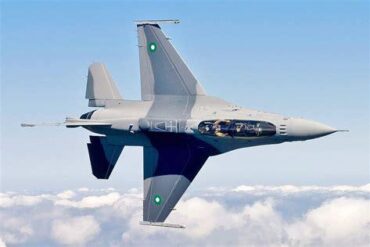
Pakistan’s defense ecosystem is increasingly linked to China and Turkey. China supplies the JF-17s, J-10CEs, PL-12/15 missiles, and provides cyber/EW support. Turkey offers drone upgrades and F-16 modernization.
India must treat this trilateral nexus as a long-term challenge, accelerating jointness between services, technological indigenization, and regional deterrence posturing.
Narrative Warfare: The Battle for Perception
Strategic victories are hollow if not communicated effectively. India must invest in a doctrine of information warfare, training digital warriors, and leveraging Kautilyan statecraft to build persuasive narratives that highlight IAF success and amplify enemy failures.
Future Tech: Stealth, Hypersonics, and Wingmen
The next generation of warfare will revolve around stealth fighters, hypersonic weapons, and loyal wingman drones. India must:
- Fast-track AMCA development
- Develop hypersonic BrahMos II
- Invest in counter-stealth radar systems
- Integrate 4.5/5th-gen jets via shared EW and secure datalinks
Doctrine and HR: Evolving for the 5th Generation
It’s not just platforms that must evolve—doctrines and personnel must too. The IAF needs HR pipelines that cultivate experts in cyber, EW, and AI, and ensure that doctrines are updated in real time to reflect technological and tactical change.
Theatre Commands: Maintain Strategic Airpower Control
The idea of Integrated Theatre Commands (ITCs) is not without merit, but must not come at the cost of fragmenting the already limited aerial assets. Until operational jointness is demonstrably viable, centralized command of airpower remains essential.
Conclusion: A Call to Act, Not Just Reflect
Operation Sindoor is more than a military success; it is a strategic inflection point. It calls for battlefield innovation, sustained funding, reform in acquisition, and deep public-private partnerships to rapidly indigenize and modernize.
The air battles of tomorrow are being decided by the decisions India makes today. The time to act is not in the next crisis—it is now.