Air travel often feels deceptively simple. You check in, pass through security, browse a few duty-free shelves, and stroll down a jet bridge toward a machine the size of a small office block. Minutes later, you are pressed gently into your seat as engines roar and the runway blurs. The transformation from stillness to flight appears seamless. But beneath that smooth exterior lies a rigorously timed orchestration of calculations, conversations, inspections, and cross-checks that begins long before the cabin doors close.
Behind every departure is a choreography built around a single tyrant: time. Not ego. Not routine. Not even technology. Time governs everything from crew reporting limits to fuel burn predictions, from gate coordination to runway sequencing. Commercial aviation does not tolerate improvisation masquerading as confidence. It thrives on precision.
The journey from check-in to gear-up is not merely procedural; it is structural. Each step reinforces the next, forming a chain where redundancy is not waste but wisdom. And at the center of it all stands one unspoken truth: a widebody jet weighing nearly 300 tonnes does not rise into the sky by accident.
The Clock Is The Real Captain
Every commercial departure is anchored to Scheduled Time of Departure (STD). Airlines track On-Time Performance (OTP) obsessively, but punctuality is not about optics. It is about legal duty limits, fatigue management, and maintaining operational buffers that protect safety margins.
A long-haul crew might report for a 9-hour 30-minute flight with a maximum duty period of 13 hours. That window includes approximately 90 minutes of pre-flight preparation and 30 minutes after landing for shutdown and paperwork. What remains is a narrow operational corridor. Taxi delays, holding patterns, or weather diversions must fit inside it. There is remarkably little slack.
That is why crews typically report at STD minus 1 hour and 30 minutes. The countdown begins long before passengers see a boarding announcement.
STD – 1:30: The Crew Room Briefing
In major airlines, pilots frequently meet for the first time in the crew room. A handshake, names exchanged, and the work begins immediately. Professional familiarity replaces personal familiarity. Standard Operating Procedures ensure that two strangers can operate a complex aircraft seamlessly.
The flight plan, prepared by specialist dispatch teams, is downloaded onto company-issued electronic tablets. These devices integrate with sophisticated flight planning software such as Jeppesen FlightDeck Pro, allowing crews to visualize the entire route in layered detail.
They analyze:
- Routing and airspace restrictions
- Alternate airports
- Destination weather forecasts
- En-route turbulence
- Jet stream strength and positioning
High-altitude jet streams—narrow bands of strong wind in the upper atmosphere—can dramatically alter fuel consumption and arrival times. A powerful tailwind across the Atlantic can shorten a crossing by 30 minutes. A headwind can erase that advantage entirely. If projections seem inconsistent, pilots contact flight planning. Dialogue is not a formality; it is a safeguard.
Building The Mental Model Of The Flight
Before a single switch is touched, pilots construct a mental simulation of the journey ahead. This includes expected weather systems, potential turbulence corridors, terrain considerations near alternates, and fuel strategy.
Aviation psychology places heavy emphasis on shared mental models. When both pilots visualize the same scenario—anticipated weather deviations, traffic density, climb constraints—they reduce ambiguity later. The aircraft’s physical systems are redundant; so too are its human systems.
At this stage, the flight exists only as data and prediction. Soon it will be aluminum and thrust.
STD – 1:20: Cabin Crew Coordination
Widebody aircraft such as the Airbus A330 or Airbus A350 operate with large cabin teams—often 10 to 13 crew members. While pilots focus on technical planning, cabin crew conduct safety reviews, assign emergency stations, and review passenger-specific considerations.
When flight deck crew enter the cabin briefing room, they provide operational context:
- Expected flight time
- Anticipated turbulence
- Routing considerations
- Any technical notes affecting service
If moderate turbulence is forecast over the North Atlantic, service plans adapt accordingly. This coordination ensures that passenger experience and operational safety align.
The walk from briefing room to aircraft may look cinematic, but it represents a transition from planning to execution.
STD – 1:05: Accepting The Aircraft
At the aircraft, roles shift from abstract planning to physical verification. Engineers brief the crew on any items listed under the Minimum Equipment List (MEL) or Configuration Deviation List (CDL). These documents define what minor systems may be inoperative while still maintaining safety and regulatory compliance.
Most entries are routine: a non-essential galley component, a redundant sensor, a minor cabin system. But each must be reviewed and understood. The aircraft is not accepted until the captain is satisfied it meets operational standards.
Acceptance is not ceremonial. It is legal responsibility.
STD – 1:00: Cockpit Power-Up And Systems Integration
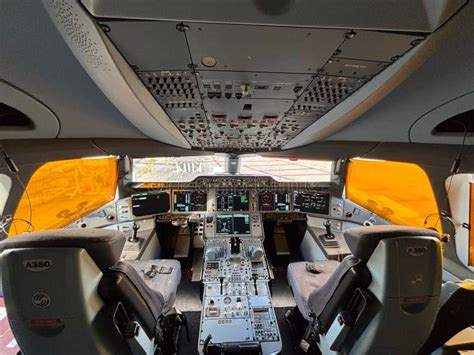
Modern aircraft such as the Airbus A350-1000 feature integrated digital platforms known as the Onboard Information System (OIS). Electronic Flight Bags connect directly to aircraft data networks, housing manuals, performance calculators, and real-time updates.
Preparation is divided between CM1 (Captain) and CM2 (First Officer). Each pilot independently conducts checklist-driven scans of cockpit panels, confirming:
- Navigation systems alignment
- Hydraulic and electrical status
- Flight control configuration
- Fuel distribution
- Performance data inputs
Cross-checking is deliberate redundancy. When two trained professionals independently verify the same information, the probability of undetected error drops exponentially.
STD – 0:55: Performance Calculations And Weather Data
The crew retrieves the Automatic Terminal Information Service (ATIS) broadcast, providing current runway configuration, wind, visibility, and operational notices.
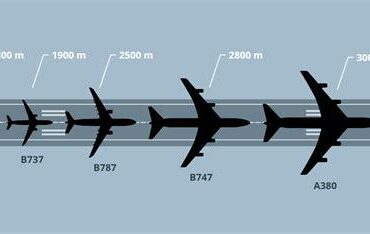
From there, takeoff performance is calculated. At airports such as London Heathrow, runway length often allows departure at Maximum Takeoff Weight (MTOW). For the A350-1000, that can approach 290,000 kilograms.
Weight influences everything:
- Required runway distance
- V-speeds (critical takeoff speeds)
- Initial climb gradient
- Brake energy limits in case of rejected takeoff
Data is transmitted to load control via ACARS (Aircraft Communications Addressing and Reporting System), essentially a digital messaging network linking aircraft and ground operations.
The aircraft is now mathematically prepared to fly.
STD – 0:50: External Inspection And FMS Programming
Roles transition to PF (Pilot Flying) and PM (Pilot Monitoring). If the First Officer is flying, the Captain may conduct the external walk-around inspection.
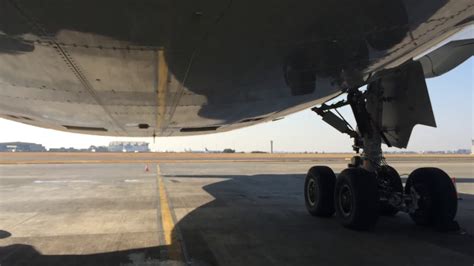
Standing beneath a 70-meter wingspan never loses its scale. The inspection includes:
- Tire condition and pressure indicators
- Landing gear assemblies
- Engine inlets for foreign object damage
- Control surfaces for structural integrity
- Fuselage panels and sensors
Meanwhile, the PF programs the Flight Management System (FMS), entering routing, weights, wind data, and constructing a contingency plan for immediate return if required.
Boarding begins. Inside, passengers see routine. Outside, vigilance continues.
STD – 0:40: Final Weights And Fuel Uplift
Once boarding completes, the Zero Fuel Weight (ZFW) is confirmed. This figure represents aircraft weight without usable fuel and is critical for final fuel planning.
If passenger numbers differ from projection, fuel calculations adjust. Widebody refueling can take 20–30 minutes, so partial fueling often begins earlier. Final uplift ensures compliance with:
- Trip fuel requirements
- Contingency fuel
- Alternate fuel
- Final reserve fuel
Fuel strategy balances regulatory minimums with operational efficiency. Excess weight increases burn. Insufficient margin invites risk. Precision wins.
STD – 0:20: The Departure Brief
This is one of the most critical moments. Two pilots—possibly strangers hours earlier—must align their understanding perfectly.
The briefing covers:
- Assigned runway
- Standard Instrument Departure (SID) routing
- Altitude constraints
- Noise abatement procedures
- First cleared altitude
- Minimum safe altitude within 25 nautical miles
The PF identifies threats: terrain, weather cells, traffic congestion, runway length limitations. Rejected takeoff considerations are reviewed, including decision speed V1, beyond which stopping is no longer an option.
The conversation is collaborative, not scripted. Shared clarity reduces ambiguity during high workload phases.
STD – 0:10: Doors Closed, Commitment Begins
With passenger count confirmed, doors are armed and closed. The captain makes a welcome announcement. In that moment, hundreds of passengers place their trust in professionals they have never met.
Pushback clearance is obtained. Brakes release. The aircraft is no longer static.
STD: Pushback, Taxi, And Thrust
Widebody operations frequently use single-engine taxi to conserve fuel. One engine starts during pushback; the second is started at least five minutes before takeoff to allow thermal stabilization.
Control checks verify full movement of ailerons, elevators, and rudder. A short threat review reinforces critical points.
Cleared for takeoff.
Thrust levers advance. Engines spool to calculated takeoff power.
“100 knots.”
“V1.”
“Rotate.”
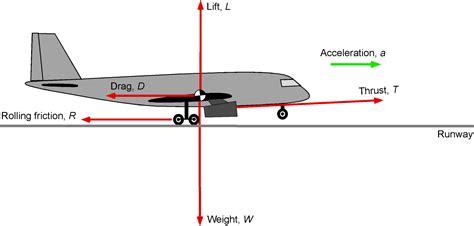
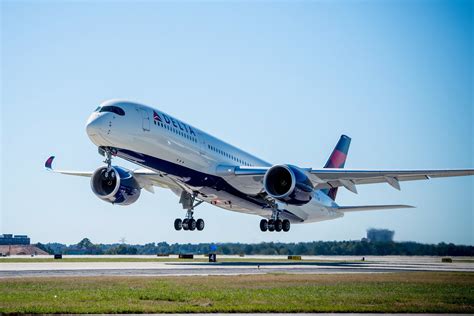
The PF gently applies back pressure at roughly three degrees per second, targeting approximately 12.5 degrees nose-up in the A350 or 15 degrees in the A330. Aerodynamic lift overcomes gravity.
“Positive climb.”
“Gear up.”
Nearly 300 tonnes leaves the earth.
Why Standardization Makes Aviation Safe
The brilliance of commercial aviation lies not in heroics but in standardization. Procedures are intentionally repetitive. Checklists are intentionally structured. Communication follows defined patterns.
When everything normal is standardized, anything abnormal becomes obvious.
Two pilots who have never met can operate flawlessly because they share:
- Identical training philosophies
- Identical procedural frameworks
- Identical threat-management models
This system design explains why commercial aviation remains statistically the safest mode of transport globally. Complexity is not eliminated; it is controlled.
From Check-In To Gear-Up: A System Built On Discipline
From the passenger’s first step into the terminal to the moment landing gear retracts into the fuselage, departure is governed by coordination across dozens of specialists: dispatchers, engineers, refuelers, cabin crew, ground handlers, and air traffic controllers.
Yet inside the cockpit, everything narrows to time, data, and disciplined execution.
The aircraft’s mass, scale, and power inspire awe. But what truly lifts a widebody jet into the sky is something less dramatic and far more profound: structured thinking, collaborative vigilance, and respect for the clock.
The surge down the runway may last less than 40 seconds. The preparation behind it begins long before passengers ever hear the engines.
And that is what it takes to get a big jet airborne.