Modern battlefields are no longer defined by what soldiers can see with their eyes. They are shaped by what sensors can perceive across hundreds of kilometers, through clouds, dust, smoke, and electronic noise. High-performance military radar has become the quiet architect of situational awareness, converting invisible electromagnetic echoes into decisive knowledge. What once began as a clever laboratory trick in the early twentieth century has evolved into a layered sensing ecosystem that links ground forces, aircraft, and command centers into a single thinking network. In this ecosystem, radar no longer merely answers the question of “what is out there,” but increasingly answers “what is happening, what will happen next, and what should be done about it.”
Radar’s long arc of innovation explains why today’s systems feel almost uncanny in their reach. From Heinrich Hertz’s 19th-century experiments with electromagnetic reflection to Sir Robert Watson-Watt’s practical demonstration of aircraft detection, the technology matured under the pressure of war and then diversified into navigation, meteorology, and space tracking. Military radar absorbed those lessons and kept evolving, pushed by adversaries who learned how to hide, jam, and deceive. The result is a class of sensors that combine raw physics with computation, signal processing, and networked intelligence, transforming noisy reflections into actionable clarity.
High-Performance Military Radar Systems Reshaping Modern Defense
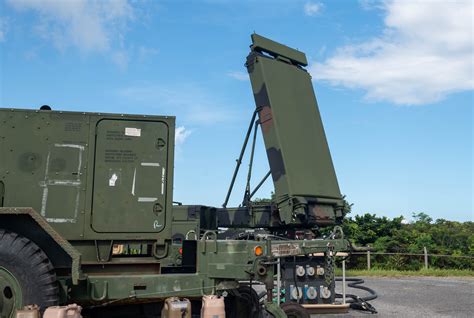
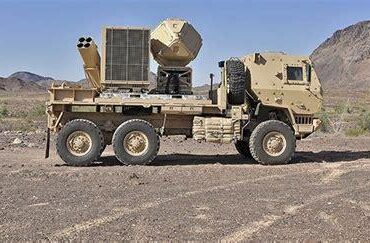
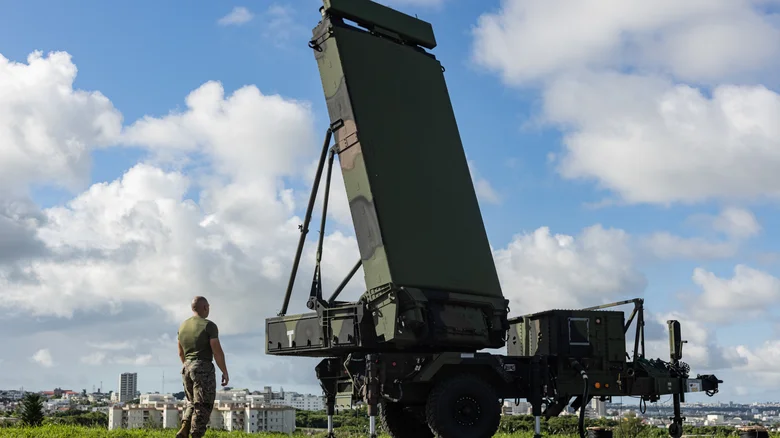
Among the most striking examples of this evolution is Northrop Grumman’s AN/TPS-80 Ground/Air Task-Oriented Radar (G/ATOR), a system fielded by the U.S. Marine Corps and the U.S. Air Force to consolidate what used to require multiple specialized radars into a single mobile platform. Built as a long-range pulse-Doppler active electronically scanned array, G/ATOR continuously steers its beam electronically rather than mechanically, allowing it to scan faster, track more targets, and adapt its attention to unfolding threats in real time. The effect is a radar that behaves less like a rotating lighthouse and more like a distributed sensory organ, sampling the battlespace from multiple angles at once.
The system’s use of S-band radar for full 360-degree surveillance gives it a valuable balance between range and resolution, well suited for detecting aircraft, drones, and incoming munitions while maintaining resilience in poor weather. Its design folds together air surveillance, ground surveillance, fire-control support, and air-traffic control into a single sensor network, reducing logistical complexity while expanding operational flexibility. Mounted on a trailer, the radar can be towed by standard military vehicles or flown into theater by cargo aircraft, which means its sophisticated sensing power is not chained to fixed infrastructure. Mobility here is not a convenience; it is a survival trait in an era where static sensors are prime targets.
Beyond Detection: Precision Fire Control and Counter-Fire Intelligence
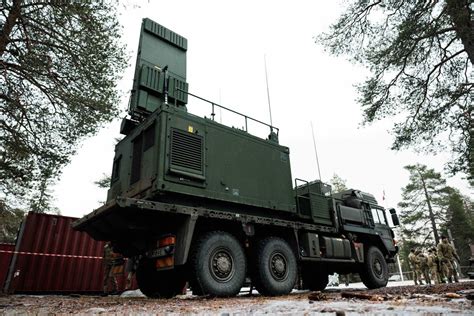
Where older radars might have warned of an incoming threat, high-performance military radar increasingly participates in the response itself. G/ATOR can trace the ballistic arc of rockets, artillery, and mortars backward to their launch points, rapidly generating coordinates for counter-battery fire. This compresses the time between attack and response, shrinking the window in which hostile forces can relocate. The radar’s anti-jamming capabilities further complicate adversarial attempts to blind or confuse the sensor, forcing opponents to contend with a system designed to keep working even when the electromagnetic environment turns hostile.
The heart of this performance lies in materials science as much as in algorithms. By using Gallium Nitride (GaN) semiconductors instead of older Gallium Arsenide components, the radar achieves higher power density and better thermal performance, which translates into longer detection ranges and more reliable sustained operation. GaN’s efficiency allows the array to emit stronger, cleaner signals without overheating, effectively extending the radar’s reach while maintaining stability. This is one of those quiet engineering choices that ripple outward into strategic consequences, because every extra kilometer of detection range expands decision time for commanders.
Open Architecture and Software-Driven Upgrades Extend the Radar’s Lifespan
Another subtle revolution is architectural rather than physical. G/ATOR is built with an open system architecture, meaning both hardware modules and software components can be upgraded without redesigning the entire platform. In December 2025, a fielded software update expanded detection range, sharpened threat identification, and accelerated data sharing with allied systems, effectively improving operational performance overnight across deployed units. This is radar behaving like a living system, capable of learning new tricks through code rather than requiring years of hardware replacement cycles. The sensor becomes a platform for ongoing evolution, not a frozen snapshot of past capability.
This software-driven adaptability also hints at the future of radar as part of a broader sensing mesh, where data flows seamlessly between platforms, fusing radar returns with satellite imagery, electronic intelligence, and other sensor feeds. In such a network, radar contributes not just detection but context, enriching a shared operational picture that supports faster and more precise decisions across domains.
The Future of Military Radar in an Era of Quantum Experiments
Speculation about quantum radar emerging from research programs in China underscores how quickly the sensing race continues to accelerate. Whether or not such systems mature into practical battlefield tools, their pursuit reflects a broader truth: radar is no longer a solved problem but a moving frontier. Today’s high-performance military radar systems like G/ATOR represent a peak of current engineering, blending physics, materials science, software, and networked intelligence into a single operational asset. Tomorrow’s sensors will push further into stealth detection, electronic resilience, and real-time data fusion, reshaping how conflicts are perceived and managed.
In that sense, modern radar is not just a machine that detects threats. It is an evolving lens through which militaries perceive reality itself, compressing uncertainty into usable knowledge. The strange beauty of this technology is that it turns invisible waves into strategic foresight, proving that the future of defense is as much about how well we see as about how well we strike.