The Demanding Path to Helicopter Mastery
Becoming a helicopter pilot is not for the faint of heart. Unlike fixed-wing aircraft, helicopters demand a degree of finesse, spatial awareness, and multitasking skill that many new aviators underestimate. While the cockpit layout may seem deceptively simple, the actual operation requires precise coordination of the collective, cyclic, pedals, and throttle—all in real-time, often under physical and mental stress.
In the early stages, students struggle with hovering, the cornerstone of rotary-wing flight. The difficulty isn’t in understanding what to do—it’s in doing it all at once. New pilots liken it to balancing a skateboard on a bowling ball, or more vividly, riding a unicycle on a beach ball during an earthquake. For most students, it takes 10 to 15 hours before hovering starts to make sense. Until then, the experience can be both humbling and frustrating.
Hovering: The Greatest Early Barrier
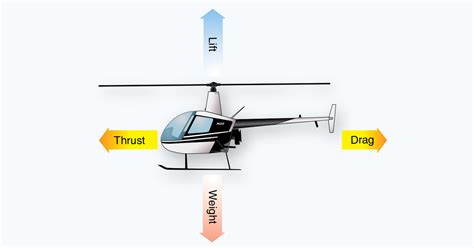
Hovering is universally accepted as the hardest part of initial flight training. It’s the point where motor memory, muscle finesse, and cognitive load intersect with unforgiving physics. New students often white-knuckle the controls, applying sharp corrections that only worsen the oscillations. As seasoned instructors often advise, “Handle the controls like you’re milking a mouse.”
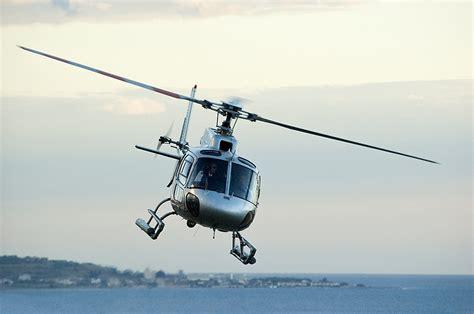
What makes hovering uniquely difficult is the lack of lag between input and aircraft response. Small movements on the cyclic—a control stick between the pilot’s knees—cause immediate tilt in the rotor disk, prompting the aircraft to drift. The pedals control yaw via the tail rotor, and the collective adjusts vertical lift. All three must be coordinated simultaneously, and failure to do so leads to what pilots call the hover dance—an unintentional sideways lurching often ending in embarrassment.
Why Takeoff and Landing Aren’t As Simple As They Look
Unlike airplanes, helicopters don’t require a runway—but this freedom comes at a price. Takeoff begins from a hover and transitions through a phase known as Effective Translational Lift (ETL). This occurs as the rotor system moves forward, gaining aerodynamic efficiency. Pilots learn to recognize this moment visually—tall grass begins to lean back, the aircraft surges forward, and yaw inputs suddenly require less effort.
Landing is essentially reversed hovering, with the same fragile balance of fine adjustments. The best advice? “Don’t land—hover to the ground.” This mindset helps avoid premature touchdowns, excessive sink rates, or lateral drift, all of which could lead to dynamic rollover.
Simulator Training: Helpful, But Not a Shortcut
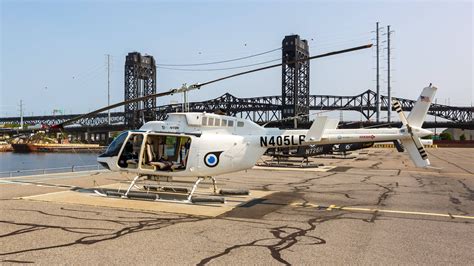
Many aspiring pilots turn to simulator training to cut costs. While full-motion sims are exceptional for instrument flying (IFR), emergency procedures, and checklist discipline, they fall short in replicating the tactile subtleties of hover control. Simulators lack the “weight and feedback” of real controls. One pilot described the experience as “learning to dance in VR—you get the steps, but not the rhythm.”
In fact, studies show cheap hover trainers rarely accelerate the learning curve. Instead, progress hinges on time in the actual aircraft, repeated exposure, and the development of neuromuscular memory. The real helicopter becomes your teacher; the wind, torque, and inertia—your curriculum.
Training Hours and Certification Requirements
In the United States, the FAA Part 61 regulation requires a minimum of 40 hours of flight time for a Private Pilot Certificate with a Rotorcraft-Helicopter rating, but most students log 50 to 70 hours before achieving the proficiency needed to pass the checkride. For commercial operations, the bar is much higher: at least 150 hours total time, often more depending on the operator’s insurance.
Breakdown of typical training milestones:
-
10–15 hours: Basic hover and hover taxi
-
20–30 hours: Solo flights begin
-
40–70 hours: Completion of Private Pilot License (PPL)
-
100–150+ hours: Commercial Pilot Certificate eligibility
Physical Coordination and Mental Endurance
Flying a helicopter is as much a physical act as it is a mental one. Precision foot control on the anti-torque pedals, micro-adjustments on the cyclic, and smooth collective inputs demand fine motor skills. Pilots often report physical fatigue after just an hour in early training—especially in manual aircraft like the Robinson R22 or Schweizer 300.
Mentally, helicopter pilots must remain highly situationally aware, constantly assessing wind, terrain, power margins, airspeed, and rotor RPM. Add in ATC communication, traffic avoidance, and navigation, and the workload can overwhelm novices.
Yet, as many experienced aviators say: “At first? Really hard. After 2,000 hours? It’s like driving your car.” That transformation comes only with time, practice, and thousands of minute course corrections embedded in memory.
Mechanical Complexity and the Margin for Error
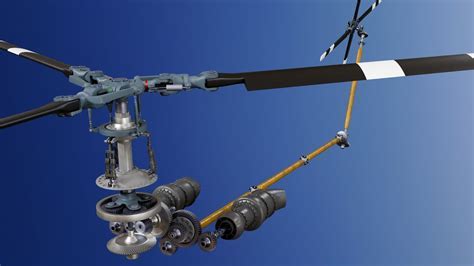
Helicopters are mechanical marvels—and that’s part of what makes flying them so unforgiving. Every component, from the main rotor gearbox to the tail rotor driveshaft, must work in perfect harmony. When maintenance falters, the consequences can be deadly.
One crash account tells of a bearing failure caused by an unsupervised mechanic, which led to a main driveshaft disintegration mid-flight. The sudden loss of rotor RPM resulted in a crash where a child tragically drowned. Photos of the worn driveshaft splines circulated in pilot forums, described as “absolutely terrifying.”
Psychological Challenge: Confidence and Doubt
Every pilot hits the wall of self-doubt. For some, it comes during the first failed hover attempt. For others, it’s the “maybe this isn’t for you” conversation with an instructor. But most who persist find that it eventually “clicks.”
Confidence must be earned—not faked. The key is consistency and incremental victories. One day, the helicopter stops bucking. The dance ends. You are still, stable, and in control. The machine responds with deference. And that is the turning point—when the impossible becomes intuitive.
Expert Advice for Aspiring Helicopter Pilots
Veterans of rotorcraft aviation often offer the following hard-earned wisdom:
-
Start with reading: The FAA’s Helicopter Flying Handbook is essential.
-
Train regularly: Gaps between lessons reset your progress.
-
Don’t over-correct: Smooth, small inputs are more effective than aggressive ones.
-
Use reference points: Look further out, not directly beneath the nose.
-
Relax: Tension in the arms leads to over-controlling.
Conclusion: Difficult, But Not Impossible
So, how hard is it to become a helicopter pilot? The answer is: extremely hard at first. The initial learning curve is steep, the coordination requirements intense, and the feedback loops unforgiving. But with time, patience, and professional instruction, what once seemed chaotic becomes instinctive.
From the shaky first hover to executing pinpoint landings in turbulent conditions, becoming a helicopter pilot is a journey of transformation. And while the skill is hard-won, it grants access to a realm of aviation few ever master.
FAQ
How long does it take to become a competent helicopter pilot?
Most students reach a basic level of proficiency in 40 to 70 hours of flight time. To become confident and reliable in real-world operations typically takes 150–200 hours, with some pilots needing more depending on frequency of training and aptitude.
Is flying a helicopter harder than flying an airplane?
Yes, particularly at the beginning. Helicopter flying requires continuous coordination of multiple controls, and the margin for error is smaller during hover and low-altitude maneuvers. However, once mastered, it becomes manageable.
Can you teach yourself to fly a helicopter using simulators?
Not effectively. Simulators are excellent for emergency procedures and instrument flight, but they lack the tactile feedback and subtle control dynamics of real helicopters. In-person instruction is necessary to master hovering and control input finesse.