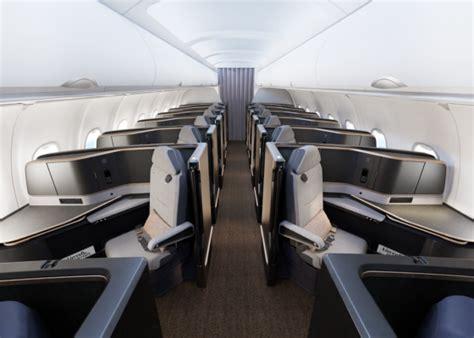
The aviation industry is witnessing a fundamental transformation in how airlines approach premium cabin offerings on single-aisle aircraft. Traditional boundaries between short-haul and long-haul service standards are rapidly dissolving as carriers recognize the immense potential of narrowbody aircraft for extended routes. This evolution represents more than just an operational shift; it’s a complete reimagining of passenger expectations and airline economics on routes that were previously the exclusive domain of widebody aircraft.
For decades, the aviation industry maintained clear distinctions between different aircraft categories and their corresponding service levels. Short-haul and medium-haul routes typically featured basic business class configurations with slightly larger seats and blocked middle seats, while long-haul flights offered the luxury of lie-flat beds and expansive personal space. However, technological advances in aircraft design, coupled with changing passenger demands and airline revenue strategies, have created an opportunity for carriers to redefine premium travel on narrowbody platforms.
The catalyst for this transformation lies in the intersection of passenger expectations, airline economics, and aircraft capabilities. Modern travelers, particularly business passengers, increasingly demand consistent premium experiences regardless of aircraft type or route length. Simultaneously, airlines have discovered that premium cabin revenue can significantly enhance the profitability of routes that might otherwise struggle to justify widebody aircraft deployment. This convergence has created a perfect storm of innovation in narrowbody cabin design and service delivery.
The Boeing 757 Legacy and Market Gap
The story of narrowbody premium evolution begins with understanding the market void left by aging aircraft fleets. The Boeing 757, which served as the backbone of many airlines’ medium-haul operations for decades, created a significant gap in the market as these aircraft approached retirement. Airlines found themselves searching for suitable replacements that could match the 757’s versatility and range capabilities while offering improved economics and passenger comfort.
Boeing’s initial response was the development of the New Midsize Aircraft (NMA), a project that promised to fill the middle-market segment between narrowbody and widebody aircraft. However, when Boeing placed this project on indefinite hold, it created an unprecedented opportunity for Airbus to capture market share in this crucial segment. The European manufacturer recognized that airlines desperately needed viable alternatives to replace their aging 757 fleets, and Boeing’s absence from this market segment presented a strategic opening.
Airbus approached this challenge by extending the capabilities of its existing A321 platform rather than developing an entirely new aircraft. This strategy proved prescient, as it allowed the manufacturer to leverage existing production lines, pilot training programs, and maintenance infrastructure while dramatically expanding the aircraft’s operational envelope. The evolution from the standard A321 to the A321neo (new engine option) and subsequently to the A321LR (Long Range) demonstrated Airbus’s commitment to pushing the boundaries of single-aisle aircraft capabilities.
The A321XLR Revolution
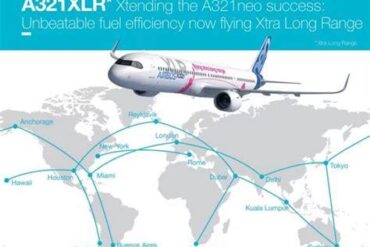
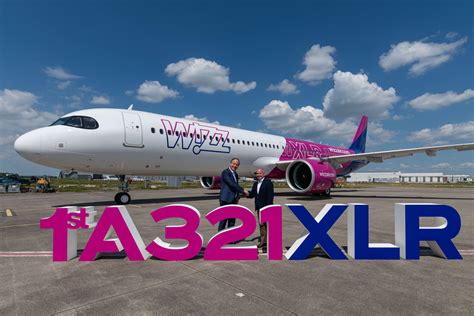
The introduction of the Airbus A321XLR (Xtra Long Range) at the 2019 Paris Air Show marked a watershed moment in commercial aviation. This aircraft represents the culmination of Airbus’s strategy to dominate the middle-market segment while simultaneously enabling airlines to reimagine their route networks and cabin offerings. With over 500 orders accumulated within five years of its announcement, the A321XLR has already begun reshaping industry expectations before reaching full operational maturity.
The aircraft’s impressive specifications tell only part of the story. With a range of 5,400 miles and the ability to accommodate an average of 220 passengers on nonstop flights lasting up to eleven hours, the A321XLR bridges the gap between traditional narrowbody limitations and widebody capabilities. This extended range opens up previously impossible route combinations, allowing airlines to serve city pairs that were either uneconomical for widebody aircraft or beyond the reach of conventional narrowbodies.
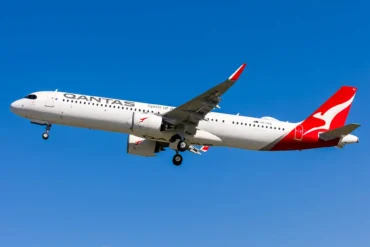
Current delivery statistics reveal the aircraft’s growing influence across the industry. As of late 2025, fifteen A321XLR aircraft have been delivered to four airlines, with Qantas operating two aircraft, Aer Lingus and Iberia each operating four, and American Airlines receiving two of their fifty-aircraft order. The diverse range of operators, from full-service carriers to low-cost airlines, demonstrates the aircraft’s versatility across different business models and market segments.
Economic Advantages Driving Adoption
Airlines’ enthusiasm for the A321XLR stems from its revolutionary impact on route economics. The aircraft enables carriers to serve long, thin routes that would be unprofitable with widebody aircraft due to insufficient passenger demand, while simultaneously offering seasonal route flexibility that was previously impossible. This operational versatility allows airlines to respond more dynamically to market conditions and passenger demand fluctuations.
The cost advantages of narrowbody operations extend far beyond initial aircraft acquisition costs. Operating expenses, including fuel consumption, crew requirements, maintenance costs, and airport fees, are significantly lower for single-aisle aircraft compared to their widebody counterparts. These savings can be substantial on routes where a widebody aircraft might operate with lower load factors, making previously marginal routes profitable and enabling airlines to offer more competitive pricing while maintaining healthy profit margins.
Furthermore, the A321XLR’s economics enable airlines to increase flight frequencies on popular routes, providing passengers with more scheduling flexibility while capturing additional market share. This frequency advantage often proves more valuable than the larger capacity offered by widebody aircraft, particularly in business markets where schedule convenience drives purchasing decisions.
Transforming the Passenger Experience
The Airspace cabin design represents Airbus’s commitment to bringing widebody comfort standards to narrowbody aircraft. This innovative cabin architecture features a higher ceiling, slimmer sidewall panels, and 60% larger overhead lockers, creating a more spacious environment that challenges passengers’ preconceptions about single-aisle aircraft comfort. The customizable LED lighting system and enhanced acoustic design further contribute to a premium travel experience that rivals traditional widebody offerings.
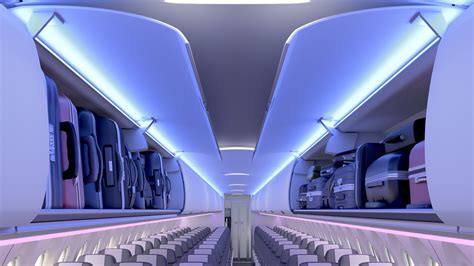
Technology integration throughout the cabin ensures that passengers enjoy modern connectivity options regardless of their seating class. Universal USB charging points, wireless charging capabilities in business class, and advanced in-flight entertainment systems create a seamless digital experience. The larger windows incorporated into the design allow more natural light to enter the cabin, reducing the claustrophobic feeling often associated with narrowbody aircraft during long flights.
Business Class Redefined
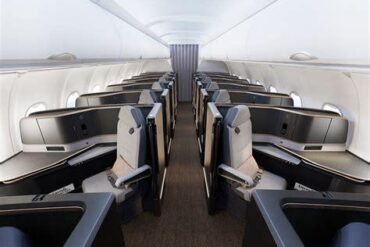
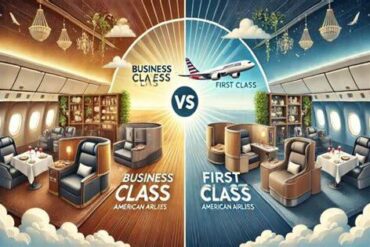
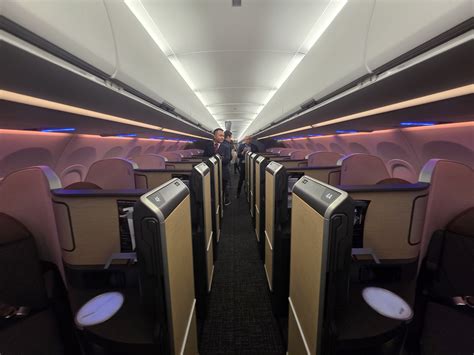
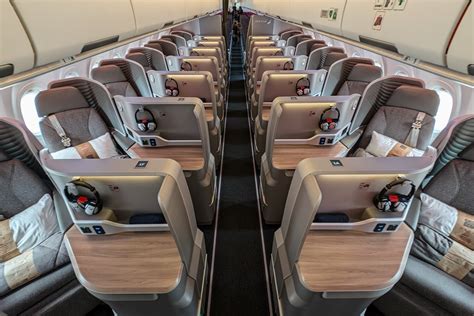
The most dramatic transformation occurring on these aircraft involves business class configurations that were previously impossible on narrowbody platforms. Airlines are installing sophisticated lie-flat suites arranged in herringbone configurations, typically featuring 14 business class seats in a 1-1 layout that ensures direct aisle access for every passenger. These installations represent a quantum leap from traditional narrowbody business class offerings.
American Airlines’ approach exemplifies this evolution, with plans for 20 Flagship Suite seats featuring privacy doors, chaise longue mode flat beds, complemented by 12 premium economy seats and 123 economy seats. This configuration demonstrates how airlines can maximize premium revenue while maintaining overall capacity efficiency. The inclusion of privacy doors and fully flat beds creates an experience that matches or exceeds many widebody business class products.
Air Canada’s strategy involves 14 lie-flat Signature Class Suites in a 1-1 layout paired with 168 economy seats, showcasing a different approach to cabin optimization. Qantas has announced that 16 of their 48 A321XLR aircraft on order will feature lie-flat business class suites, marking the first time the Australian carrier has offered beds on narrowbody aircraft. These configurations represent a fundamental shift in how airlines approach premium product offerings across their fleets.
Industry Perspectives and Strategic Implementation
Airlines worldwide are recognizing the strategic importance of premium narrowbody configurations in their competitive positioning. Arved von zur Muehlen, Chief Commercial Officer of Saudia, emphasizes the aircraft’s capability to deliver authentic business class experiences while enabling higher frequency operations on routes where widebody aircraft might not be economically justified. This flexibility proves particularly valuable in markets like India and Europe, where demand patterns vary significantly across different city pairs.
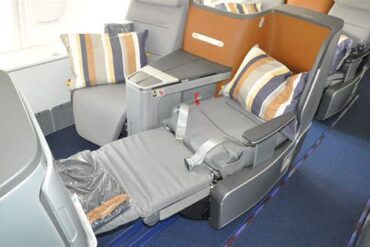
Thai Airways’ experience illustrates the evolution of airline thinking regarding narrowbody premium products. The carrier’s decision to retrofit aircraft with proper business class seats that recline 180 degrees, rather than maintaining European-style blocked middle seat configurations, reflects their understanding of market expectations and competitive requirements. This investment in hard product improvements demonstrates the airline’s commitment to meeting passenger expectations regardless of aircraft type.
Technical Specifications and Environmental Impact
The A321XLR’s technical achievements extend beyond passenger comfort to encompass significant environmental improvements. The aircraft delivers 50% noise reduction, 30% lower fuel burn, and 30% reduced CO2 emissions per seat compared to previous generation aircraft. These improvements align with industry sustainability goals while providing airlines with operational cost advantages that enhance route profitability.
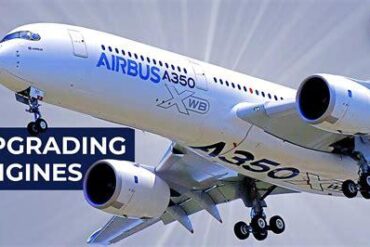
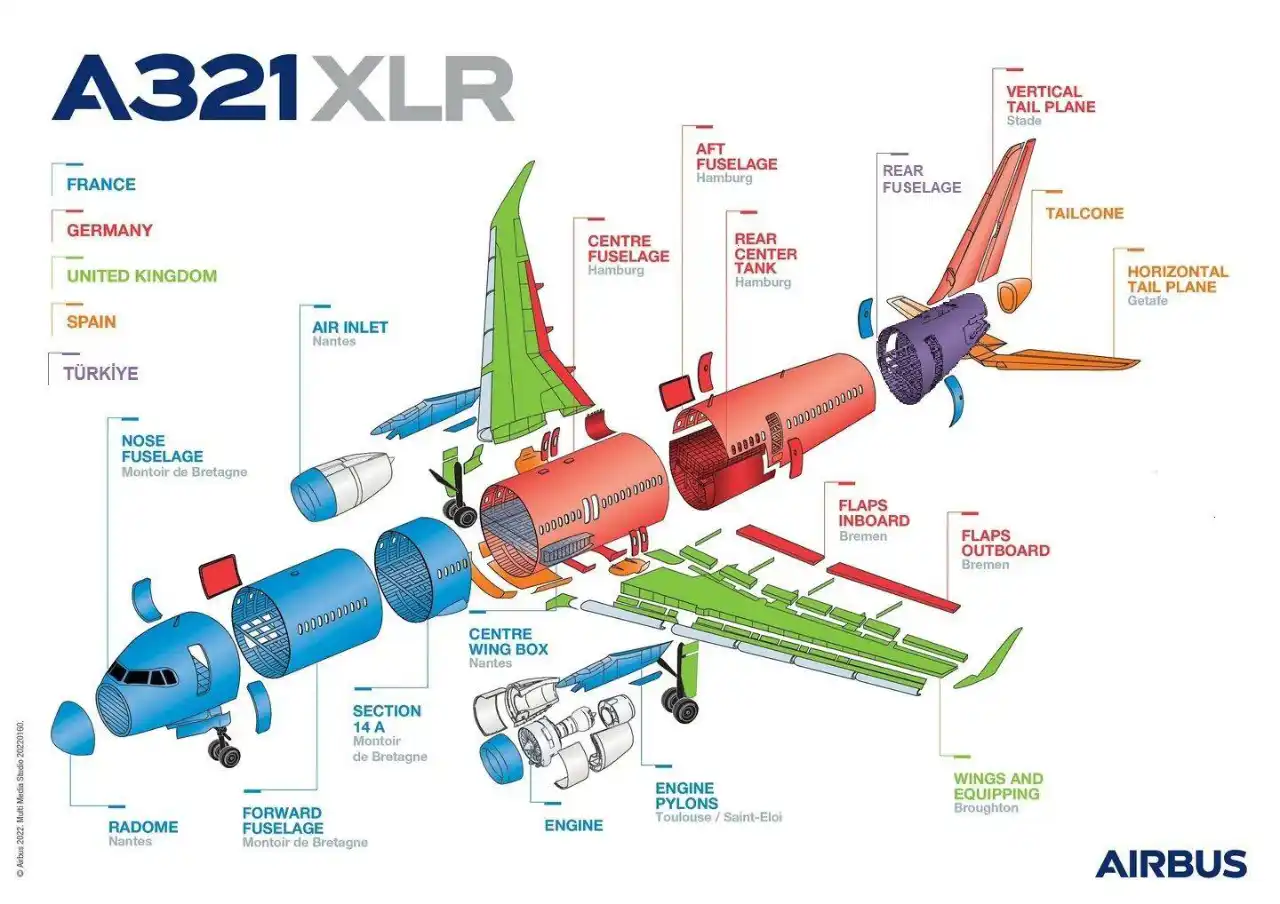
The aircraft’s development involved substantial engineering challenges, including the integration of an additional rear central fuel tank that extends range to 4,700 nautical miles. Enhanced engines, improved airframe design, and optimized winglet configurations contribute to the aircraft’s impressive performance envelope. Strengthened landing gear and optimized wing trailing edge flap configurations ensure safe operations across the aircraft’s extended weight and range parameters.
Current operational routes demonstrate the aircraft’s capabilities in real-world conditions. Iberia’s Madrid to San Juan route covers 3,448 nautical miles, while Aer Lingus operates Dublin to Nashville service spanning 3,394 nautical miles. These routes, previously requiring widebody aircraft or inconvenient connections, now offer passengers direct service with premium amenities on efficient narrowbody platforms.
Future Implications and Market Evolution
The success of premium narrowbody configurations signals a fundamental shift in airline strategy and passenger expectations. As more carriers take delivery of A321XLR aircraft and retrofit existing narrowbody fleets with enhanced premium products, the distinction between narrowbody and widebody passenger experiences will continue to blur. This evolution benefits both airlines and passengers by creating more efficient operations while maintaining high service standards.
The competitive implications extend beyond individual airlines to encompass entire route networks and alliance strategies. Airlines equipped with premium narrowbody capabilities can serve previously uneconomical routes, potentially disrupting established hub-and-spoke systems and creating new point-to-point opportunities. This flexibility enables more responsive network planning and enhanced passenger convenience through reduced connection requirements.
Long-haul airlines are successfully redefining business class standards on narrowbody aircraft by combining advanced cabin design, sophisticated seating products, and enhanced service delivery. The Airbus A321XLR and similar aircraft represent more than technological achievements; they embody a new paradigm in commercial aviation that prioritizes efficiency, flexibility, and passenger satisfaction. As this transformation continues, passengers can expect increasingly sophisticated premium products regardless of aircraft type, while airlines benefit from improved economics and operational flexibility that enhance their competitive positioning in an evolving marketplace.