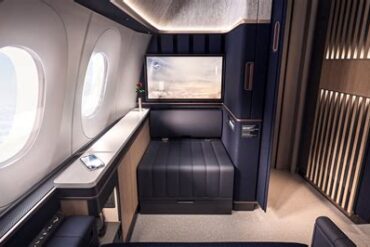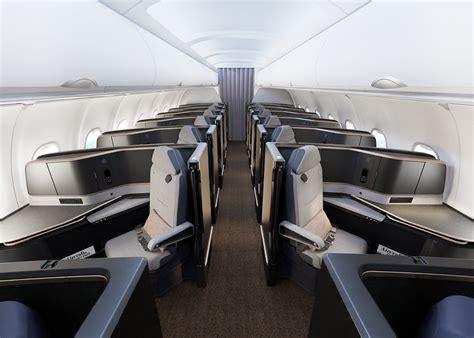
Modern air travel has entered an era where narrowbody aircraft are no longer confined to short-haul hops or quick business-traveler shuttles. Long-range variants of the Airbus A321neo family and the Boeing 737 MAX series have redrawn the world’s route maps, enabling nonstop links between cities once considered too distant or too thin in demand. These aircraft bring impressive range, significantly reduced operating costs, and a design philosophy that elevates the passenger experience well beyond the traditional narrowbody stereotype. Airlines have embraced this transformation by installing business-class cabins that rival — and occasionally surpass — their widebody counterparts.
As carriers shift capacity toward flexible, fuel-efficient jets, the competition to create the most comfortable narrowbody business-class product has intensified. Designers have leveraged slimmer cabin structures, quieter engines, and digital cabin ecosystems to optimize comfort within a single-aisle fuselage. These changes have yielded an expanding list of premium seats with lie-flat beds, sliding doors, advanced lighting systems, and 4K screens. The result is a suite of products sophisticated enough to redefine long-haul luxury, even on aircraft once considered modest.
Efficiency and Innovation: Why Narrowbodies Dominate New Long-Haul Markets
Airlines have grown increasingly confident in deploying long-range narrowbodies on intercontinental routes. The logic is simple: these jets deliver long-haul reach with narrowbody economics. Lower fuel burn reduces financial risk, and fewer seats create ideal conditions for launching flights between secondary cities that cannot support widebody capacity. This shift has transformed airline network strategy, enabling direct routes between regions that once required cumbersome connections.
The expanded reach of aircraft like the Airbus A321XLR has made nonstops possible between markets such as Scandinavia and the U.S. East Coast or between the Gulf and Southeast Asia. These routes thrive precisely because the narrowbodies serving them are equipped with sophisticated cabins that appeal to premium travelers seeking privacy and comfort. As the competitive environment expands, global carriers continually invest in seats providing flat beds, personal suites, precise mood lighting, high-end dining, and state-of-the-art entertainment.
American Airlines A321XLR Flagship Business Class Suites
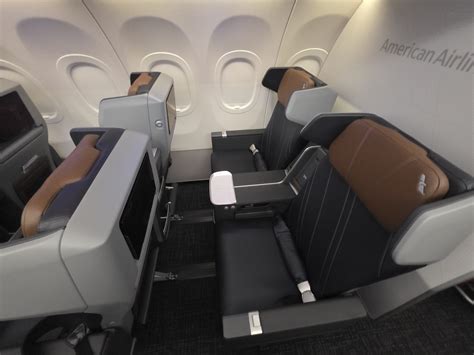
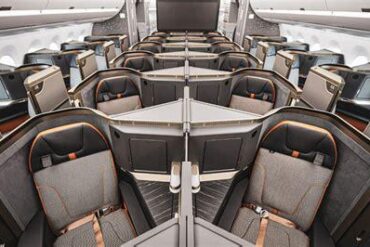
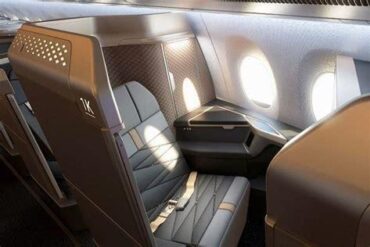
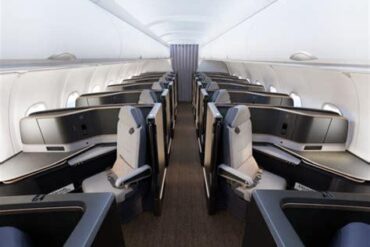
American Airlines is preparing to redefine its narrowbody experience with its upcoming A321XLR flagship product. Unlike many business-class offerings on comparable aircraft, American’s new suite is fully enclosed, giving each traveler sliding-door privacy once reserved for widebody fleets. The cabin uses a herringbone layout offering direct aisle access for every passenger, a critical marker of modern business-class quality.
Each suite incorporates a fully flat bed with refined cushioning calibrated for long-haul comfort. The seating shell integrates personal storage, expansive side-ledges, and tactile controls placed intuitively for travelers who work, dine, or sleep through their flight. A 4K entertainment screen anchors the suite visually, while multiple charging ports and wireless connectivity create an uninterrupted digital workspace. Soothing cabin lighting inspired by the airline’s widebody interiors adds an elegant, calming ambiance.
This new A321XLR will debut on the airline’s premium transcontinental service between New York JFK and Los Angeles before expanding to transatlantic flying. Once deployed on routes such as JFK–Edinburgh, the aircraft will give American a competitive edge by offering a small-widebody feel within a narrowbody frame.
JetBlue Mint: Boutique Luxury at 35,000 Feet
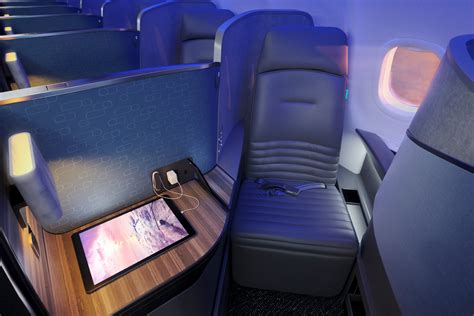
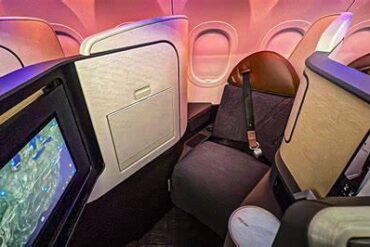
JetBlue’s Mint cabin has long held an outsized reputation for delivering luxury that feels handcrafted rather than industrial. The latest Mint suites on the airline’s A321LR and A321neo exemplify this reputation. Each business-class suite is fully enclosed with a sliding door, housing a lie-flat bed stretching to 6 feet 8 inches. The seat’s sculpted design prioritizes comfort during extended rest, while generous storage space, reading lights, and a thoughtfully engineered tray table support a seamless work-or-relax experience.
JetBlue’s soft product elevates the cabin further with plush bedding, artisanal amenity kits, and curated dining that feels more boutique hotel than mass-market airline. Noise-canceling headphones and large, crisp entertainment screens complete an experience tailored to long-haul relaxation.
The Mint Studio — available in the first row — adds yet another layer of exclusivity with even more personal space, a significantly larger display, and an extra seat useful for guests during meals or conversation. Whether flying from New York or Boston, travelers feel a sense of curated privacy and elevated hospitality.
La Compagnie’s All-Business-Class A321neo: Boutique Aviation in Its Purest Form
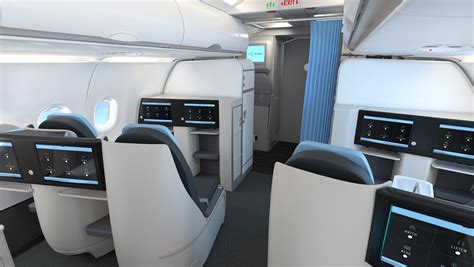
La Compagnie operates an all-business-class fleet that brings a distinctive style to transatlantic travel. Its Airbus A321neo cabin features 76 lie-flat seats arranged in a clean 2-2 layout. Every passenger enjoys a bed stretching over six feet, built with plush cushioning that makes overnight flights between Europe and the U.S. remarkably comfortable.
With only business-class seats aboard, the aircraft feels more like a private charter than a commercial flight. Although window seats lack direct aisle access, they gain from the intimacy of a cabin devoid of economy seating. The atmosphere is relaxed, the lighting soft, and the boarding process free from congestion. These elements create a refined, minimalist environment reminiscent of a boutique coastal resort rather than a traditional airplane.
La Compagnie flies exclusively to Newark from Paris Orly, Milan Malpensa, and Nice, catering to travelers who value exclusivity and consistent premium service. The airline’s brand personality shows in its onboard dining, amenity kits, and personable service ethos.
Cathay Pacific A321neo: Regional Travel Enhanced with Premium Touches
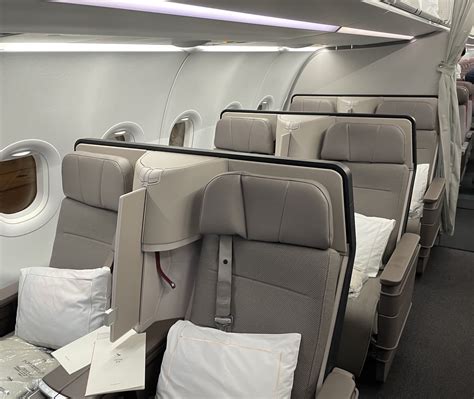
Cathay Pacific has adapted its regional strategy by outfitting its Airbus A321neo fleet with an elevated business-class cabin that emphasizes personal space and digital comfort. Unlike many narrowbody products in Asia, Cathay’s seats incorporate a fixed-shell design that prevents intrusion from recline. These “recliner-plus” seats do not lie flat but offer deep recline, extended leg rests, and a sense of personal territory uncommon in regional aircraft.
Each 21-inch-wide seat is paired with a 15.6-inch 4K entertainment monitor, offering crisp resolution usable even in bright cabin lighting. Bluetooth connectivity invites passengers to sync their own headphones — a small but impactful modern touch. USB ports and AC outlets support productivity throughout flights that connect Hong Kong with cities across Asia.
Cathay’s A321neo business class brings a polished experience that blends efficiency with comfort. While not intended for long-haul missions, its refinement ensures regional travelers access a premium cabin that feels well considered and technologically current.
The Airbus A321XLR: Transforming Narrowbody Expectations
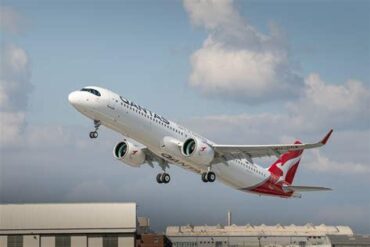
The introduction of the Airbus A321XLR marks a pivotal moment in single-aisle aviation. Launched in 2019 and certified in 2024, the aircraft answered the long-standing need for a modern successor to the Boeing 757. With a range of approximately 5,400 miles, the XLR extends transatlantic, Middle Eastern, and intra-Asian markets in ways previously impossible for narrowbodies.
This advancement is fueled by a redesigned center fuel tank, reinforced landing gear, and aerodynamic enhancements that boost efficiency. The aircraft reduces fuel burn per seat by up to 30 percent compared with previous generations, making it attractive not only for its range but also for its environmental performance. Its cabin architecture allows airlines significant freedom to design premium cabins tailored to long-haul expectations.
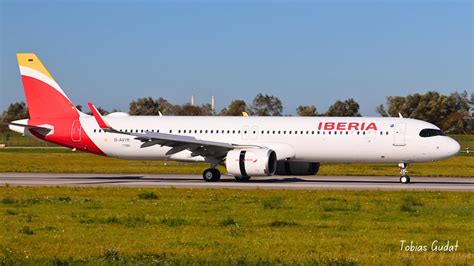
Early adopters like Iberia, Aer Lingus, and Qantas have already begun integrating the type into their networks, each tailoring the cabin to its premium strategy. From lie-flat suites to exclusive privacy doors, the XLR has become the canvas upon which airlines paint their vision of long-haul narrowbody luxury.
Why Narrowbody Business Class Now Rivals Widebody Luxury
Technological evolution has narrowed the comfort gap between single-aisle and dual-aisle aircraft. Airframe structures on modern narrowbodies allow for precise climate control, lower cabin altitude, and quieter engine performance. These gains enable airlines to install fully flat beds without compromising on aisle width or personal space.
Seat manufacturers have played an equally important role. Through compact engineering, they have perfected herringbone and reverse-herringbone layouts that provide direct aisle access even within tight fuselages. Suites with sliding doors — once unthinkable in a narrowbody — are now common among leading premium carriers. Digital innovations such as personalized LED lighting, large-format 4K screens, Bluetooth audio, wireless charging, and customizable control panels give these seats a sophistication once exclusive to widebody flagships.
Passengers benefit from cabins designed around human comfort rather than technical limitations. Softer materials, precise ergonomic contours, acoustic dampening, and intuitive storage ensure an experience that feels serene and curated, not cramped or compromised.
Looking Ahead: The Future of Single-Aisle Premium Travel
The rise of long-haul narrowbodies shows no signs of slowing. As delivery numbers increase, airlines plan to expand routes that bridge global cities with unprecedented efficiency. Premium travelers will find themselves flying between secondary airports — avoiding mega-hubs altogether — while still enjoying lie-flat suites, enclosed doors, and boutique-quality service.
As carriers develop next-generation seating systems and refine onboard service design, the narrowbody business-class cabin will continue to evolve. Expect more flexible seating shells, modular privacy features, precision-tuned bedding systems, and immersive digital entertainment. With sustainability becoming central to route planning, the long-range narrowbody will remain a cornerstone of global aviation strategy.
The transformation underway proves that comfort is no longer determined by fuselage width. Instead, it is shaped by design ambition, engineering creativity, and airlines willing to redefine what a single-aisle aircraft can deliver. Narrowbody business class has reached a level where luxury, privacy, and long-haul comfort coexist — and in many cases, thrive.