The global aviation industry has rarely faced a test as dynamic and volatile as the 2026 Iran Crisis, where rapidly shifting airspace risks forced airlines to rethink real-time operations. Yet, in the middle of escalating missile and drone alerts across the Gulf, Emirates has achieved what many would consider improbable—restoring 96% of its global network while maintaining operational continuity through one of the world’s most critical aviation hubs.
This remarkable recovery is not a story of luck or temporary stabilization. It is the result of precision planning, advanced risk management, and the strategic deployment of “safe corridors”—a concept that is quietly redefining how airlines operate in contested airspace.
The Strategic Role of Safe Corridors in Modern Aviation Conflict Zones
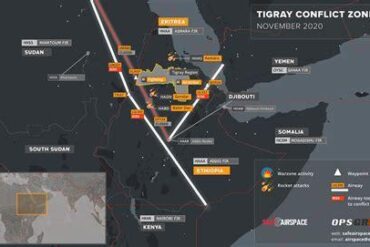
At the core of Emirates’ resilience lies the concept of safe air corridors—carefully monitored flight paths dynamically carved through restricted or potentially hostile airspace. These corridors are not fixed routes but fluid, intelligence-driven pathways that evolve in near real-time.
Unlike traditional air routes, which rely on predictable navigation structures, safe corridors depend on constant coordination between civil aviation authorities, military surveillance systems, and airline operations centers. Every flight that passes through these corridors is supported by a continuous stream of data—tracking missile activity, drone movement, and radar signals.
The result is a system where aircraft can continue operating even under threat conditions, provided they remain within these tightly controlled zones. This approach minimizes exposure to danger while preserving the connectivity that global aviation depends on.
Inside Emirates’ Operational Nerve Center
Behind every successful flight during this period is a highly coordinated network of dispatchers, analysts, and pilots working in synchronization. Emirates’ flight operations teams have been constantly recalibrating routes, sometimes within minutes, based on emerging intelligence.
Each flight plan is treated as a living document, subject to change until the aircraft reaches its destination. Dispatchers evaluate:
- Real-time threat intelligence
- Airspace closures and restrictions
- Fuel efficiency under rerouted conditions
- Alternate diversion airports
This level of adaptability ensures that flights can be rerouted seamlessly, often without passengers ever realizing the complexity behind their journey.

Dubai International Airport: Operating Under Pressure Without Collapse
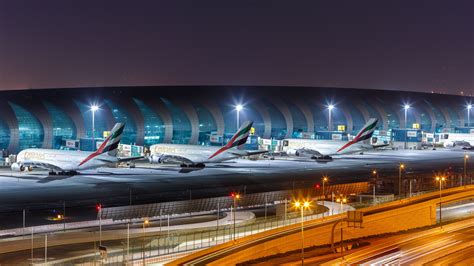
The resilience of Emirates would be impossible without the operational stability of Dubai International Airport (DXB)—a hub that has remained fully functional despite facing over 114 missile-related alerts in recent weeks.
Each alert triggers a series of predefined contingency protocols, including temporary pauses in departures, rapid sequencing adjustments, and rerouting of inbound aircraft. These interruptions are typically brief, measured in minutes rather than hours, allowing the airport to maintain flow without cascading delays.
What makes DXB unique is its role as a global transit superhub, linking Europe, Asia, and Africa. Any prolonged disruption here would ripple across international networks. Instead, the airport has demonstrated how precision response systems can absorb shocks without shutting down operations.
Maintaining 137 Destinations Across 72 Countries
Even amid uncertainty, Emirates continues to operate an expansive network—137 destinations across 72 countries, supported by over 1,300 weekly flights. This represents roughly 75% of pre-crisis capacity, a figure that underscores both resilience and strategic prioritization.
Rather than restoring routes indiscriminately, the airline has focused on high-demand, high-value corridors, ensuring that critical connections remain intact. This includes major long-haul routes linking continents, where alternative travel options are limited.
The emphasis is clear: maintain global connectivity where it matters most, even if it requires complex rerouting and operational compromises.
Real-Time Airspace Adaptation: Minutes That Matter
One of the defining features of this operational model is its speed of response. In traditional aviation environments, route changes are planned hours or days in advance. In contrast, the current environment demands decisions within minutes.
Air traffic controllers, military observers, and airline dispatchers operate within a shared information ecosystem, enabling immediate updates to flight paths. Pilots receive revised instructions mid-flight, including:
- Adjusted altitudes to avoid risk zones
- New waypoints that shift flight trajectories
- Diversions to alternative corridors or open-water routes
This level of agility ensures that aircraft remain one step ahead of potential threats, rather than reacting after the fact.
Cargo Continuity: The Invisible Lifeline of Global Trade
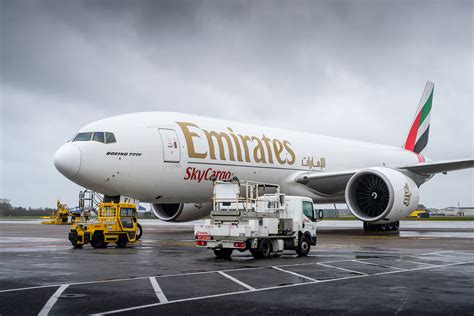
While passenger operations often capture attention, Emirates’ ability to sustain cargo flights during this period is equally significant. The airline’s freight division has continued to move time-sensitive shipments, including medical supplies and high-value goods, across continents.
In times of instability, cargo operations become a critical economic stabilizer, ensuring that supply chains remain functional despite geopolitical disruptions. Safe corridors have enabled these flights to proceed with minimal interruption, reinforcing the airline’s role as both a transport provider and a logistics backbone.
The Hidden Costs of Rerouting and Risk Management
Maintaining operations under these conditions is not without cost. Rerouted flights often result in:
- Longer flight times, increasing crew duty requirements
- Higher fuel consumption, impacting operational margins
- Complex scheduling adjustments, affecting fleet utilization
Yet, these costs are weighed against the alternative—network disruption and loss of connectivity. For a carrier like Emirates, the strategic decision is clear: absorb operational inefficiencies to preserve market position and passenger confidence.
A Blueprint for Future Conflict-Area Aviation
The success of safe corridor operations during this crisis is likely to influence how airlines approach future geopolitical disruptions. With advancements in satellite tracking, predictive analytics, and integrated defense coordination, the industry is moving toward a model where complete airspace closures become less common.
Instead, the focus is shifting to controlled accessibility, where aircraft can continue operating within defined safety parameters. This approach not only preserves airline networks but also reduces the economic fallout associated with large-scale disruptions.
Why Emirates’ 96% Recovery Matters Beyond the Gulf
Emirates’ near-full recovery is more than a regional success—it is a global aviation benchmark. It demonstrates that even in high-risk environments, airlines can sustain operations through innovation, coordination, and disciplined execution.
For passengers, it means continued access to global travel. For businesses, it ensures the movement of goods. And for the aviation industry, it provides a playbook for resilience in an increasingly unpredictable world.
The skies over the Gulf may remain tense, but the systems guiding aircraft through them have never been more sophisticated. In that quiet precision lies the real story—not just survival, but controlled, calculated continuity at scale.