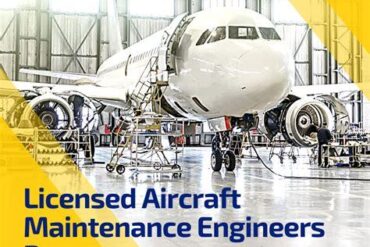
Understanding the Role of an Aircraft Maintenance Engineer
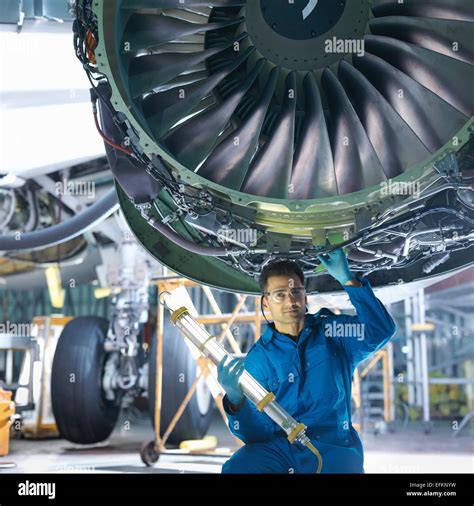
An Aircraft Maintenance Engineer (AME)—more formally recognized in the U.S. as an Aviation Maintenance Technician (AMT)—is the frontline professional responsible for ensuring aircraft safety and regulatory compliance. This position goes beyond mechanical repairs; it is a role grounded in aerospace engineering principles, aviation law, and technical proficiency. AMEs maintain the airworthiness of aircraft across sectors such as commercial airlines, private charter operations, military aviation, and unmanned aerial systems (UAS).
These engineers operate under the certification and regulatory framework established by the Federal Aviation Administration (FAA), which outlines stringent requirements for training, experience, testing, and licensure. FAA-certificated AMTs are qualified to inspect, repair, overhaul, and approve aircraft for return to service. Specializations include airframe systems, powerplant operations, avionics, and rotorcraft engineering.
Eligibility Requirements for FAA Certification
To begin a legitimate path toward becoming a certified AME in the U.S., candidates must satisfy specific eligibility criteria. These conditions ensure only qualified individuals advance to testing and licensure:
-
Minimum Age: Applicants must be at least 18 years old.
-
Language Proficiency: Must demonstrate the ability to read, write, speak, and understand English fluently.
-
Experience: Candidates must acquire practical experience—either through employment or structured education—before applying for certification.
The FAA offers two primary ratings:
-
Airframe Rating: Requires 18 months of practical experience focused on aircraft structural systems.
-
Powerplant Rating: Also requires 18 months, centered on aircraft engine systems.
-
Combined Airframe and Powerplant (A&P): Requires 30 months of concurrent experience covering both disciplines.
Educational Pathways to Licensure
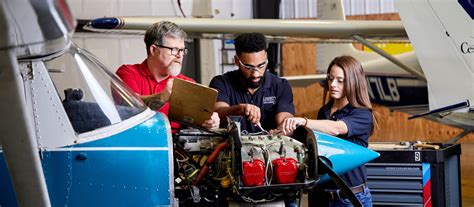
Although a college degree is not mandatory, formal training is often the most efficient route toward qualification. Candidates may opt to enroll in an FAA-approved Aviation Maintenance Technician School (AMTS). These institutions follow a curriculum aligned with Part 147 of FAA regulations, offering instruction in systems theory, structural materials, propulsion, avionics, and regulatory practices.
Another pathway is military training. Veterans who served in aviation maintenance roles may leverage their experience to fulfill FAA requirements. Proper documentation, such as DD Form 214, is required for evaluation.
The Certification Process: Application to Testing
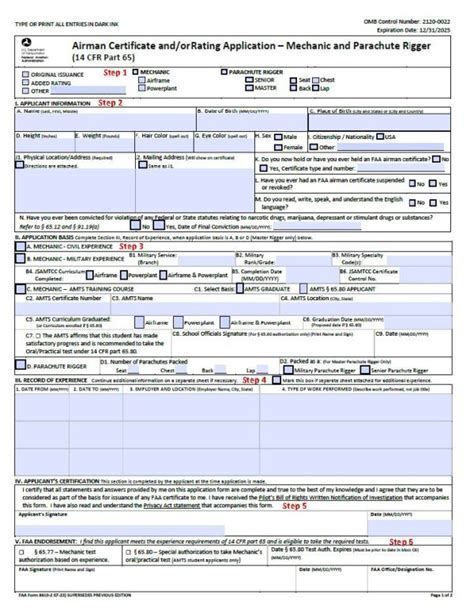
Once eligibility is confirmed, candidates initiate the certification process using FAA Form 8610-2, officially titled the “Mechanic’s Application for Evaluation.” This form is submitted in person at an FAA Flight Standards District Office (FSDO). At this stage, the FAA assigns an FAA Tracking Number (FTN), which is essential for scheduling examinations.
The FAA mandates three phases of testing:
-
Knowledge Tests (Written): Administered electronically, these exams evaluate theoretical understanding. Topics range from hydraulics and pneumatics to FAA regulations and aircraft systems. Each rating requires a separate test.
-
Oral Exam: Conducted by a Designated Mechanic Examiner (DME), this stage tests the applicant’s conceptual mastery and ability to troubleshoot.
-
Practical Test: Also led by a DME, this hands-on evaluation covers real-world tasks such as component inspection, wiring diagnostics, and engine disassembly.
Successful candidates earn either the Airframe, Powerplant, or A&P Mechanic Certificate, authorizing them to work independently on U.S.-registered aircraft.
Documentation and Proof of Experience
To validate experience, candidates must provide verifiable documentation. The FAA accepts various forms of proof:
-
Logbooks: Detailed records of maintenance tasks performed.
-
Employment Records: Including pay stubs or employer verification letters.
-
Military Records: Specifically, DD Form 214, showing applicable maintenance duties.
All documentation is reviewed during the FSDO interview. If accepted, the candidate is cleared to proceed with testing.
Career Opportunities and Work Environments
FAA-certificated AMTs find employment in a wide spectrum of aviation sectors. These include:
-
Major Airlines: Performing scheduled maintenance, overhauls, and emergency repairs.
-
General Aviation: Servicing private aircraft, helicopters, and charter fleets.
-
Repair Stations (Part 145): Providing specialized services such as avionics installations and composite repairs.
-
Military Contractors and Defense Agencies: Supporting fleet readiness for aircraft like the F-35 Lightning II or C-130 Hercules.
-
Unmanned Aircraft Systems (UAS): A growing sector requiring advanced knowledge in electronic systems and remote diagnostics.
The AMT profession also allows for upward mobility into roles like Quality Control Inspector, Maintenance Supervisor, FAA Safety Inspector, or even Aviation Safety Consultant.
Recertification, Retesting, and Continuing Education
Although FAA mechanic certificates do not expire, mechanics must remain current and competent. When failing any part of the examination, a 30-day waiting period applies unless further instruction is received. After multiple failures, the FAA may require additional training.
AMTs are encouraged to pursue ongoing education through:
-
Manufacturer Training Programs
-
Online Courses
-
FAA Advisory Circulars and Updates
-
Industry Conferences (e.g., Aviation Technician Education Council – ATEC)
These opportunities ensure proficiency in emerging technologies like composite airframes, glass cockpits, and electrical propulsion systems.
Distinguishing AMTs from Other Technical Roles
In the U.S., the terms Aircraft Mechanic, Aviation Maintenance Technician, and Aircraft Maintenance Engineer are often used interchangeably, though they refer to the same FAA-certificated role. However, international designations vary. For example, in Canada, AMEs are certified under Transport Canada, and in the European Union, they follow EASA Part-66 guidelines.
The FAA does not require a high school diploma, college degree, or medical certificate for AMT certification. However, employers may impose additional hiring standards, especially in competitive sectors such as aerospace manufacturing or airline maintenance programs.
FAQs
What is the difference between an Aircraft Maintenance Engineer and an Aviation Maintenance Technician?
Both terms describe the same core profession, though terminology varies by region. In the United States, the FAA certifies individuals as Aviation Maintenance Technicians (AMTs), while in countries like Canada and India, the term Aircraft Maintenance Engineer (AME) is used. Functionally, both perform critical maintenance, inspection, and airworthiness tasks.
Can I become an AMT without going to a formal school?
Yes. If you accumulate the required 18 or 30 months of hands-on experience working on aircraft—under supervision—you may qualify to take the FAA exams without attending an AMTS. However, you must still provide proper documentation and pass the same testing requirements.
Is there a demand for Aircraft Maintenance Engineers in the aviation industry?
Absolutely. According to industry forecasts by Boeing and the U.S. Bureau of Labor Statistics, demand for qualified AMTs and AMEs is rising due to an aging aircraft fleet, global travel expansion, and increasing retirement among current personnel. This trend is expected to continue through 2035 and beyond.