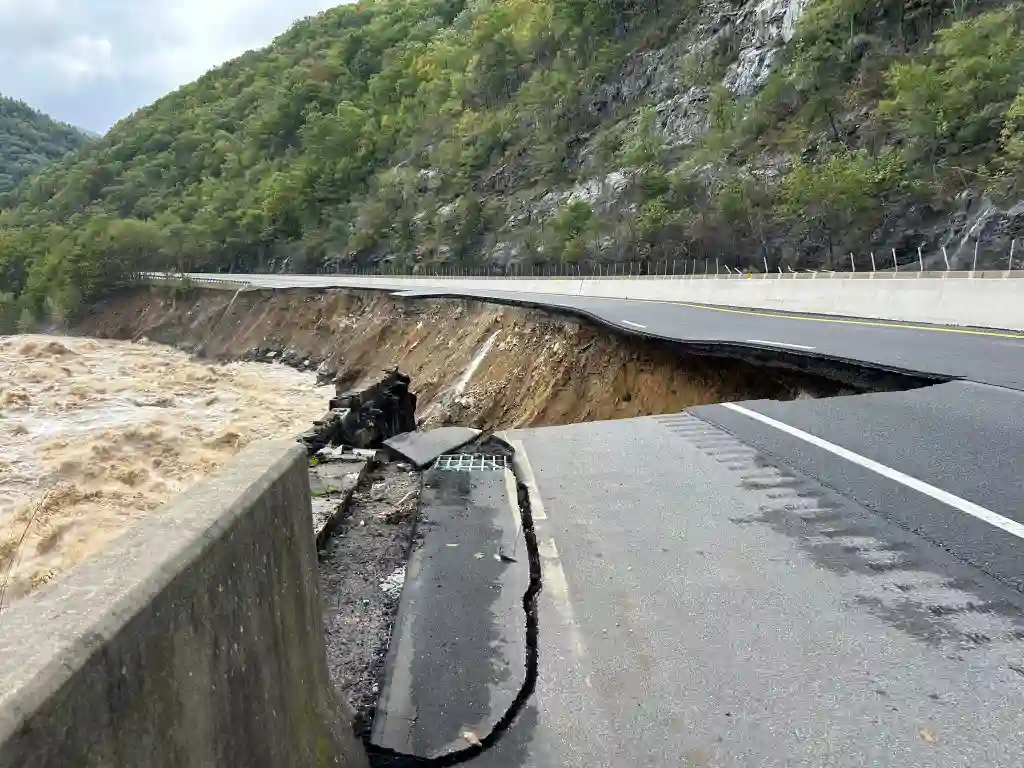
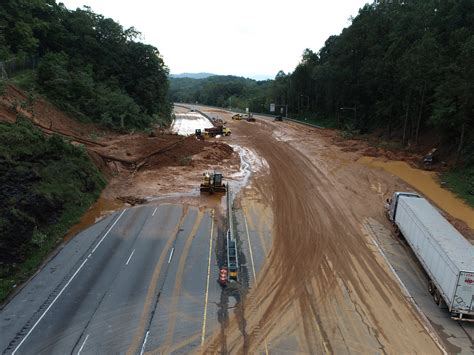
The collapse of I-40 through the Smoky Mountains has raised alarm bells across the region, posing a significant threat to tourism and regional travel. This critical artery, connecting North Carolina and Tennessee, has been severely impacted by unprecedented flooding and rock slides, leading to its closure near mile marker 450. Following a torrential downpour that dumped between 2.5 to 3.5 inches of rain in just three hours, the highway sustained extensive damage, creating a situation that could see it closed for at least two weeks. This is not merely a roadblock; it’s a dire warning about the fragility of infrastructure in the face of extreme weather events.
The scenic beauty of the Smoky Mountains, a region famed for its breathtaking landscapes, now faces a treacherous reality. With the highway blocked, the implications extend far beyond immediate travel disruptions. Local businesses, reliant on the influx of tourists during the summer season, are bracing for cancellations and a significant drop in reservations. The I-40 route serves as a lifeline not only for residents but for travelers from across the country, making its closure a pressing concern.
Why This Closure Hits Hard
This stretch of I-40 is more than just a road; it represents a critical connector in a 2,500-mile route linking Wilmington, NC, to Barstow, CA. The closure necessitates lengthy detours, forcing drivers to navigate alternate routes via I-26 through Asheville, west to Johnson City, and then south on I-81. Such rerouting adds dozens of miles and considerable travel time, straining an already burdened infrastructure. Moreover, trucks—essential for transporting goods—are banned on nearby U.S. 441, further complicating supply chain logistics.
Historically, this stretch of the highway has faced challenges. Just last year, Hurricane Helene caused similar damage, leading to temporary repairs that were inadequate for enduring the recent deluge. The current situation underscores a pattern of vulnerability, revealing the need for more resilient infrastructure capable of withstanding extreme weather conditions.
Tourism Impact: Hotels and Businesses Brace
The fallout from the I-40 closure extends to the local economy, particularly affecting hotels, campgrounds, and attractions that thrive on summer tourism. As news of the highway’s closure spreads, businesses are reporting a surge in cancellations and a decline in new bookings. Travelers who had planned scenic drives through the Smokies and visits to gateway towns like Asheville and Gatlinburg are left in a state of uncertainty. Local businesses are urging potential visitors to either delay their trips or consider alternative routes, while many offer flexible booking options to alleviate traveler stress.
However, the question looms: will the two-week repair estimate hold? With ongoing rainfall and unstable slopes, there’s a real possibility that closures could extend beyond initial projections. Local tourism boards are keenly aware of the economic ramifications; each day the highway remains closed equates to thousands of dollars in lost revenue.
Engineering Roadblocks Complicate Repairs
Repair efforts in the aftermath of such natural disasters are fraught with challenges. Engineers face a complex task: they must drain floodwaters, conduct geotechnical studies to assess slope stability, and then begin stabilization work. Emergency lanes that once provided quick access have been removed, complicating rescue and recovery efforts. The process will involve drilling steel rods deep into the bedrock, securing cliffs with concrete, and reinforcing slopes to prevent future slides.
This meticulous work is both slow and costly but necessary to safeguard against the next heavy storm. Temporary fixes will not suffice; lasting solutions require comprehensive engineering strategies designed to address the unique vulnerabilities of the Smoky Mountain region.
What Travelers Need to Know
For those planning to traverse the Smoky Mountain corridor, immediate action is required. Expect long detours via I-26 and I-81, which add significant time to travel plans. Travelers should avoid late-weekend and holiday travel, when tourist volumes peak. Keeping an eye on weather forecasts is crucial, as additional rain could prolong the closure. Consider flying into nearby airports such as Knoxville, Asheville, or Greenville-Spartanburg, and opt for hotels that offer free cancellation in case detours necessitate changes in travel plans. Truckers should prepare for renewed restrictions on U.S. 441 and plan alternate freight routes accordingly.
Regional Response and Funding Pressure
Local leaders are pushing for swift action from state and federal agencies to expedite funding for repairs. Tennessee Representative Jeremy Faison has emphasized the risks posed by unstable slopes and potential flooding. For tourism boards and local chambers of commerce, the stakes are high; each day of highway closure threatens the financial viability of countless businesses. The Tennessee Department of Transportation is working closely with the U.S. Forest Service, geotechnical experts, and emergency responders to coordinate an effective response aimed at reopening the highway without compromising safety.
Long-Term Fix: Engineering vs. Nature
The Smoky Mountains are no strangers to extreme weather patterns. The combination of steep slopes, narrow road corridors, and aging infrastructure renders the area particularly susceptible to damage. Engineers argue that piecemeal repairs are insufficient; instead, a long-term resilience strategy is essential. Proposed measures include anchoring bedrock and reinforcing cliffs, which must be part of a broader approach to ensure the highway’s safety for decades to come. Although federal infrastructure bills have allocated funds, local authorities require the flexibility to redirect resources swiftly, particularly in the wake of rare, destructive storms.
Tourism Outlook: Recovery and Resilience
Despite these setbacks, tourism operators are maintaining an optimistic outlook. Initiatives are underway to promote alternate routes and experiences that do not rely on I-40 access. Accommodations near Asheville and Gatlinburg are crafting tailored visitor experiences centered around hiking trails, waterfalls, and farm-to-table dining, effectively marketing a detour-friendly mini-vacation. The focus is gradually shifting toward resilient tourism, encouraging travelers to embrace flexibility and explore less-traveled paths.
Final Takeaway: Travel Safely Through the Smoky Mountains this Summer
The closure of I-40 through the Smoky Mountains is not just an inconvenience; it serves as a testament to the resilience of both the region and its travelers. If you plan to journey through this area—be it for business, leisure, or a cross-country haul—strategic planning is essential. Build in extra travel time, consider alternate routes early, and stay informed with regular updates. With careful preparation, you can transform this travel challenge into a scenic detour, keeping your journey on track. The Smokies will rise again, fortified by the lessons learned from this crisis.