The Rise of Drone Warfare on the Ukrainian Frontlines
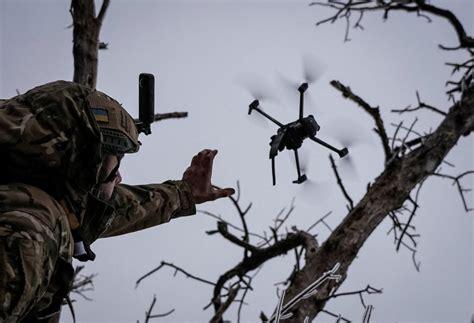
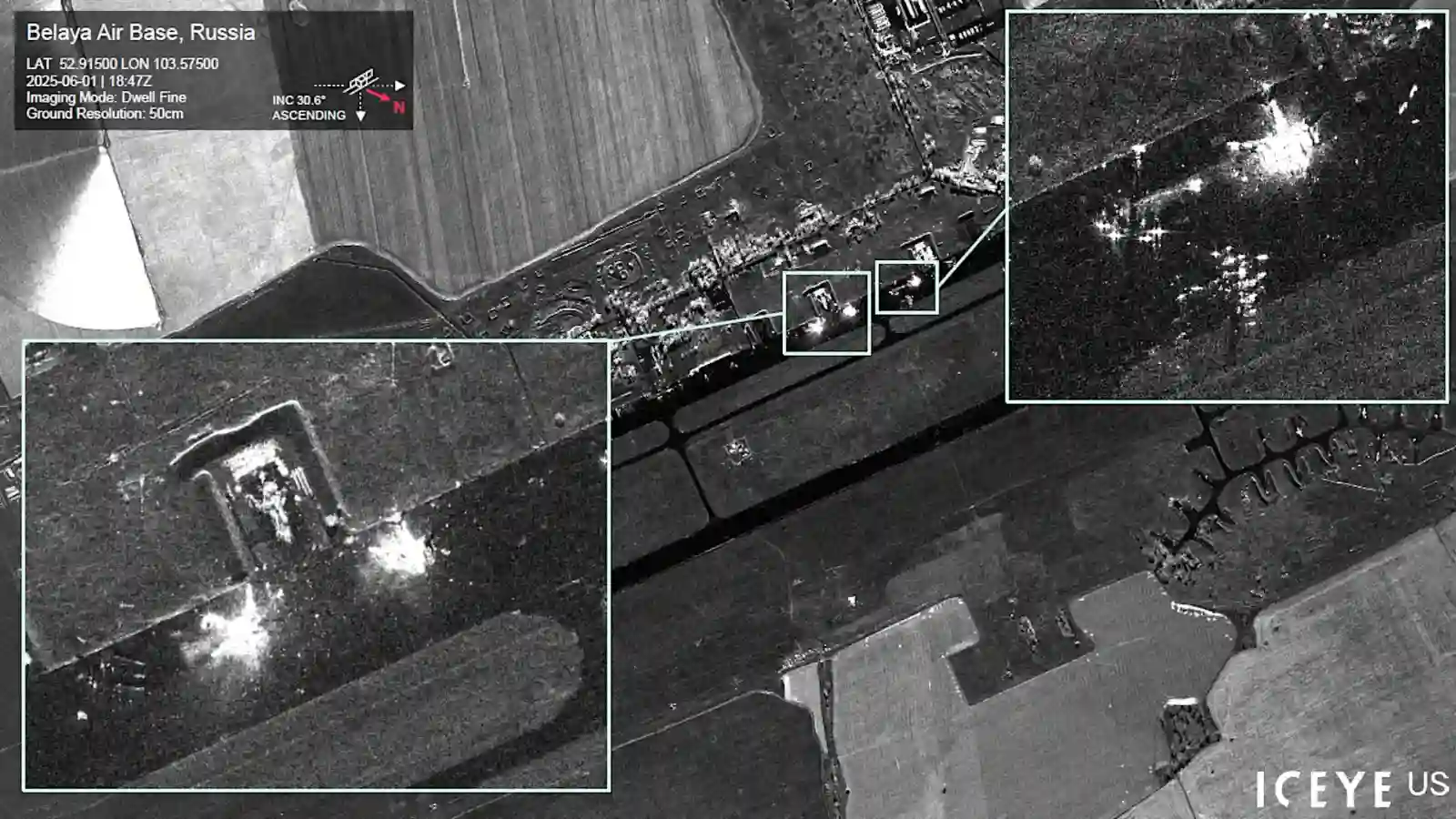
The Ukrainian battlefield has transformed. What began as a conventional war quickly evolved into a conflict dominated by unmanned aerial vehicles (UAVs) and drone technology. The latest Ukrainian operation inside Russia marked a defining moment. Using squads of FPV kamikaze drones launched covertly from cargo containers embedded within civilian trucks, Ukraine struck four major Russian airbases housing Tu-95 “Bear” bombers. The attack ignited aircraft worth billions. These were not stealth bombers or next-gen fighters; they were vintage strategic bombers, modernized at enormous cost.
Ukraine claimed to have disabled or destroyed 41 aircraft—nearly half of Russia’s operational long-range bomber fleet. President Zelensky celebrated the mission as an “absolutely brilliant result.”
Ingenuity Over Technology: The Power of Fusion
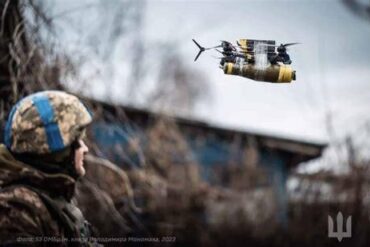
This drone operation succeeded not through high-tech marvels, but by combining commercial-grade technology, bold tactics, and military precision. Quadcopter drones retrofitted with warheads, hidden launchers camouflaged in freight containers, and first-person-view (FPV) control made the assault devastatingly effective. The strike was a reminder: innovation in war often lies not in hardware, but in how it is employed.
Ukraine’s strategy echoes the revolution seen during World War I trench warfare, or the blitzkrieg of World War II. Today, drone swarms represent that same kind of disruptive force—small, cheap, and deadly.
The New Frontlines: Trench Warfare Meets Digital Skies
Despite technological advancements, the ground war often resembles a World War I-style trench stalemate. But this deadlock now unfolds under the constant hum of surveillance and attack drones. Ukrainian and Russian units alike move stealthily at night to avoid being spotted by thermal-equipped drones. One American volunteer, callsign “Athos,” described a mission where a drone spotted his unit at 4 a.m. and dropped a grenade into his trench. The blast shattered his leg.
His unit suffered multiple injuries in minutes. This is the reality of combat in Ukraine—combatants are not hunted by soldiers, but by machines hovering above in the dark.
The Dominance of FPV Drones and Drone Swarms
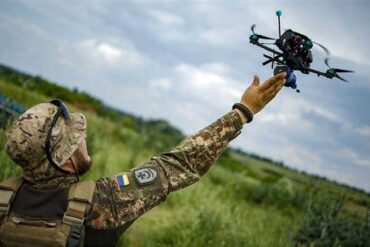
By the end of 2023, FPV drones—racing-style quadcopters with warheads—became ubiquitous. Each unit costs under $500 to assemble. This low barrier of entry means both sides can produce them in the thousands. On the frontline, soldiers rarely advance in vehicles anymore. Instead, they dismount far behind and walk to avoid being instantly targeted by circling drones.
The battlefield has become a game of predator and prey—with drones as both hunter and hunted.
Electronic Warfare: The Invisible Dogfight
Electronic warfare (EW) has surged in relevance. Drones depend on radio frequencies for control and video transmission. Jammers, whether vehicle-mounted, fixed, or portable, attempt to disrupt drone operations. However, the cat-and-mouse dynamic is relentless. Operators simply change frequencies. Jammers, in turn, become targets themselves.
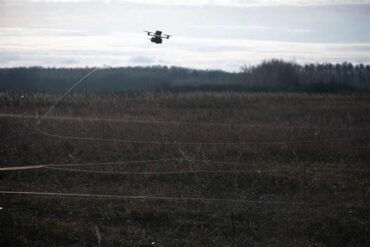
Ukraine’s forces employed mobile EW trucks during their brief occupation of Russia’s Kursk oblast. Russia answered with a more insidious tool: the fiber-optic drone. These drones trail a physical fiber cable for control—making them immune to jamming. They wreaked havoc on Ukrainian convoys before forcing a withdrawal.
Institutionalizing the Drone Revolution
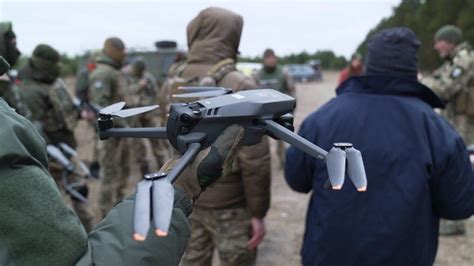
This is no longer improvisation. Drone warfare is now institutionalized. Ukraine has formed drone brigades, and Russia is planning an entire tactical unmanned service branch. Hundreds of workshops churn out drones, from FPV quadcopters to strike UAVs.
Deputy Defense Minister Oleksandr Kozenko revealed in May 2025 that Ukraine aims to produce 10 million tactical drones per year. Photographs from an Odessa facility show rows of engineers assembling drones daily. According to Kozenko, drones account for 80% of battlefield losses.
Unmanned Ground, Sea, and Sky: The Three Drone Theaters
Drones in Ukraine span three dimensions:
- Unmanned Ground Vehicles (UGVs): Used primarily for logistics and mine-clearing.
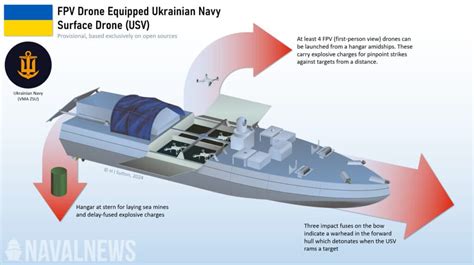
- Unmanned Surface Vehicles (USVs): Especially potent for Ukraine, which lacks a traditional navy. These maritime drones have sunk Russian Black Sea vessels and even downed helicopters.
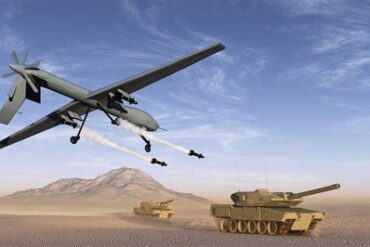
- Unmanned Aerial Vehicles (UAVs): The most influential, capable of everything from reconnaissance to long-range strategic attacks.
Long-Range One-Way Drones: A Strategic Breakthrough
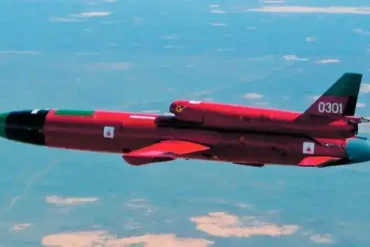
The most transformative innovation has been the development of long-range one-way attack drones. Russia’s Geran-2 (a rebranded Iranian Shahed-136) has become a daily menace in Ukrainian skies. These slow-flying, moped-sounding kamikaze drones are analogues of Germany’s V-1 rockets—only smaller, cheaper, and far more precise.
Russia aims to produce 500 daily from a plant in Yelabuga, Tatarstan. Shockingly, this factory is reportedly staffed by high school students and foreign women laborers. Western sanctions have tried to block access to the electronics used in these drones, but Russia has built alternative supply chains.
Ukraine is not far behind. Since January 2025, Ukraine has launched its own long-range drones targeting Russian energy infrastructure and military depots. Kyiv’s goal: produce 30,000 strategic drones this year alone.
The Human Cost Beneath the Drones
Amidst this digital battleground, human loss is staggering. British intelligence estimates over 1,200 Russian casualties per day, totaling nearly 960,000 since the 2022 invasion. Former Wagner Group head Yevgeny Prigozhin admitted to losing 20,000 mercenaries in a single campaign.
Ukraine’s own numbers are grim. In February 2025, Zelensky cited 46,000 killed and 380,000 wounded, though many wounded returned to action. Other sources believe Ukrainian fatalities may be closer to 70,000.
Despite these figures, technology—not attrition—is shaping this war’s future. Drones are less about replacing infantry and more about redefining how war is fought.
Drones as the Strategic Equalizer
What makes drones truly powerful is their democratization of force. No longer must a state invest billions in aircraft or missiles. With a few hundred dollars, some ingenuity, and civilian electronics, a country like Ukraine can penetrate deep into enemy territory and damage strategic assets worth hundreds of millions.
The FPV quadcopter has become to modern war what the musket once was—a tool that flattens the battlefield, blurring the lines between superpower and underdog. Tactical brilliance now beats brute force.
No End in Sight: The Dronification of Modern Conflict
As of June 2025, no cease-fire exists. Russia continues massive aerial bombardments. Between May 23–26, it launched over 900 drones and dozens of missiles into Ukrainian cities—the largest aerial assault of the year. Meanwhile, U.S. diplomatic efforts remain adrift. Former President Trump has repeatedly claimed breakthroughs are imminent, but none have materialized.
On the ground, soldiers like Athos—the American volunteer wounded in 2023—now walk the streets of Kyiv, recovered but deeply altered. “I’ve had enough of getting shot at,” he says. And yet, the buzz of drones above Kyiv reminds him—and everyone else—that the war has changed forever.
Conclusion: A Paradigm Shift in Global Warfare
Drones are not merely tools of surveillance or tactical support; they are now the primary instruments of modern combat. In Ukraine, they have become the decisive factor in both offense and defense, reaching deep into enemy territory and reshaping strategic assumptions.
The future of warfare is here. It is airborne, autonomous, and algorithmically driven. And as Ukraine’s battlefield innovations show, victory belongs not to the side with the most tanks, but to the one with the most creativity—and the most drones.