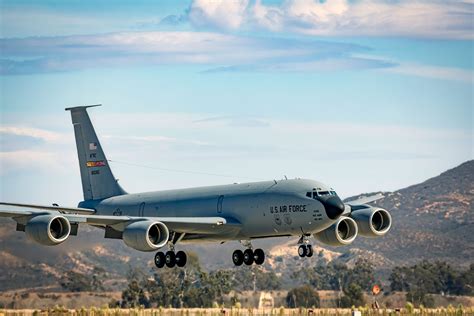
The Boeing KC-46 Pegasus was supposed to represent a clean break from Cold War-era aerial refueling—a leap into a digitized, multi-mission future where tankers do far more than pass fuel midair. Instead, nearly a decade into its service life, the aircraft finds itself at the center of one of the most expensive and technically stubborn modernization struggles in recent U.S. Air Force history.
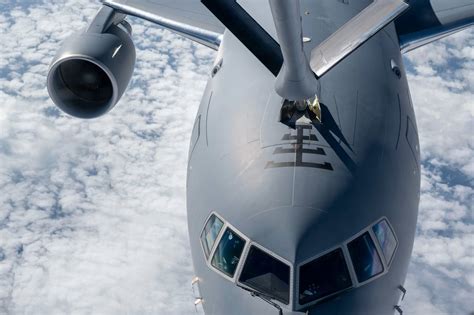
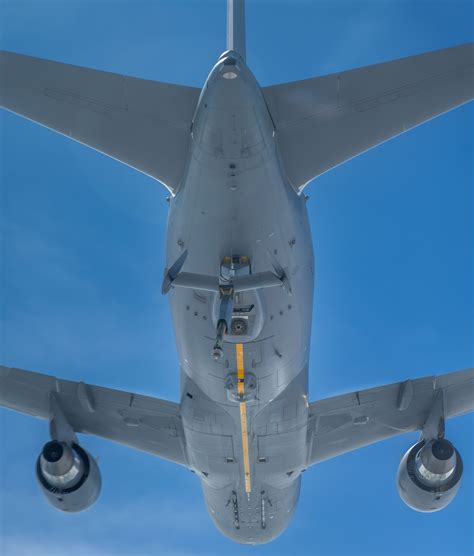
At the heart of the issue lies a deceptively simple component: the refueling boom. What should be a precise yet forgiving mechanical link between tanker and receiver aircraft has instead become a source of operational risk, costly damage, and strategic delay. Now, after years of incremental fixes failed to resolve the problem, the Air Force and Boeing are moving toward a complete overhaul of the boom system itself—a rare and telling admission that the original design fell short in fundamental ways.
A Modern Tanker With Persistent, High-Stakes Flaws
From the outset, the KC-46 promised a blend of efficiency, survivability, and flexibility unmatched by its predecessor, the KC-135 Stratotanker. Built on the Boeing 767 platform, it introduced modern avionics, advanced defensive systems, and a reimagined approach to aerial refueling operations.
Yet these advancements came with a tradeoff: complexity that proved difficult to perfect under real-world conditions. The aircraft accumulated multiple Category 1 deficiencies—the most serious classification, indicating issues that could result in loss of life or mission failure. These weren’t minor bugs; they were structural problems that directly affected operational capability.
Lawmakers took notice. Concerned about the Pegasus’ readiness, Congress effectively slowed the retirement of older KC-135 aircraft, ensuring the Air Force would not become overly dependent on a platform still struggling to meet its baseline mission requirements.
The Core Problem: A Boom That Doesn’t Behave Like One
Aerial refueling is a delicate choreography. The receiving aircraft must maintain formation while the tanker’s boom operator carefully guides a telescoping tube into a small receptacle. On legacy platforms like the KC-135, the boom is intentionally designed with flexibility and “give”, allowing pilots of lighter aircraft to maintain contact without exerting excessive force.
The KC-46’s boom, however, introduced a stiffer, less forgiving system. This design flaw quickly revealed itself in operational scenarios, particularly when refueling aircraft such as the F-16 Fighting Falcon and A-10 Thunderbolt II—both of which lack the mass and thrust to easily compensate for the boom’s resistance.
The result was more than inconvenience. It led to dangerous incidents, including structural damage to receiving aircraft and, in extreme cases, damage to the tanker itself.
When Refueling Turns Hazardous: Documented Incidents and Damage
The consequences of the KC-46’s boom stiffness are not theoretical—they are documented, costly, and alarming. Multiple incidents have been reported where aircraft sustained serious damage during refueling attempts, with repair costs running into the tens of millions of dollars.
In at least three high-profile cases between 2022 and 2024, the boom system experienced a phenomenon known as “nozzle binding.” This occurs when the boom becomes stuck in the receiving aircraft’s receptacle. Under stress, the boom can suddenly release and “whip” violently, sometimes striking the tanker’s own fuselage or tail.
This is not merely a mechanical inconvenience—it is a flight safety hazard with cascading implications for mission readiness. The fact that such events occurred during routine operations underscores how deeply the issue is embedded in the system’s design.
Why Legacy Aircraft Struggle the Most
Not all aircraft interact with the KC-46 equally. Heavier platforms like bombers can often compensate for the boom’s rigidity, but lighter, slower aircraft face a distinct disadvantage.
The A-10 Thunderbolt II, a rugged close-air-support aircraft designed for low-speed operations, has been particularly affected. In fact, it remains uncertified to receive fuel from the KC-46, an astonishing limitation given its continued operational relevance.
Similarly, the F-16, one of the most widely used fighter jets in the world, has experienced repeated compatibility issues. These limitations ripple outward, affecting not only U.S. forces but also allied air forces that rely on these aircraft.
The result is a paradox: a next-generation tanker that cannot reliably refuel a significant portion of the current fleet.
The Engineering Fix: Boom Telescope Actuator Redesign
After years of incremental adjustments failed to resolve the problem, Boeing has committed to a Boom Telescope Actuator Redesign—a comprehensive reworking of the system’s internal mechanics.
This redesign focuses on replacing the rigid actuator system with one that offers greater responsiveness and reduced force requirements. In practical terms, the boom will be able to compress more easily, allowing receiving aircraft to maintain contact without excessive thrust or maneuvering.
This is not a minor upgrade. It represents a fundamental shift in how the boom behaves under load, effectively bringing it closer to the forgiving characteristics of legacy systems while preserving the KC-46’s advanced capabilities.
The stakes are high. Until this redesign is fully implemented and validated, the KC-46 will continue to operate under restrictions that limit its full utility.
A Costly Program Under Financial and Political Pressure
The technical challenges facing the KC-46 have translated directly into financial losses and political scrutiny. Boeing has already absorbed billions in cost overruns, including a $565 million loss reported in late 2025 alone tied to ongoing fixes and delays.
Meanwhile, Congress has imposed strict limits on procurement, capping the fleet at 183 aircraft unless the Air Force can demonstrate clear progress in resolving major deficiencies. This creates a delicate balancing act: the military needs more tankers, but it also needs reliable ones.
Adding to the tension, lawmakers have mandated that the Air Force maintain a minimum number of KC-135 aircraft until the KC-46 proves it can fully assume its role. This effectively slows modernization while increasing the cost of maintaining older platforms.
Cold War Engineering vs. Modern Design Philosophy
It may seem counterintuitive, but the older KC-135 continues to outperform its successor in certain critical aspects of the refueling mission. The reason lies in design philosophy.
The KC-135 was built during the Cold War with an emphasis on durability, redundancy, and survivability under extreme conditions—including the possibility of nuclear conflict. Its systems are mechanically robust and forgiving, prioritizing reliability over sophistication.
The KC-46, by contrast, reflects a 21st-century mindset focused on efficiency, automation, and multi-role capability. It is designed to operate in a networked battlespace, integrating data, sensors, and defensive systems. But this sophistication introduces new points of failure, particularly when physical systems must interact seamlessly with a wide variety of aircraft.
This contrast highlights a broader truth: technological advancement does not automatically guarantee operational superiority.
Beyond Fuel: The KC-46’s Expansive Mission Profile
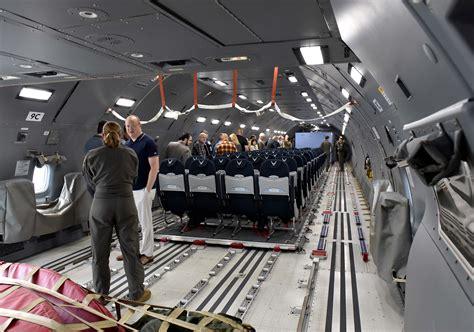
Despite its challenges, the KC-46 is far more than a refueling platform. It was designed as a multi-mission aircraft, capable of transporting cargo, personnel, and medical patients while simultaneously supporting aerial refueling operations.
Its capabilities include:
- Dual refueling systems, allowing it to service both boom- and probe-equipped aircraft in a single mission
- Aerial self-refueling, extending its range beyond traditional tankers
- Rapid aeromedical conversion, enabling casualty evacuation in as little as two hours
- Expanded cargo and passenger capacity, far exceeding that of the KC-135
These features position the Pegasus as a force multiplier, capable of supporting a wide range of operations beyond traditional tanker roles. Once its core deficiencies are resolved, it has the potential to redefine how the Air Force approaches global mobility and sustainment.
The Remote Vision System: Innovation With Growing Pains
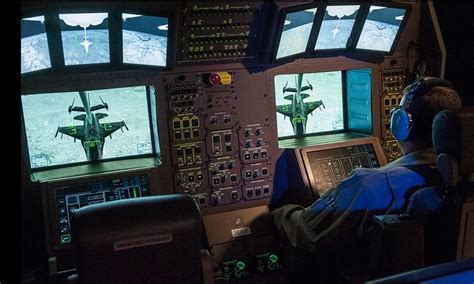
One of the KC-46’s most ambitious features is its Remote Vision System (RVS). Instead of lying prone and looking through a rear window, boom operators sit at a console and rely on high-resolution cameras and 3D displays to guide the boom.
The system offers a 185-degree field of view, enhanced by infrared sensors that enable operations in complete darkness. In theory, this provides a tactical advantage, allowing refueling missions to proceed under conditions that would challenge legacy systems.
However, early versions of the RVS suffered from visual distortion, glare issues, and inconsistent depth perception. These problems complicated already delicate refueling operations, contributing to the broader challenges faced by the KC-46 program.
The upcoming RVS 2.0 upgrade aims to address these issues with 4K video, improved processing, and LiDAR-based distance measurement, bringing the system closer to its intended performance.
Strategic Implications: Delays, Dependencies, and Decisions
The KC-46’s ongoing struggles have forced the Air Force into a series of strategic compromises. Plans to develop a stealthy next-generation tanker have been scaled back, while additional KC-46 purchases are being considered to fill capability gaps.
At the same time, the total tanker fleet is expected to expand significantly, reflecting the growing importance of aerial refueling in modern warfare. From supporting stealth fighters to enabling long-range bomber missions, tankers are the backbone of global airpower projection.
Yet this expansion depends on resolving the KC-46’s core issues. Without a reliable boom system, the aircraft cannot fulfill its primary mission—no matter how advanced its other features may be.
A Defining Test for Boeing and the U.S. Air Force
The decision to overhaul the KC-46’s boom system is more than a technical fix—it is a defining moment for both Boeing and the Air Force. It signals a willingness to confront fundamental design flaws rather than relying on incremental patches.
Success would validate the Pegasus as a cornerstone of future air mobility, restoring confidence in a program that has faced years of criticism. Failure, on the other hand, would deepen concerns about the viability of complex, software-driven military systems in roles that demand mechanical precision and reliability.
For now, the KC-46 remains a study in contrasts: a highly advanced aircraft constrained by a single critical weakness. The outcome of its boom redesign will determine whether it ultimately fulfills its promise—or becomes a cautionary tale of ambition outpacing execution.