A military tank turret is far more than a rotating dome—it is the nerve center and primary combat mechanism of armored fighting vehicles. This compact fortress houses not just the tank’s main weapon, but also complex systems responsible for target acquisition, fire control, and crew coordination. Understanding the turret is essential to grasping how modern armored warfare operates. It’s a space where raw firepower meets advanced computation, and where design decisions often mean the difference between victory and obliteration.
From the exterior, a turret might appear simplistic, merely swiveling atop a heavily armored hull. But within its confined armor lies a densely engineered system designed for maximum combat efficiency. The turret is mounted on a circular bearing ring, allowing it to traverse 360 degrees horizontally. This horizontal rotation is powered by either electric or hydraulic drives, and it ensures that the crew can engage threats from any direction without repositioning the entire tank.
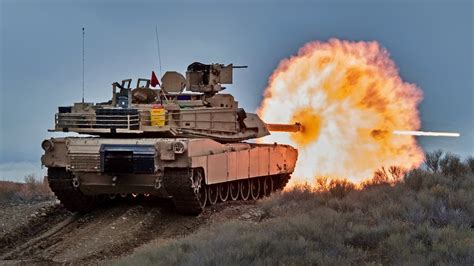
Crew and Operational Roles Within a Tank Turret
Traditional tank turrets are manned by three specialized crew members: the commander, the gunner, and the loader. Each plays a pivotal role:
- The commander holds the highest situational awareness, scanning the battlefield using a panoramic sight and issuing orders based on tactical priorities.
- The gunner operates the main gun and secondary weapons, often assisted by stabilized optics and advanced fire-control computers.
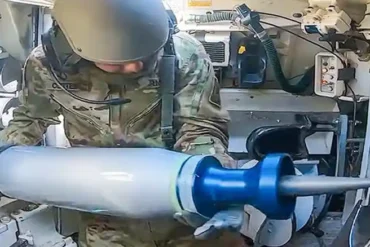
- The loader, when present, handles shell insertion and safety checks, although many modern turrets now use autoloaders instead of manual loading.
In unmanned turret designs like that of the T-14 Armata, all crew members are relocated to a protected capsule in the hull. These systems use sensors, remote controls, and AI-driven targeting to maintain lethality without exposing human operators to direct hits.
Architecture of Modern Tank Turrets
Beneath the visible armor of a turret lies a meticulous layout of weaponry, machinery, and technology. Central to the structure is the main armament, generally a high-caliber smoothbore or rifled gun. This weapon is stabilized in two planes, allowing the tank to fire accurately even while moving across uneven terrain.
The gun is mounted on an elevating cradle, capable of vertical movement independent of turret rotation. Supporting systems include:
- Muzzle brakes to reduce recoil
- Breech blocks for chamber sealing
- Gun recoil mechanisms for stability and structural protection
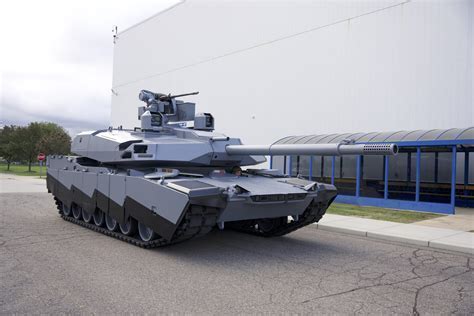
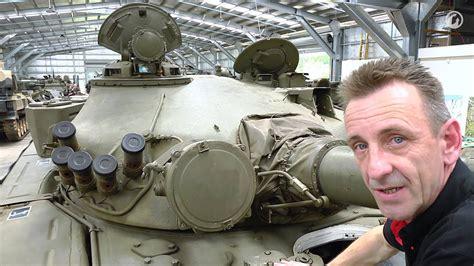
The power traverse and elevation mechanisms are typically electric in newer Western tanks like the Leopard 2 and M1 Abrams, offering faster and more precise targeting than the older hydraulic systems seen in Cold War-era designs like the M60 Patton or T-72. These systems are integrated with fire-control computers to enable synchronized movement and automated ballistic calculations.
Fire Control Systems: Brainpower Behind the Barrel
Modern turret systems are not just about brute force—they rely heavily on advanced fire control systems (FCS) to process targeting data and execute precise strikes. These systems continuously calculate:
- Target range using laser rangefinders
- Relative speed and direction of both the tank and target
- Environmental factors like wind speed, air pressure, and temperature
- Ammunition type and performance characteristics
Fire-control computers use this data to adjust the gun’s aim in real-time, making “first-round hits” far more likely, even while the tank is in motion. Some fire control systems also support hunter-killer operations: the commander identifies a target and cues the gunner’s optics and weapon to align instantly, enabling rapid threat neutralization.
Unmanned and Modular Turret Evolution
A seismic shift in turret design is underway: the movement toward unmanned, modular, and remote-operated systems. Platforms like the AbramsX and Kurganets-25 showcase how reducing the turret crew enhances survivability and combat versatility. Without humans inside, designers can reduce turret size, weight, and height, all of which improve battlefield stealth and speed.
In unmanned turrets, high-speed fiber-optic lines transmit sensor data and turret commands back to the vehicle’s hull, where the crew monitors digital displays and engages targets remotely. These designs often include:
- Autoloaders replacing manual loaders
- Pop-up missile pods or integrated drone launchers
- 360° optical and radar coverage
Such systems don’t just improve combat performance—they reshape armored tactics, favoring distributed, networked warfare over traditional line-of-sight battles.
Oscillating Turrets: A Niche Engineering Marvel
Though uncommon, oscillating turrets represent a unique engineering approach. Found in vehicles like the French AMX-13, these turrets separate horizontal traverse and vertical elevation into two linked shells:
- The lower portion rotates
- The upper portion pivots vertically
This design simplifies the use of autoloaders because the gun breech remains fixed relative to the loader, regardless of elevation. However, oscillating turrets suffer from poor sealing against NBC (nuclear, biological, chemical) threats, limiting their use in high-threat environments. Their lightweight construction makes them ideal for airborne and light reconnaissance vehicles but less suitable for main battle tanks.
Armor, Survivability, and Active Protection Systems
Protecting the turret is paramount, as it is frequently the most targeted part of a tank. Turret armor has evolved from cast steel in World War II to composite and reactive armor in modern tanks. Layered structures made of ceramics, metal alloys, and non-metallic materials help deflect or absorb kinetic and shaped-charge penetrators.
Newer advancements include:
- Explosive Reactive Armor (ERA), which detonates outward to disrupt incoming projectiles
- Modular armor packages, allowing battlefield replacement or upgrades
- Slat armor, used to defeat rocket-propelled grenades (RPGs)
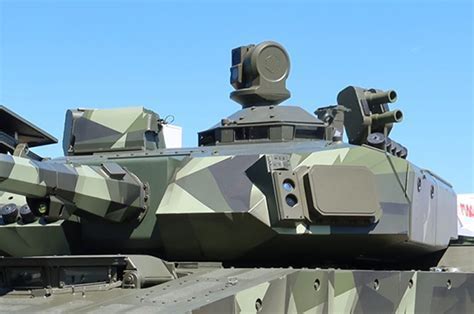
Perhaps the most revolutionary step in turret defense is the rise of Active Protection Systems (APS). Technologies like Trophy (Israel) and Iron Fist use radar and electro-optical sensors to track incoming projectiles and intercept them mid-flight using countermeasures. APS transforms the turret into not just a point of offense, but an information hub that enhances survivability through early detection and layered response.
Turret Integration with Network-Centric Warfare
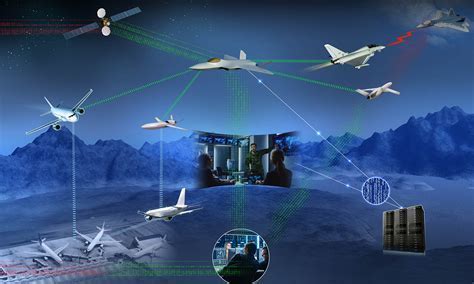
In 21st-century warfare, no system functions in isolation. The turret now acts as a data-processing node in network-centric combat environments. Through secure datalinks and battlefield management software, a tank’s turret can share targeting information, receive updates from drones or reconnaissance units, and coordinate fire missions with artillery or air support.
This capability is transforming the turret from a localized weapon station into a digitally connected battlefield command post. The integration of AI decision-support tools and machine learning algorithms is making these systems smarter, allowing predictive target recognition and prioritized threat engagement.
Conclusion: The Turret’s Dominant Role in Tank Superiority
The tank turret is the crown jewel of armored vehicle engineering—a concentrated convergence of firepower, protection, technology, and human-machine collaboration. As turrets evolve with new materials, AI capabilities, and unmanned operation, their battlefield dominance continues to increase. Whether defending urban terrain or engaging in open desert combat, the turret remains the center of gravity in tank warfare.
What began as a manually rotated cupola with a fixed cannon has transformed into a digitally enhanced warfighting system, able to detect, decide, and destroy within seconds. Future developments in laser weaponry, electromagnetic railguns, and fully autonomous turrets promise to elevate this already lethal component into a new dimension of military capability.
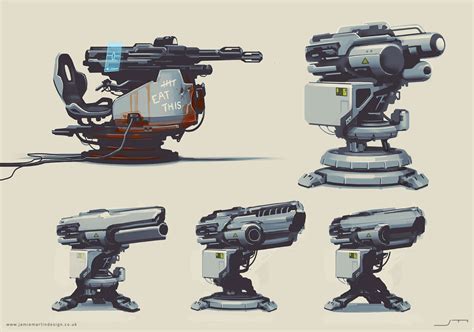
In the ever-changing arena of modern combat, the tank turret is not just a weapon—it is a strategic multiplier that redefines what armored dominance looks like in the 21st century.