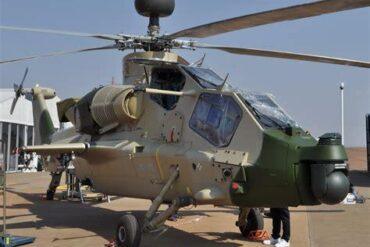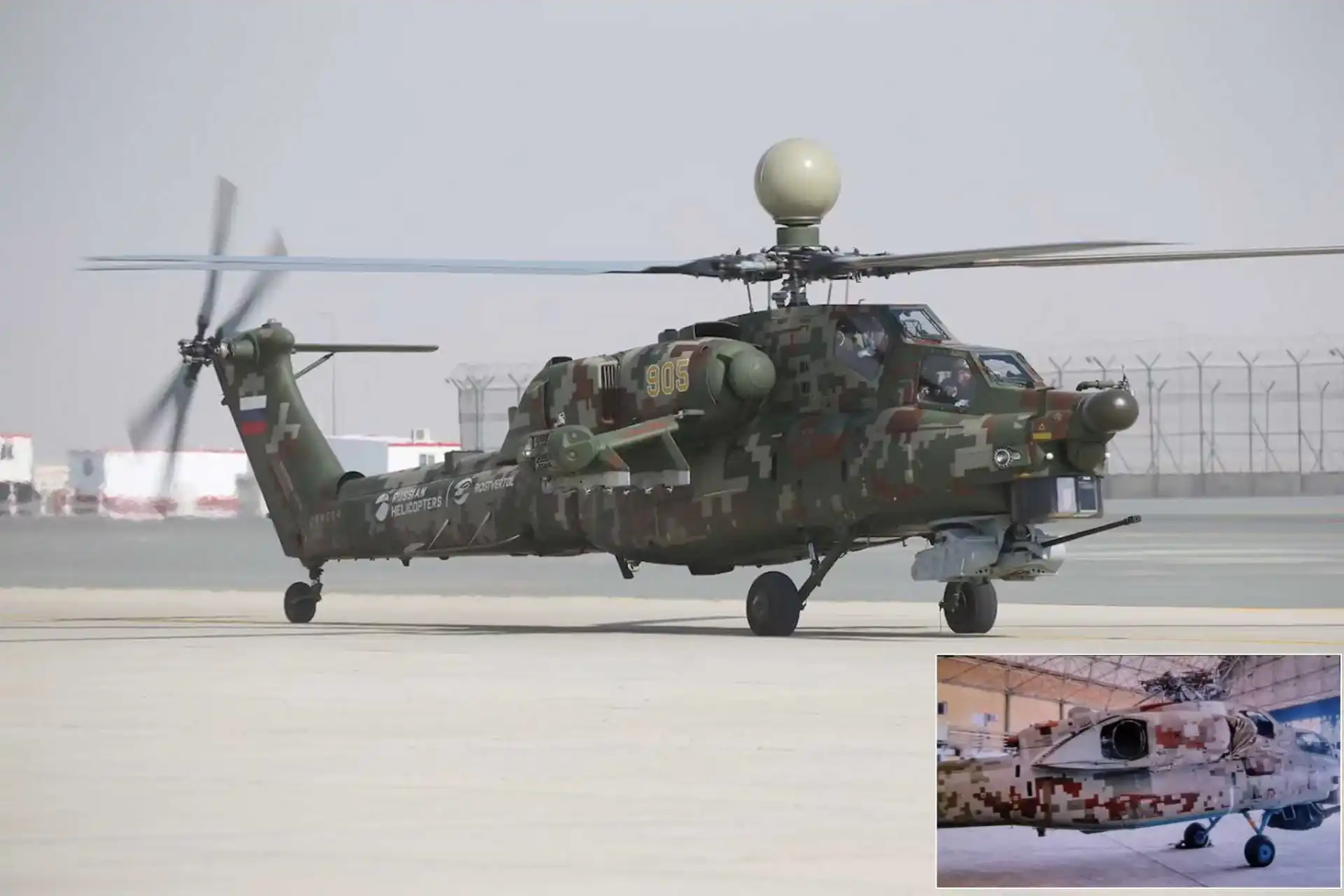
Iran has quietly taken delivery of its first Mi-28NE “Night Hunter” attack helicopter from Russia, marking a significant milestone in Tehran’s effort to modernize its rotary-wing strike capability amid escalating U.S. military pressure. The arrival confirms that a procurement agreement announced in late 2023 has moved beyond paper commitments and into physical transfer, even as Washington reinforces its posture of deterrence and signals readiness for direct action against Iranian military infrastructure.
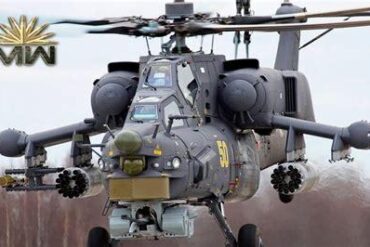
According to open-source intelligence and geolocation analysis published in late January 2026, the helicopter was photographed inside a hangar at the Pars Aerospace Services Company facility near Tehran. The setting strongly suggests inspection, technical acceptance, and systems familiarization rather than immediate operational deployment. The aircraft was observed wearing a digital desert camouflage scheme consistent with patterns used by Iranian military aviation units, reinforcing assessments that the helicopter has entered Iranian custody and is undergoing formal handover procedures.
The delivery comes at a moment of unusually high strategic tension. Since early 2026, U.S. officials have emphasized a willingness to employ direct military force in response to Iranian actions, backed by visible deployments of naval and air assets across the Middle East. In this context, the appearance of a survivable, heavily armed attack helicopter is not a symbolic gesture but a calculated addition to Iran’s layered deterrence and battlefield resilience strategy.
The Mi-28NE’s arrival also highlights the evolving Russia–Iran defense relationship, which has expanded in scope and urgency as both countries face sustained Western pressure. For Tehran, the helicopter represents not only new firepower but also access to a mature combat platform designed to operate under conditions Iran considers most likely in a future conflict: degraded airfields, intense electronic warfare, and persistent surveillance.
The confirmation of delivery answers months of speculation that followed reports in early January 2026 suggesting that the first airframes might already have reached Iranian territory. While the exact number of helicopters covered by the 2023 agreement remains undisclosed, the presence of a confirmed aircraft signals that the contract is active and progressing despite sanctions, logistical challenges, and geopolitical scrutiny.
A Helicopter Designed for War Under Pressure
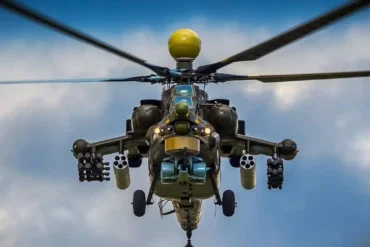
The Mi-28NE Night Hunter is not a lightweight showpiece. It is a purpose-built attack helicopter optimized for high-threat environments, where survivability and sustained combat capability matter more than speed or elegance. Developed by Russian Helicopters as an export variant of the Mi-28, the NE model incorporates lessons from years of operational use and foreign customer requirements, making it a formidable tool for countries anticipating intense, short-notice conflicts.
Configured with a two-person crew seated in tandem, the helicopter is designed for low-altitude penetration, rapid target engagement, and persistent presence over contested terrain. Its mission set includes destroying armored vehicles, engaging fortified positions, suppressing enemy air defenses, and countering low-speed aerial threats such as helicopters and unmanned aerial vehicles. These roles align closely with scenarios Iranian planners have long emphasized, particularly in the event of limited but intense strikes on military installations.
Unlike multirole helicopters adapted for attack missions, the Mi-28NE is heavily armored from the outset. The cockpit is protected by layered armor plating and armored windshields, while critical systems are shielded by ceramic and composite armor elements. Fuel tanks are crashworthy and self-sealing, reducing the risk of catastrophic fire after battle damage. The landing gear is energy-absorbing, designed to protect the crew during hard landings or emergency descents under fire.
The helicopter’s X-shaped tail rotor and composite main rotor blades improve damage tolerance and reduce vulnerability to small-arms fire. These features are not theoretical; they reflect a design philosophy built around the assumption that the aircraft will be hit and must keep flying. For Iran, which expects any major confrontation to involve saturation strikes and persistent surveillance, such characteristics are operationally decisive rather than optional.
Avionics and Night-Fighting Capabilities
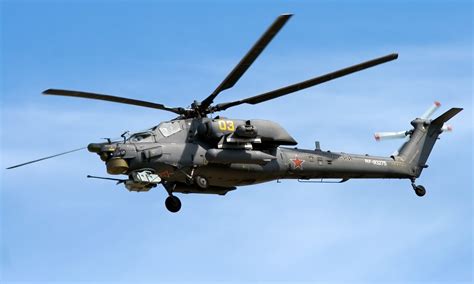
A defining feature of the Mi-28NE is its ability to fight effectively day or night, in poor weather, and from austere locations. The helicopter integrates a mast-mounted or nose-mounted radar, a gyro-stabilized electro-optical targeting system, and a comprehensive fire-control suite capable of handling both guided and unguided munitions. This sensor fusion allows crews to detect, track, and engage targets while remaining masked by terrain.
Navigation relies on a combination of inertial and satellite-based systems, enabling autonomous flight even in environments where ground-based navigation aids are unavailable or degraded. The cockpit layout emphasizes multi-function digital displays, reducing pilot workload and improving situational awareness during low-level, high-speed operations. Compatibility with night vision goggles allows takeoff, landing, and maneuvering from unlit or damaged sites, a capability Iranian planners consider essential given the vulnerability of fixed air bases.
Communications systems support coordination with other helicopters, ground units, and command elements, while also allowing integration into broader battlefield networks. The Mi-28NE includes provisions for interaction with unmanned systems, reflecting modern doctrines that pair crewed platforms with drones for reconnaissance and target designation. An onboard auxiliary power unit enables systems operation without external support, a critical feature for dispersed basing and rapid relocation.
Firepower Tailored for Intense Ground Combat
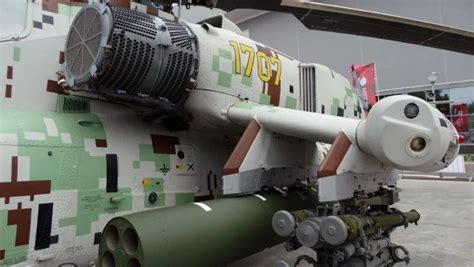
The Mi-28NE’s armament is extensive and flexible, designed to overwhelm a wide range of targets within a single sortie. At its core is a 30 mm 2A42 cannon mounted in a flexible nose turret, capable of engaging armored vehicles, infantry, and low-flying aerial targets. The cannon’s high rate of fire and diverse ammunition types make it effective in both precision strikes and area suppression.
Guided weapons form the helicopter’s primary anti-armor punch. The Mi-28NE can carry up to 16 Ataka-V air-to-ground missiles, optimized for defeating main battle tanks and hardened targets. Depending on configuration, it can also employ Khrizantema-family missiles with advanced guidance options. For self-defense, the helicopter can be equipped with Verba air-to-air missiles mounted on Strelets launchers, providing a measure of protection against hostile helicopters and slow-moving aircraft.
Unguided munitions remain a key part of the arsenal. The helicopter can carry up to 80 S-8 80 mm rockets or 20 S-13 122 mm rockets, enabling saturation attacks against troop concentrations, light fortifications, and area targets. Additionally, the Mi-28NE can be configured to drop up to four aerial bombs, including high-explosive and concrete-penetrating types, with a total external weapons load of 2,100 kg. This versatility allows commanders to tailor each mission to specific tactical requirements without relying on multiple platforms.
Performance in Hot, High, and Hostile Environments
Powered by twin VK-2500 engines, the Mi-28NE is designed to operate in conditions that challenge many attack helicopters. With a maximum takeoff weight of 12,100 kg, it achieves maximum speeds of up to 315 km/h and cruising speeds near the ground of approximately 280 km/h. Its normal operational range exceeds 420 km, extendable to over 1,000 km with additional fuel, providing flexibility for both local defense and longer-range missions.
The helicopter’s service ceiling reaches around 5,600 m, with out-of-ground-effect hovering capability between 3,200 m and 3,600 m, depending on conditions. Crucially for Iran, the Mi-28NE is certified to operate from bases at altitudes up to 4,000 m and in hot climates, aligning well with the country’s diverse geography. These performance margins ensure that the helicopter remains effective even when operating from dispersed, improvised sites after initial strikes.
Strategic Implications for Iran and the Region
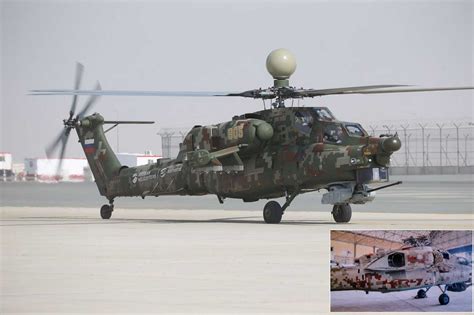
The delivery of the Mi-28NE does not fundamentally alter the regional balance of power, but it does complicate planning for any adversary considering limited strikes against Iranian military targets. Attack helicopters capable of surviving initial salvos and operating from damaged infrastructure provide Iran with a tool for rapid retaliation, border defense, and internal security operations under high alert conditions.
The timing of the delivery is inseparable from the broader strategic climate. Following renewed maximum-pressure policies and reinforced U.S. deployments, Iranian defense planning has emphasized assets that can remain operational despite precision strikes on air bases and command nodes. In this framework, the Mi-28NE fits neatly alongside mobile missile units and dispersed air defenses as part of a strategy focused on endurance rather than escalation dominance.
For Russia, the transfer underscores its willingness to sustain defense exports to partners facing Western pressure, reinforcing political ties while expanding its footprint in Middle Eastern security dynamics. For Iran, the helicopter is both a practical combat asset and a signal that it retains options for military modernization despite sanctions and isolation.
As additional deliveries potentially follow, attention will shift to how Iran integrates the Mi-28NE into its existing rotary-wing forces, which include a mix of legacy U.S.-era platforms, indigenous upgrades, and limited modern imports. Training, logistics, and doctrine adaptation will determine whether the Night Hunter becomes a niche capability or a central pillar of Iran’s attack helicopter force. What is already clear is that its arrival adds another layer of complexity to an already tense strategic environment, where perception, readiness, and survivability carry as much weight as raw numbers.