The Chengdu J-20, China’s premier fifth-generation stealth fighter, has been a subject of intense scrutiny and speculation regarding its true unit cost. Reports frequently cite figures north of $100 million per aircraft, yet a closer examination of available data, historical context, and defense economics reveals a far more nuanced picture.
The Origins of the $100 Million Estimate
The frequently referenced $100 million price tag appears to stem from early, somewhat speculative reporting, notably from South China Morning Post (SCMP) articles dated back to 2017. At that time, limited verified information was available regarding the People’s Liberation Army Air Force’s (PLAAF) procurement costs, leading many English-language outlets to adopt unverified figures that became entrenched in the public discourse.
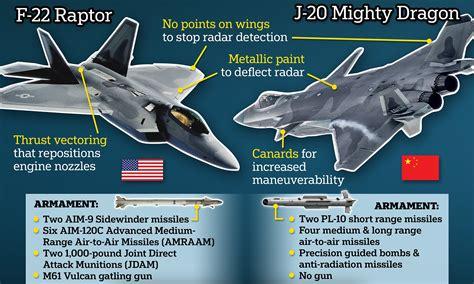
A critical factor driving this speculation is the comparison with American programs like the F-22 Raptor and F-35 Lightning II, both of which experienced skyrocketing costs during their development and initial production phases. The assumption that China’s stealth fighter would follow a similar cost trajectory seems logical at first glance but lacks deeper context about China’s manufacturing capabilities and economic strategies.
Early Cost Estimates and Currency Dynamics
According to research cited by Rick Joe in The Diplomat, historical estimates placed the J-20’s unit cost between 450 to 500 million yuan during its developmental phase. When pegged against the pre-2005 exchange rate (8 RMB to 1 USD), this translated to approximately $56 to $63 million per aircraft. It is critical to note that these figures were derived from assessments over 15 years ago, and naturally, costs have evolved due to inflation, technological enhancements, and production scaling.
The Economics of Scale: Lessons from the F-35
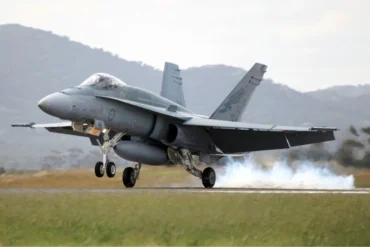
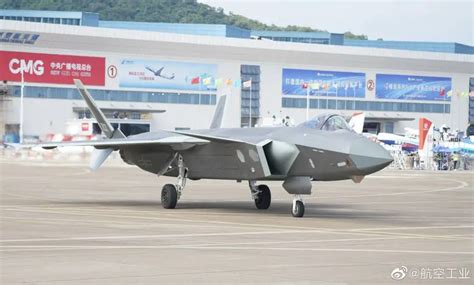
One compelling parallel often drawn is the cost trajectory of the F-35 program. Initially, the F-35’s price per unit exceeded $110 million, but as the program transitioned out of Low-Rate Initial Production (LRIP) and entered mass production, costs steadily decreased to the $70–$80 million range. Observers suggest a similar pattern may be emerging with the J-20, which is reported to be manufactured at a rate of 90 to 120 units per year.
China’s vast domestic industrial base, competitive labor costs, and advanced supply chains—especially in critical materials like rare earth elements—significantly enhance its cost-containment capabilities. Unlike the F-35, which involves an intricate international supply chain, the J-20 benefits from a more centralized and efficient production model, likely driving costs down further as production scales.
The Double-Engine Factor: Why It Matters
A crucial distinction in cost comparisons lies in the J-20’s twin-engine configuration, which inherently raises its production cost relative to single-engine fighters like the F-35 or China’s own J-10. Double-engine jets not only require more raw materials but also involve more sophisticated maintenance and testing regimes. However, even within this context, Chinese cost advantages—ranging from labor to domestic sourcing of key components—help mitigate the traditionally higher costs associated with twin-engine designs.
Comparing With Other PLAAF Aircraft
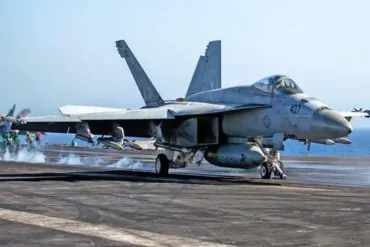
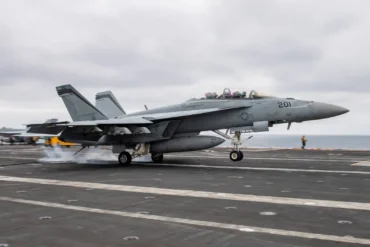
Intriguingly, multiple sources have pointed out that the J-20 may not even be the most expensive airframe in PLAAF service. Anecdotal reports suggest that the J-16D, a specialized electronic warfare variant, might eclipse the J-20 in unit cost, much like how the EA-18G Growler surpasses the F-35 in the U.S. inventory. While exact figures remain classified, this comparison underscores that cost metrics are highly variable and contingent on mission-specific capabilities.
Accounting Practices: East vs. West
Another often-overlooked aspect in cost estimations is the accounting methodology. In Western defense procurement, cost per unit often includes a wide array of additional expenses—ranging from research and development (R&D) amortization to long-term maintenance and logistics. By contrast, Chinese accounting may isolate pure production costs, presenting a seemingly lower per-unit figure that doesn’t fully encapsulate the life-cycle cost of the platform.
This disparity is critical when interpreting cost figures from different geopolitical contexts. Without transparency into what each side includes in their costing formulas, direct comparisons can be misleading.
Inflation, Upgrades, and the True Cost Today
Over time, several factors likely pushed the J-20’s real cost upwards:
- Inflationary pressures within China’s rapidly expanding economy.
- Upgrades to avionics, radar systems, and stealth coatings.
- Transition to domestic engine production with the WS-10C and future WS-15 engines.
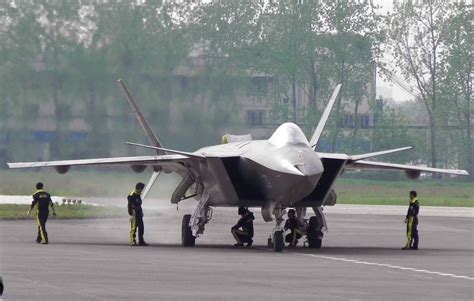
However, these increases are tempered by economies of scale and enhanced manufacturing efficiencies. Given that current production rates are reportedly high and China’s procurement strategy is designed for long-term fleet sustainability, it is plausible that today’s J-20 costs hover between $70 and $90 million per unit, depending on the block version and specific mission configuration.
The Verdict: Is It Really Over $100 Million?
Based on the available evidence, it appears unlikely that the J-20 consistently costs over $100 million per unit in its current production phase. While initial units—especially prototypes and early production batches—may have approached or even exceeded this figure due to R&D amortization and early inefficiencies, the maturation of China’s defense-industrial complex likely brought significant cost reductions over time.
We must also consider that many $100 million estimates lack concrete sourcing, often relying on outdated reports or assumptions anchored in Western defense economics, which do not fully translate to China’s unique production environment.
Final Thoughts
In conclusion, the narrative surrounding the J-20’s cost requires careful examination of economic, industrial, and strategic contexts. While we may never obtain fully transparent figures due to the secretive nature of military procurement, the balance of evidence suggests that the J-20’s per-unit cost today is likely below $100 million, driven by China’s powerful manufacturing ecosystem and strategic procurement efficiencies. Any future assessments must remain vigilant about source credibility and contextual accuracy to avoid perpetuating outdated or oversimplified cost narratives.