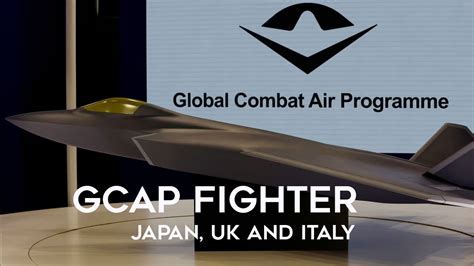
The race to develop sixth-generation fighter aircraft is no longer dominated solely by the United States. As the U.S. Air Force progresses with its Next-Generation Air Dominance (NGAD) initiative, a parallel multinational effort is taking shape across the Atlantic and the Pacific. The Global Combat Air Program (GCAP) — a trilateral venture uniting Italy, the United Kingdom, and Japan — is gaining traction, underscoring a rapidly evolving strategic landscape and the shared imperative among U.S. allies to field sovereign, next-gen air dominance capabilities.
Conceived in 2022, GCAP is not merely a symbolic gesture of transcontinental cooperation. It is a high-stakes commitment to develop a cutting-edge sixth-generation fighter platform that will eventually replace the Eurofighter Typhoon in Europe and Japan’s F-2 fleet, which has long been considered the cornerstone of its tactical air power.
Strategic Urgency: A Response to Regional and Global Tensions
While GCAP had been progressing methodically in its early stages, recent developments in the Indo-Pacific have amplified its urgency. In particular, Pakistan’s reported combat use of Chinese-made fighters during recent border skirmishes with India sent a clear signal to policymakers in Tokyo and London. With China’s aerial capabilities increasingly viewed as a potential strategic overmatch, GCAP’s timeline has been accelerated. According to the South China Morning Post, the move reflects growing regional concern over Beijing’s expanding air superiority arsenal and the overarching implications for Indo-Pacific security.
While official statements stop short of naming China explicitly as the catalyst, the pace of China’s and the United States’ concurrent sixth-generation programs has undoubtedly played a role. The GCAP coalition is racing to ensure it is not technologically outpaced by either power. The urgency also comes in light of Washington’s tight control over the F-35 platform, which has led several nations to reconsider the viability of true operational independence when relying solely on U.S.-led systems.
A Sovereign Vision: Escaping the Grip of U.S. Defense Ecosystem
The GCAP’s formation also reflects a desire for strategic autonomy. For Japan in particular, this marks the first time it will jointly develop a front-line combat aircraft with Western partners on a fully equal footing. While Japan has collaborated in past U.S.-led defense programs, including the F-35, this project gives Tokyo full operational and technological sovereignty — a breakthrough in the nation’s postwar defense policy framework.
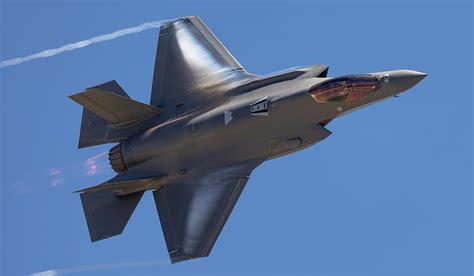
This emphasis on sovereignty carries added weight amid persistent rumors of a so-called “kill-switch” embedded within the F-35 architecture — a suggestion that the U.S. might be able to unilaterally disable a partner nation’s aircraft in conflict scenarios. Although this claim is widely disputed, the reality remains that the U.S. imposes strict controls on the export, testing, and modification of F-35 systems. GCAP seeks to break that mold.
Platform Capabilities: Toward a True Sixth-Generation Fighter
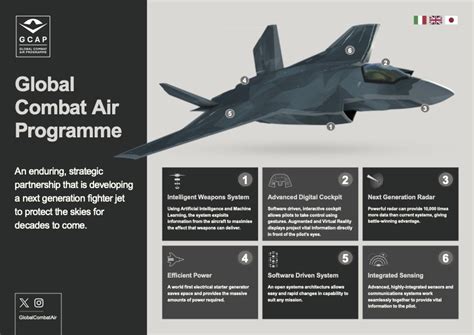
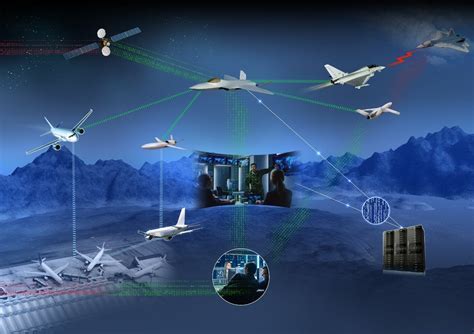
The GCAP fighter is envisioned as a next-level air superiority platform, integrating a fusion of kinetic and non-kinetic capabilities, AI-driven battle management systems, and seamless multi-domain connectivity. While full technical specifications remain closely held, early program outlines suggest that GCAP will rival the ambitions of NGAD in both scale and scope.
Central to this is the Integrated Sensing and Non-Kinetic Effects & Integrated Communications Systems package, a technological ecosystem being jointly developed by:
- Leonardo UK
- Leonardo Electronics (Italy)
- ELT Group (Italy)
- Mitsubishi Electric (Japan)
These firms are collectively designing the fighter’s multi-function radio frequency system, expected to serve as a combined radar, electronic warfare array, and secure communications suite. This tight-knit collaboration is intended to provide cross-domain superiority, enabling the GCAP fighter to dominate the electromagnetic spectrum while maintaining real-time coordination with allied systems across air, land, sea, and space.
Historic Collaboration: Echoes of Tornado and Eurofighter Programs
The roots of GCAP are firmly planted in European aerospace cooperation. Both the Panavia Tornado (introduced in the 1970s) and the Eurofighter Typhoon (1980s) were the product of UK-Italy-Germany collaboration. What makes GCAP distinct, however, is Japan’s full integration into the program. This is no minor milestone.
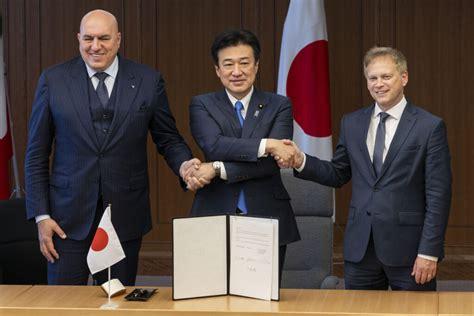
Japan’s inclusion reflects a new era of multilateral defense alignment between European and Asian democracies. It also underscores a shared understanding of the growing multi-theater nature of military conflict — where future engagements may stretch from the Indo-Pacific to the Mediterranean in a matter of hours. The three nations signed a formal treaty in late 2023, outlining joint development, cost-sharing, industrial participation, and operational deployment schedules.
Funding and Program Milestones
The United Kingdom alone has already committed over £14 billion to GCAP, according to statements from Leonardo UK. Although Japan and Italy have not yet disclosed precise figures, insiders suggest all three nations are contributing proportionally, with industrial benefits distributed based on technological input and production capacity.
In 2024, GCAP is expected to receive its first international development contract, signifying a transition from design to system integration. According to Andrew Howard, Director of Future Combat Air at Leonardo UK, the contract will facilitate clearer work disaggregation — a complex process ensuring that roles, intellectual property, and national priorities are all properly respected and managed.
NGAD: The Benchmark in the Sky
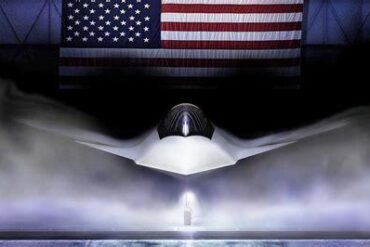
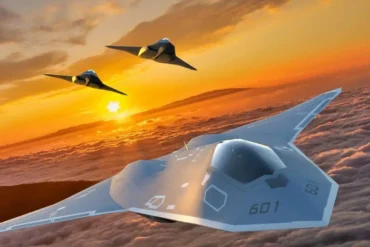
Meanwhile, the U.S. Air Force’s NGAD program continues to evolve in near-secrecy. One of the few known details is its impressive combat radius — now publicly stated to exceed 1,000 nautical miles, a quantum leap over the F-22 and F-35. According to General David Allvin, Chief of Staff of the U.S. Air Force, NGAD will likely exceed Mach 2 speeds and operate within a broader “family of systems,” possibly incorporating loyal wingmen, drone swarms, and AI-enabled battle control nodes.
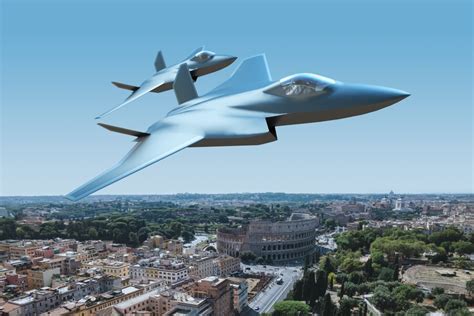
This sets a high benchmark, but GCAP designers are unfazed. Insiders suggest the European-Japanese platform will feature similar speed, range, and stealth characteristics, but also push harder on modularity and digital twin simulation — features allowing for rapid software updates, mission reconfiguration, and virtual testing.
The Stakes: Shaping the Next Century of Air Power
GCAP is not just a technical project. It is a geostrategic statement, one that speaks to the emergence of interlinked allied defense networks outside of traditional U.S.-led frameworks. The trilateral nature of GCAP presents a new model of sovereignty-oriented defense collaboration, free from the political strings sometimes attached to American platforms.
For Italy, it’s a reaffirmation of its commitment to European aerospace leadership. For the United Kingdom, it is a tangible demonstration of post-Brexit strategic independence and technological prowess. For Japan, it is an opportunity to integrate with the global West while reinforcing its regional deterrence posture.
The coming decade will determine whether GCAP can genuinely rival NGAD in capability and readiness. But what’s already clear is that sixth-generation warfare will not be the sole domain of any one superpower. With GCAP, Italy, the UK, and Japan are reshaping the future of combat aviation — not as spectators, but as full-spectrum players.