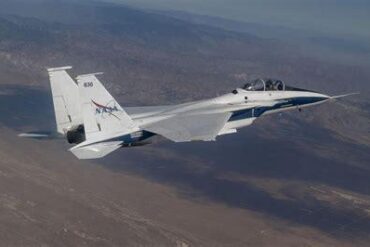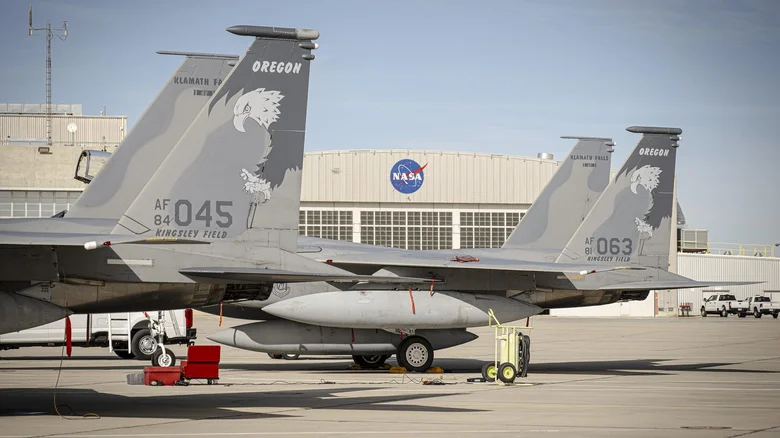
The Boeing F-15 Eagle has always been the kind of aircraft that refuses to fade quietly into history. Born in the Cold War, forged in aerial dominance, and matured into one of the most respected airframes ever built, the F-15 has spent decades proving that raw engineering excellence can age like fine wine. Now, in a twist worthy of aerospace mythology, two veteran F-15s are trading their military retirement for a second life with NASA’s Quesst mission, helping to unlock the next era of civilian supersonic travel.
This transition is happening because NASA needs something rare: an aircraft that can keep pace with experimental supersonic prototypes while carrying sophisticated instrumentation. The F-15, with a top speed exceeding Mach 2.5 and a service ceiling stretching toward 60,000 feet, is almost uniquely suited for the job. Where most retired fighters end up in storage deserts or museums, these two Eagles are stepping into a future-oriented research role that could reshape commercial aviation.
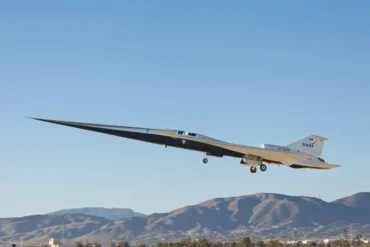
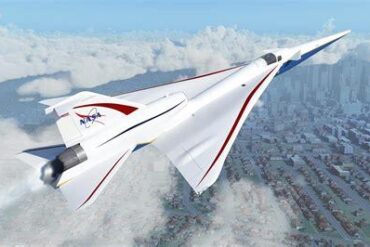
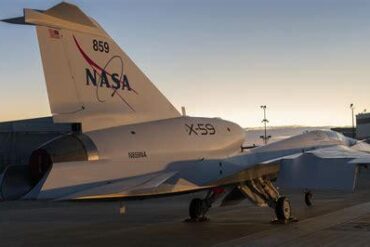
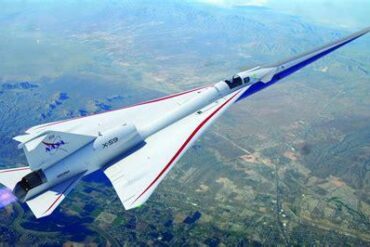
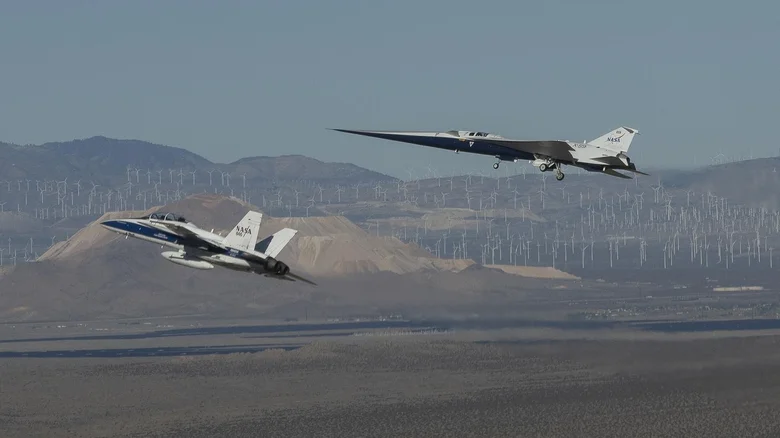
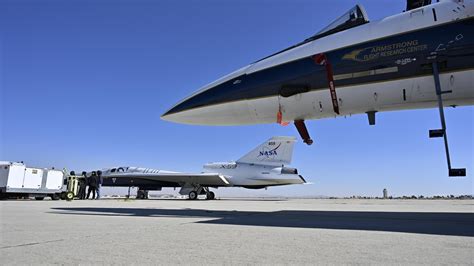
Their new partner in science is the X-59, NASA’s futuristic long-nosed demonstrator designed to make sonic booms quieter and less destructive. The X-59 is built to prove that a supersonic aircraft doesn’t have to shatter windows or terrify cities. If successful, it could rewrite the rules that currently ban overland supersonic flight, opening the door to dramatically faster global travel.
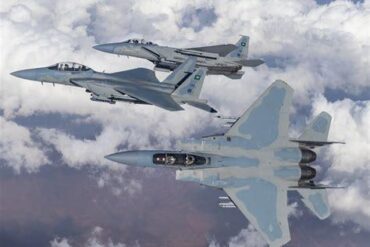
The F-15s will serve as chase planes, flying above and behind the X-59 to gather data, observe flight behavior, and provide safety oversight. This role requires speed, altitude capability, and reliability—three traits the Eagle delivers with stubborn consistency. In aerospace terms, the F-15 is not just a legacy platform; it is a flying laboratory with decades of proven performance.
NASA’s relationship with the F-15 is older than many of today’s aerospace engineers. The agency has flown F-15 variants for research since the 1970s, and astonishingly, one 1974-era F-15B is still operational in NASA’s fleet. That longevity speaks volumes about the aircraft’s structural integrity and adaptability. For Quesst, NASA is continuing that tradition by outfitting these newer C/D variants with advanced sensors and modifications to push them into high-altitude research roles.
These specific F-15s come from the Oregon Air National Guard’s 173rd Fighter Wing, which is transitioning to the stealthy F-35A. As the military modernizes, older Eagles are being phased out in favor of fifth-generation fighters. Normally, that would mean storage in the “boneyard” or conversion into static displays. Instead, NASA is turning retirement into reinvention, transforming these combat veterans into scientific scouts for the supersonic future.
The X-59 itself is a technological oddity in the best possible way. Its elongated nose, sculpted fuselage, and carefully tuned aerodynamics are designed to distribute shockwaves differently, reducing the sharp crack of a sonic boom into a softer “sonic thump.” The physics here are both elegant and stubborn: shockwaves are inevitable at supersonic speeds, but their impact on the ground can be reshaped through design. NASA’s Quesst mission is essentially an experiment in acoustic diplomacy between physics and human habitation.
Why does this matter so much? Because the current business model for supersonic commercial travel is strangled by regulation. Concorde proved that people will pay for speed, but its sonic booms made overland routes politically and legally impossible. Without the ability to fly supersonic over populated areas, airlines can’t justify large-scale commercial fleets. If NASA proves that quiet supersonic flight is feasible, it could trigger a renaissance in civil aviation design, economics, and infrastructure.
The implications extend far beyond luxury travel. Faster point-to-point transport could reshape global business, emergency response logistics, and even cultural connectivity. A future where transcontinental flights take a couple of hours instead of half a day is not science fiction; it is a regulatory and engineering puzzle waiting to be solved.
There is also a quietly poetic aspect to this story. The F-15, once a symbol of Cold War air superiority, is now a scientific companion helping humanity rethink speed, noise, and environmental impact. The same airframe that once trained for air-to-air dominance is now contributing to acoustic research, data science, and civilian aerospace innovation. That arc—from fighter to research platform—is the kind of narrative engineers secretly love.
Not everything is sentimental, of course. One of the two acquired F-15s will reportedly be cannibalized for parts, a pragmatic reminder that even legends serve as donors to keep others flying. Aerospace progress often advances through this mix of romance and ruthless practicality. One Eagle will soar with sensors and telemetry; the other will live on as components and systems inside its sibling.
This partnership between NASA and aging military hardware highlights a deeper truth about engineering: longevity comes from adaptability. The F-15’s design margin, structural strength, and performance envelope were so generous that it can be repurposed decades later for cutting-edge research. That is not accidental brilliance; that is disciplined design foresight.
As the X-59 moves toward full test campaigns, these Eagles will become silent protagonists in a story about future travel. They will trail a strange-looking aircraft across the stratosphere, gathering the data that regulators, engineers, and economists need to justify a supersonic comeback. The public may see the sleek X-59 headlines, but behind it, two stubborn Eagles will be doing the unsung work of verification, measurement, and safety.
In the grand sweep of aviation history, the F-15’s refusal to retire feels less like nostalgia and more like inevitability. Some machines are too capable to discard. Instead of fading into static displays, these aircraft are stepping into a new narrative: guardians of quiet speed, scouts of a future where the sky is faster and friendlier to those below.